
Roof Algae Removal With Soft Washing and Why It Works
Roof algae removal with a soft wash is one of the safest ways to clear dark streaks without roughing up your shingles. Those black lines and green patches are often living growth, not plain dirt, and they spread where shade and moisture stick around.
A professional soft wash uses low pressure and roof-safe cleaning solutions. That matters because a hard spray can strip granules, loosen shingles, and push water where it shouldn’t go.
If your roof looks older than the rest of your home, a proper cleaning can change that. It also helps to know what causes the staining and what a professional service should do before anyone steps on a ladder. That makes it easier to choose a safe service and avoid methods that do more harm than good.
What causes roof algae to grow in the first place
Roof algae thrives when a roof stays damp for long stretches. Shade from trees, humid air, slow drying after rain, and clogged gutters all help it grow. On many asphalt roofs, the staining comes from Gloeocapsa magma, a blue-green algae explained in this roof algae causes overview. Its spores travel through the air, land on shingles, and spread over time. That’s why the problem often comes back if the roof isn’t cleaned well and the damp conditions stay the same.
Why dark streaks are more than a cosmetic issue
At first, the problem looks like a few dirty marks. Soon, those marks can make the whole roof look old. Dark streaks are easy to spot from the street, so they can make a well-kept home seem tired. Over time, that buildup can also hold moisture on the surface, which doesn’t help a roof dry properly.
Signs your roof has algae instead of another problem
Algae often shows up as black or dark brown streaks that run down the roof. In shady areas, you may also notice green patches. Moss looks thicker and more tufted. Lichen looks crusty or spotted. Plain dirt usually appears as a dull, even film, not long streaks. If the discoloration is uneven and keeps spreading, algae is a likely cause.
How soft washing removes roof algae without damaging shingles
Soft washing cleans the roof with a gentle application, not a forceful blast. The cleaning solution does the heavy lifting by killing algae at the root, then loosening the staining so it can rinse away. Because of that, it’s a better choice for asphalt shingles and many tile or metal roofs. For tiles specifically, see my guide to black algae roof cleaning and safe methods for tile roofs.
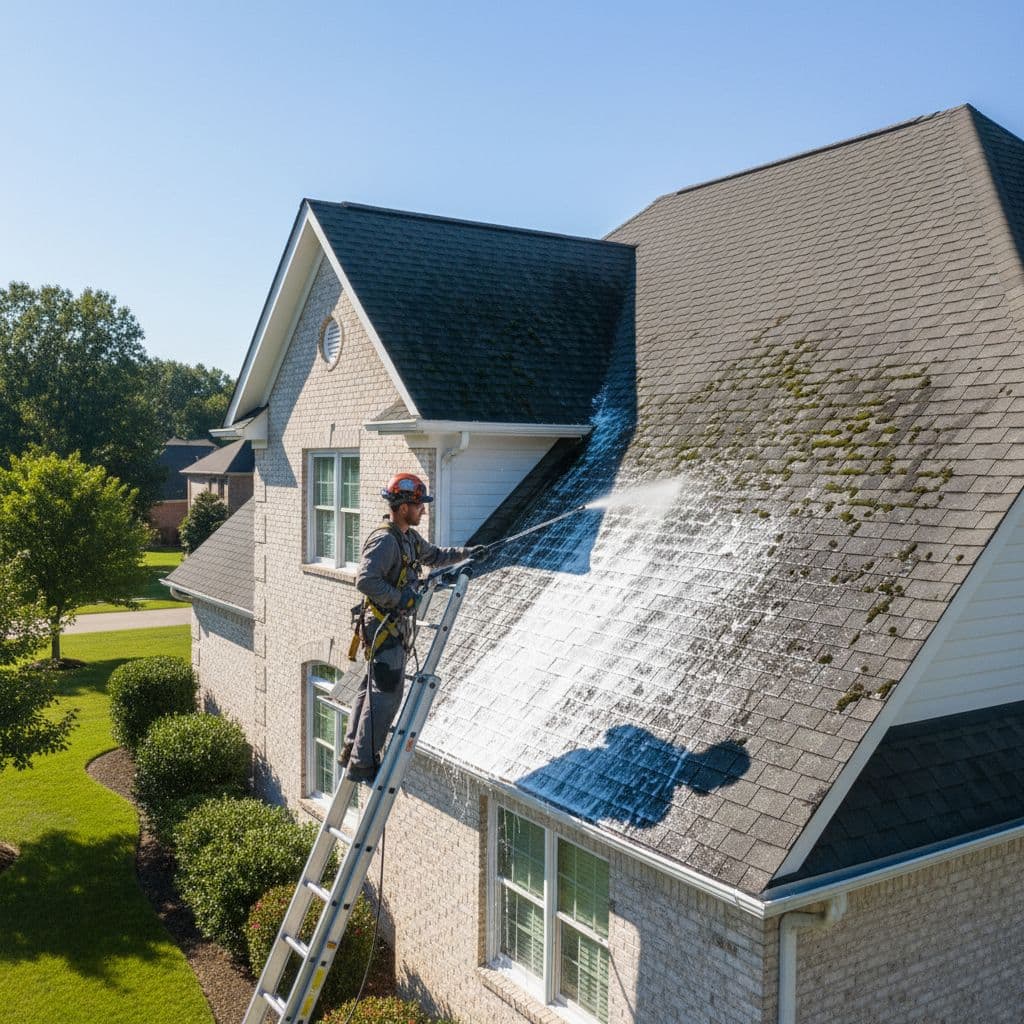
What happens during a professional soft wash service
A crew usually starts with an inspection. They look at the roof material, the amount of staining, and any worn areas. Next, they protect plants, gutters, siding, and nearby surfaces. Then they apply the cleaner with low pressure and give it time to work. Some roofs need a light rinse, while others brighten up as the treatment breaks down the growth. For a local service example, this page on soft wash roof cleaning in Fort Myers shows the kind of process homeowners should expect.
Why low pressure matters for roof safety
Low pressure matters because shingles aren’t built to take the punishment of a power washer. High pressure can knock off protective granules, lift shingle edges, and force water under the roofing system. A soft wash avoids that risk. It treats the algae, removes the staining, and helps preserve the roof instead of wearing it down.
Benefits homeowners can expect after a roof algae soft wash
Most homeowners notice the looks first, but the benefits don’t stop there. A cleaner roof improves the appearance of the whole house, and it removes buildup that can sit on the surface for months. Results vary based on roof type, stain level, local weather, and how much shade the roof gets.
Better curb appeal and a cleaner-looking home
A stained roof can drag down the look of the entire property. Once the streaks are gone, the roof color looks more even and the house looks newer. That change matters whether you plan to stay for years or simply want your home to look sharp from the street.
Less wear from buildup over time
Removing algae helps the roof shed grime and moisture more easily. It won’t reverse age or repair damaged shingles, but it can reduce the extra stress that comes with long-term buildup. That’s a practical win for homeowners who want their roof to stay in better shape over time.
What to ask before hiring a roof cleaning company
Hiring the right company matters as much as choosing the right method. A good contractor explains the process in plain language and respects the roof material. You shouldn’t have to guess what they plan to spray on your home.
Questions that show whether they really use soft wash methods
Ask a few direct questions before you book:
- What pressure do you use on my roof type?
- What cleaning solution do you apply, and does it kill algae or only rinse the surface?
- How do you protect plants, siding, gutters, and walkways during the job?
- Will you inspect the roof first and tell me if soft washing is a good fit?
If you want a quick primer before making calls, this guide on algae on roof shingles gives useful background. Clear answers usually mean the company has done this work before.
Red flags that suggest the wrong cleaning method
Some warning signs are hard to miss:
- They promise to “blast” stains away.
- They won’t explain the pressure level or the cleaning solution.
- They don’t ask what kind of roof you have.
- They say landscaping protection isn’t needed.
If a contractor treats every roof the same, move on. Roof cleaning works best when the method fits the material and the stain.
Conclusion
Roof algae removal with a soft wash gives homeowners a safer way to deal with stains, green growth, and that worn-looking roof line. It cleans by treating the algae itself, not by hammering shingles with pressure.
A clean roof should never come at the cost of roof damage. If the staining keeps spreading, deal with it sooner rather than later and choose a company that uses low-pressure cleaning and explains every step clearly. That choice protects the roof, the landscaping, and the look of the whole home.