
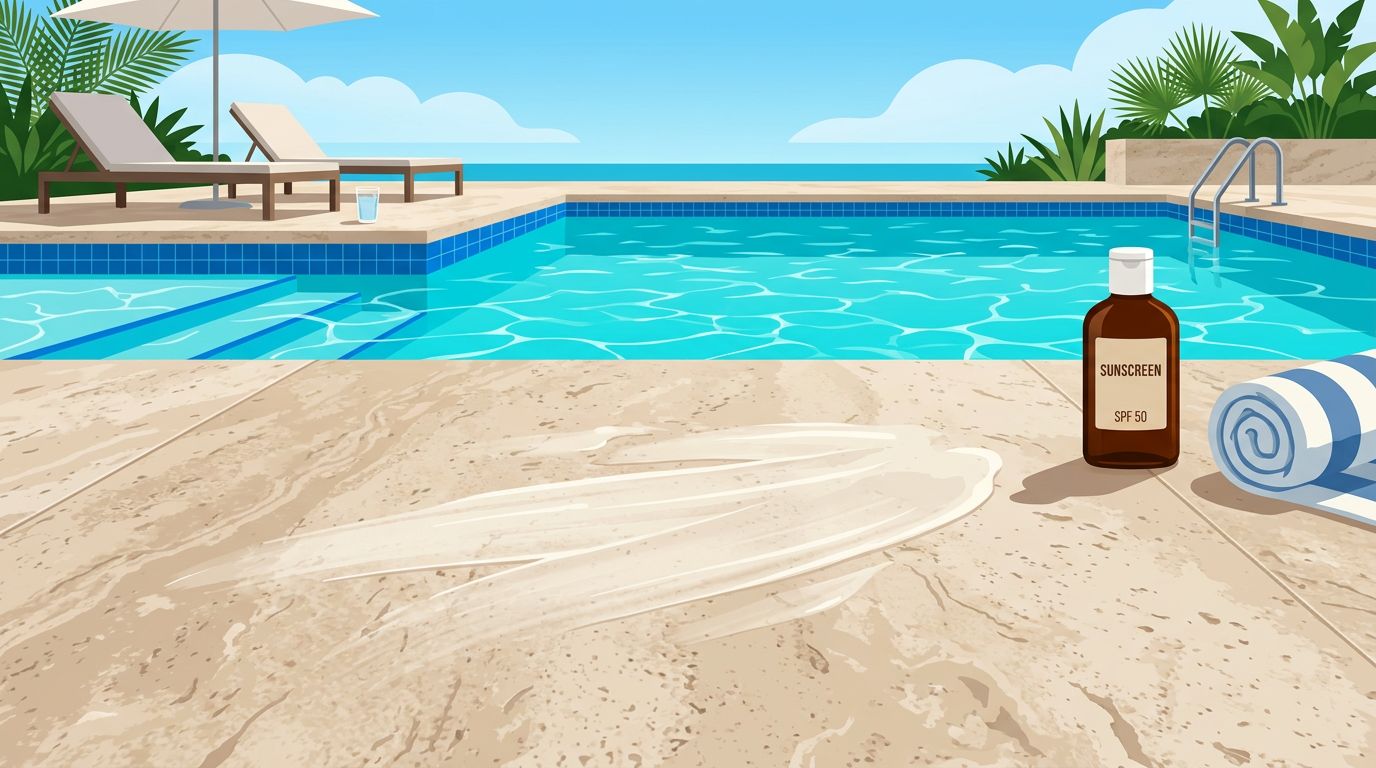
Sunscreen does not stay where you put it. On a travertine pool deck, it spreads, dries, and sinks into the stone until the surface starts to look cloudy, blotchy, or flat.
I see this all the time in Florida backyards. Many homeowners choose this beautiful natural stone for their backyard pool area, but the travertine pavers can be surprisingly delicate. A deck might look fine after a quick rinse, then the white film shows up again once the sun hits it and the stone warms up. The problem is not just dirt. It is a mix of oils, mineral residue, heat, and a stone that wants to drink up whatever lands on it.
Key Takeaways
- Porous Nature of Travertine: Because travertine is a natural stone with tiny, textured pits, it easily absorbs oils and minerals from sunscreen, leading to cloudy or chalky-looking blotches.
- Gradual Buildup: Stains rarely appear from a single spill; they accumulate as invisible layers of oils and residues that attract dirt and are subsequently baked into the stone by intense heat and sun exposure.
- Avoid Harsh Cleaning Methods: Traditional pressure washing or acidic cleaners can damage the soft surface of travertine; instead, use pH-neutral cleaners and soft agitation to safely lift stains.
- Importance of Sealing: While professional sealing is not a permanent shield, it provides a vital protective barrier that prevents deep absorption, making routine maintenance and future stain removal significantly easier.
Why sunscreen clings to a travertine pool deck
Travertine is beautiful, but it has a hungry side. Due to the porous nature of this natural stone, tiny openings can grab onto lotion, sweat, body oils, and the leftover ingredients in sunscreen. Once that happens, a quick spray from the hose usually moves water around more than it removes the stain.
The type of sunscreen matters too. Some formulas leave an oily film, while others leave a pale mineral cast. I often see both at the same time, which is why the mark looks uneven instead of neat and tidy. On a warm deck, that residue softens, spreads, and settles into the texture of the stone.
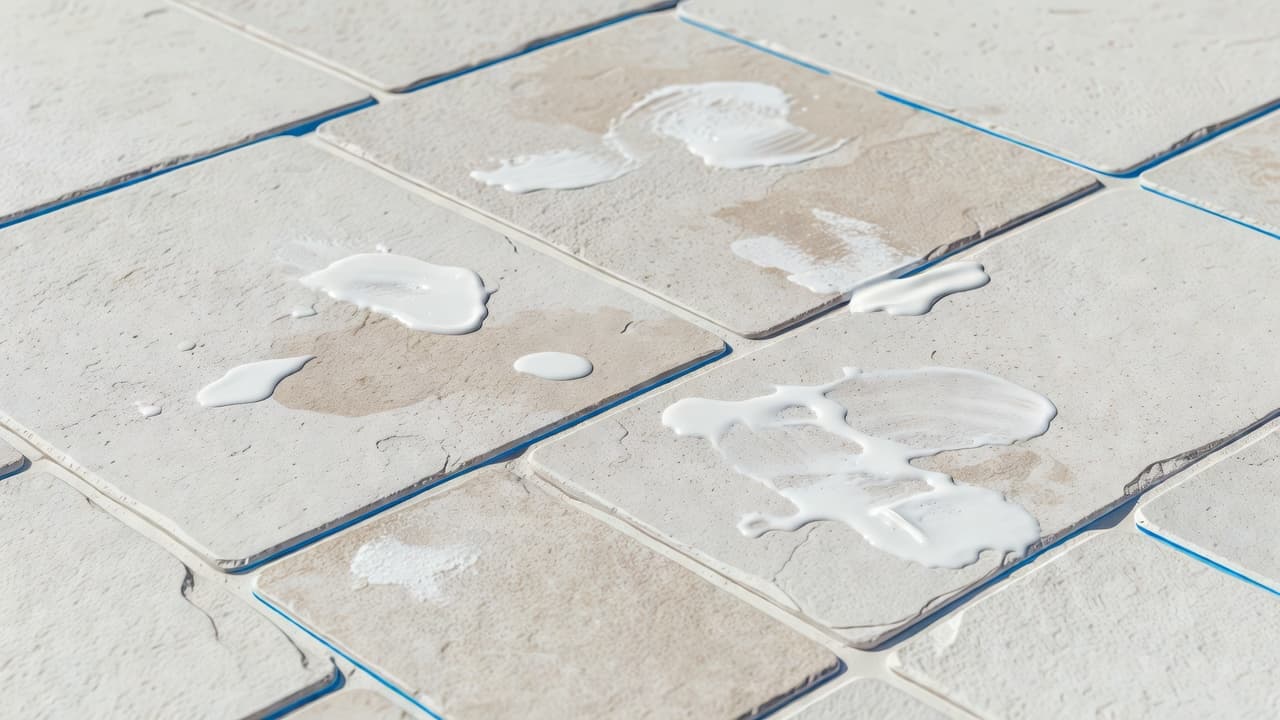
The first signs usually show up in the same places. I look near lounge chairs, entry steps, pool coping, and bullnose edges, which are common areas for buildup. Whether you have travertine pavers laid in a classic French pattern or a standard layout, bare feet, wet swimsuits, and towels all help spread the residue. By the time the deck looks dull in more than one spot, the buildup has already been happening for a while.
Travertine tile also has inherent texture, which is a major benefit for those seeking a non-slip, slip-resistant surface. However, those little pits and low spots catch more debris than a smooth slab would. That is why a deck can seem clean from ten feet away, then look spotty as soon as you stand over it. The stain is not always dark; sometimes it is a chalky haze that hides in plain sight.
Why the buildup gets worse after every swim day
The sneaky part is that sunscreen buildup rarely starts as one big mess. It begins as a thin, invisible layer. Then another application lands on top of it, and soon, dirt and pollen cling to the film like lint on tape. Unlike a traditional concrete pool deck, which can absorb heat, natural stone is prized for its heat reflectivity. While travertine is naturally heat resistant and remains cool underfoot, this unique texture means it can trap oils more easily than smoother surfaces. As foot traffic moves across the deck, that greasy film spreads from one spot to the next, causing the surface to look duller over time.
I often see this buildup concentrated around the pool coping and near the edge of the travertine tile where swimmers drip, sit, or move chairs. These high-traffic areas become magnets for residue. After a busy holiday weekend, what starts as a small amount of lotion from each guest quickly accumulates into one stubborn patch.
If your travertine pavers look perpetually dusty even after a heavy rinse, stop blaming the weather and look at the sunscreen first.
The Florida sun only accelerates the issue. Intense heat bakes the residue into the porous surface, especially when the deck is left damp after a swim. While pool water and chlorine do not create the stain on their own, they combine with foot traffic to help lock the oils into the stone.
Regular sealing travertine is a crucial step in your long-term maintenance plan. While sealing provides a necessary barrier, it does not make the stone completely stain-proof. Think of it like protecting a driveway; sealing offers a head start on stain prevention, but active cleaning is still required to maintain the stone’s long-term durability. Once you ignore that top layer of residue, the stone begins to show signs of every bad habit, making the cleanup process much more labor-intensive than it needs to be.
How I clean sunscreen marks without hurting the stone
I do not treat travertine like a concrete driveway. What works with pressure washing for harder surfaces can damage soft stone if the wrong tip or too much force gets used. I handle travertine pavers more like a soft wash job, or even a careful roof cleaning job, where the cleaner matters just as much as the water. To protect the aesthetic appeal you enjoyed at the time of your initial installation, it is vital to avoid harsh chemicals that can cause long-term discoloration.
First, I test a small spot. That tells me whether I am dealing with a fresh film, an older stain, or a mix of sunscreen and dirt that has settled into the pores. Then I use stone-safe, ph-neutral cleaners that can loosen the residue without stripping the surface. I let the solution sit long enough to work, but not so long that it dries on the stone.
After that, I use light agitation where needed. A soft brush helps lift the film from the pits and texture. Then I rinse with the right amount of pressure, not the kind that etches the stone or blasts grime deeper into it. That balance matters. Too little cleaning leaves the haze behind, but too much turns a simple stain into a permanent surface problem.
I would stay away from harsh acids, random degreasers, and the kind of heavy pressure that chews up the edges of the stone. Travertine can lose its clean look fast if it gets treated like a garage floor. I have seen homeowners scrub and rinse for hours, only to end up with a deck that looks chalkier than before.
If the stain is already baked in, I would rather see it handled the right way than attacked with guesswork. Get a Quote for sealing or pressure cleaning services if the deck needs a cleaner reset than a hose can give it.
Simple habits that slow the stains down
Effective stain prevention starts when I treat sunscreen like spilled coffee rather than background noise. The faster these oils are wiped or rinsed away, the less time they have to penetrate the natural pores of the stone.
These habits go a long way in protecting your investment:
- Rinse your travertine pool deck after a busy day, especially around lounge chairs and entry steps.
- Keep a soft brush and a pH-neutral cleaner nearby for quick touch-ups.
- Wipe up sunscreen drips from bottles, tables, and railings before the heat bakes them into the stone.
I always advise homeowners to be mindful of where products are applied in the backyard pool area. If the sunscreen station sits directly beside the water, that spot will naturally require extra care. Using a tray, an oversized towel, or a side table can keep lotion from landing on the stone, which helps maintain the slip-resistant surface you rely on for safety.
Sealing travertine is another essential step for long-term durability. A high-quality sealer creates a protective barrier that resists absorption and makes your routine cleaning much easier. Proactive maintenance is always a smarter choice than waiting until the deck looks dull. When you consider the cost of professional deep cleaning versus the price of simple, consistent care, it is clear that staying ahead of the buildup protects both the appearance and the longevity of your patio.
Think of it the same way you approach roof cleaning or exterior washing. You do not wait until the surface looks ruined before you care for it. You stay ahead of the grime. Your travertine rewards that kind of attention, and it shows in the finished look of your outdoor space.
Frequently Asked Questions
Why does my travertine look dull even after I rinse it with a hose?
A simple water rinse is often insufficient because sunscreen oils are hydrophobic and tend to settle into the tiny, porous openings of the stone. When the surface warms up in the sun, that residue softens and spreads, creating a hazy or dull film that remains stuck to the texture even after the water evaporates.
Can I use a pressure washer to remove these sunscreen stains?
You should avoid using a high-pressure setting, as it can easily etch the stone, damage the surface finish, and drive residues deeper into the porous material. Instead, treat your travertine like a delicate surface, using low pressure and pH-neutral cleaning solutions to gently lift the buildup without causing permanent damage.
Is it normal for sunscreen stains to appear only in certain spots?
Yes, buildup is typically most concentrated in high-traffic areas such as pool steps, entry points, and around lounge chairs where swimmers frequently sit or apply products. These areas receive the most exposure to body oils, dripping lotions, and wet swimsuits, allowing the residue to accumulate faster than in open, unused sections of the deck.
Will sealing my deck make it completely stain-proof?
Sealing provides a crucial protective barrier that resists absorption, but it does not make the stone entirely immune to stains. Think of it as a head start on maintenance; the sealer makes it much harder for oils to penetrate the pores, allowing you to clean spills more easily before they can become baked-in blemishes.
Conclusion
Sunscreen stains on your travertine pool deck are rarely the result of one dramatic spill. Instead, they build up in thin layers, gradually becoming baked into the natural stone by direct sunlight, pool water, and daily foot traffic.
The solution is steady care rather than brute force. Using gentle cleaning techniques, the right pH-neutral products, and a bit of routine maintenance will keep your surface looking bright instead of cloudy. That first chalky patch is usually the warning sign; once you notice it, you can be certain that the buildup has already started. By staying consistent, you can protect the aesthetic of your travertine pool deck for years to come.