
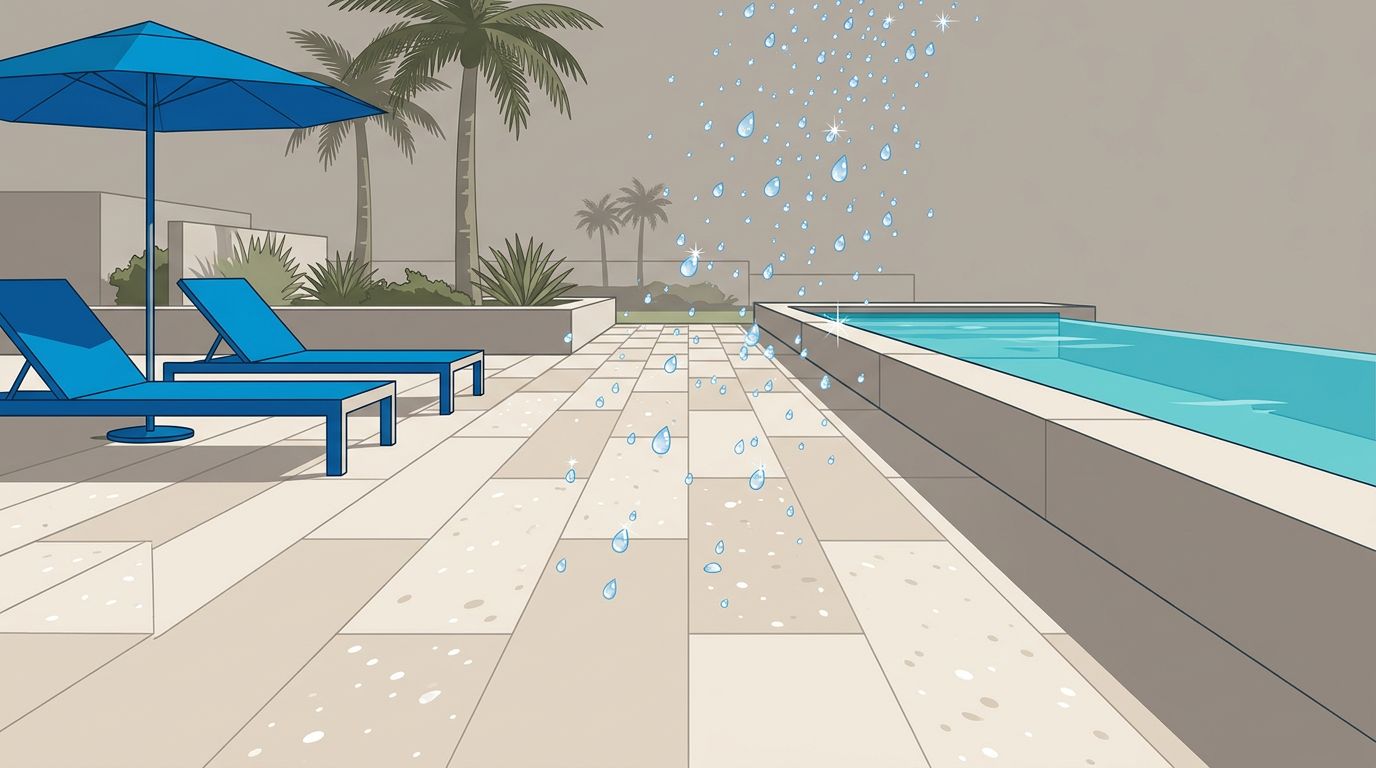
Travertine hard water spots can turn a beautiful natural stone surface into a chalky mess fast. One day the stone looks warm and clean, the next it has white blotches that catch your eye every time you walk outside.
I see this a lot on pool areas that get hit with sprinkler overspray, splash-out, and evaporation. Travertine is a great surface, but it doesn’t shrug off mineral buildup the way concrete sometimes can. If you want these travertine pavers to stay sharp, the fix has to fit the stone, not just the stain.
Key Takeaways
- Travertine is a naturally porous material, making it highly susceptible to mineral absorption and stubborn hard water stains when moisture evaporates.
- Avoid using high-pressure washing or acidic cleaners like vinegar and lemon, as these can permanently etch, thin, or damage the delicate surface of the stone.
- Effective maintenance relies on gentle, pH-neutral stone cleaners combined with soft-bristled agitation rather than aggressive force.
- Long-term protection requires addressing the root cause, such as adjusting sprinkler heads or improving deck drainage, followed by regular application of a quality stone sealer.
Why travertine gets hard water spots so easily
Travertine is a naturally porous surface, and that is the root of the problem. Water settles into these tiny openings, evaporates, and leaves minerals behind. Over time, those minerals accumulate into white rings, faded patches, and crusty calcium deposits that sit on top of the stone or work their way deep into the texture. While this article focuses on your outdoor pool deck, these unsightly water spots are a common frustration for homeowners elsewhere, as similar issues frequently occur on travertine floors and inside a travertine shower due to constant water exposure.
Pool decks suffer the most because they remain damp so often. A sprinkler that sprays the stone, a pool spill, or a constant foot path can keep feeding the same stain repeatedly. If your water has a high mineral content, these marks appear even faster.
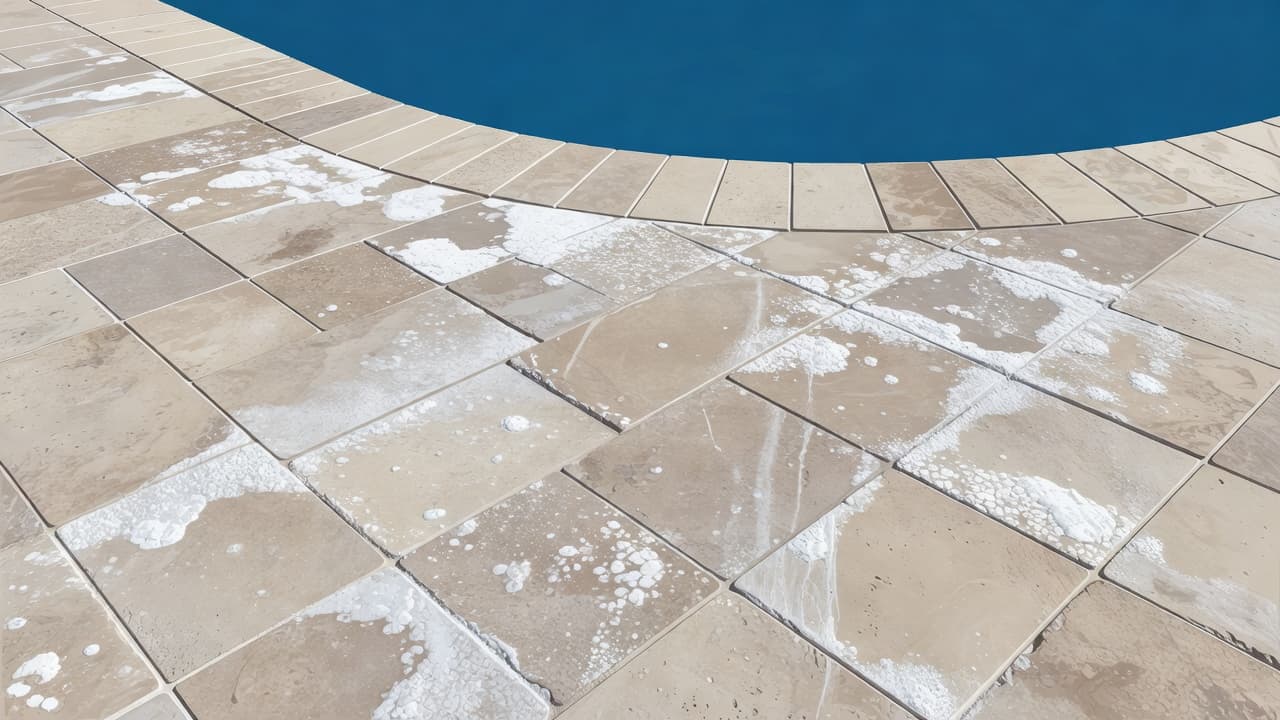
That is why I never treat these stains like simple dirt. Dirt rinses away easily, but mineral buildup requires a more specialized and careful approach.
Why pressure washing is not the first move
A lot of homeowners assume pressure washing is the answer to everything outdoors. Sometimes it is. On travertine, though, too much pressure can leave etch marks, open up the surface, or make the stone look patchy.
The problem is that hard water spots are often bonded to the stone. A stronger blast does not always remove them, and it can actually lead to significant surface damage by stripping the stone’s natural protective layer. That is why I think about the surface before I think about the machine.
Here is the simple version I use:
| Cleaning method | Best use | Watch out for |
|---|---|---|
| Soft wash | Light buildup, algae, routine cleaning | Needs the right mix and a good rinse |
| Pressure washing | Tougher surfaces like concrete or some pavers | Can etch travertine if the pressure is too high |
| Spot treatment | Mineral stains and isolated white marks; best with a pH-neutral stone cleaner | Must be stone-safe and used carefully |
The right method depends on what I am looking at. If the stain is mineral-based, I want control. If the surface is delicate, I want less force, not more.
If the stone looks white but feels rough, I do not assume it is only residue. Sometimes the spot has already started to damage the surface.
The safer way I handle mineral buildup
When I am dealing with travertine hard water spots, I start small. I clear loose debris first, then test a hidden spot before I touch the whole deck. That one move can save a lot of regret.
For light buildup, a soft wash approach makes sense because it cleans without beating up the stone. I typically use a soft-bristled brush to gently agitate the surface, ensuring I do not scratch the delicate finish. Afterward, I use a clean microfiber cloth to wipe away any residue or moisture, which helps prevent streaks from forming as the area dries. For stubborn mineral crust, I use a cleaner specifically formulated for natural stone, then rinse thoroughly. No rushing. No guessing. No blasting the deck because it looks quicker.
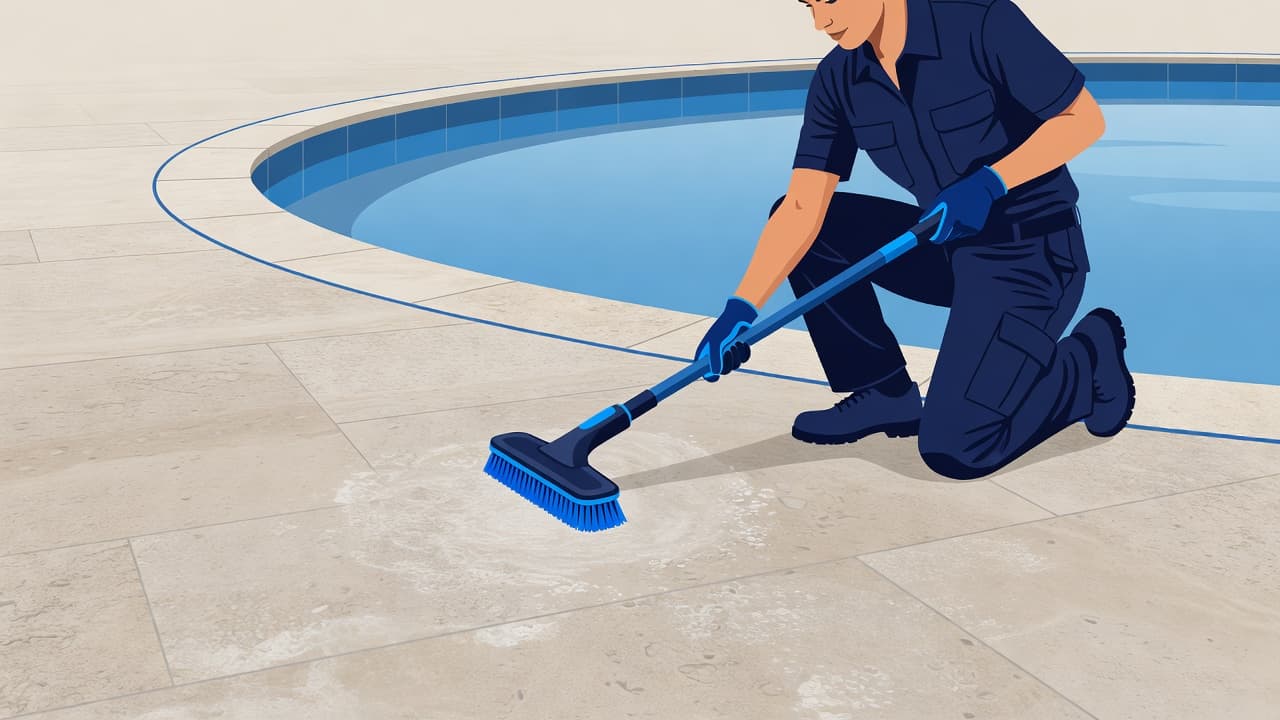
If the stain has been there for a while, I expect to work in stages. That is normal. Stone does not always give up its stains in one pass, and trying to force it usually creates a bigger problem than the spot itself. While mineral crusts are the primary focus here, different types of blemishes may require specific techniques. For instance, rust stains or organic soap scum might respond better to a baking soda poultice or a mixture involving hydrogen peroxide.
I also avoid anything that feels like a shortcut. Many people make the mistake of using acidic cleaners, such as common household vinegar and lemon juice, but these can etch and permanently damage the surface of natural stone. The goal is for the deck to look cleaner when I am done, rather than thinner, duller, or rougher.
How I keep the deck from spotting again
Cleaning is only half the job. If the water source keeps hitting the stone, the stains come back like clockwork. That means I look at the cause, not just the mark.
The easiest place to start is water movement. Sprinkler heads should not spray across the deck. Pool splash-out should drain away, not sit in a puddle. If the deck stays damp in the same places every afternoon, the spots will keep showing up there first.
After cleaning, sealing matters too. I think about it the same way I think about driveway sealing, as you need to clean the surface well, apply a quality stone sealer, and keep up with maintenance before the next round of weather and water hits. Because travertine is a porous surface, it naturally absorbs minerals; therefore, you should regularly reseal travertine to help slow down absorption and make future cleanups easier. This process is a vital part of routine maintenance that prevents moisture stains from settling deep into the stone.
The same logic applies across the rest of the exterior. I use roof cleaning to control growth before it stains, and I use pressure washing on the right surfaces when the material can take it. The trick is matching the method to the job instead of forcing one tool to do everything.
If your pool deck sits in full sun, that matters too. Heat can dry mineral water into visible residue faster, which means you can get fresh spots even when the deck looked clean earlier in the day. That is why regular care beats big rescue jobs every time.
When it makes sense to bring in a pro
Some stains are simple. Some are not. If the white marks have hardened, spread across multiple tiles, or left the stone looking etched, I would rather have a trained crew handle it than gamble with the finish. Professionals can help you distinguish between simple mineral deposits that sit on the surface and deep etching that has physically altered the travertine.
That is especially true when the deck has other nearby surfaces that need different treatment. A pool area often sits next to pavers, screens, patio walls, and sometimes the roofline. One wrong method can create a second repair job before the first one is finished. Experts typically achieve the best results by using a professional-grade pH-neutral stone cleaner paired with specialized equipment designed to protect the integrity of the natural stone.
If you are dealing with stubborn buildup and want the deck cleaned without beating up the stone, you can Get a Quote and talk through sealing or pressure cleaning options. A short conversation up front can save the travertine from a long, ugly repair later.
Frequently Asked Questions
Can I use vinegar to remove hard water spots from my travertine?
No, you should never use vinegar or any acidic cleaner on natural stone. Acids will chemically etch the surface, causing permanent dulling and damage that is difficult to repair.
Why does my pool deck keep getting white spots even after I clean it?
White spots usually return because the source of the water—such as sprinkler overspray or pool splash-out—has not been redirected. If the stone remains constantly damp, the minerals in your water will continue to accumulate regardless of how well you clean the surface.
How often should I seal my travertine pool deck?
While frequency depends on your local climate and deck usage, you should reseal your travertine regularly to maintain a protective barrier. This process fills the stone’s natural pores, which slows down mineral absorption and makes routine cleaning much easier.
Is it safe to pressure wash travertine to get rid of crusty deposits?
Pressure washing is generally too harsh for natural travertine and can easily cause surface etching or pitting. It is much safer to use a dedicated stone-safe cleaner and a soft-bristled brush to gently agitate the buildup without damaging the material.
Conclusion
Managing travertine hard water spots does not happen by accident, and these stubborn stains certainly do not disappear with the same harsh treatments you might use on concrete. I have found that the best results come from a slower, smarter approach, one that respects the delicate composition of the material first.
If your pool deck is already chalky or blotchy, start by addressing the root cause before you choose a cleaning method. That is the most effective way to protect your natural stone, keep the deck looking pristine, and stay ahead of the next round of mineral buildup. By committing to these gentle, preventative steps, you ensure that your investment remains a beautiful focal point of your outdoor space for years to come.