
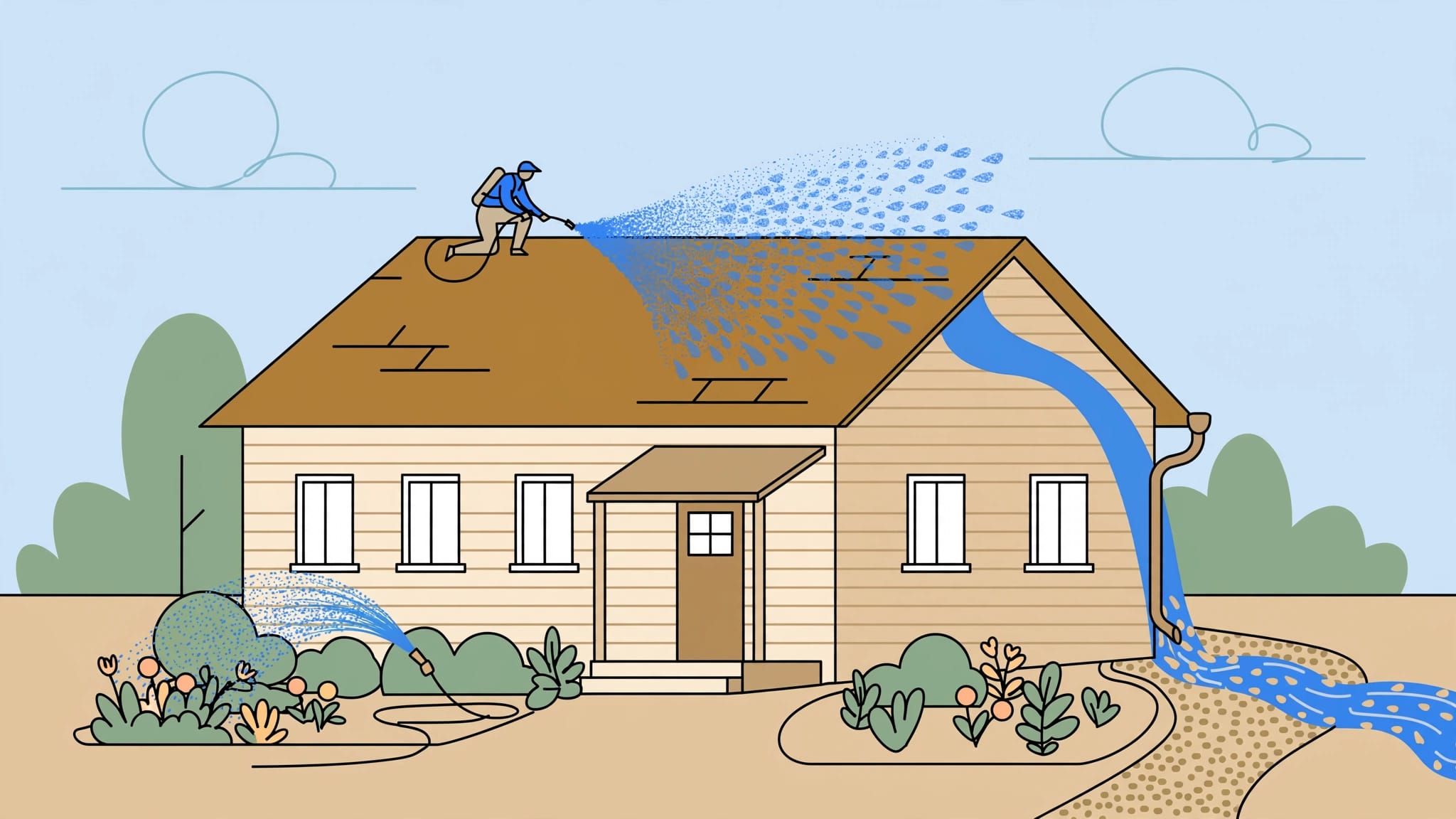
To protect landscaping during roof soft washing, water plants before treatment, control overspray, manage runoff, and rinse exposed foliage throughout the job. Low pressure helps protect roofing materials, but the cleaning solution still requires careful handling around your yard.
I recommend treating plant protection as part of the cleaning process, not something handled after spraying starts. Your shrubs, lawn, flower beds, and nearby pool areas all need attention.
Start with the cleaning method, then follow the water path around your property.
Key Takeaways for Protecting Your Yard
- Water foliage and the root zone before cleaning, without leaving beds flooded.
- Move potted plants, outdoor furniture, pet bowls, and garden decorations away from the work area.
- Use temporary covers carefully, since trapped heat can damage plants in Florida sunshine.
- Control downspout discharge and rinse exposed landscaping during and after treatment.
I also recommend pointing out delicate plants, edible gardens, ponds, and existing drainage problems before work begins. These details affect how the property should be protected.
Why Soft Washing Can Affect Landscaping
Low pressure still requires chemical protection
Soft washing uses cleaning chemistry rather than force to remove organic buildup. Many dedicated systems use a 12-volt agricultural-style pump and apply solution at about 50 psi, roughly comparable to garden-hose pressure. Equipment and operating pressure vary.
Sodium hypochlorite, the active ingredient in bleach, is commonly used with compatible detergents. The treatment kills susceptible algae, mold, mildew, and other growth, while detergents help loosen dirt and grime.
That same chemistry can injure leaves and roots. SoftWash Technologies explains that plant damage depends on exposure, including how much solution reaches foliage and soil. A biodegradable ingredient doesn’t make a fresh cleaning mixture harmless to plants.
Roof stains need the right treatment
Black streaks often indicate algae. Green patches and fuzzy clumps may involve moss, mildew, lichen, or other growth. They don’t all mean the same thing.
Algae staining is often mainly cosmetic. Moss can hold moisture and interfere with shingle edges. Aggressive scraping or blasting can create additional damage.
I recommend matching the treatment to the roof material, shingle type, and condition. A low-pressure application isn’t the same as using a pressure washer or pressure washing. Roof cleaning should remove buildup without unnecessary force or uncontrolled chemical exposure below.
Prepare the Landscaping Before Cleaning Starts
Inspect the drainage and surrounding beds
I start with where the water will go. Roof valleys, gutter outlets, slopes, and low spots can concentrate runoff in a small area.
Clogged gutters can overflow onto flower beds, fascia, and areas beside the foundation. Addressing blockages before roof treatment helps keep discharge predictable. Our gutter and soffit cleaning supports proper drainage around the roofline. If gutter brightening is also planned, ask the crew to keep its rinse water away from planting beds.
Point out plants directly below roof edges and downspouts. Identify installed systems, such as Bulldog Gutter Guards, for the crew. Include hanging baskets, newly planted shrubs, vegetable gardens, and anything already stressed by heat or drought.
Ponds and rain barrels need their own protection plan. Roof-treatment runoff should never enter a fish pond or be collected for later garden watering.
Water plants and clear the work area
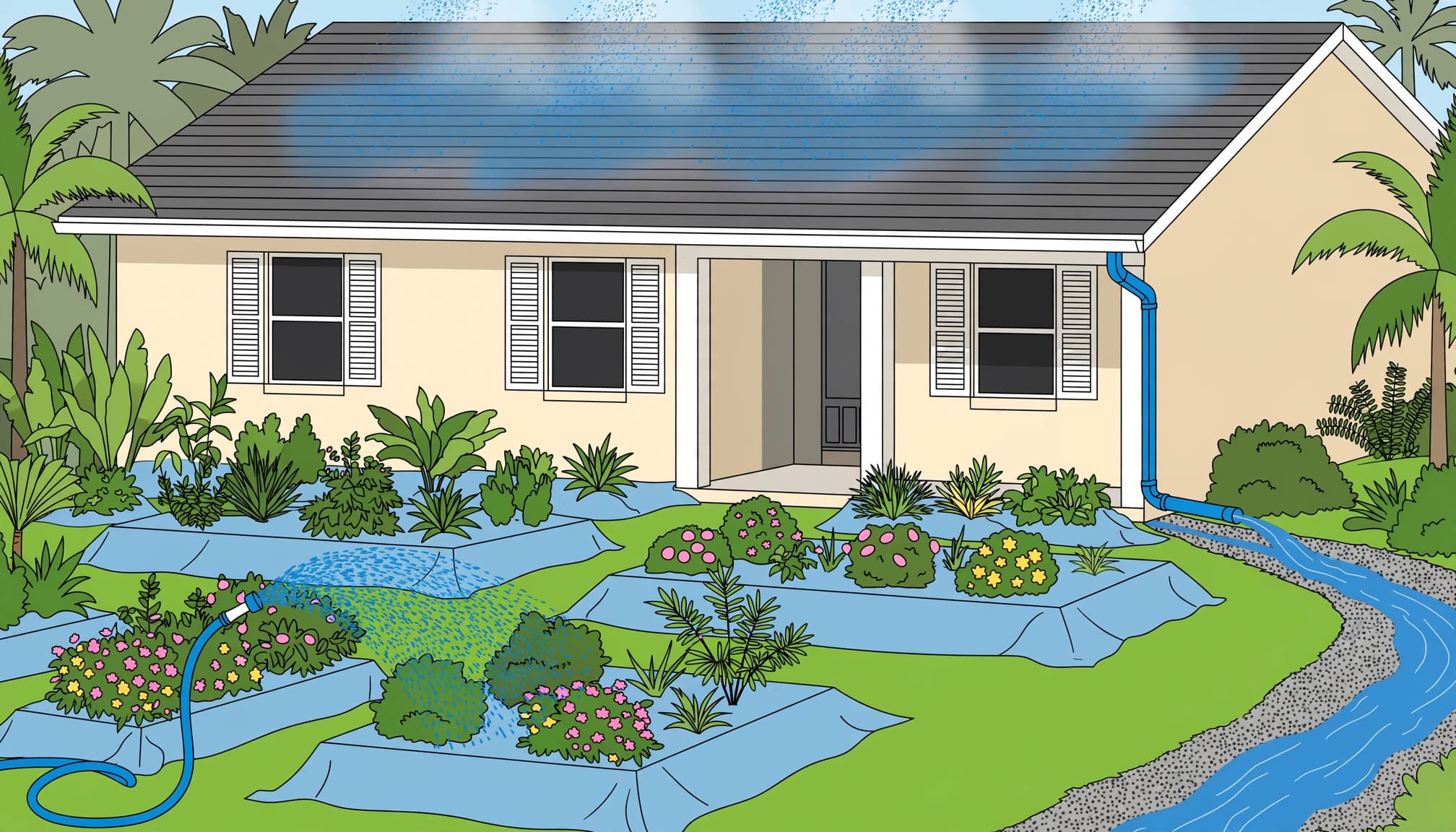
Pre-wet leaves and irrigate the root zone with clean water. The goal is evenly moist soil, not standing water or runoff spilling across the property.
Pre-watering reduces exposure to concentrated solution, but it doesn’t prevent every type of injury. The University of Minnesota Extension warns that bleach can harm plants and soil organisms.
Move portable plants beyond the spray and runoff area. If house washing is scheduled too, include wall-side beds in the runoff and rinsing plan. Close windows, relocate outdoor furniture, and remove pet bowls and children’s toys.
Coordinate eave access and runoff planning with the crew if holiday light installation is scheduled. Keep a clean-water hose ready before chemical application begins.
Use Temporary Covers and Control Runoff
Keep plant covers brief and supervised
A temporary waterproof barrier can help shield delicate plants from direct overspray. However, leaving plastic over landscaping in hot weather creates another problem.
Heat can build beneath the cover and stress foliage. I recommend covering only the plants that need shielding, keeping the covering off delicate branches where practical, and removing it promptly when that section is finished.
Don’t leave contaminated covers dripping onto plants during removal. Handle them carefully and contain their rinse water appropriately.
Covers support the protection plan. They don’t replace watering, controlled application, or rinsing.
Manage water at each downspout
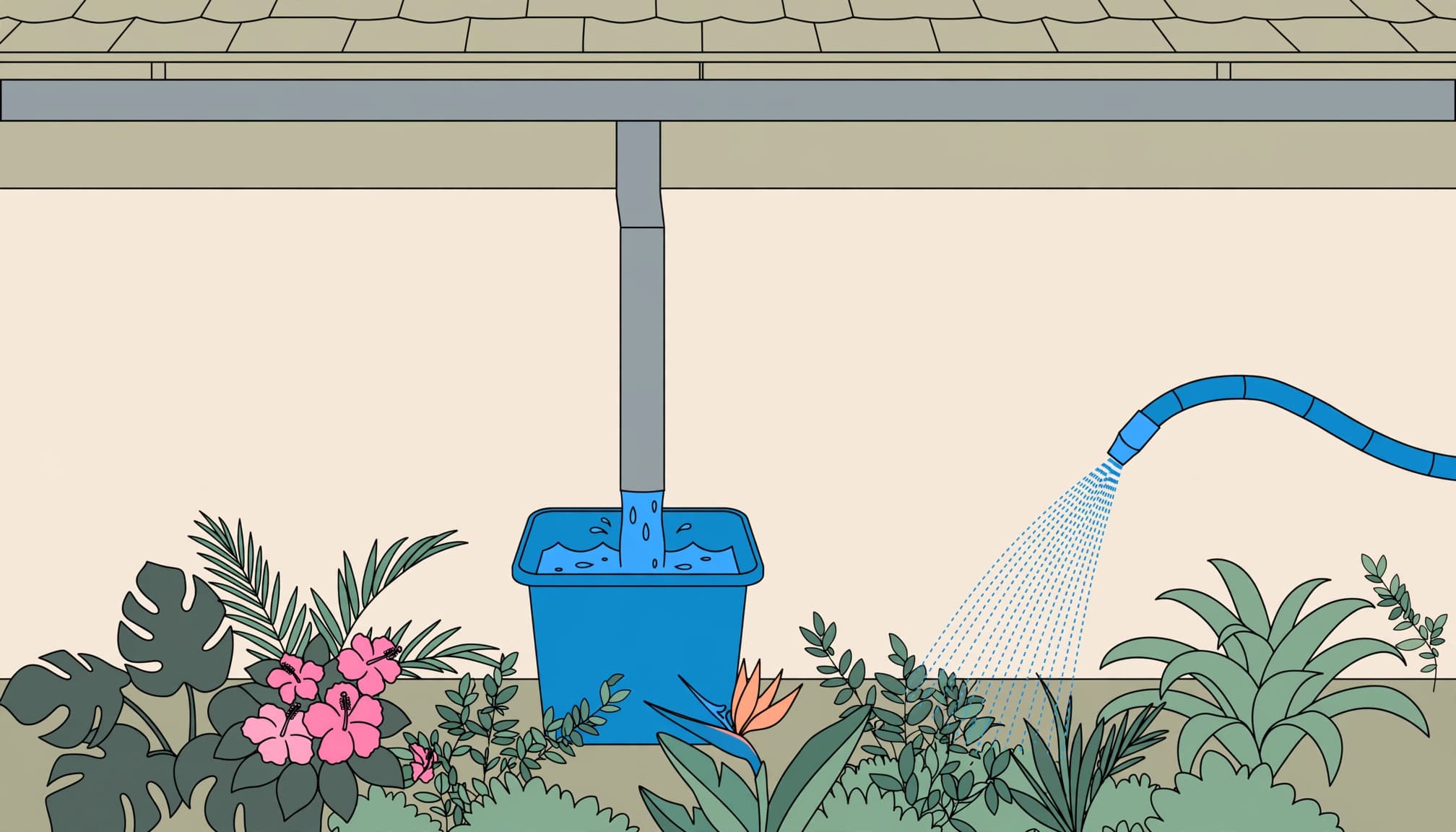
Downspouts can deliver a concentrated dose of roof-treatment runoff directly into a planting bed. Temporary collection or controlled diversion may be necessary.
Collection containers need enough capacity and active monitoring. Redirecting runoff into another flower bed, a neighboring yard, or a street drain simply moves the problem.
I recommend keeping discharge away from edible gardens, ponds, pools, and sensitive root zones. Roof areas without gutters need attention along the entire drip line.
Diluting runoff near plants doesn’t replace containing concentrated discharge before it reaches them.
Protect Plants Throughout Chemical Application
Plant protection continues while the roof is being treated. A quick watering beforehand isn’t enough if foliage receives repeated overspray.
I recommend having someone monitor ground-level conditions while solution is applied above. If the crew identifies its system as Superior SoftWash, ask which product it’s applying. Then ask how the product label guides plant rinsing and runoff handling.
That person can rinse affected plants, watch collection containers, and identify overflow before it spreads.
Wind matters, too. Spray that drifts beyond the intended area can reach neighboring landscaping, outdoor seating, or pool equipment. Application should pause when conditions prevent controlled coverage.
The cleaning solution needs the product’s required contact time. There isn’t one reliable dilution or dwell time for every roof. Roof material, growth, product strength, and manufacturer directions affect the treatment.
During that period, exposed plants should receive clean-water rinsing as needed. Avoid blasting flowers or forcing water into saturated beds.
Bleach must never be mixed with acids, ammonia, or unrelated cleaning products. I also advise against homemade plant-neutralizing mixtures. Any chemical aid should be compatible with the treatment and used according to its label.
A controlled application reduces unnecessary chemical use and makes the surrounding property easier to protect.
Rinse the Property and Watch for Plant Stress
Once treatment is complete, rinse exposed foliage with clean water. Include leaves beneath the outer canopy, where droplets may collect unnoticed.
Nearby walls, windows, screens, gutters, and exposed metal also deserve attention. Pool equipment and pool-adjacent surfaces need protection when roof runoff travels toward the enclosure.
Remove temporary covers and collection equipment carefully. Restore normal downspout drainage only after concentrated treatment discharge has been managed.
If a plant receives an accidental splash, stop the exposure and rinse the foliage promptly. Don’t immediately add fertilizer, vinegar, or another chemical treatment.
Bleach can also injure people. North Dakota State University’s chlorine bleach safety guidance describes its corrosive effects and eye hazards.
Over the following days, look for leaf spotting, browned edges, yellowing, or unusual wilting. These symptoms can have several causes, so photographs help document changes.
I recommend keeping soil appropriately moist without flooding it. Severe damage or symptoms that continue to spread deserve an assessment from a qualified landscape professional.
Choose a Roof Cleaner With a Protection Plan
A professional service should explain how plants, downspouts, pools, and neighboring surfaces will be protected. Ask the contractor to explain the Superior SoftWash treatment and plant-protection plan.
Tell the crew which guard system is installed, including Bulldog Gutter Guards, so they can plan downspout access. Ask whether house washing or gutter brightening is included, and how rinse water will be kept away from beds along the walls.
I recommend a roof inspection before treatment, particularly around worn materials, flashing, vents, and existing repairs. Those areas shouldn’t receive a forceful spray. Coordinate holiday light installation with the work schedule and eave access.
For asphalt shingles, the Asphalt Roofing Manufacturers Association’s roof-cleaning guidance warns against pressure washers because they can remove granules and cause premature failure.
A useful quote for a professional clean should describe the cleaning scope, preparation, runoff handling, and final cleanup. Clarify whether pressure washing or power washing is separate from roof treatment, and how crews will keep spray and runoff away from landscaping.
Deck soft washing and patio soft washing may be included as adjacent work. Ask crews to protect nearby planters and direct rinse water away from beds. If driveway soft washing is included, ask how runoff will be controlled along planting strips.
Roof size, access, growth, and landscaping complexity affect the work involved. At Kingsway Paver Sealing, our residential exterior cleaning services address the surrounding property as well as the surface being cleaned.
I recommend completing roof work and cleanup, and correcting drainage, before driveway sealing or deck staining. That order reduces the chance of dirty roof runoff crossing a newly finished surface.
Frequently Asked Questions
Can soft washing kill plants?
Yes. Direct exposure to concentrated cleaner or repeated chemical runoff can seriously injure plants. The risk depends on the product, concentration, exposure, and plant condition.
Pre-wetting, shielding, controlled application, and rinsing reduce that risk. No cleaning solution should be treated as automatically safe for every plant.
When can pets return to the yard?
Keep pets away during application and cleanup. They shouldn’t walk through runoff, drink collected water, or lick treated surfaces.
Return timing depends on the product’s label and completed cleanup. Dry-looking pavement alone doesn’t establish that the area is ready. Food bowls, water bowls, bedding, and toys should remain outside the work area.
How long will a soft-washed roof stay clean?
Results depend on shade, moisture, nearby trees, roof material, and the amount of growth present. A shaded roof that stays damp can develop staining again sooner.
I don’t recommend relying on a universal lifespan or water-savings claim. Careful treatment, clear gutters, and sensible vegetation maintenance matter more than a fixed promise.
Protect the Yard Along With the Roof
A clean roof should come with careful property protection. Pre-watering, controlled application, managed runoff, and thorough rinsing all help protect the landscaping you’ve invested in.
I recommend settling the protection plan before treatment begins. Complete roof treatment and runoff cleanup before driveway soft washing, power washing, or deck staining. This keeps concentrated discharge away from freshly cleaned or finished areas.
For roof cleaning and exterior care in Southwest Florida, Get a Quote to discuss your property and the work it needs.