
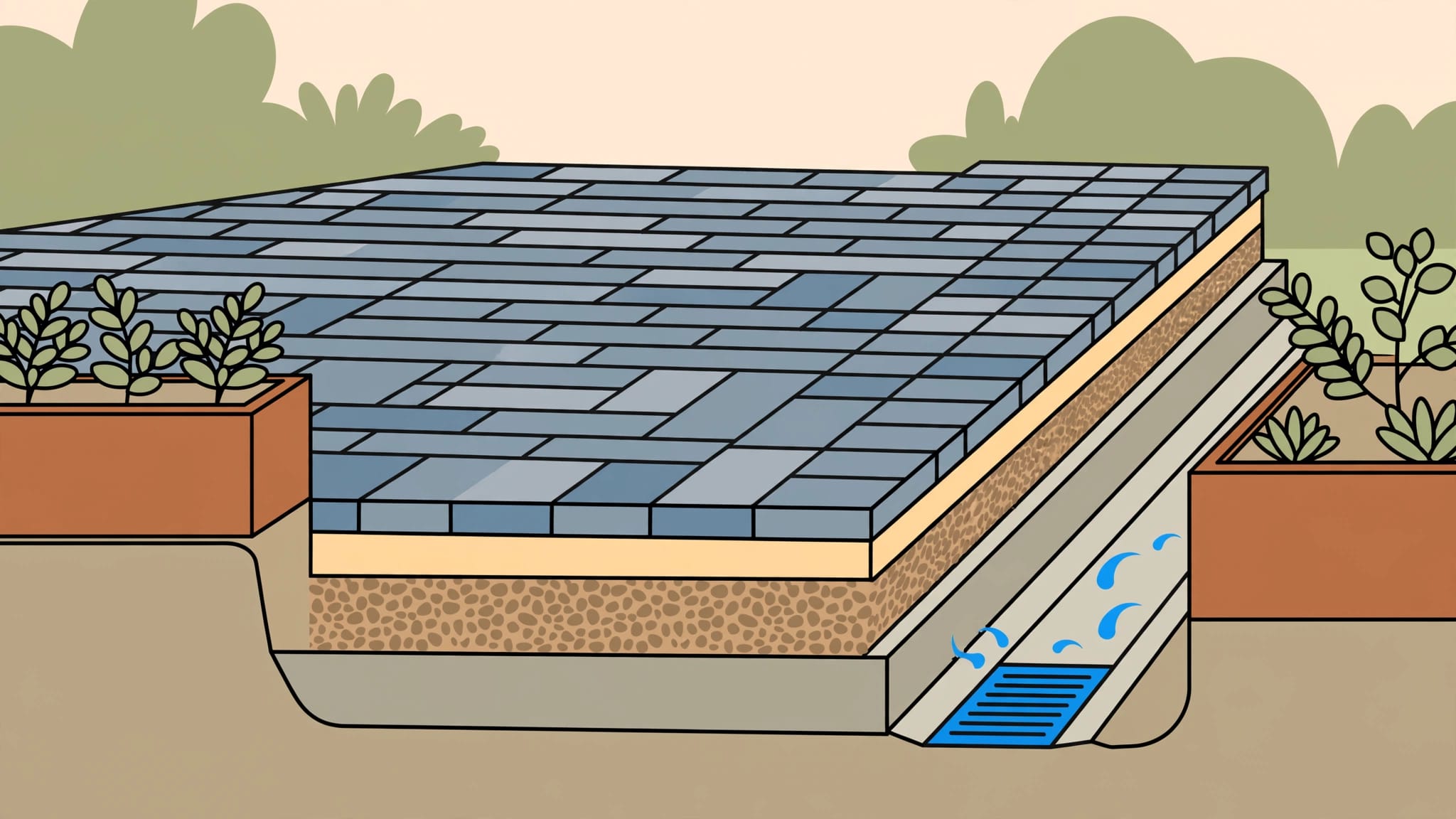
Yes, you can install pavers over concrete when the existing patio is structurally sound, drains properly, and has enough clearance. A concrete overlay can refresh the patio’s curb appeal without demolition, but it won’t repair a failing slab.
I recommend checking support, drainage, and finished height before choosing pavers. Those conditions determine whether keeping the concrete is a practical improvement or an expensive shortcut.
When Pavers Over Concrete Make Sense
A stained or dated concrete patio may be suitable for an overlay. Movement and poor drainage need more attention.
Check the Slab for Movement
Stable hairline cracks don’t automatically rule out an overlay. Large cracks, heaving, settlement, or sections that rock indicate the slab needs rebuilding instead.
Start with a clean surface so damage is visible. Look across cracks for height differences and watch for changes after rain. Widening cracks or displaced sections deserve professional assessment. Filling a moving crack won’t restore the support underneath.
Follow the Water Before Covering It
The slab must slope away from the house. Use a straightedge and level, then observe where water collects.
Unilock’s concrete-overlay guidance addresses drainage, bedding, borders, and joints. Low spots that trap water beneath pavers need drain holes or weep holes with a functioning discharge path.
Clear blocked drains and redirect concentrated downspout runoff first. In freezing climates, trapped moisture can expand during freeze and thaw cycles, shifting the installation and making drainage and joint maintenance especially important.
Choose concrete removal or another patio approach if movement, persistent ponding, or clearance problems can’t be corrected.
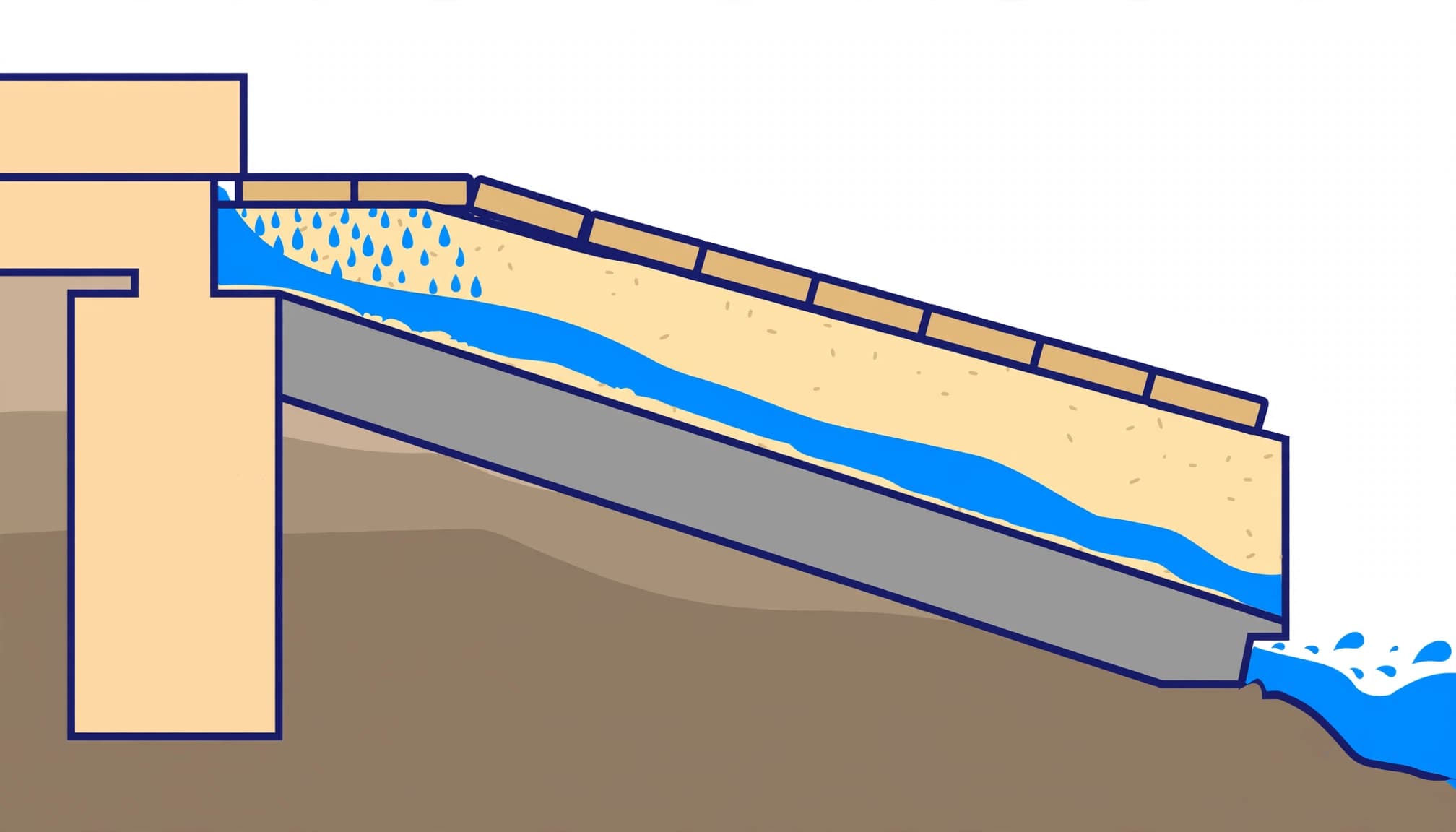
Added Height Can Change the Plan
Every overlay raises the patio. Calculate the finished elevation and check clearance at door thresholds, sliding-door tracks, stair risers, pool deck coping, and an adjoining walkway.
Options include 20 mm porcelain pavers, 30 mm low-profile pavers, 50 mm slab pavers, and 60 mm plank pavers. These aren’t interchangeable installation systems.
For example, a 30 mm paver over a 1/4-inch bedding layer adds approximately 1.4 inches. A thicker setting bed raises it further.
Thin pavers help preserve clearance, but they don’t eliminate the need to assess how the finished elevation affects drainage openings and step height.
Compare Paver Overlay Bedding Methods
The setting method determines how the pavers are supported and secured. Belgard’s paver-base guidance describes sand and dry-mudset options over concrete.
These methods have different requirements.
| Method | Setting layer and application |
|---|---|
| Sand set | A specified sand bed, commonly 1 inch in this method, supports the pavers over concrete. |
| Bituminous set | Sand mixed with bituminous binder adheres pavers to concrete for pedestrian or vehicular applications. |
| Mortar set | A 3/4-inch latex-modified mortar bed typically supports non-vehicular areas, with pointing mortar and a suitable sealer afterward. |
| Dry mudset | Techniseal DRIBOND spreads like sand, then hardens when water is sprayed over the pavers to bond them to concrete. |
Bedding depths aren’t universal. Unilock describes a thin layer of “leveling sand”, about 1/4 inch or less, for its approach. Don’t combine one system’s bedding depth with another system’s installation details.
How to Install Pavers Over Concrete
Once the slab, drainage, and clearance are suitable, installation follows a clear order.
- Prepare the concrete. Remove grime, algae, debris, and incompatible residue. Controlled pressure washing can expose the condition without unnecessary surface damage.
- Complete repairs and drainage work. Address stable surface defects, preserve required movement joints, and provide water outlets before covering the slab.
- Install the specified bedding. Screed the setting layer consistently while maintaining the drainage slope. Bedding isn’t structural fill for deep depressions.
- Lay pavers and secure borders. Install a compatible edge restraint around the perimeter. Border pavers or soldier courses are commonly glued or mortared to concrete. Loctite PL500 landscape adhesive is one option for compatible applications. Keep drainage outlets open.
- Finish the joints. For compatible sand-set systems, sweep in polymeric sand, seat the pavers as specified, and remove surface residue. Activate with controlled water according to the product instructions.
Polymeric sand helps resist joint erosion and weed growth. Mortared systems use their specified joint treatment instead.
Protect the Surface After Installation
I recommend completing repairs before surface protection. Sealer won’t correct a bad slope, fill a void, or secure an unstable border.
Plan nearby roof cleaning or soft wash work before sealing so rinse water doesn’t reach the fresh finish. Patio and driveway sealing should follow proper cleaning, joint preparation, and drying.
Our guidance on when to seal new pavers covers that preparation. With a sand-set overlay, damaged individual units can often be replaced without removing the entire patio.
Key Takeaways
Pavers over concrete can avoid demolition, debris disposal, and excavation. The existing slab still needs dependable support, outward drainage, and sufficient clearance.
Choose one compatible installation system. Keep its bedding, border, joint, and water-management requirements together.
Frequently Asked Questions
Can Pavers Sit Directly on Concrete Without Sand?
Some bonded systems use mortar or dry mudset instead of sand. Simply placing loose pavers directly on an uneven slab can leave unsupported areas. I recommend a defined overlay system rather than skipping the setting layer.
Is an Overlay the Cheapest Way to Cover Concrete?
An overlay can eliminate removal and disposal work, but drainage changes, border work, and clearance problems add expense. Compare complete project scopes. If the slab needs rebuilding, covering it can leave you paying for another repair later.
Build on a Stable Patio
A sound slab can provide a practical foundation for pavers over concrete. I recommend resolving water and movement problems before investing in a new surface.
Once your patio is stable and ready for cleaning or sealing, Get a Quote. Protecting a properly prepared patio starts with getting the conditions underneath right.