
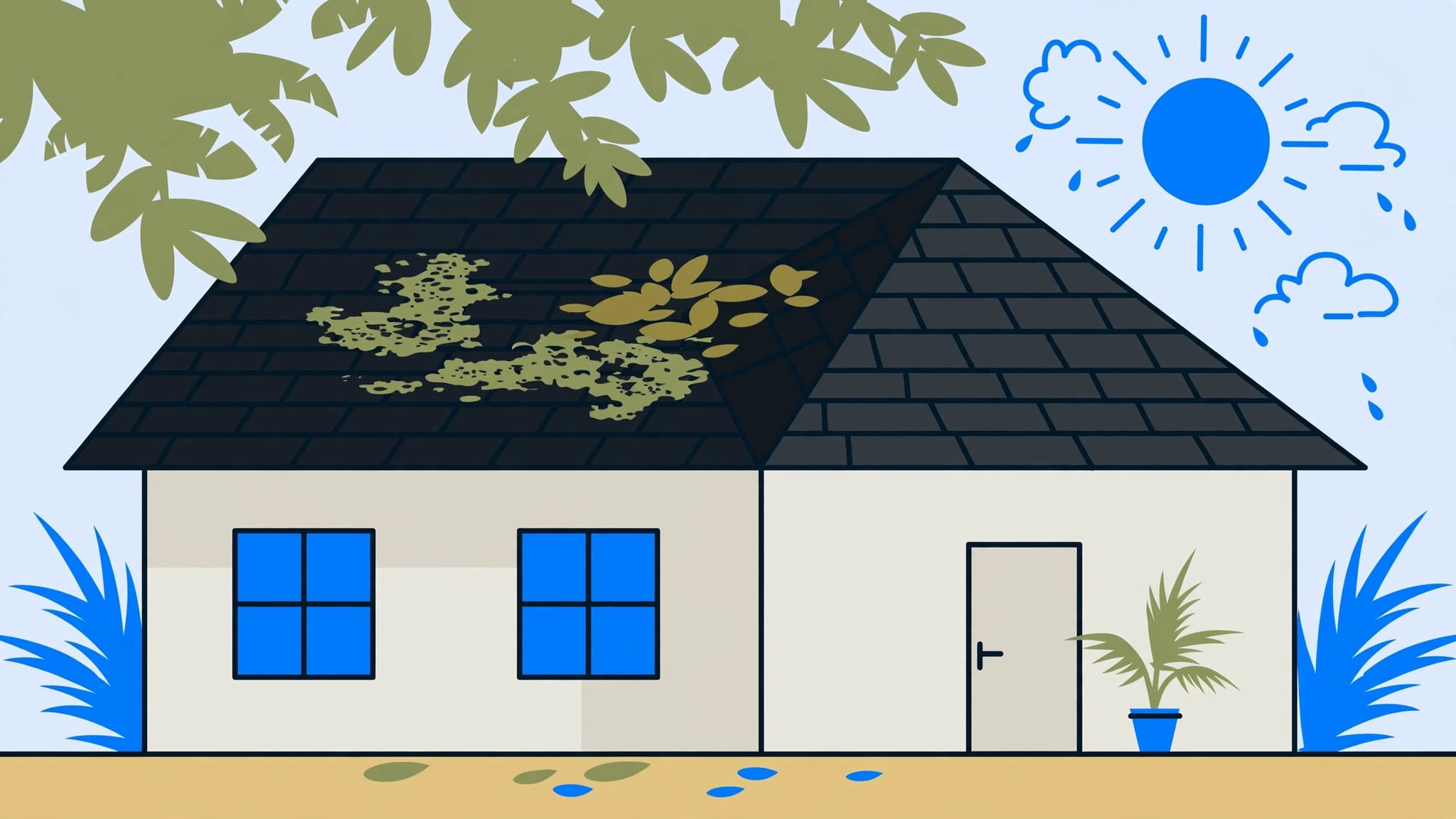
Roof algae returns after soft washing because treatment removes existing growth without removing Southwest Florida’s humidity, shade, or repeated moisture exposure. New growth can establish later, especially where shingles stay damp and leaves collect.
I recommend treating recurring stains as a maintenance issue, while also checking whether the previous treatment reached all affected areas. The first step is understanding what returned, where it’s growing, and how long the roof stays wet.
Key Takeaways
- A soft wash removes existing algae, but it doesn’t provide permanent protection against new growth.
- Shade, trapped debris, poor drainage, and unprotected shingles can encourage repeat staining.
- Asphalt shingles need compatible roof-treatment solutions and gentle rinsing, not high-pressure washing.
- Roof maintenance helps preserve the clean appearance after treatment.
Why Roof Algae Returns After Cleaning
A clean roof still faces the subtropical conditions that encouraged algae in the first place. Southwest Florida’s humidity, frequent rain, and shade slow drying. Persistent dampness gives algae a chance to return, so thorough treatment and ongoing maintenance work together.
Humidity and shade keep shingles damp
Rain, humid air, and shaded roof sections slow drying. Overhanging tree branches block sunlight and drop leaves into valleys, where leaf litter holds moisture against the surface.
North facing roof slopes often stay damp longer than sunnier sections. Areas beneath dense trees can remain favorable for growth even when the rest of the roof dries.
I recommend paying attention to where staining returns. Repeated growth beneath the same branches or beside a valley filled with fallen leaves points toward a moisture problem that washing alone won’t correct.
New growth and incomplete treatment are different problems
Algae growth can return after a successful treatment. However, growth that wasn’t fully treated can remain where coverage was uneven or contact time was insufficient.
Persistent discoloration doesn’t automatically prove either problem. Attached material may release gradually, and worn roofing can remain uneven in color after treatment.
Dark algae staining starts as small spots that develop into streaks. By the time you notice it, growth may already have been present for months. Unprotected shingles in damp coastal climates can develop streaking in as little as three years. Persistent dampness raises the chance of regrowth, but there is no fixed post-treatment schedule.
Identify Algae, Moss, and Lichen Before Treatment
Different growth calls for different handling. I recommend identifying the buildup before choosing a cleaner or deciding that another application is needed.
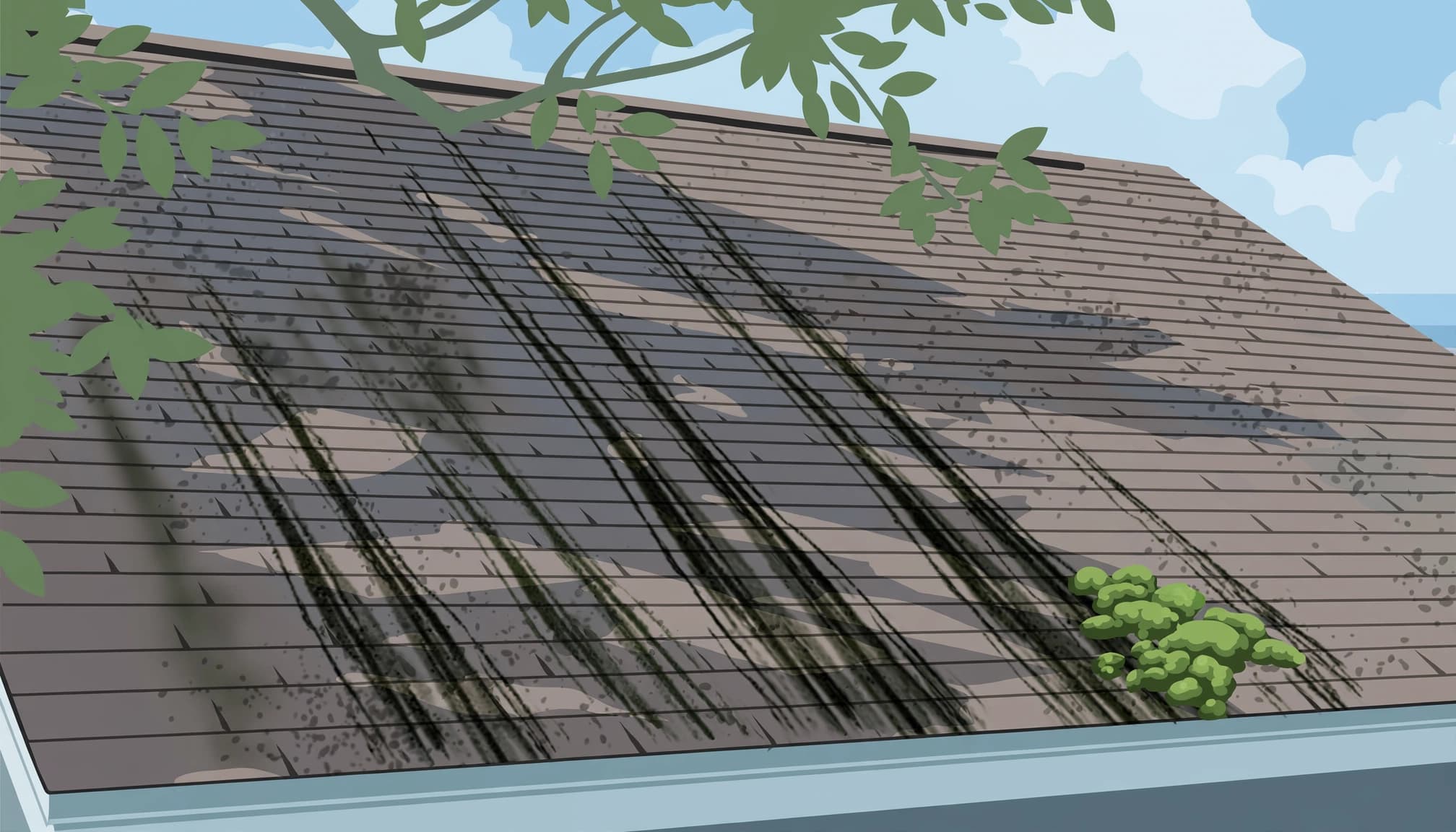
Alt text: Roof algae returning on a Southwest Florida roof after soft washing.
Dark streaks usually point toward algae
Black or dark brown streaks on asphalt shingles are commonly associated with dark staining, often linked to Gloeocapsa magma. Green surface growth can also appear in damp sections.
Algae discoloration is generally a cosmetic concern. Color alone, however, doesn’t identify every stain. Dirt, surface wear, and other biological growth can overlap.
My advice is to look beyond the staining. Missing or exposed roofing, sagging, or indoor water marks need a roofing assessment before cleaning. A wash can improve appearance, but it won’t repair roof damage.
Raised moss and crusty lichen need extra care
Moss is a non-vascular plant that absorbs water through its leaves. Moss growth favors damp, shaded areas, particularly north-facing slopes and sections beneath overhanging branches.
Thick moss can lift or curl shingle edges. That increases wind-related shingle blow-off risk. Severe growth can contribute to leaks and roof-deck moisture damage.
Lichen is a partnership between a fungus and an alga or cyanobacterium. Its acids can erode the shingle surface, and pulling it away can remove protective material. Neither moss nor lichen should be scraped off for an immediate clean appearance.
Clean Asphalt Shingles With Controlled Treatment
A proper soft wash relies on compatible chemistry, sufficient contact time, and low-pressure water. Forceful rinsing can dislodge protective granules and contribute to premature roof failure.
The ARMA algae-discoloration guidance describes equal parts laundry-strength liquid chlorine bleach and water for asphalt roofing. It calls for 15 to 20 minutes of contact time, followed by thorough low-pressure rinsing.
A 50:50 mixture means equal parts household bleach product and water. It does not mean 50% sodium hypochlorite.
I recommend this order for professional roof treatment:
- Assess the roof and drainage before treatment. Damaged roofing, difficult access, and unsafe walking surfaces need attention first.
- Prepare the property. Clear gutter blockages, protect nearby surfaces, and plan where runoff will discharge. Wet exposed landscaping and monitor it throughout treatment.
- Apply the roof-compatible solution with a suitable sprayer. Maintain controlled coverage and the approved dwell time without allowing cleaner to bake onto the surface.
- Rinse thoroughly with low-pressure water. Inspect after drying rather than increasing pressure to remove every remaining mark.
Concentrated professional bleach requires different dilution. Stronger mixtures aren’t automatically better, and low pressure doesn’t make an unsuitable chemical safe.
Never mix bleach with ammonia, acids, vinegar, or unrelated cleaners. Chemical-resistant gloves, eye protection, controlled application, and fall protection matter. Our soft wash roof cleaning uses a low-pressure approach instead of forceful surface washing.
Understand What Alternative Cleaners Can Deliver
Not every roof treatment works at the same speed. Some remove staining during the appointment. Others depend on later weathering.
Vinegar recipes have limits
A commonly described vinegar method uses 2 gallons of water with 1 1/2 to 3 1/2 cups of white vinegar. It calls for dampening the roof surface, waiting about 45 minutes, brushing softly, and rinsing.
I don’t recommend treating that household recipe as blanket approval for your shingles. A soft brush can still disturb granules on weathered roofing, and vinegar isn’t automatically harmless because it’s a household product.
Roof-compatible treatment is the better starting point. Never combine vinegar with bleach or apply it over bleach residue.
Spray-and-leave products take patience
Spray and Forget and Wet & Forget are maintenance-style products designed to work gradually. Their formulations and application directions differ.
The Spray & Forget application guidance specifies a dry surface and at least 24 hours before heavy rainfall. Roof staining may take months to fade, so an immediate visual change isn’t a reliable way to judge these treatments.
I recommend keeping two processes separate: treating the organism and removing its remaining discoloration. Don’t scrape attached material or apply extra chemicals simply because a slow-working treatment hasn’t produced an immediate bright surface. Its label determines whether rinsing is required.
Reduce the Conditions That Encourage Repeat Growth
Prevention starts with helping your roof dry and drain properly. It also protects the appearance you paid to restore.
Keep branches, debris, and drainage under control
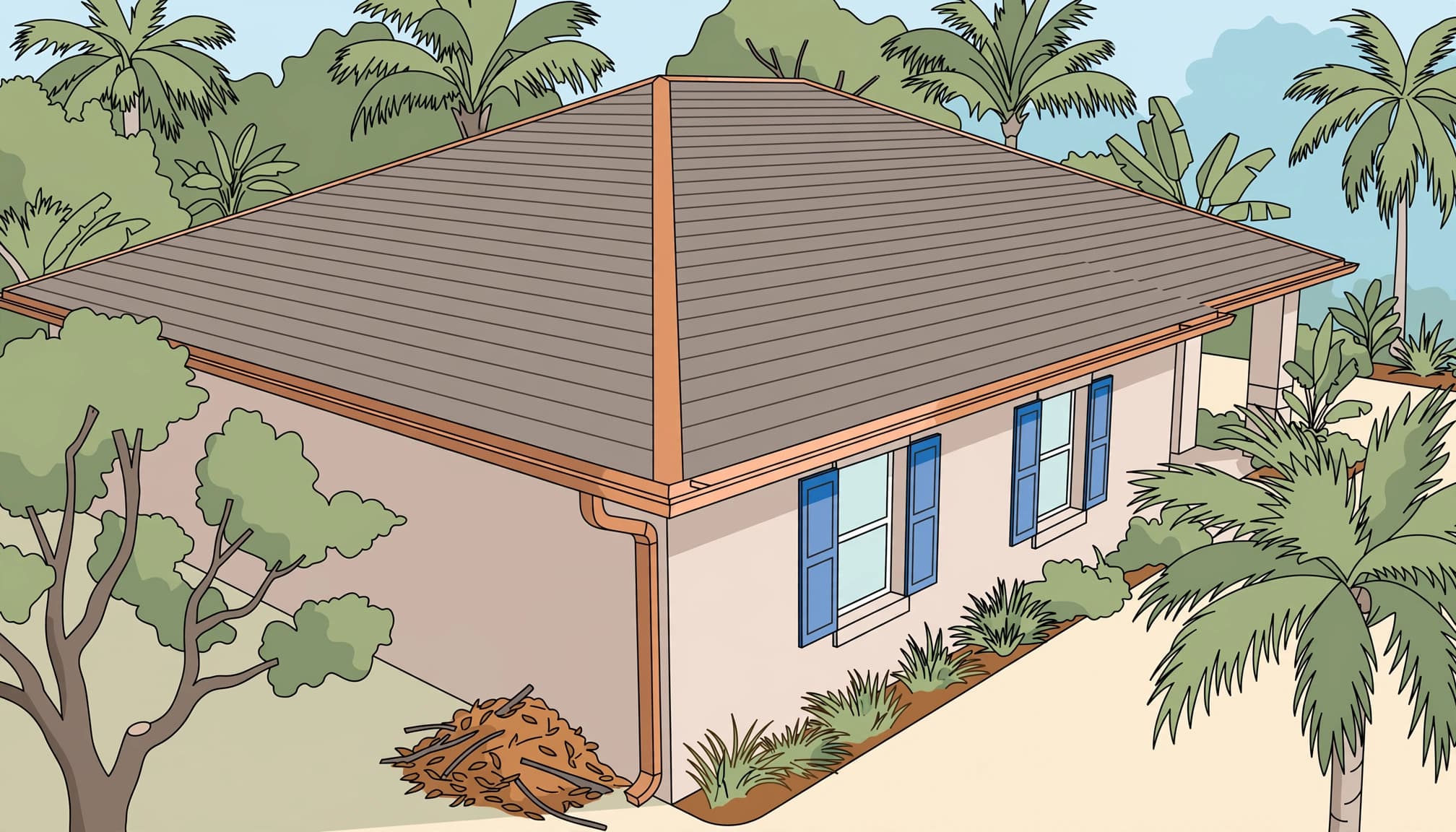
Trim branches that shade the roof or drop leaves onto it. Remove leaf litter with a leaf blower or another non-abrasive method, using safe access rather than walking across a slippery roof surface.
Keep gutters and outlets clear. Where an upper roof downspout empties onto a lower roof, extending it into the lower gutter reduces concentrated discharge across the roofing.
These steps follow ARMA’s roof maintenance recommendations. For prevention, make drainage and leaf-litter removal part of regular exterior maintenance. Less shade and moisture help limit recurring algae growth.
Understand copper protection and its limits
Copper strips and zinc strips release ions that inhibit algae and moss. Ridge-mounted strips only affect areas reached by treated rainwater. They don’t remove existing stains or protect every shaded corner.
ARMA advises against adding strips to existing asphalt roofing because installation can damage the roof surface or its sealant bonds.
For replacement roofs, algae-resistant shingles are worth considering. Malarkey’s copper-granule technology uses 3M copper granules to release algae-inhibiting copper ions. Its Scotchgard Protector shingles contain at least a 10% blend.
Algae resistance reduces susceptibility to staining. It doesn’t guarantee a spotless roof in heavy shade or a damp coastal setting.
Choose Professional Cleaning for Difficult Roof Conditions
Consult a professional roofing contractor when the roof is steep, fragile, heavily overgrown, or difficult to rinse completely. The same applies when runoff could reach a pool, sensitive planting beds, or neighboring property.
A written scope should cover assessment, treatment, landscaping protection, runoff handling, and cleanup. Our guide to comparing roof cleaning quotes explains how to compare the work included.
Ask how remaining moss or lichen will be handled. A promise to blast everything away is a warning sign.
Treatment and repairs also need separate expectations. Treatment can reveal existing wear, but it can’t restore missing granules, seal leaks, or strengthen damaged shingles.
Frequently Asked Questions
How soon will algae return after a soft wash?
There isn’t a dependable schedule for every roof. Shade, moisture, debris, treatment quality, and shingle protection all matter. I recommend evaluating the location and pattern of recurring growth instead of relying on a fixed cleaning interval.
Does remaining staining mean the treatment failed?
Remaining discoloration alone doesn’t establish failure. Attached growth can release gradually, while age-related color changes may remain. Assessing the dry roof helps separate lingering material, untreated growth, and existing wear before another application is considered.
Can copper or zinc hardware protect the whole roof?
No. Metal ions only help where rainwater carries them across the roofing. A clear section beneath metal flashing can show that effect, but it doesn’t mean nearby hardware protects every slope. Drainage patterns and coverage limit the benefit.
Is pressure washing safe if the nozzle stays far away?
I don’t recommend pressure washing asphalt shingles. Distance alone doesn’t provide reliable control over the force reaching the surface. Protective granules and shingle edges can still be damaged. A compatible treatment with a gentle rinse is the safer approach.
Keep the Roof Clean by Managing Moisture
A successful soft wash removes existing growth. Longer-lasting results also depend on reducing shade, clearing debris, and keeping water moving off the roof.
I recommend addressing those conditions before repeated staining becomes routine. Careful maintenance supports the cleaning instead of leaving the same damp areas untreated.
For professional roof washing in Southwest Florida, Get a Quote for treatment suited to your roof and property.