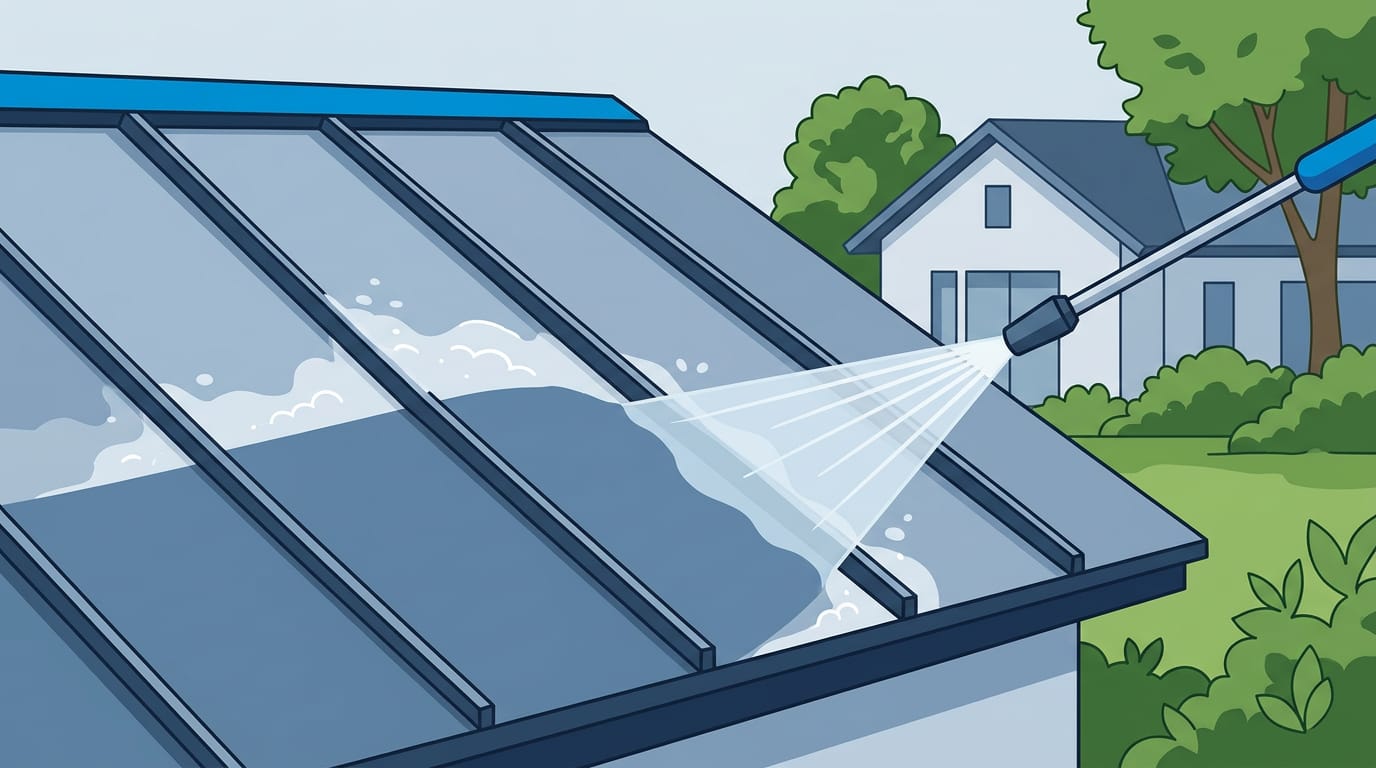
To soft wash a metal roof without dulling its finish, use low pressure, coating-compatible cleaner, controlled dwell time, and a complete rinse. I recommend starting with the gentlest approved treatment, because a more concentrated cleaner isn’t automatically better for painted metal.
Metal roof soft washing can remove algae and improve your home’s appearance. But the wrong chemical strength, a hot surface, or dried residue can damage the finish you’re trying to protect.
Start with the roof material and its condition before choosing a cleaning solution.
Key Takeaways
- Use low pressure and a cleaner approved for the roof’s coating.
- Keep the treatment wet, protect landscaping, and rinse the entire metal roof.
- Leave steep roofs, uncertain finishes, and difficult runoff conditions to a professional with a written protection plan.
Start With the Finish, Not the Stain
Painted metal needs gentle treatment
A factory-painted metal roof has a protective finish that needs different care than bare metal. Age, existing wear, and previous repairs also affect how that surface responds to cleaning.
I recommend checking the panel and coating maintenance instructions, including warranty requirements, before treatment. The cleaning product, dilution, and application method must fit those instructions. General roof-cleaning advice doesn’t replace them.
Avoid steel wool, sandpaper, wire brushes, paint thinners, and acetone. These can scratch, soften, or remove paint and may affect warranty coverage. Cleaning also won’t restore missing paint or repair a failing coating.
High pressure can leave permanent damage
Never use a pressure washer to blast a metal or asphalt shingle roof. High pressure can scar painted metal, force water through vulnerable joints, and strip protective granules from shingles.
A stronger spray also won’t solve every discoloration. Black streaks commonly involve Gloeocapsa magma, a blue-green cyanobacterium. Rust, oxidation, and coating failure require different attention.
I recommend understanding pressure washing versus soft washing before choosing equipment. For roof algae, the cleaner should do the work. Water pressure should remain gentle.
Choose a Roof-Compatible SH Strength
Sodium hypochlorite, usually called SH, is the active ingredient in bleach. Roof-cleaning recommendations commonly range from about 2% to 6% SH at the roof surface, but that range isn’t blanket approval for painted metal.
These recommendations apply to different materials and methods.
| Roof material | Published SH guidance | Important limitation |
|---|---|---|
| Compatible painted metal | Some metal-roof guidance specifies 2% SH | Coating instructions still control |
| Asphalt shingle roofs | Some guidance uses equal parts laundry bleach and water | Final strength depends on the original bleach |
| Heavy-growth roof treatments | Some operators use 4% to 6% SH | Don’t transfer these rates to metal automatically |
| Bare Galvalume | No universal safe bleach rate | Manufacturer-approved treatment is necessary |
The takeaway is simple: choose by material and coating, not by how dark the roof looks.
Start low within approved directions
The NZ Metal Roofing Manufacturers’ washing guidance describes a 2% SH treatment, five minutes of contact, and thorough washing afterward. That’s one published method, not a universal recipe.
I favor the lowest effective, approved strength. Heavy growth may require additional treatment, but a more concentrated mix can increase exposure for paint, fasteners, and landscaping. Heat and steep pitch don’t justify exceeding coating limits.
Treat bare Galvalume separately
Bare Galvalume has a protective metallic coating rather than a painted finish. Chlorine exposure can cause spotting or damage that coating.
I don’t recommend this treatment on bare Galvalume without the panel maker’s approved cleaning directions. A mix used successfully on painted steel isn’t proof that it’s suitable for an unpainted roof.
Protect People, Plants, and Drainage First
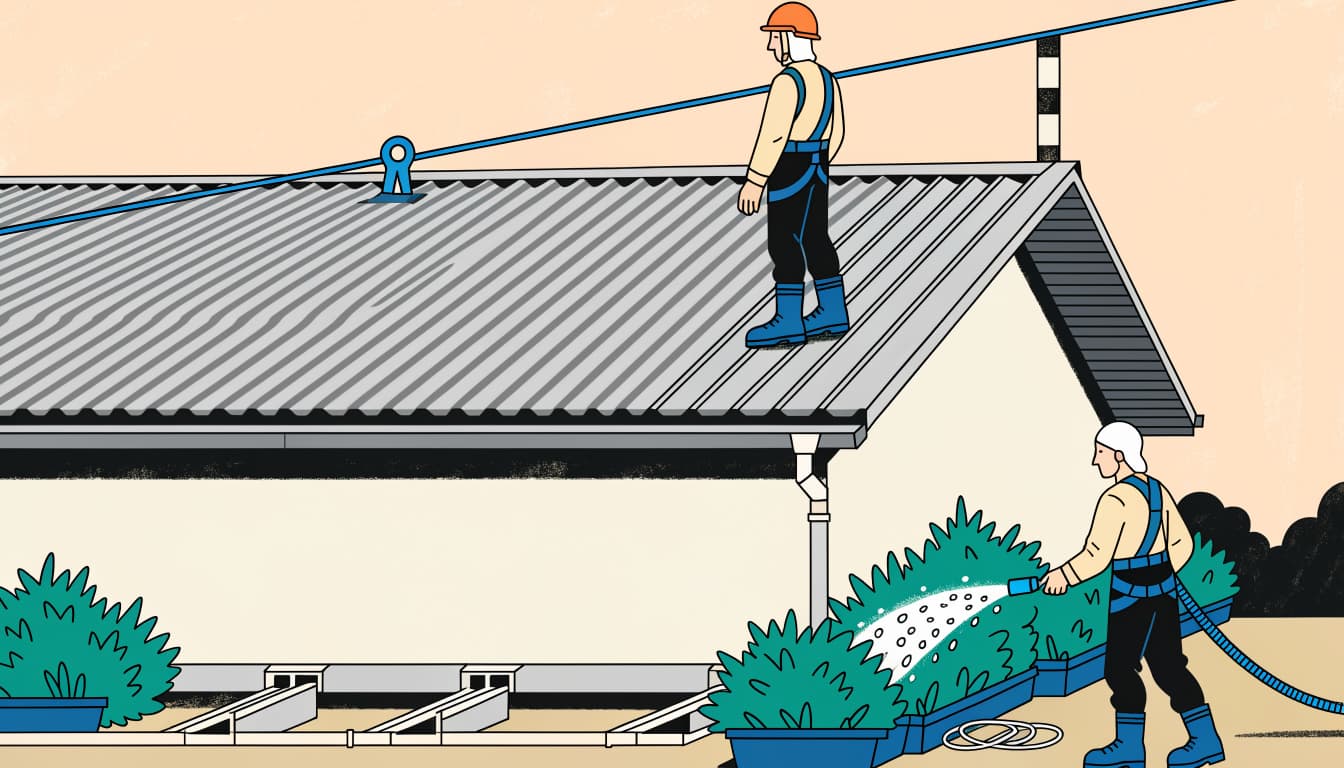
Metal roof washing area with nearby landscaping protected.
Plan safe access before spraying
Safety starts with secure access before spraying. Wet metal is slippery, and cleaning solution makes footing less reliable. High-traction footwear helps, but it doesn’t replace proper fall protection.
For workers, OSHA’s fall-protection guidance identifies general thresholds of six feet for construction and four feet for general industry. The applicable standard depends on the work. Those thresholds aren’t permission to take risks below them.
I recommend professional service when cleaning requires roof access. Set a ladder on stable ground, secure it, and don’t spray from it if footing or reach is unsafe. Worker safety requires a second person, suitable fall protection, and a rescue plan. Chemical-resistant gloves, eye protection, and protective clothing are also necessary.
Keep children and pets outside the work area throughout treatment and cleanup.
Follow runoff all the way down
Pre-wet leaves and the root zone without flooding planting beds. Move portable plants, pet bowls, and outdoor furniture beyond the spray area.
Keep exposed shrubs, grass, and foliage wet during the job. A biodegradable ingredient doesn’t make fresh cleaning solution harmless to plants.
Downspouts may need monitored collection or controlled diversion. Keep concentrated discharge out of storm drains, ponds, pools, rain barrels, and neighboring property. Brief shielding can help delicate plants, but covers can trap damaging heat.
I also recommend completing roof cleaning before driveway sealing so dirty or chemical-laden runoff doesn’t cross newly finished pavers.
How to Soft Wash Painted Metal Roofing
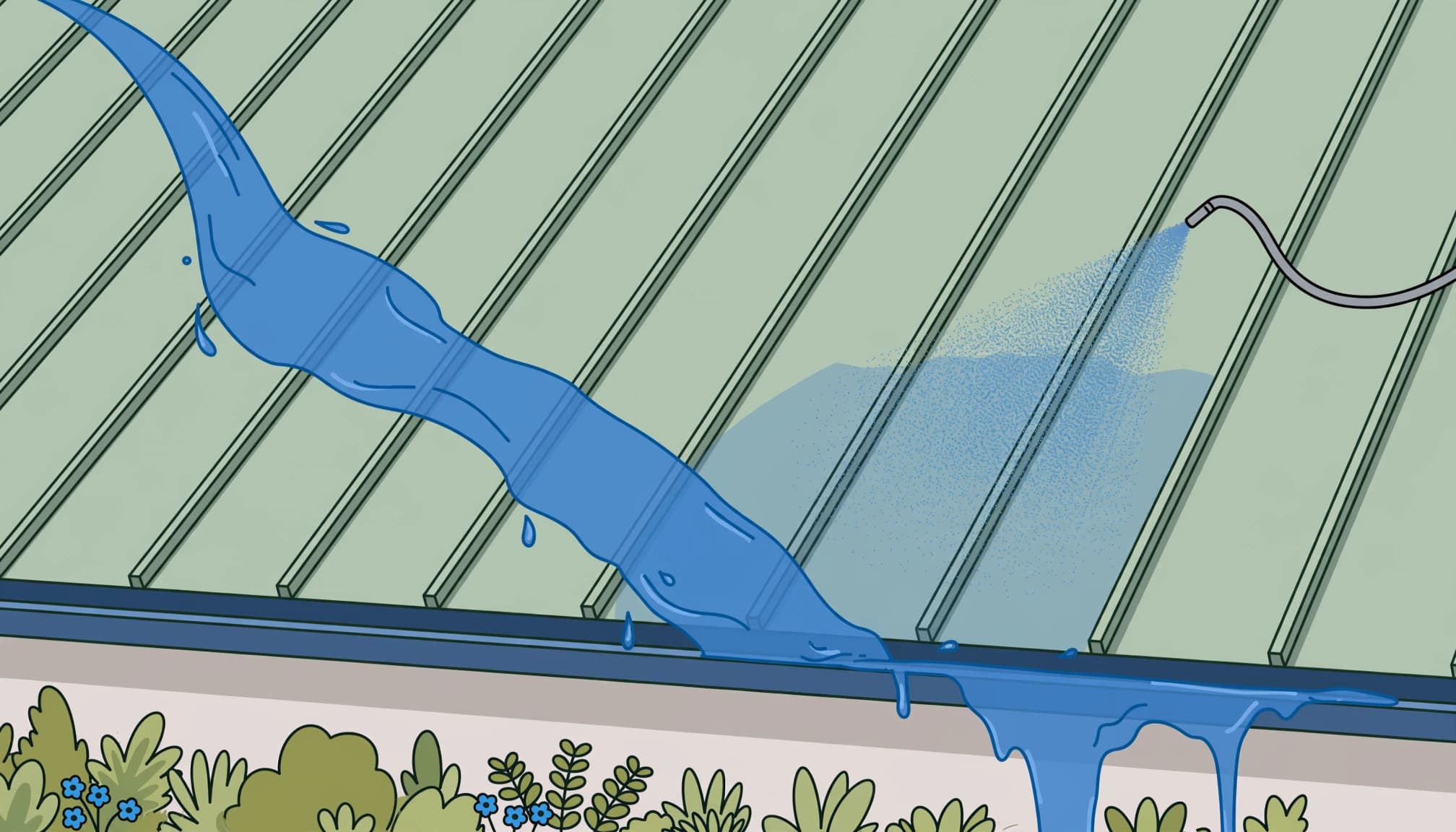
For metal roof cleaning, work in small sections after settling the finish, access, and drainage plan. I prefer early morning, late afternoon, or cool overcast conditions. A roof that feels hot is a reason to pause.
- Remove loose debris gently. Clear accessible leaves and gutter obstructions without scraping the paint. Where the maintenance instructions allow it, try clean water first. Ordinary dirt may rinse away without chemical treatment.
- Prepare only the approved solution. Follow the cleaner’s label and coating requirements. Never mix the prepared product with ammonia, acids, vinegar, or unrelated cleaners. A compatible surfactant can improve cling on steep panels, but excess detergent creates more residue.
- Treat a small, inconspicuous area first. Apply at the approved dilution and dwell time, rinse thoroughly, and let it dry before comparing the finish. Stop if gloss, color, or surface appearance changes. Don’t continue across the roof hoping the difference will disappear.
- Apply gently and monitor continuously. Use a suitable low-pressure sprayer, working in manageable sections. Keep the solution wet throughout its approved dwell. Never let cleaner bake onto hot metal. If drying starts, stop application and rinse rather than adding stronger bleach.
- Rinse the entire treated roof. Use clean water and low force, directing flow down the panels. Avoid spraying upward beneath laps, flashing, or the ridge cap. Flush gutters and exposed components, then inspect the roof after it dries.
The rinse matters. Bleach residue can corrode metal and affect coatings, screws, clips, and rubber grommets. Don’t leave it for the next rainstorm.
Know What Results to Expect
SH treats susceptible organic growth, but it doesn’t make every stain disappear immediately. Green growth turning brown or tan can indicate that treatment is working.
Attached moss, lichen, and remaining biological material may release gradually over subsequent weeks. That delay isn’t a reason to scrape the panels or turn up the pressure.
However, waiting for dead growth to release doesn’t mean leaving the cleaning chemical on metal. Rinse the chemical residue off after the approved dwell, even when some discoloration remains.
I recommend inspecting the dry roof before deciding whether another application is necessary. Repeat treatment only where the product and coating directions allow it. If discoloration remains unchanged, additional bleach may be the wrong approach.
A clean roof can also reveal existing wear that dirt previously covered. Professional cleaning should improve appearance without promising to reverse corrosion, faded paint, or coating deterioration.
Put the Price and Protection Plan in Writing
Budget for the property, not only the square footage
General roof-cleaning estimates commonly run about $0.30 to $0.75 per square foot, with national averages around $460 to $700. These are broad roof-cleaning figures, not fixed metal-roof prices.
Pitch, height, access, growth, landscaping, and runoff collection can change the amount of work. A straightforward roof and one above a pool enclosure don’t require the same setup.
At Kingsway, our roof washing in Southwest Florida uses a low-pressure approach tailored to the roof. I recommend comparing the complete service, including protection and cleanup, rather than price alone.
Define responsibility before work begins
The written scope should identify the roof material, existing damage, treatment method, and included cleanup. Photographs help document the condition of panels, gutters, landscaping, and nearby property before work starts.
Include language requiring low-pressure application, coating-compatible products, controlled dwell, and a complete metal-roof rinse. The agreement should also state who pays for damage caused by the work.
I recommend a cleaner who carries appropriate insurance, provides references, and clearly explains access and runoff protection. Existing roof defects and workmanship-related damage should be addressed separately rather than covered by a blanket waiver.
Frequently Asked Questions
Can a pressure washer become a soft wash system?
Some professionals use pressure-washer equipment with dedicated low-pressure application components. That doesn’t make a standard high-pressure nozzle safe for roofing.
I don’t recommend a homeowner experimenting overhead with nozzle changes. A dedicated low-pressure system offers a more controlled approach, but chemistry, access, and drainage still require planning.
Can a homeowner clean the roof without climbing?
Some roof areas may be reachable with suitable ground-based equipment, but reaching the panels doesn’t guarantee controlled coverage or rinsing. Wind, height, and roof layout matter.
Where workers need roof access, OSHA’s construction fall-protection requirements address hazards at unprotected edges. I recommend professional service when safe access or complete rinsing is uncertain.
Is an oxygen-based cleaner safer for painted metal?
Sodium percarbonate cleaners offer a non-chlorine option and usually work more slowly. They still need to be approved for the roof’s coating.
I wouldn’t substitute one simply because it says “oxygen-based.” Product compatibility, application directions, plant protection, and rinse requirements remain part of a careful cleaning plan.
Protect the Finish While Restoring the Roof
A successful metal roof cleaning removes growth while protecting the paint, hardware, and surrounding property. I recommend compatible chemistry, low pressure, and a complete rinse over aggressive treatment.
Your roof’s finish should guide the cleaning method. A more concentrated mix and harder spraying can turn a maintenance job into a repair.
For help with roof cleaning in Southwest Florida, Get a Quote for a service plan that includes the roof and the property below it.