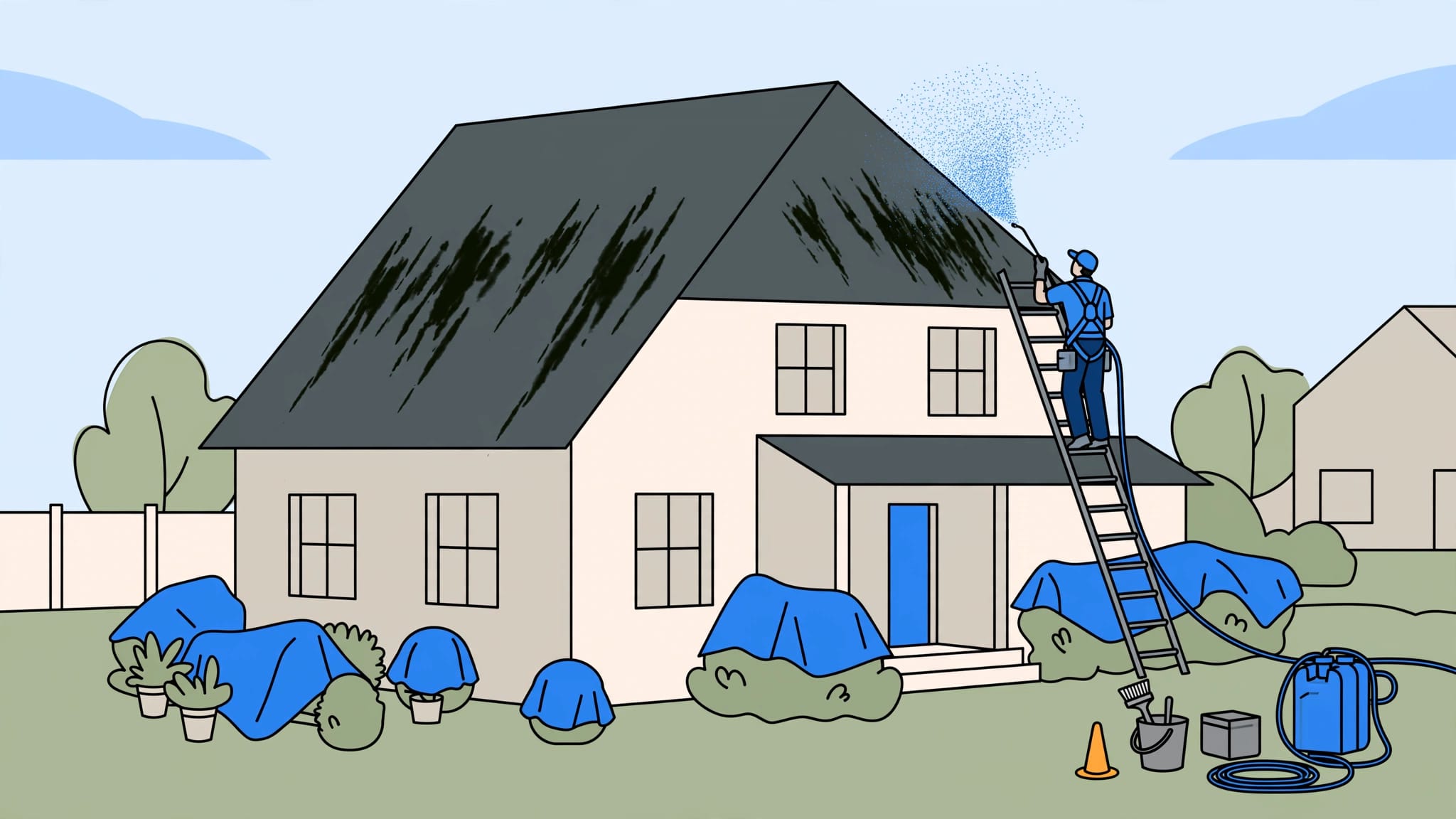
The appointment should include a roof assessment, property protection, treatment suited to your roofing material, and a final cleanup. I recommend a written scope of work before your appointment so you know what’s included.
Your roof needs careful treatment, especially when algae, moss, or worn shingles are involved. Here’s what you should expect before the crew arrives, during the cleaning, and before the job is finished.
Key Takeaways
- A soft wash uses cleaning solutions and low pressure rather than force to remove organic growth.
- Roof size, pitch, height, condition, and access all affect the price.
- Plant protection, runoff handling, insurance, and cleanup belong in the service agreement.
- Cleaning improves appearance, but it doesn’t repair leaks, damaged shingles, or worn coatings.
Signs Your Roof Needs Cleaning
Black streaks and discolored shingles
Black streaks on asphalt shingles are commonly caused by Gloeocapsa magma, a type of algae. Thumbtack notes that these streaks usually develop over several months.
I recommend treating the growth before staining spreads across larger sections. Timely treatment can also improve curb appeal by reducing visible staining. Our guide to soft wash roof algae removal explains why the cleaning solution matters as much as the rinse.
On reflective cool roofs, biological buildup can also reduce sunlight reflection. Removing it can help restore performance, although cooling savings depend on the roof and building.
Moss, lichen, and trapped debris
Moss holds moisture against shingles and can interfere with runoff. Over time, that moisture can contribute to deterioration and rot in vulnerable areas.
Common warning signs include:
- Raised green patches or firmly attached lichen.
- Leaves and branches collecting in roof valleys.
- Recurring staining beneath shaded trees.
Missing shingles, sagging areas, and indoor water stains need a roofing assessment before cleaning proceeds.
Roof Cleaning Costs and Appointment Length
What the price should cover
Thumbtack’s national cleaning estimate ranges from $270 to $350, with higher prices for larger, steeper, taller, or more complicated roofs.
Top Hat Services gives a broader typical range of $250 to $1,000 per home. It also describes cleaning as roughly 3% to 7% of roof replacement cost. These are general benchmarks, not a Kingsway price.
A roof cleaning cost comparison is most useful when it covers the full service. Check that the quote includes roof treatment, preparation, landscaping protection, runoff handling, rinsing, and cleanup. Gutter cleaning and additional treatments should have separate entries when they’re extra.
A low price becomes less useful when important preparation is missing.
How long to allow
Top Hat Services puts a typical cleaning at two to five hours. Heavy growth, difficult access, steep sections, and extensive landscaping can add time.
House floor area isn’t the same as roof surface area. Roof pitch and overhangs affect the amount of material being cleaned.
If you’re also planning driveway sealing, schedule roof work first. Roof runoff shouldn’t cross a freshly sealed surface. Wind, lightning, or unsuitable rain conditions can also change the appointment schedule.
Getting Your Home Ready
Before the crew arrives, move vehicles out of the work area and clear outdoor furniture near the house. Close windows, secure pets indoors, and keep children away from hoses and treatment areas.
The crew needs access to the agreed water supply, gates, and working areas. Mention known leaks, loose gutters, rainwater collection systems, and sensitive plants before application begins.
I recommend keeping a phone available for updates. You shouldn’t need to stand outside watching the work.
Plant protection should include appropriate watering, shielding where needed, and controlled runoff. Covers require care in Florida heat because prolonged covering can stress plants.
Pets should remain away until the work area has been rinsed and the product’s re-entry conditions are satisfied.
What Happens During Professional Roof Cleaning
Assessment and property protection
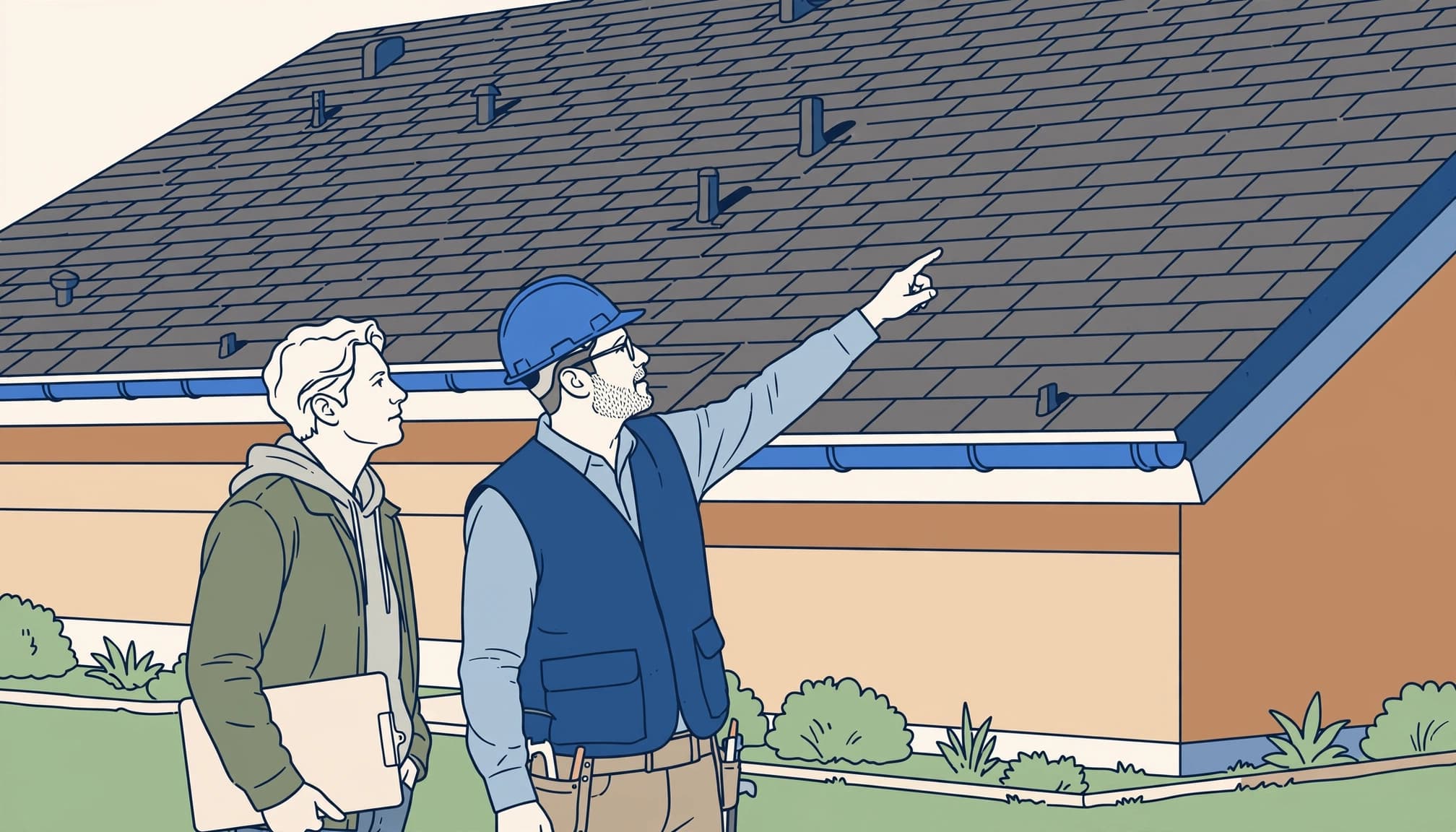
A roof washing appointment should begin with a condition review. The cleaner identifies the roofing material, growth, drainage routes, and visible defects before choosing a treatment.
The review should cover missing or cracked shingles, rust around flashing, damaged vents or chimneys, and signs of leaks. Hail, wind, snow, and rain damage also matter, depending on the property’s location and history.
Photos document existing conditions. Loose debris may be removed, and landscaping, outdoor equipment, and nearby surfaces need protection.
A roof cleaning assessment isn’t a complete roof inspection. A qualified roofer or roof inspector should assess suspected structural problems or active leaks before washing.
Treatment, dwell time, and rinsing
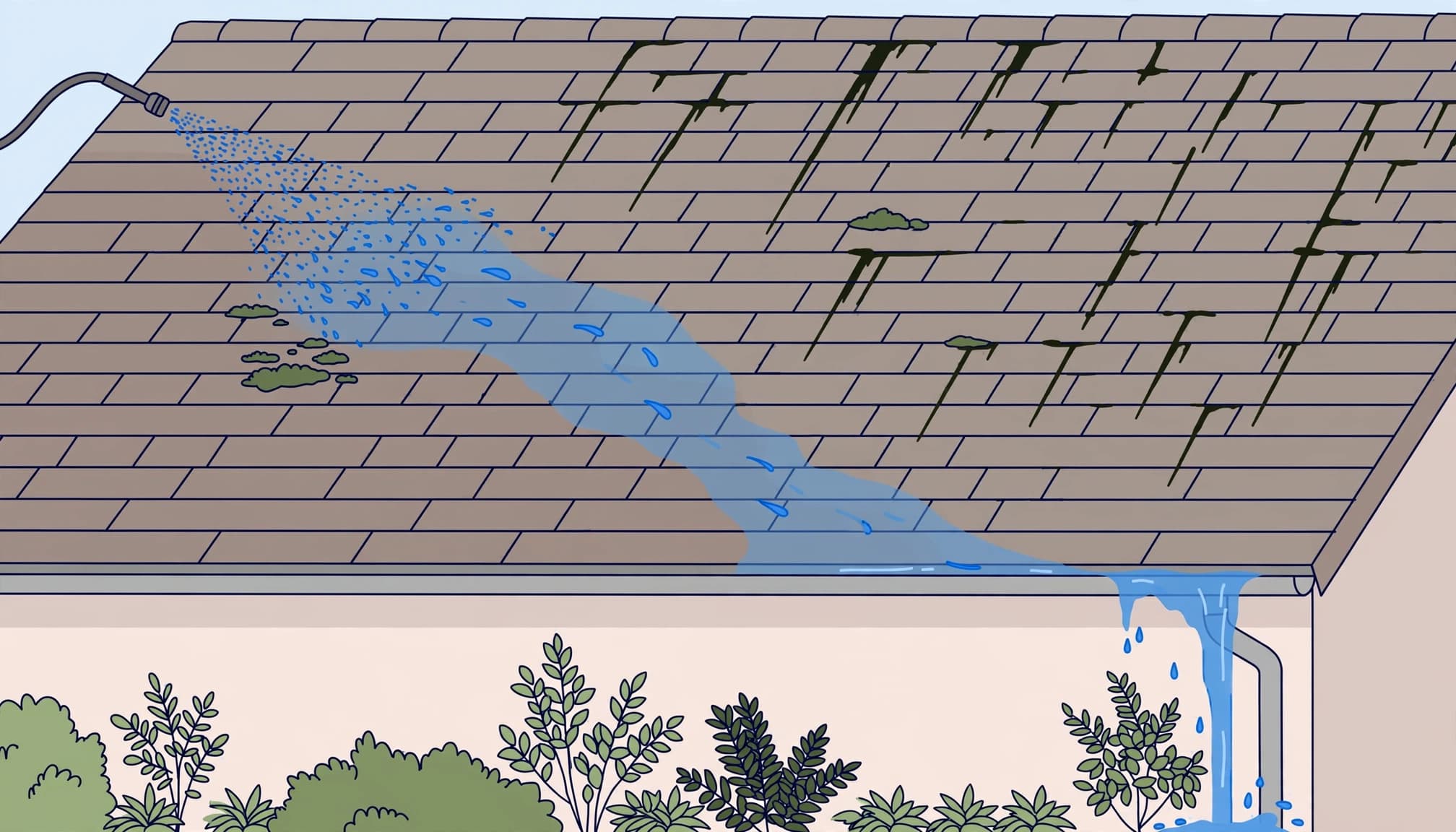
A soft wash applies a low-pressure bleach or detergent solution to treat moss and algae. The cleaner remains wet for its required dwell time before a gentle rinse removes loosened buildup.
The Asphalt Roofing Manufacturers Association’s cleaning guidance describes a mixture of 50% laundry-strength liquid chlorine bleach and 50% water for asphalt roofing.
That means equal parts household product and water. Concentrated professional products need different dilution, and the formula isn’t suitable for every roof. Any chemical wash must suit the roofing material and follow the product directions.
Never mix bleach with ammonia, acids, or other cleaners.
The crew should manage overspray and runoff throughout treatment. Attached moss may loosen gradually, so aggressive scraping for an immediate result can cause unnecessary damage.
Soft Washing vs. Pressure Washing by Roof Material
I choose a roof washing approach based on the roofing material and its condition. Equipment that works on a driveway can damage shingles or a painted metal finish.
Here’s how the methods compare.
| Roof material | Suitable starting approach | Main concern |
|---|---|---|
| Asphalt shingles | Manufacturer-compatible chemical treatment and low-pressure rinse | Granule loss, lifted edges, and water intrusion |
| Painted metal | Coating-compatible cleaner and gentle rinse | Fading, coating damage, and dried residue |
| Wood shakes or slate | Material-specific professional assessment | Damaged fibers, fragile pieces, and vulnerable joints |
For a shingle roof, low-pressure washing with a compatible treatment and gentle rinse helps prevent granule loss and water intrusion.
Best Pick Reports describes pressure washing as commonly used on metal roofing, wood shakes, and slate. That description isn’t blanket approval for high pressure on those materials.
Industrial pressure washers can exceed 3,000 psi. That force is too powerful for routine roof cleaning and can tear shingles or remove protective granules.
Shingle edges lifting, granules washing away, or water being driven beneath the roofing are warning signs of damaging pressure.
Our pressure washing versus soft washing guide explains why pressure, product selection, and surface condition need to work together.
The Final Walkthrough and Ongoing Care
Before the crew leaves, expect a review of the cleaned areas, rinsed surfaces, drainage, and remaining growth. Photos are useful when sections aren’t visible from the ground.
Some staining clears during treatment. Dead moss may release over time, and heavy growth can require another application. Cleaning won’t reverse faded paint, corrosion, or existing shingle wear. It also doesn’t reset or guarantee a longer roof life expectancy.
The walkthrough should also cover any unexpected damage and the agreed follow-up process.
For maintenance, Nationwide recommends professional roof inspections at least annually. Inspections also make sense when buying or selling, documenting an insurance claim, and before or after major roof work.
Cleaning is often needed about every couple of years, but shade, humidity, and recurring growth affect that schedule. In Southwest Florida, I recommend watching roof condition rather than waiting for heavy staining.
Choosing a Roof Cleaning Professional
A reliable roof cleaning company should explain the method, protection plan, and responsibility for damage in plain language. “Licensed and insured” needs supporting documentation, not just a line on an advertisement.
Compare local roof cleaners using the same criteria:
- Review a written scope that identifies your roof material, treatment, preparation, runoff control, and cleanup.
- Look for an insurance certificate naming the business, with active policy dates, general liability coverage, and workers’ compensation where required.
- Read the damage and follow-up terms. They should explain responsibility for roof damage, exclusions, and retreatment conditions.
Fall protection and safe access belong in the work plan. Runoff handling may require diversion, collection, or filtration, depending on the property and applicable rules.
Guarantees also have limits. Ask what any satisfaction guarantee covers, and check its written terms. Best Pick Reports’ roof-cleaning guarantee offers eligible customers up to $2,500 in labor-cost protection, subject to its terms. The organization says it reviews recommended cleaners annually for licensing and insurance.
Those are useful protections, but the written scope still matters.
Frequently Asked Questions
When should moss be removed?
Treat moss before it forms thick patches or blocks drainage. Spring and fall often offer suitable temperatures in temperate climates, but weather matters more than the calendar.
In Southwest Florida, cooler, drier conditions can make scheduling easier. Treatment needs a suitable weather window for the cleaner to work without rapid drying or premature wash-off. I wouldn’t wait for a particular season while growth continues spreading.
Can a metal roof be cleaned without scrubbing?
Light dirt and organic growth can often be treated with a coating-compatible cleaner and low-pressure rinse. Stubborn deposits may still need gentle contact cleaning.
The Metal Roofing Alliance recommends using the lightest effective cleaning touch. Stronger chemicals and more pressure aren’t automatic improvements. Painted finishes need controlled dwell time and a complete rinse so residue doesn’t dry on the panels.
Protect Your Roof With a Clear Cleaning Plan
A good roof cleaning appointment should leave you with a cleaner roof and a clear understanding of the work completed. The strongest protection is a material-specific plan that covers treatment, landscaping, runoff, and cleanup.
At Kingsway, our roof cleaning services serve homeowners across Southwest Florida. If your roof has black streaks or organic buildup, Get a Quote for professional cleaning suited to your property.