
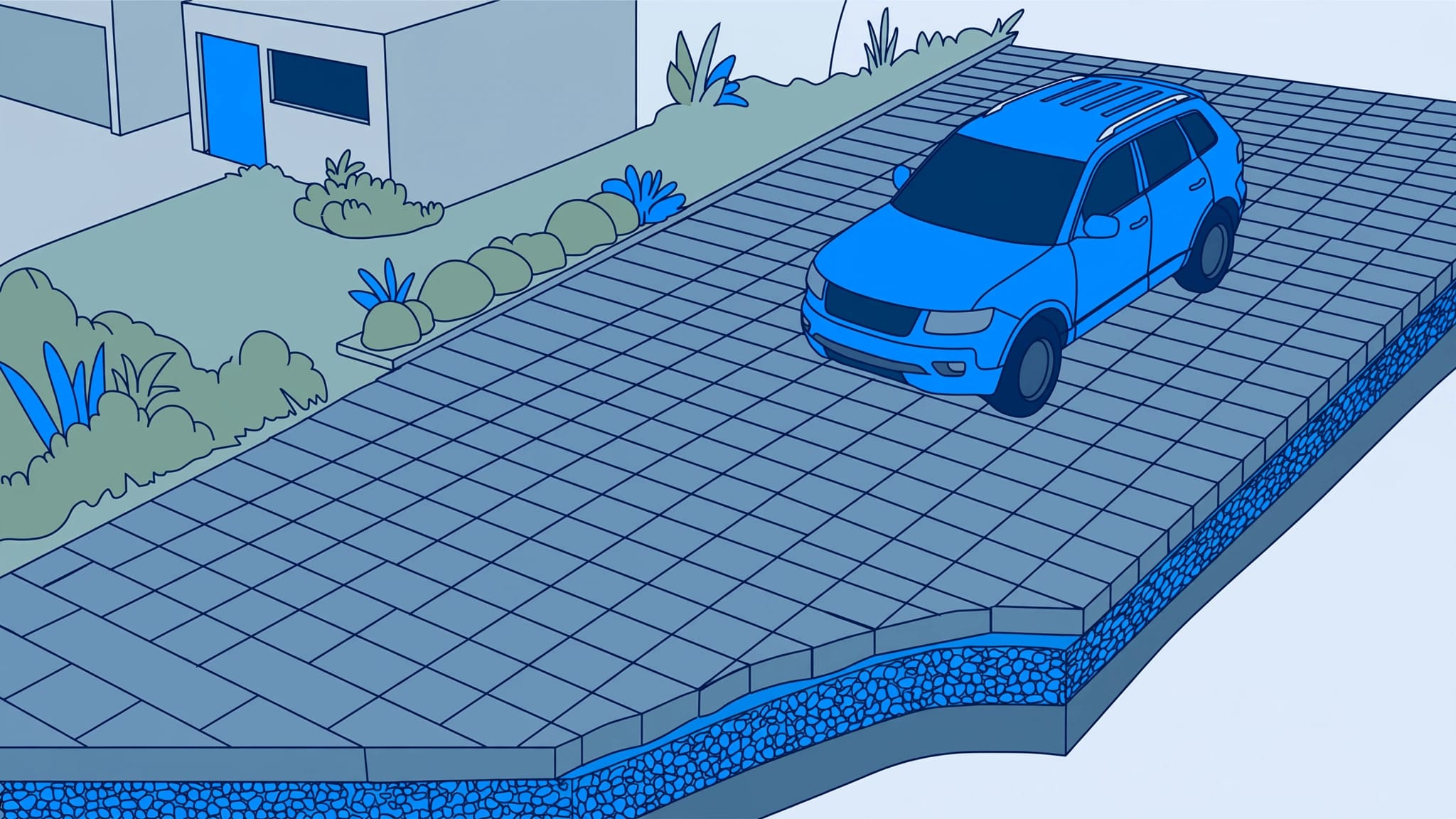
For most residential installations, I recommend 2 3/8-inch (60 mm) concrete pavers rated for cars, SUVs, and light trucks. Heavier vehicles usually need 3 1/8-inch (80 mm) pavers and stronger support underneath.
The right driveway paver thickness depends on vehicle weight, expected use, and soil conditions. A properly compacted base matters just as much, so start with the complete installation.
Key Takeaways
- Choose vehicle-rated 60 mm pavers for ordinary residential traffic.
- Plan thicker pavers and stronger support for RVs or heavy trucks.
- Base depth means compacted aggregate, not total excavation.
- Sealing protects the surface but won’t correct unstable ground.
Choose Driveway Paver Thickness for Your Vehicles
Western Interlock’s product range shows why thickness and intended use belong together.
| Thickness | Product or application | Intended use |
|---|---|---|
| 40 mm | Slimline | Walkway use and foot traffic only |
| 50 mm | La Lastra slabs | Thickness alone doesn’t establish vehicle suitability |
| 60 mm | Standard driveway pavers | Cars and light vehicles |
| 70 mm | Alpine Stone | Heavier cars and trucks |
| 80 mm | Interstone | Industrial driveways, by special order |
These examples aren’t interchangeable specifications. Choose a vehicle-rated product for the expected traffic.
Standard Driveways With Cars and Light Trucks
A 60mm paver is the normal starting point for passenger vehicles. Nicolock’s driveway selection guidance recommends at least this thickness for standard residential applications.
I wouldn’t pay for thicker pavers simply because they look stronger. Paver dimensions, installation, and support also affect performance. An ordinary driveway with dependable support doesn’t automatically benefit from the thickness intended for industrial traffic.
RVs, Trailers, and Heavier Traffic
For RV parking, heavy trucks, or frequent heavy traffic, plan around 80mm pavers. Some heavy-duty designs use thicknesses up to 3.5 inches (88.9 mm).
A 70 mm product can suit heavier cars and trucks when designed for that application. However, thickness alone doesn’t establish a safe vehicle-weight limit. Soft or shifting ground may require deeper aggregate, ground improvement, or both. I recommend professional pavement design for substantial RV loads or widespread weak soil.
How Thick Should the Driveway Base Be?
Understand the Different Base Recommendations
Some guides describe 4-6 inches as typical, but that shouldn’t become a universal driveway specification. Passenger-vehicle guidance commonly starts at 6 to 8 inches on suitable soil.
Nicolock’s installation recommendations call for 8-12 inches beneath residential driveways, compared with 4 to 6 inches for patios and pedestrian walkway applications.
Soft clay soil or wet climates can require 10 to 12 inches or more. Clay holds water and can shift. Freeze-thaw conditions add another concern outside Southwest Florida.
Calculate the Complete Excavation
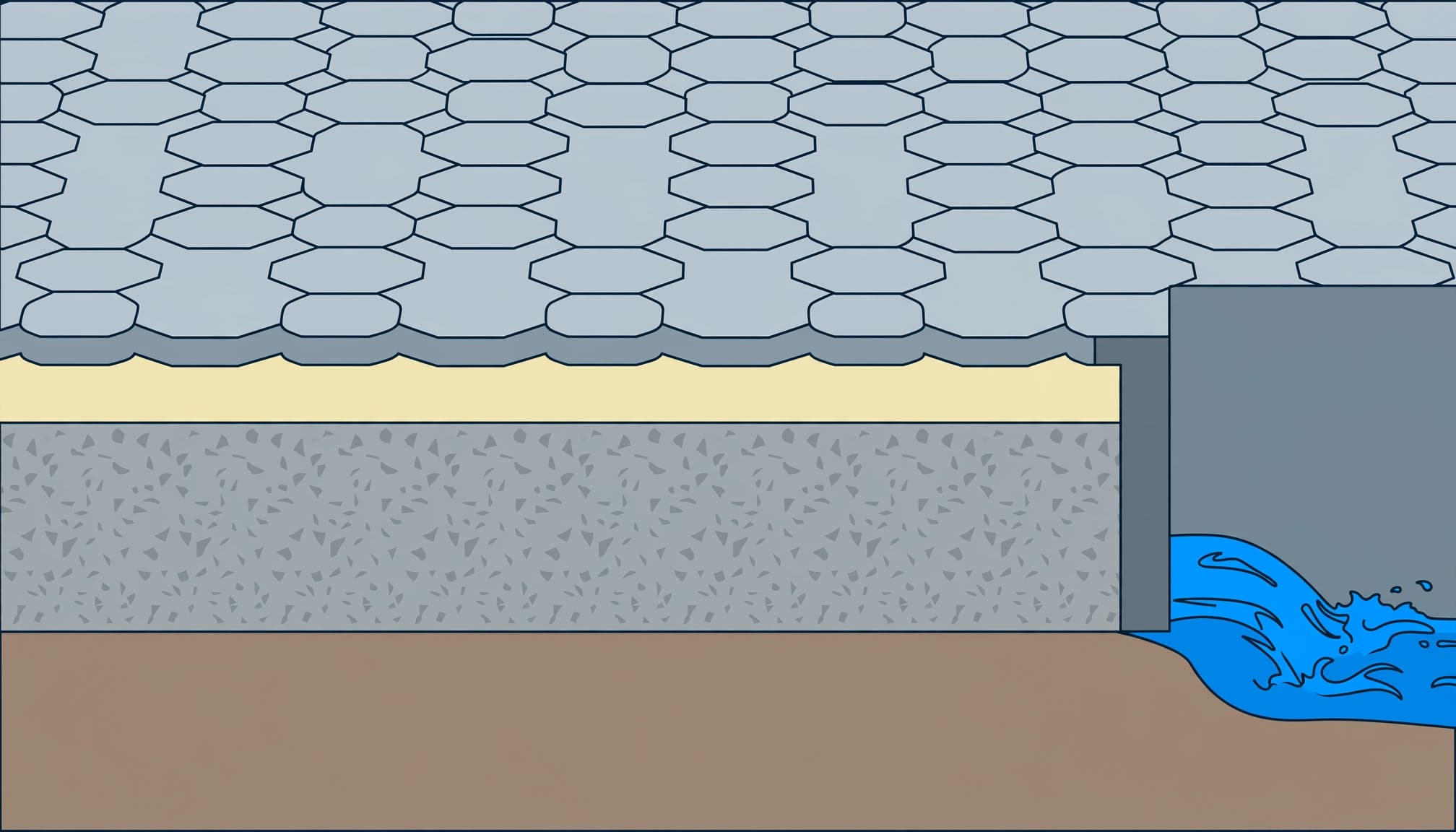
Conventional sand-set construction needs a stable prepared subgrade, a compacted paver base, about 1 inch of bedding sand, and pavers.
An 8-inch base plus 1 inch of bedding and 2 3/8-inch pavers requires 11 3/8 inches of excavation below finished grade. Bedding sand can’t replace missing aggregate.
Western Outdoor Designs contrasts older 80 mm installations over a 6-inch base with 60 mm pavers over thicker support. That illustrates why the whole assembly matters. My guide to paver driveway base depth explains these layers further.
Installation Details That Prevent Shifting and Cracking
A thicker paver can’t compensate for poor compaction, weak edge restraints, or improper drainage.
For conventional aggregate construction, compact the prepared soil and place aggregate in manageable lifts, commonly 2 to 4 inches. Compact each lift with suitable equipment. Loose material depth isn’t finished base depth.
Soft, muddy ground, recurring ruts, and washed-out areas indicate support problems. In Southwest Florida, heavy rainfall and disturbed soil deserve close attention.
I favor herringbone for driveway interlock. Running bond is common on patios and walkways. Secure edges and maintained joints remain necessary with either pattern.
Undersized pavers can crack under wheel loads. Opening joints allow additional movement and sand loss. A paver driveway inspection helps identify these warning signs before surface treatment.
Compare Complete Installation Costs
Western Outdoor Designs estimates that pavers cost about 10% to 15% more per square foot than a standard concrete slab. That’s a broad comparison, not a Southwest Florida installation price.
I recommend comparing excavation, aggregate, drainage, edging, and labor alongside paver prices. Extra thickness won’t provide value if the quote leaves out necessary support.
Properly installed pavers can last decades and allow individual units to be repaired. They can also return to service sooner than poured concrete, which needs time to cure.
For ongoing care, driveway sealing protects a sound surface. Professional pressure washing should clean the pavers without stripping away joint material.
Common Questions About Driveway Thickness
Can 2-Inch Patio Pavers Support a Driveway?
I don’t recommend ordinary 2-inch patio pavers for vehicle traffic. Choose a driveway-rated system, typically starting at 60 mm, rather than assuming a pedestrian product will hold up.
Are 4-Inch Pavers Enough?
Four-inch pavers exceed the usual residential thickness. They still need suitable support, drainage, and edge restraint. Extra thickness doesn’t make a poorly built driveway dependable.
Build Support Before Protecting the Surface
For ordinary residential traffic, 60mm pavers are the practical starting point. Heavy vehicles need a stronger assembly, often with 80 mm units and deeper support.
I put base preparation first because a clean, protected surface still depends on stable ground.
Once repairs are complete, Get a Quote for professional paver sealing or pressure cleaning from Kingsway.