
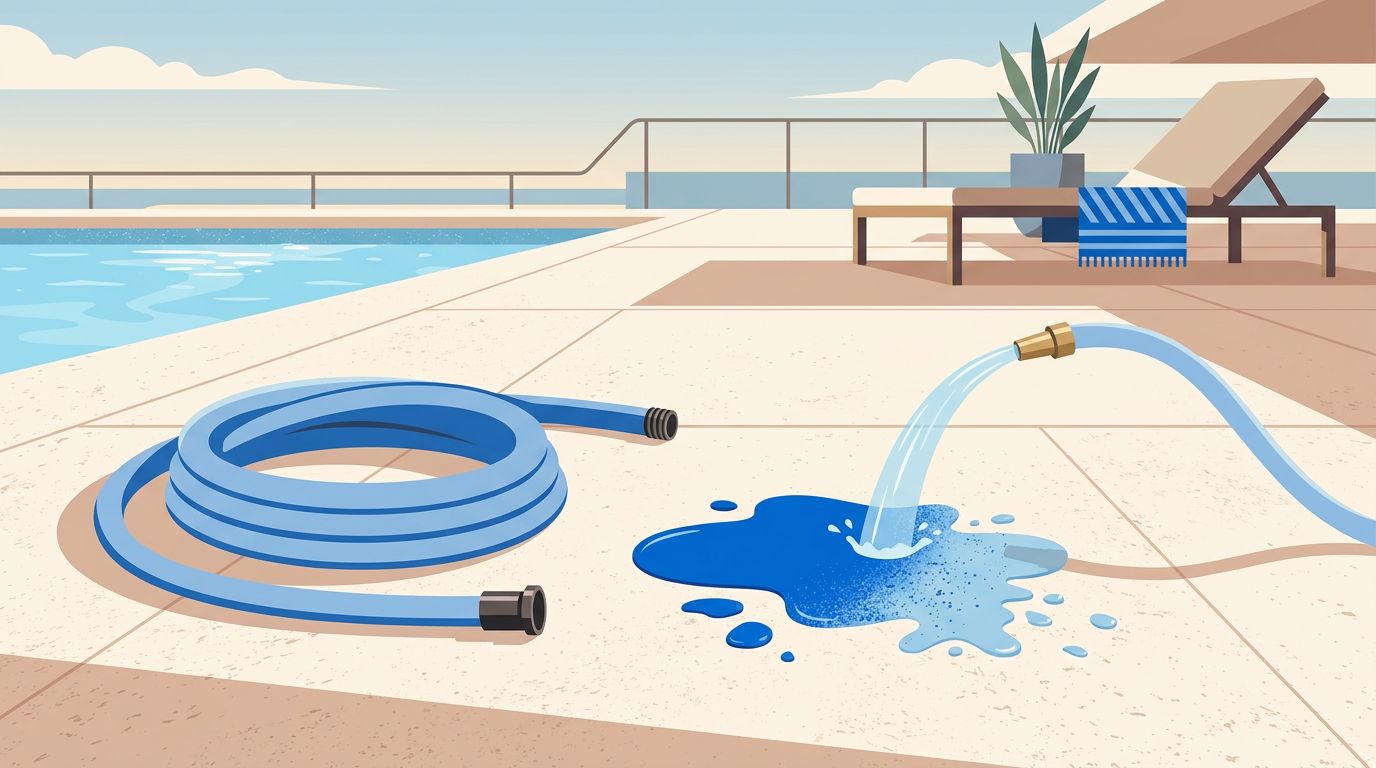
A travertine chlorine spill can turn a pristine travertine pool deck into a blotchy mess in minutes. I see homeowners get worried fast when pool chemicals land on their decking, because while travertine appears solid, it can mark much faster than most people expect.
The good news is that a small spill does not always lead to permanent damage. Because this natural stone is porous, the first rinse, the use of proper tools, and a calm cleanup plan make a significant difference. Here is how I handle these accidents, and when I advise people to stop and call for professional help.
Key Takeaways
- Rinse a fresh spill with clean water right away, and keep the area clear until it is fully cleaned.
- Avoid scrubbing hard or mixing chlorine with vinegar, ammonia, or other household cleaners.
- Travertine is a porous stone, which means a spill can leave a white spot, dull patch, or rough area if it sits on the surface for too long.
- Gentle cleanup is better than aggressive pressure, especially on a pool deck.
- If the stone still looks faded, chalky, or etched, professional cleaning and sealing may be the next step.
Why chlorine can mark travertine pool decks
Travertine is a beautiful travertine pool deck, but it is not a tough, sealed slab of plastic. It is a natural stone that offers timeless elegance, yet those tiny pores can hold onto moisture and chemicals if they are left behind. Because travertine is a porous stone, a travertine chlorine spill can leave a mark even when the spill looks small.
If the chlorine sits on the surface, it can dry into a pale residue or leave a patch that looks lighter than the rest of the deck. Sometimes the surface does not look stained in the usual sense. It just looks off, dull, or chalky in one spot while the rest of the stone still has its normal color.
Sealed travertine has more protection, but sealing is not a force field. It slows absorption and makes cleanup easier, yet a strong chemical spill can still affect the finish if it is not rinsed quickly. In Southwest Florida heat, that problem can happen even faster because liquid dries so quickly on stone.
I tell homeowners to think of it this way: travertine is like a nice shirt, not a work shirt. It can handle daily use, but it needs fast attention when something harsh lands on it.
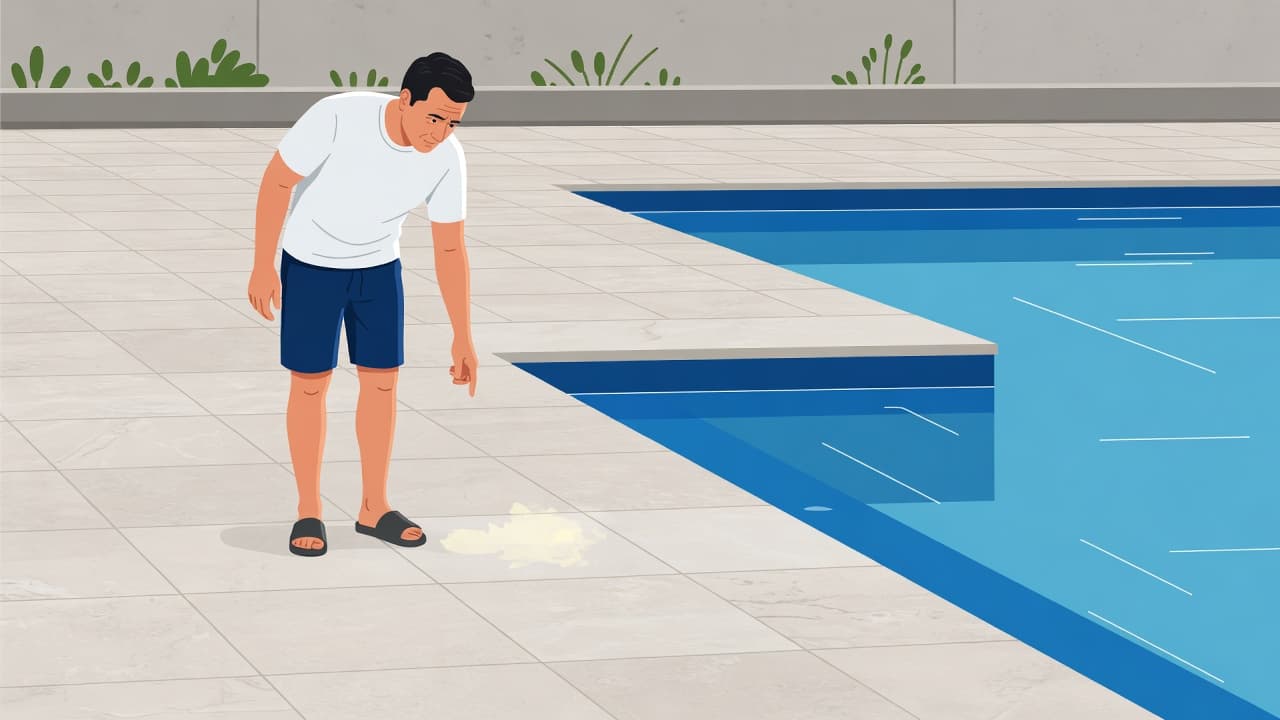
What to do in the first few minutes
The first few minutes matter more than most people think. I always start with safety, then I move to a simple rinse.
- Keep people and pets off the area.
- Rinse the spill with clean water as soon as you can.
- Use a gentle flow, not a hard blast.
- Blot standing liquid with clean towels, then rinse again.
- Check the area once it dries a little to see if the color has changed.
If the spill is dry chlorine powder or a broken tablet, avoid grinding it into the stone with shoes, brushes, or rough pads. If you can remove loose dry residue safely, do that carefully, then rinse the area well after the product is no longer loose. When the spill is liquid, steady rinsing is usually the safest first move. If a faint residue remains after you have rinsed the area, you might consider applying a baking soda poultice to gently lift the stain without damaging the natural stone.
I also tell people to skip acidic cleaners, such as vinegar, ammonia, or any harsh chemical agents. Those products are not meant for a chlorine spill, and mixing cleaners can create a bigger problem than the stain itself. Keep it simple. Use water first to dilute the area, then take a closer look to assess if further action is required.
If the spill is still wet, speed matters more than scrubbing.
Do not reach for a stiff brush or a high-pressure nozzle right away. A fresh spill is easier to control than a dry mark that has already baked into the stone.
Safe cleanup methods that protect the stone
Once the area has been rinsed, I look at how the surface is reacting. If there is just a light residue, a soft nylon brush and clean water may be enough to lift it. I do not use wire brushes, harsh pads, or anything that can scratch the stone.
If the spot still feels sticky or chalky after a rinse, I move to a pH-neutral stone cleaner. I use it lightly, rinse it fully, and keep an eye on the finish. The goal is to perform a deep cleaning to remove the residue without opening up the surface or changing the look of the travertine.
This is where people sometimes overdo it with a pressure washer. While a pressure washer is useful on many exterior surfaces, travertine requires a gentler touch to avoid etching the stone. A wide fan tip and a controlled rinse are safer than a narrow, high-pressure jet. Too much force can wear down the surface or drive leftover residue deeper into the pores.
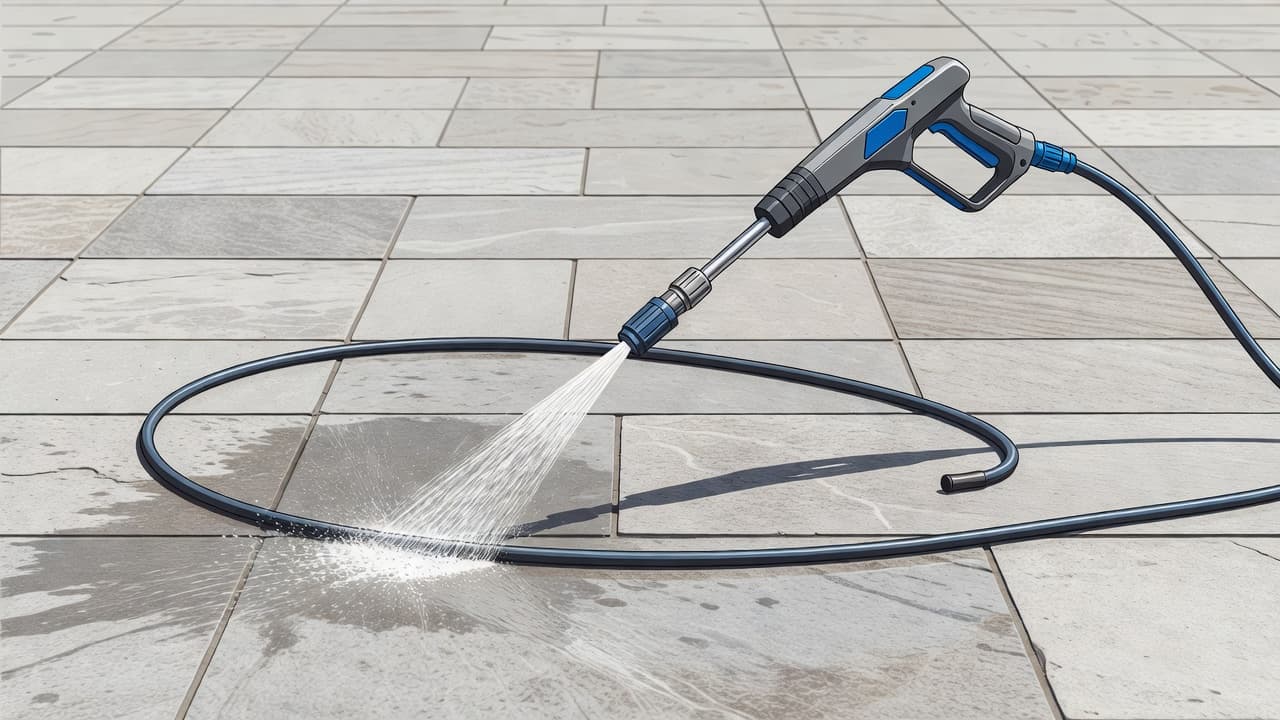
I look at it the same way I look at soft wash and roof cleaning work. The surface decides the method. A roof gets a softer approach than a driveway, and a travertine deck deserves that same level of care. Heavy pressure has its place, but not everywhere.
When the spill needs professional help
Some spills clean up fast. Others leave a pale halo, a rough patch, or a spot that looks dull even after rinsing. When that happens, I stop treating it like a simple cleanup and start treating it like a specialized stain removal project.
If the travertine still looks faded after it dries, the finish may have been affected. If the stone feels rough underfoot, the surface may have suffered from etching caused by the acid in the chlorine. If the spill spread into joints or around other outdoor pavers, the cleanup may require more than a quick rinse. That is when a professional should examine the stone, the sealer, and the surrounding area together.
I handle these jobs the same way I manage other exterior care work. A roof cleaning project may call for a soft wash, not pressure. A driveway sealing job may need a different prep step than a patio. Travertine is no different. The right method for restoring your outdoor pavers depends on the material, the finish, and how long the chemical sat there.
If your deck has already turned chalky or patchy, Get a Quote and let me take a look before the mark settles in. A quick check now is easier than a larger repair later.
How I help homeowners prevent the next spill
The best cleanup is the one you never have to do twice. I tell homeowners to build a few simple habits around pool chemicals so the deck stays easier to manage.
- Keep chlorine containers closed and upright.
- Carry pool chemicals over concrete or pavers, not across the nicest part of the deck.
- Rinse small drips right away instead of waiting until the end of the day.
- Store chemicals away from the pool edge and away from direct sun when possible.
- Focus on sealing travertine with a high-quality penetrating sealer to protect the surface.
That last point matters. Just like driveway sealing helps a driveway stay cleaner and easier to maintain, using a professional stone sealer helps the pool deck handle daily use with less drama. It does not make the stone invincible, but applying a quality stone sealer gives you more breathing room when spills happen. By staying mindful of your pool water chemistry, you can also prevent accidental overflows or drips during your balancing routine.
Regular exterior care helps too. Incorporating seasonal maintenance, which includes managing mold and algae buildup, keeps dirt and residue from hiding small problem spots. When the whole property is maintained, it is easier to spot a fresh spill before it turns into a stubborn mark.
Frequently Asked Questions
Can I use vinegar or bleach to clean a chlorine spill on travertine?
No, you should never use vinegar, bleach, or other acidic household cleaners on travertine. These substances can cause permanent etching and damage the natural stone surface, often making the discoloration worse than the original spill.
Will a light chlorine spill always leave a permanent stain?
Not necessarily. If you act quickly by rinsing the area thoroughly with clean water, you can often prevent the chemical from soaking deep into the stone’s pores and leaving a permanent mark.
Is it safe to use a pressure washer on my travertine deck?
It is generally best to avoid high-pressure washing on travertine, as it can easily damage or etch the surface. If you must use cleaning equipment, stick to a wide fan tip and keep the pressure low to protect the stone’s finish.
Why does my travertine deck feel chalky after a spill?
If your deck feels chalky, the chlorine has likely begun to break down the surface of the stone, resulting in etching. Once the stone reaches this stage of degradation, it is often best to consult with a professional for deep cleaning or potential resealing.
Conclusion
A chlorine spill on travertine does not have to turn into a major project. If you rinse the area quickly, stay gentle, and avoid harsh chemicals, you give your stone a much better chance of staying in pristine condition.
While this guide focuses on immediate chlorine cleanup, remember that a travertine pool deck is also susceptible to other common issues. Over time, you may notice hard water stains, stubborn mineral deposits, or even oil and grease stains that require different maintenance approaches. Regardless of the blemish, you should always avoid bleach, as it can permanently damage the surface. Instead, reach for pH-neutral or specific alkaline cleaners only when dealing with organic stains, as these are much safer for the natural composition of your stone.
The big takeaway is simple. Proper travertine chlorine spill cleanup works best when it is handled right away with care, not force. If the spot still looks dull or rough after you rinse it, that is the time to get professional help before the mark sets in permanently.