
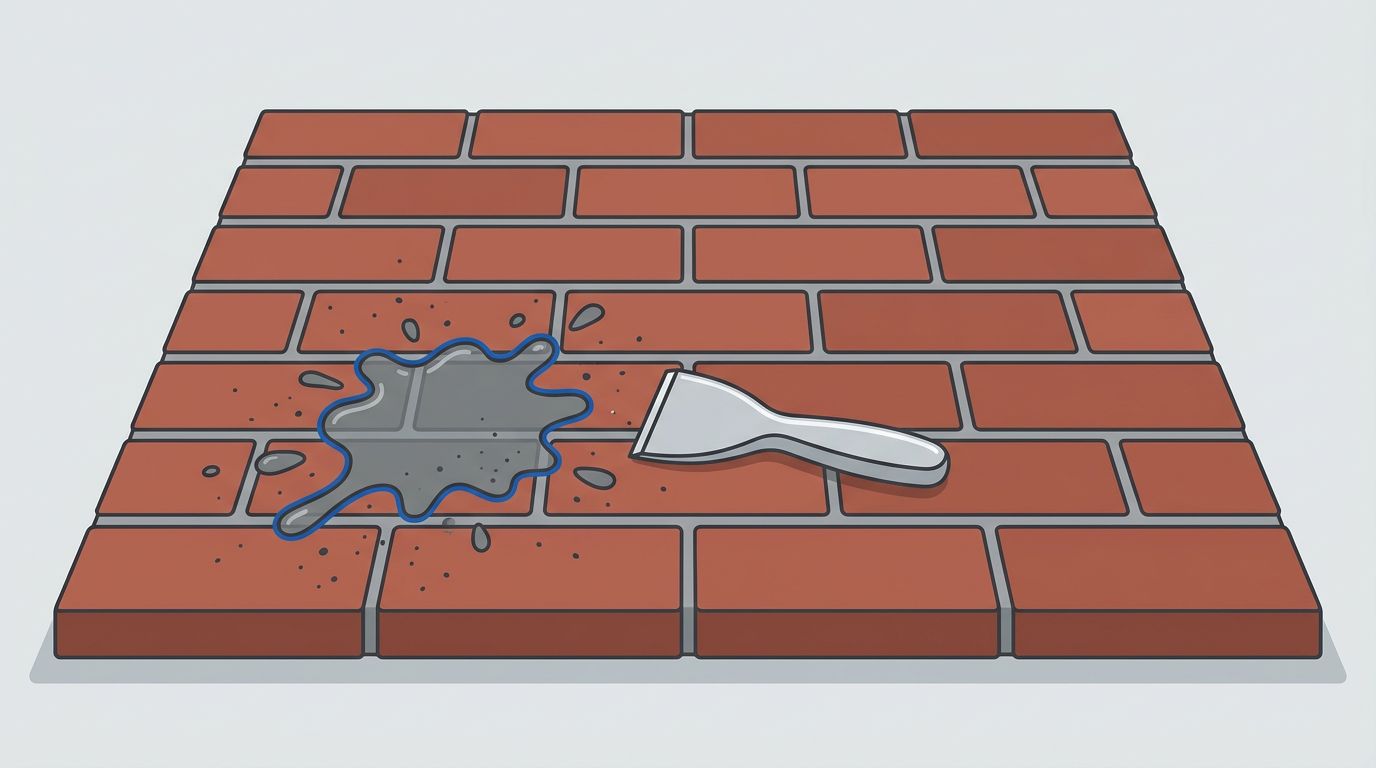
Dealing with concrete splatter on brick pavers can turn a fresh renovation into an ugly cleanup job fast. I see it most often after driveway work, patio repairs, and backyard projects where a little mix, mortar, or slurry lands where it shouldn’t.
The trouble is that brick pavers are porous. Once the splatter dries, it can grab the surface, settle into the texture, and leave a rough, chalky mark behind. The good news is that this is usually a cleanup issue, not permanent damage, if you handle it the right way. However, if the buildup is widespread or stubborn, you may need to look into professional brick cleaning services to restore the surface safely.
Key Takeaways
- If you act quickly, it is much easier to remove concrete splatter before it bonds permanently to your patio surface.
- Brick pavers absorb residue fast, which is why hard scrubbing usually makes things worse.
- I start with scraping, mild cleaner, and controlled rinsing before I think about pressure washing.
- Applying a quality sealer after cleaning makes it easier to manage future spills and protects the pavers from the stubborn residue of cured concrete.
- If the stain is old or the joints are weak, I slow down and use a safer approach.
Why Concrete Splatter Grabs Brick Pavers So Hard
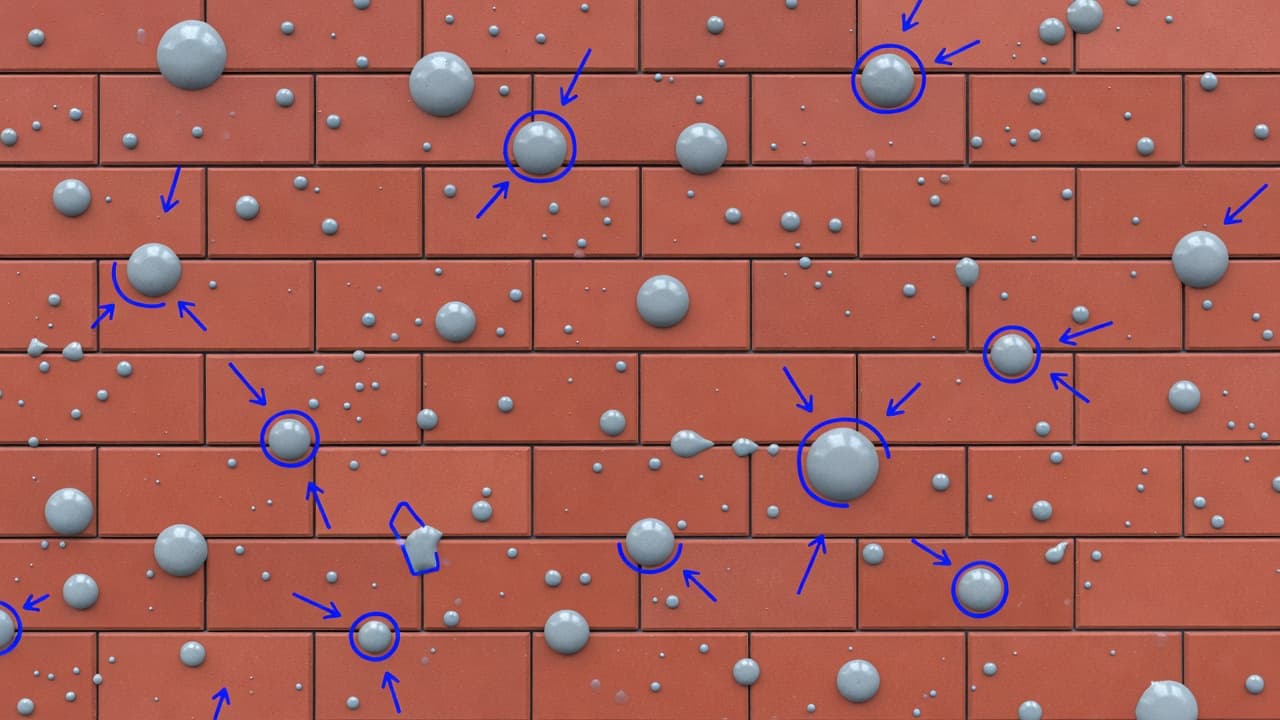
I run into this a lot after home renovations. Concrete does not land neatly and stay polite. It dries into tiny ridges, dots, and film that cling to the paver face.
Brick pavers are part of the problem and part of the reason they look so good. The same texture that gives them character also gives concrete residue a place to hold on. When the brick surface is warm, dusty, or damp, the splatter sets even faster.
If the mess sits too long, I often see three things at once. There is a hard crust on top, a pale film around the edges, and discoloration in the brick itself. That is why a quick rinse usually falls short. Water alone can spread the residue and push fine particles into the joints of the brickwork.
What I Do Before I Touch the Stain
Before I start cleaning, I clear the area. Loose dust, gravel, drywall bits, and extra sand need to go first. If the patio still has renovation debris on it, I do not want that grinding into the brick during the cleanup process.
If the concrete is still soft, I remove the excess with a plastic scraper first. I never drag metal across the paver face, as that is how a small cleanup turns into a permanent surface repair. The main goal of this first pass is to remove cement residue carefully without scratching or damaging the pavers.
Then I work through the initial steps in a simple order:
- Sweep or vacuum the dry debris.
- Check the splatter for loose edges.
- Test an area with a mild cleaner to ensure compatibility with your specific paver type.
- Protect nearby plants, screens, and painted trim.
- Wear personal protective equipment before I scrub anything.
The big thing here is patience. If I flood the area too early, I can turn one small spot into a larger gray smear. I want the stain to be loose before I try to move it.
My Safest Method for Dried Concrete Splatter
I do not start with a wire brush or harsh chemicals like muriatic acid, also known as hydrochloric acid, as these can permanently etch the brick surface. That usually creates a bigger mess than the splatter itself. On brick pavers, I prefer a slower approach that keeps the surface intact.
This is the order I trust most on pavers:
| Step | What I use | Why it helps |
|---|---|---|
| Light scrape | Plastic scraper or dull putty knife | Lifts the bulk without gouging the brick |
| Mild cleaner | NMD 80 or a paver-safe masonry cleaner | Softens the residue before scrubbing as a reliable cement removal method |
| Gentle brush and rinse | Medium or soft-bristle brush, low-pressure rinse | Clears the last film without blowing out sand |
If the splatter has cured hard, I repeat the process instead of forcing it in one pass. One careful cleaning cycle is better than one rough one.
For instances of hardened cement that refuse to budge, a hammer and chisel may be used very gently. You must be extremely careful during this step to avoid causing damage to the pavers or loosening the surrounding mortar joints, which can compromise the stability of your walkway.
If the splatter is still fresh, I want the excess off first. If it is cured hard, I want a slow approach, not a harder one.
I also keep an eye on the joints. Aggressive cleaning can wash out the sand and leave the pavers loose. If the joints were already weak before the spill, I get even more careful to ensure the structure remains sound.
When Pressure Washing Helps, and When It Doesn’t
Pressure washing has a place here, but it is not the first tool I reach for. Once the residue is loosened, a controlled rinse can finish the job and even out the color across the patio. Used the wrong way, it can etch the brick surface, strip joint sand, and leave the pavers blotchy.
That is why I keep the pressure low and the tip wide. I want movement across the surface, not a hard blast in one spot. On older pavers, or on joints that are already fragile, I slow down even more.
The same rule applies to other exterior work. I use soft wash methods on roofs and delicate surfaces because a roof is not the place for force. Roof cleaning calls for a different touch than patio cleaning, and I treat it that way. If the renovation dust also hit siding, soffits, or trim, I handle those areas separately.
How I Keep the Marks from Coming Back
Once the pavers are clean and dry, I look at protection. If the surface is unsealed or the old sealer is worn out, future splatter sticks much faster. That is where driveway sealing and patio sealing matter. A high quality sealer provides a protective buffer that preserves the brick finish and makes it significantly easier to remove concrete splatter if it happens again.
I also like a few simple habits after any renovation work:
- Keep crews from washing wet concrete residue across the walk.
- Cover nearby pavers before cutting, patching, or mixing.
- Rinse light dust off early, before it hardens.
- Sweep the joints and edges after the work is done.
If you live in Southwest Florida, heat and humidity can make a mess set faster than you expect. Warm pavers dry splatter in place, and damp evenings do the same. That is one reason I push routine maintenance instead of waiting until the patio looks rough.
A regular cleaning schedule helps too, as long as it is matched to the surface. General dirt, pollen, and jobsite dust are much easier to handle when they are not sitting on top of old, neglected debris.
When I Tell Homeowners to Bring in a Pro
If the concrete has been on the pavers for days, or the stain covers a large area, I usually recommend reaching out to brick cleaning or adhesive residue removal services. The wrong scrubber or the wrong pressure can take the top off the brick face. Once that happens, the cleanup problem turns into a permanent restoration problem. Professional brick cleaners have the specialized equipment and experience to remove stubborn marks without damaging your pavers.
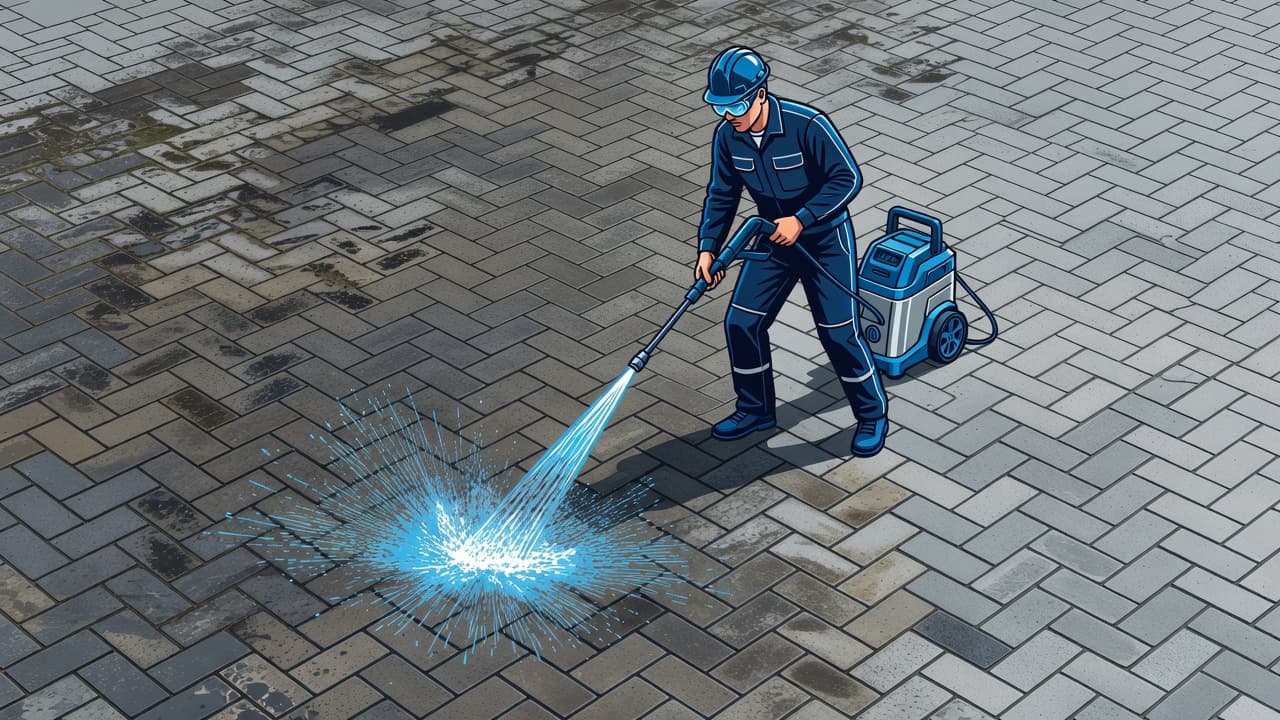
That is where a crew that handles paver restoration, pressure washing, and sealing can save you time and money. Experts who specialize in cleaning cement off bricks can effectively treat the surface, check the integrity of your joints, and determine whether the pavers need more than just a quick wash. If your patio, driveway, or lanai needs professional attention, Get a Quote and I can take a look before the stain becomes more difficult to remove.
Frequently Asked Questions
Can I use vinegar to remove concrete splatter from my brick pavers?
I generally advise against using vinegar because it is an acidic substance that can etch and damage the surface of your bricks. While it may seem like a natural solution, it often leads to discoloration and makes the texture of your pavers more prone to holding onto future dirt. It is safer to stick with a dedicated, paver-safe masonry cleaner.
Will pressure washing alone remove stubborn, dried concrete?
Pressure washing alone is rarely enough to remove fully cured concrete without risking damage to the brick or the joint sand. If the splatter is already hard, a high-pressure blast is more likely to gouge the paver face than lift the stain. I prefer to use a cleaner to soften the residue first, using the washer only for a final, controlled rinse.
How soon after cleaning should I apply a sealer?
After cleaning, you must ensure the pavers are completely dry throughout their entire depth before applying a sealer. If you seal the surface while moisture is trapped inside, you risk creating a cloudy appearance or causing the sealer to peel later on. It is best to wait at least 24 to 48 hours, depending on the weather conditions, to ensure the brick is ready to be protected.
Is it okay to use a wire brush for really tough concrete spots?
No, you should avoid wire brushes entirely because they will scratch and scar the surface of your brick pavers. Even if they seem effective at removing the cement, they often leave permanent, unsightly marks that are much worse than the original splatter. Always opt for a soft or medium-bristle nylon brush to keep the integrity of the brick intact.
Conclusion
Concrete splatter on brick pavers can be an eyesore, but it does not have to be permanent. The key is to treat it as bonded residue rather than ordinary dirt, ensuring you follow the correct cement removal method for your specific surface.
I always suggest starting with gentle techniques and patience. By avoiding harsh tools like a wire brush and steering clear of abrasive chemicals like muriatic acid, you can keep your brickwork looking pristine for years to come. The same careful approach applies to rubber mat stains on brick pavers, grout haze removal after tile work, and other common marks. Once the area is clean and protected with a quality sealer, your outdoor space will be much easier to maintain.
If you address the splatter early, your renovation can end with a clean patio instead of a stained one. Taking these precautions now is the simple difference between a quick, successful cleanup and a costly repair later.