
When battery acid stains brick, the damage can move faster than most homeowners expect. I see this issue most often when a car battery leaks on a driveway, or when someone reaches for the wrong cleaner and makes the spot significantly worse.
The surface may look like a simple stain at first, but battery acid can also burn the brick, weaken the joint sand, and dull any sealer that was already on the driveway. The goal of this guide is to help you remove battery stains safely and effectively without causing permanent damage to your property. The right move is to remain calm, careful, and quick. I never treat these spills like common mud or oil, as the chemical nature of the acid requires a more precise approach.
Key Takeaways
- Act Quickly but Safely: Battery acid is highly corrosive and causes immediate chemical burns; neutralize fresh spills with baking soda immediately to stop the reaction before attempting to clean.
- Avoid Harsh Chemicals and Pressure: Do not reach for bleach, vinegar, or a high-pressure wand initially, as these can create dangerous fumes, spread the acid, or physically damage the porous brick surface.
- Distinguish Stains from Damage: Understand that a surface stain is a discoloration, while a chemical burn alters the texture and composition of the brick; deep pitting or erosion often requires professional restoration.
- Professional Products are Key: For residual staining, use professional-grade rust removers containing oxalic acid rather than aggressive chemicals like muriatic acid to ensure the brick remains intact.
- Seal for Longevity: Once the area is neutralized, cleaned, and fully dry, applying a protective sealer can help create a uniform look and act as a barrier against future spills.
Why battery acid is hard on brick
Battery acid contains sulfuric acid, which is highly corrosive and strong enough to change the look of a driveway in a hurry. On brick pavers, it can pull color out of the surface, leave a pale or chalky mark, or create a rough spot that feels different underfoot. If the spill sat for a while, the acid may have gone past the top layer and started damaging the brick itself.
That matters because a surface stain and a chemical burn are not the same thing. Because brick pavers are porous surfaces that absorb liquids quickly, you will often see orange battery acid staining develop almost immediately. If left untreated, this can result in a permanent orange acid burn that eats into the finish and loosens the sand between the joints. This chemical reaction goes far beyond simple surface dirt, often leaving a patch that never matches the rest of the driveway without professional repair.
Here in Southwest Florida, heat makes the problem worse. A hot driveway can let the acid set in faster, and the longer it stays in place, the harder the cleanup gets. That is why I always start by looking at the spill first, not grabbing the pressure washer first.
If the driveway was already sealed, the area can also look cloudy or uneven after the spill. Sealer does not stop acid from reacting, and it does not hide damage once the surface is burned.
How I tell a stain from real surface damage
Before I clean anything, I check three things: color, texture, and the joints. That tells me whether I am dealing with leftover residue or actual damage to the brick and stone.
One of the most common signs is a distinct orange staining, which is often a result of iron oxide reacting within the material when exposed to acid. If the spot is still wet or slick, I treat it like an active spill. If it is dry but the brick looks bleached, pitted, or rough, the acid probably caused surface degradation. In more severe cases, heavy acid can leave behind etched concrete or deeply degraded stone that requires more than simple cleaning. I also look at the sand between the pavers, because battery acid can wash out joint material and leave the driveway loose in that area.
A simple stain usually sits on top of the brick. Damage changes the chemical composition of the brick itself. That is the difference that matters when determining your next steps.
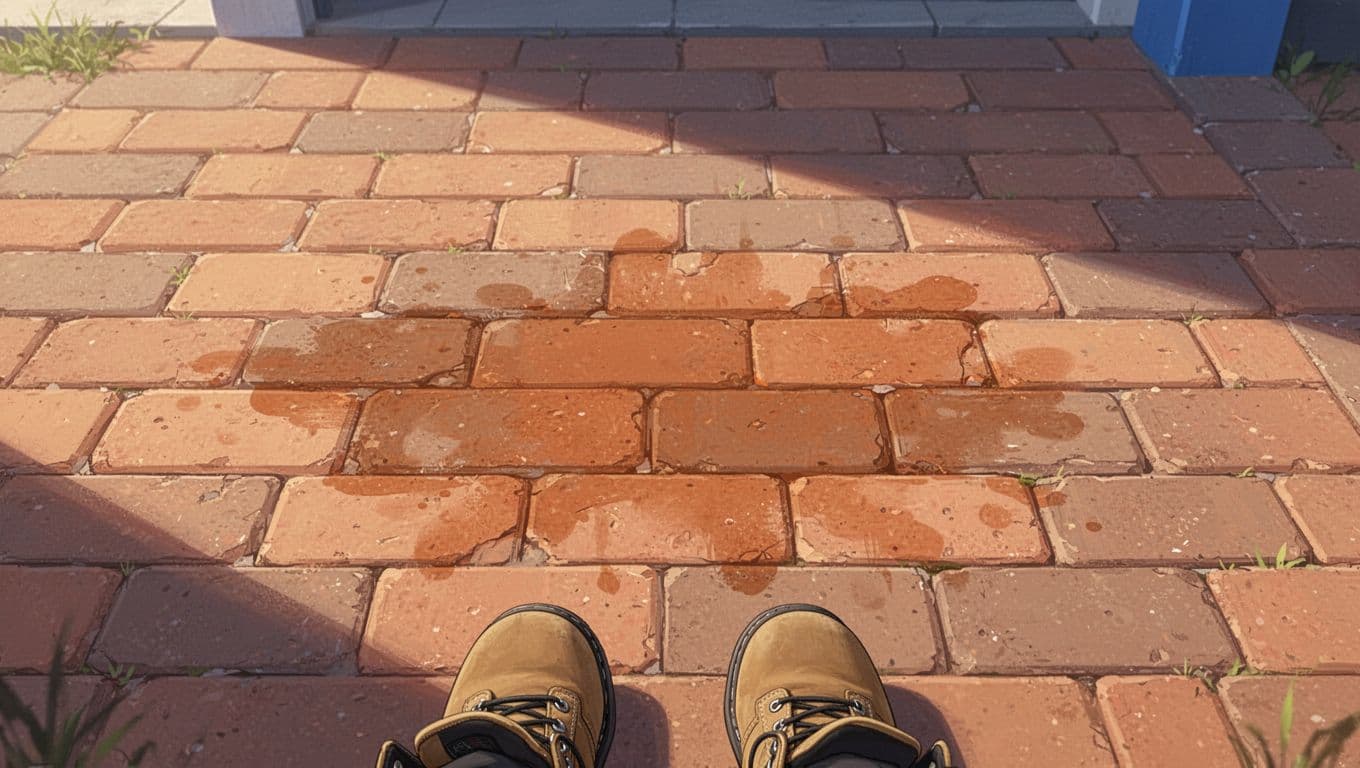
When I inspect a spill, I also watch for any spread. Sometimes the acid follows the slope of the driveway and marks a bigger area than the homeowner first noticed. A small spot near the battery tray can leave a trail if it ran toward the garage or the street, potentially causing secondary damage to surrounding pavers.
Safe steps for a fresh battery acid spill
Fresh acid requires a controlled, immediate response. Often, these leaks originate from the battery terminals of a vehicle or a golf cart parked on your driveway. I do not start with pressure washing, and I do not start with a harsh cleaner either. The first goal is to stop the chemical reaction.
If the spill is still wet, speed matters more than force.
- Keep people and pets away from the area. I isolate the spill before doing anything else. Wearing protective gloves and eye protection is essential for safety.
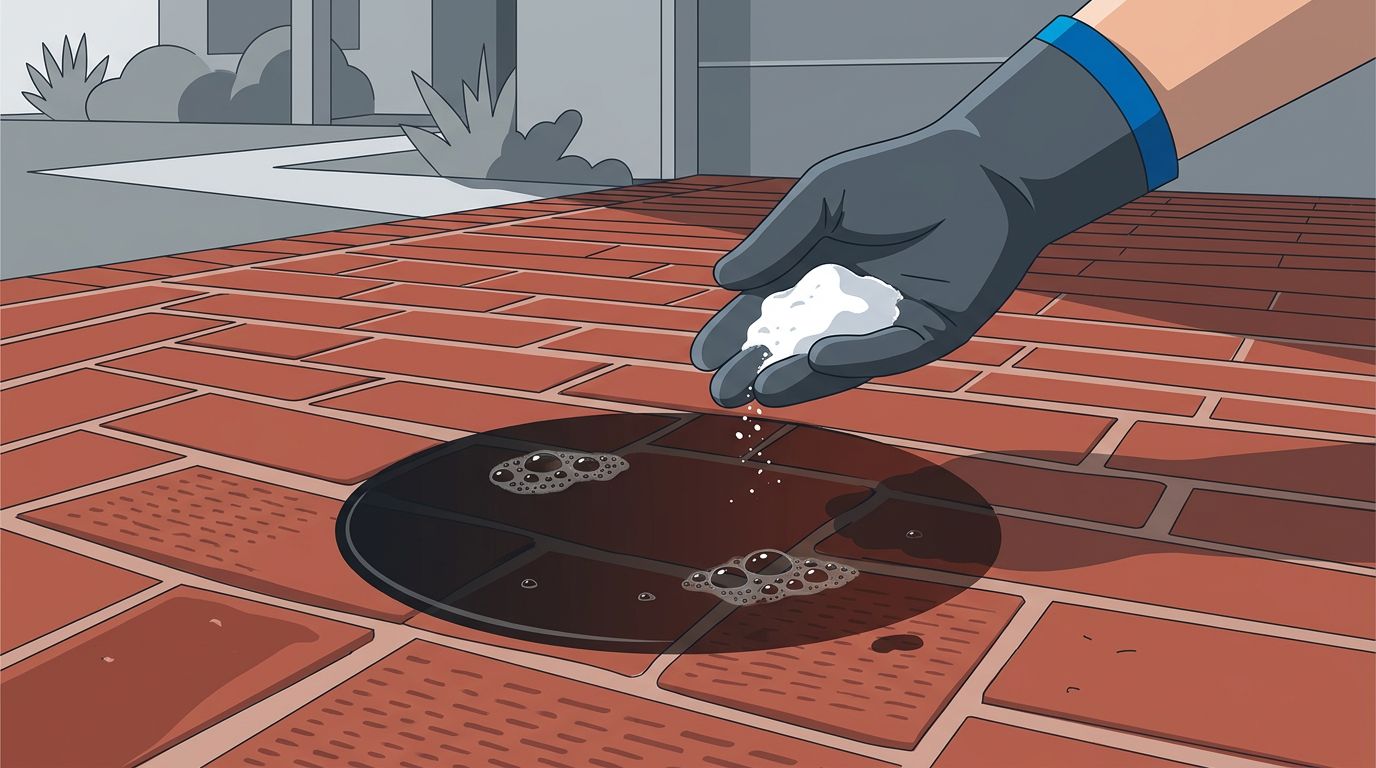
- Neutralize the acid carefully. For a small spill, using baking soda is an effective DIY option for neutralizing acidic products immediately. I apply it slowly and let the powder react with the liquid until the fizzing stops before moving on to the next step.
- Collect the residue. Once the chemical reaction has ceased, I sweep up the spent material and place it in a safe, sealable disposable container. I never leave the residue sitting on the brick surface.
- Rinse with plenty of clean water. A thorough rinse is necessary to flush out the remaining residue. I maintain a high dilution ratio with water to ensure no active acid remains trapped in the porous surface of the brick. I repeat the rinse if the area still appears to be active.
I stay away from vinegar, bleach, and other random household cleaners during this process. Mixing the wrong products can create dangerous fumes or make the mess significantly harder to control. I also avoid scrubbing hard with a wire brush, because that can chew up the face of the brick and spread the damage further.
If the spill is large, or if the battery is still actively leaking, I stop and get the source under control before moving any further. A battery spill is not the time to guess or take shortcuts.
When pressure washing helps, and when it hurts
A pressure washer has a place in this job, but only after the acid is neutralized and the residue is gone. Used the wrong way, strong pressure can drive leftover material deeper into the surface, strip out joint sand, and rough up the brick. That turns a simple cleanup into an expensive repair.
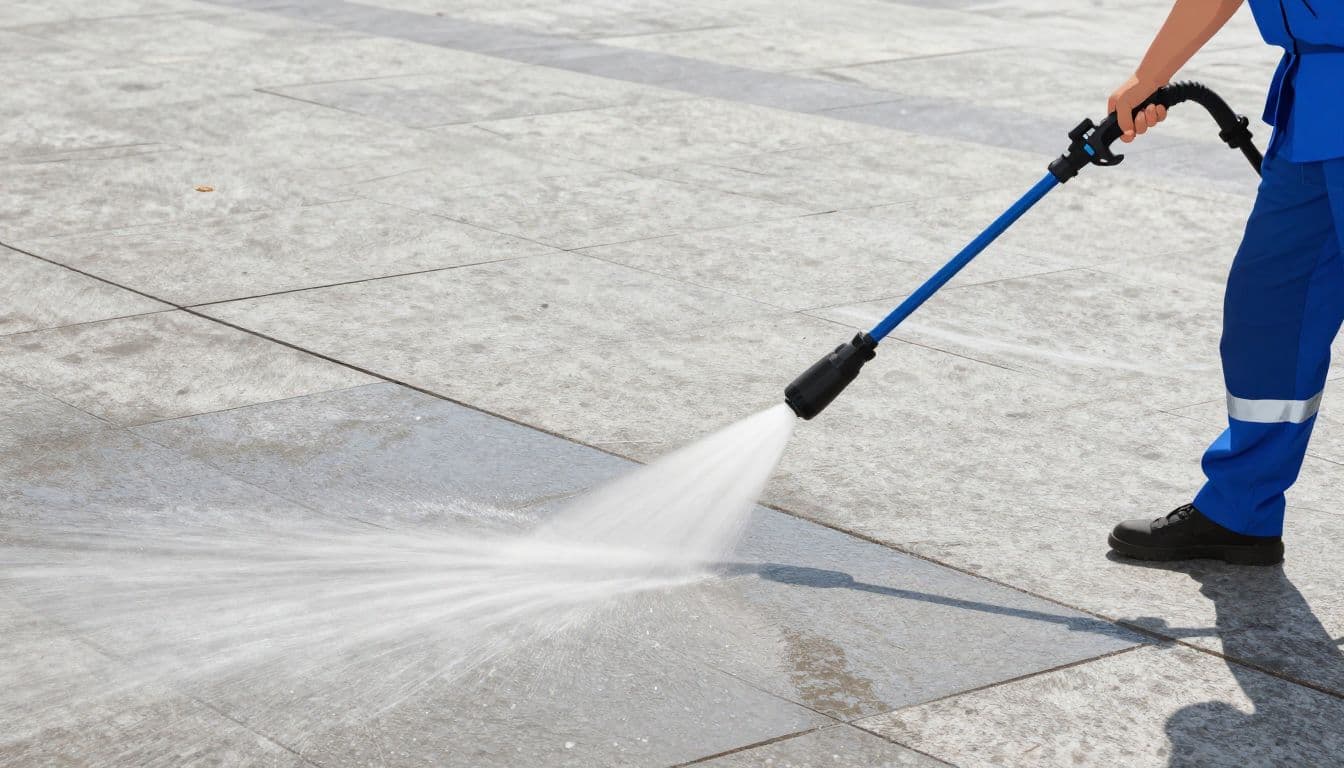
I use a pressure washer for the overall driveway cleanup only after the chemical spill has been handled. I do not use it as the first attack on fresh battery acid. The method matters as much as the machine, and using a professional surface cleaner attachment is often much safer than a high-pressure wand alone. This tool provides an even, controlled clean that prevents the uneven streaks or surface pitting caused by a concentrated nozzle.
The same careful mindset applies to roof cleaning and soft wash work. On a roof, I do not want to force the surface. I want the right solution and the right amount of rinsing. A brick driveway calls for the same common sense. Clean the surface, but do not beat it up. If you are uncertain about the process, a professional pressure washing company will typically use professional equipment and specialized chemicals, such as F9 BARC, to safely lift stains without eroding the paver surface.
If the pavers are older, if the joints are already weak, or if the spill sits near a garage apron, I lower the pressure and clean in stages. That keeps the surface intact and gives me a better result in the end.
Restoring the driveway after the spill
Once the spill is neutralized and cleaned, I assess what remains. Sometimes only a faded mark persists, but if the brick surface is chemically burned, cleaning alone will not restore it. To address these persistent marks, I rely on a specific rust removal methodology. Many homeowners mistakenly turn to muriatic acid, but that chemical is often too aggressive and can cause permanent etching or discoloration. Instead, I use a professional-grade concrete rust remover formulated with oxalic acid, which is significantly more effective and safer for brick surfaces. For the most stubborn stains, I reach for F9 BARC, and if the acid spill was mixed with motor oil, I incorporate a double eagle degreaser to ensure the surface is completely pristine.
If the damage is severe, I may need to re-sand the joints or replace individual damaged pavers. If the driveway had a protective finish, I also check whether the chemical reaction dulled the sealer in that specific spot.
That is where driveway sealing helps after the surface is fully cleaned, dry, and stable. While sealer cannot fix a brick that has been physically burned, it provides a vital barrier that protects the driveway from future stains and makes routine maintenance much easier. It also creates a uniform aesthetic across the entire paved area. I always treat sealing as the final step because if there is any lingering acid residue, moisture, or loose sand in the joints, the sealer will fail to adhere properly.
If you want professional help with cleanup, restoration, or driveway sealing, Get a Quote and I will take a look. I can also inspect adjacent sections of driveway concrete to ensure the final result looks consistent throughout the entire property. I am also happy to check for loose joint sand, faded areas, and any spots that require pressure washing before they become bigger problems.
Frequently Asked Questions
Can I use a pressure washer to clean battery acid off my driveway?
You should avoid using a pressure washer as your first step, as high-pressure water can drive the acid deeper into the porous brick and damage the surrounding joint sand. Only use a pressure washer after the acid has been fully neutralized and the residue is removed to rinse the area safely.
Why does my brick look orange after a battery acid leak?
The orange color is typically the result of iron oxide reacting with the acid when it contacts the material within the brick or stone. This indicates that the acid has already begun to break down the surface, turning a simple spill into a potential chemical burn.
Is it safe to use household cleaners like bleach or vinegar on the spill?
No, you should avoid bleach and vinegar, as mixing these with battery acid can create dangerous fumes or produce unpredictable chemical reactions. These household products are not designed to neutralize sulfuric acid and may leave you with a larger, more difficult stain to remove.
What should I do if the brick feels rough or pitted after cleaning?
If the brick feels rough, pitted, or bleached, you are dealing with a chemical burn rather than a surface-level stain. In these cases, cleaning the residue is not enough, and you may need to consult a professional to see if the pavers can be restored or if the damaged units need to be replaced.
Conclusion
Successfully removing battery stains from a brick driveway is a process that rewards fast, careful action. You should always prioritize neutralizing the acid first, followed by a thorough rinse, before assessing whether you are dealing with a surface-level discoloration, actual structural damage, or eroded mortar joints.
It is important to remember that battery acid stains brick differently than standard organic debris, requiring a more specialized approach than a simple wash. While this guide focuses specifically on neutralizing acid, these techniques are often adaptable for treating fertilizer rust stains found on various non-porous substrates or masonry surfaces.
If you rush straight to heavy pressure washing, you risk making the damage harder to correct. By following these safe cleaning steps, your driveway has a much better chance of looking consistent again, whether or not you choose to finish the project with driveway sealing. A small spill does not have to become a permanent mark on your brick if you address it with the right methods.