
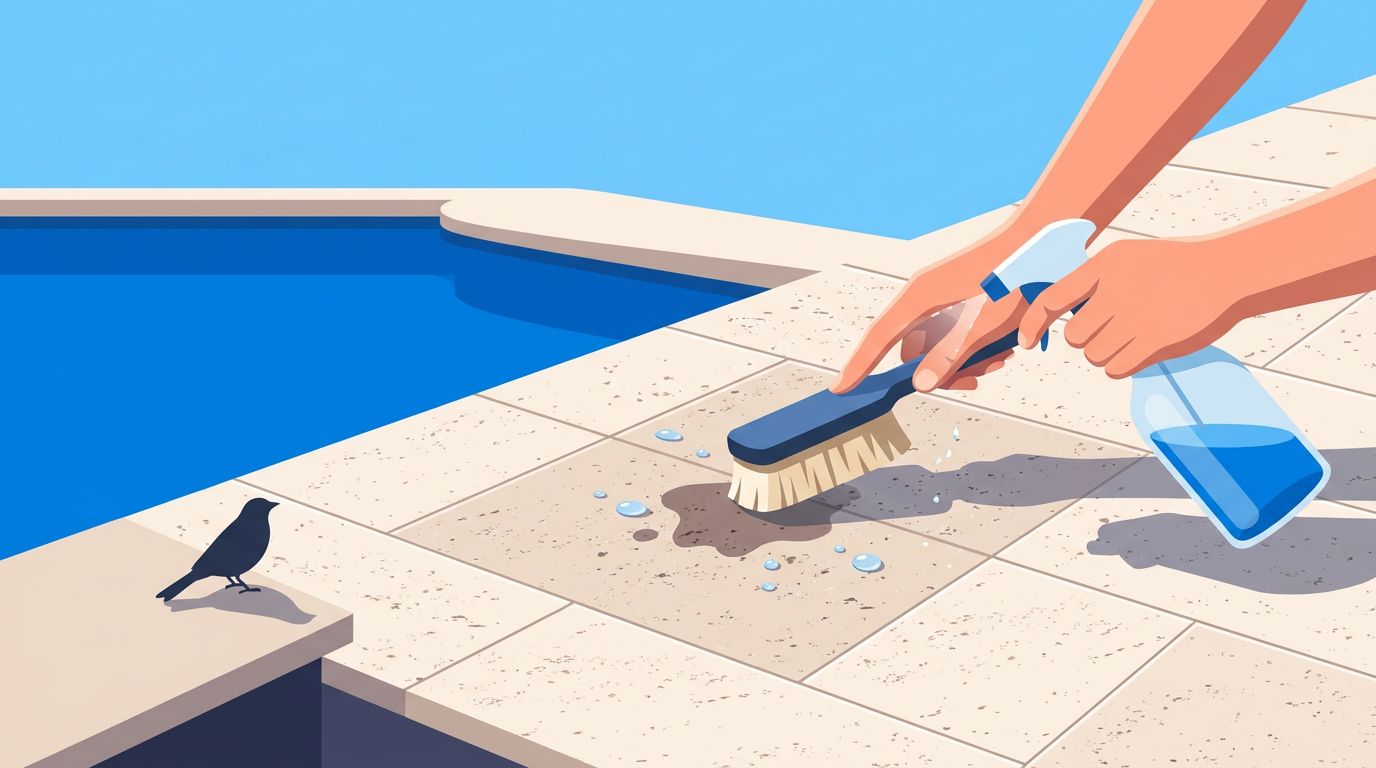
Bird droppings on your outdoor patio are more than just a nuisance. Because you are dealing with porous natural stone, these acidic droppings dry fast, cling deeply to the surface pores, and quickly make a pristine pool area look tired and weathered.
I see this issue frequently throughout Southwest Florida, where the constant cycle of intense sun, heavy rain, and local wildlife all work against a bright stone surface. The solution is not brute force or harsh chemicals. Instead, the best way to maintain your exterior space is through a careful travertine pool deck cleanup that respects the integrity of the stone and removes the mess without causing long term damage.
Key Takeaways
- Travertine is naturally porous, which means bird droppings can lead to permanent staining if they remain on the surface for too long.
- You should avoid using harsh acidic cleaners, wire brushes, and high-pressure washing at close range, as these can easily damage the delicate stone surface.
- A safe travertine pool deck cleanup routine begins with a light rinse, the application of a stone-safe cleaner, and gentle agitation.
- Soft wash methods are frequently more effective and safer for travertine than aggressive pressure washing techniques.
- Regularly applying a high-quality sealer helps your travertine resist future stains, although it does not serve as a substitute for routine maintenance and cleaning.
Why bird droppings are so rough on travertine
Travertine is beautiful, but it is not a hard, sealed slab of plastic. It is a porous natural stone that features small pits and a textured surface, which can easily grab hold of dirt and debris. This natural character is exactly what makes the material so attractive, but it is also the reason why cleanup must be handled with care.
Bird droppings act as organic stains that can leave behind a dark spot, a dull patch, or a chalky residue once they dry. If the mess sits in the Florida heat, it bakes into the surface even faster. Furthermore, the presence of standing water from pool splashes combined with high temperatures can exacerbate the absorption of these stains deep into the stone. Around a pool deck, this is a significant concern because people are walking barefoot, and the surface is already exposed to chlorine and constant daily use.
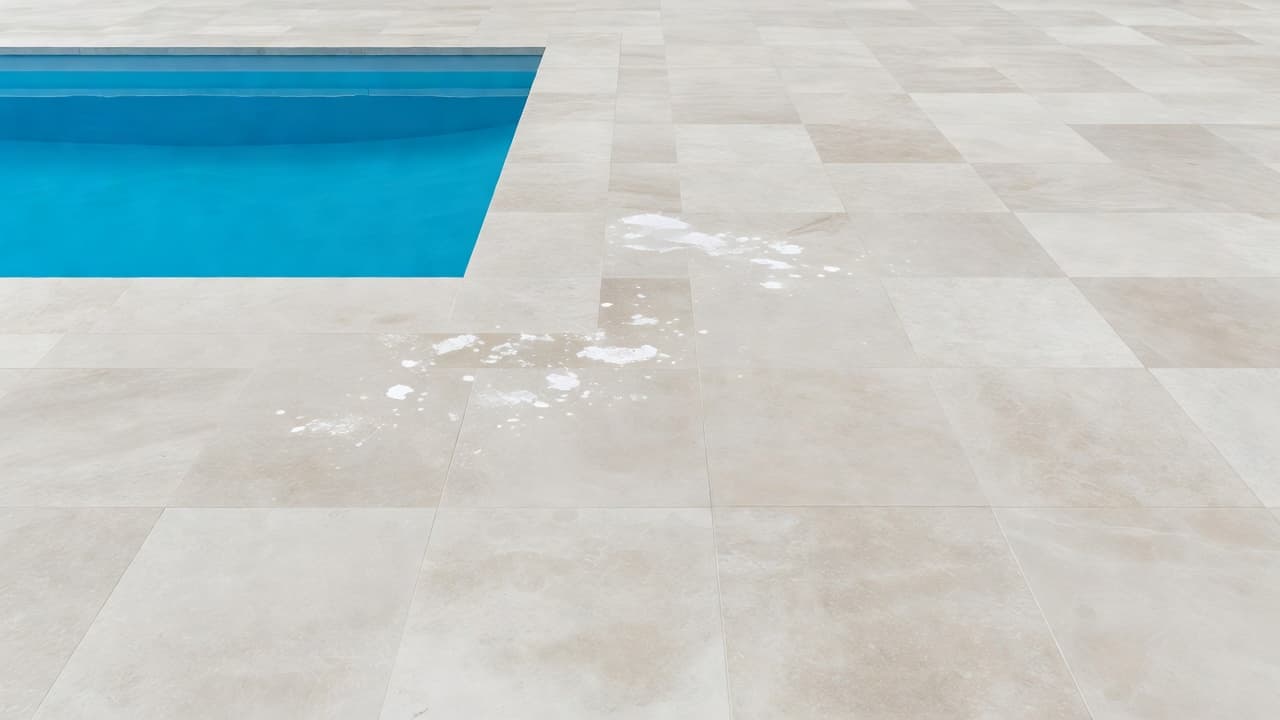
A quick wipe is often enough if you catch the issue early. Once the material hardens, however, the stone needs a more effective cleaning plan than just a quick scrub.
The cleanup mistakes I avoid on stone around a pool
The wrong cleaner can do more damage than the bird mess itself. I never start with anything harsh just because the stain looks stubborn. Travertine does not respond well to rough treatment, and aggressive cleaning methods can ruin the integrity of the stone.
I stay away from anything that can etch, strip, or scratch the surface. That means no metal tools, no random acid cleaners from the garage shelf, and no intense blast from a pressure washer nozzle held too close.
Here is what I skip on travertine:
- Wire brushes and metal scrapers, because they can leave permanent marks.
- Vinegar and bleach, because these acidic or harsh chemicals can dull the stone and leave it susceptible to damage.
- Bleach left to sit too long, because it can discolor nearby materials and plants.
- A pressure washer used at close range or on high settings, because it can open up the surface and create a new cleaning problem. Always stick to a low pressure setting to prevent etching the stone.
If a cleaner feels strong enough to strip paint, it is usually too aggressive for travertine.
That same rule matters on sealed stone too. Sealer helps, but it does not make the surface invincible. The finish still needs the right cleaner and the right touch to ensure the longevity of your pool deck.
Safe travertine pool deck cleanup step by step
The safest travertine pool deck cleanup starts with a simple, methodical approach. I want to remove the mess without forcing it deeper into the porous surface of the stone.
When the droppings are fresh, I start with water first. If they have dried, I give the area a little more time with a stone-safe cleaner, then I work gently with a soft brush.
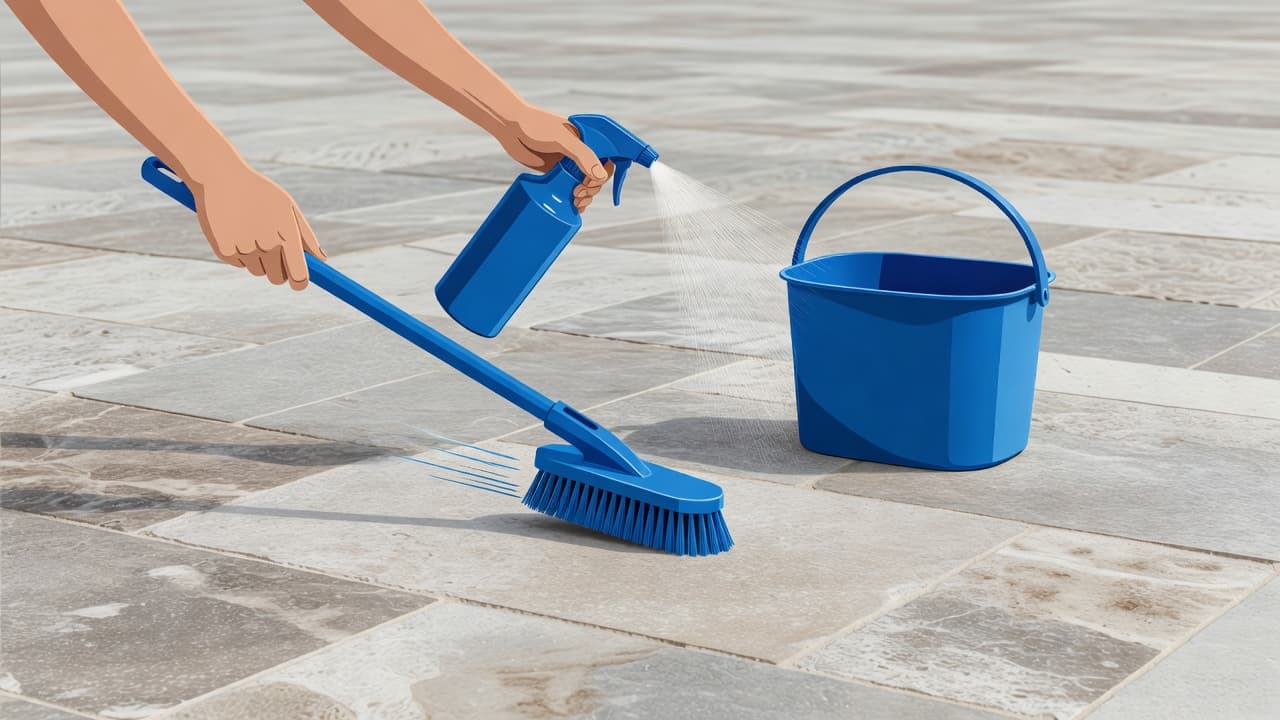
This is the process I trust most for a professional travertine pool deck cleanup:
- Perform regular sweeping to clear away loose grit and leaves first. Sand and debris can scratch the stone if they move around during the cleaning process.
- Rinse the spot with a garden hose. This initial rinse softens the residue and helps the cleaning solution penetrate more effectively.
- Apply a pH-neutral stone cleaner or a mild solution specifically formulated for natural stone. I keep it simple and avoid using anything harsh that could etch the surface.
- Let the cleaner sit for a short time, then use a soft-bristle brush to agitate the area. I do not scrub hard, as I prefer to let the cleaner do the heavy lifting.
- Rinse well and remove all residue. Leftover cleaner can leave a film behind that may attract new dirt and grime.
If the stain has already settled into the pores, I slow down and test a small, inconspicuous area first. Travertine is too easy to damage when the wrong product meets the wrong amount of pressure.
Where pressure washing fits, and where soft wash does better
Not every exterior cleaning job calls for the same method. On travertine, I am careful when using a pressure washer because too much force can leave permanent marks or open up weak spots in the stone. A light, controlled rinse is one thing, but a hard blast from a powerful pressure washer is something else entirely.
That is where soft wash comes in. On delicate surfaces, I prefer a gentler method that uses the right cleaning solution and low pressure instead of raw force. I take the same approach on roof cleaning, because a roof should be cleaned without damage. I use that same judgment on house washing too, since siding and trim need protection as much as they need cleaning.
Bird droppings on a pool deck are a good example of why method matters. The goal is not to win a battle with the stone. The goal is to clean it and keep the finish intact. When dealing with travertine pavers, I also pay close attention to the pool coping. If the joints between these stones are not cleaned carefully, they can become a breeding ground for mold and algae. For light, routine maintenance, you can often remove surface debris using a soft brush and a mixture of warm water and mild dish soap.
When I am dealing with a larger exterior cleanup, I look at the whole surface, not just the stain. Travertine, pavers, concrete edges, and nearby features each need their own treatment. That is also why driveway sealing and stone sealing matter after a thorough cleaning. Clean first, protect second, and keep the surface in better shape for the long run.
If you want help with a stubborn spot or a full deck refresh, Get a Quote and I will take a look.
Keeping bird mess off the deck longer
A clean pool deck is easier to maintain when the surface is protected and the area around it stays tidy. I tell homeowners to think about prevention the same way they think about paver care or driveway sealing. Consistent seasonal maintenance ensures that the less grime settles into the stone, the easier your next cleanup will be.
A few habits help a lot:
- Trim back trees and branches that provide birds with a place to perch near the pool area.
- Rinse fresh droppings as soon as you see them to prevent etching.
- Keep gutters and nearby ledges clean, since birds often gather where debris collects.
- Apply a high-quality natural stone sealer to protect the surface. You can perform a simple water bead test; if water no longer beads on the surface, it is time to re-seal.
- Inspect the deck for low spots and cracks where moisture and dirt can sit longer. Filling cracks with a durable epoxy filler is the best way to prevent permanent stains and surface damage.
A quality penetrating sealer does not make travertine stain-proof, but it does make the surface much easier to clean and gives you more time to act before a mess sinks in. In our climate, that matters. Sun, rain, and daily use all wear on stone faster than most homeowners expect.
If the deck gets a lot of shade or sits under trees, regular maintenance matters even more. The same is true for any hardscape around the home. Pool decks, walkways, patios, and driveways all stay in better shape when they are cleaned on a schedule instead of waiting for heavy buildup to accumulate.
Frequently Asked Questions
How often should I seal my travertine pool deck to prevent stains?
You should generally apply a high-quality penetrating sealer every 1-3 years depending on local weather exposure and pool usage. You can perform a simple water bead test; if water no longer beads on the surface, it is a clear sign that the stone needs to be resealed to protect against future stains.
Can I use vinegar to clean bird droppings off my travertine?
No, you should never use vinegar, bleach, or other acidic household cleaners on travertine stone. These substances can cause permanent etching and dull the natural finish of your pavers, making them more susceptible to long-term damage and staining.
Is it safe to use a pressure washer on a travertine pool deck?
A pressure washer can be used, but only at low pressure settings and with careful technique. Avoid holding the nozzle too close to the stone, as high pressure can easily open up the surface pores or create permanent marks that are difficult to repair.
What is the best way to remove old, dried bird droppings?
For dried messes, start by rinsing the area with water to soften the residue before applying a pH-neutral stone cleaner. Use a soft-bristle brush to gently agitate the surface, allowing the cleaner to do the heavy lifting rather than using physical force or aggressive tools.
Conclusion
Bird droppings on travertine do not need to turn into a major project. The key is to act fast, use the right cleaner, and keep pressure low enough to protect the stone. While bird droppings are a common issue for homeowners, a professional deep cleaning can restore your stone’s original luster if the stains have become deeply embedded.
I treat travertine like any other natural surface that deserves care, not force. That is the same approach I use with soft wash work, roof cleaning, pressure washing, and sealing jobs across Southwest Florida. By following these steps for regular travertine pool deck cleanup, your outdoor space will look bright, safe, and ready for use, rather than worn down by the maintenance process itself.