
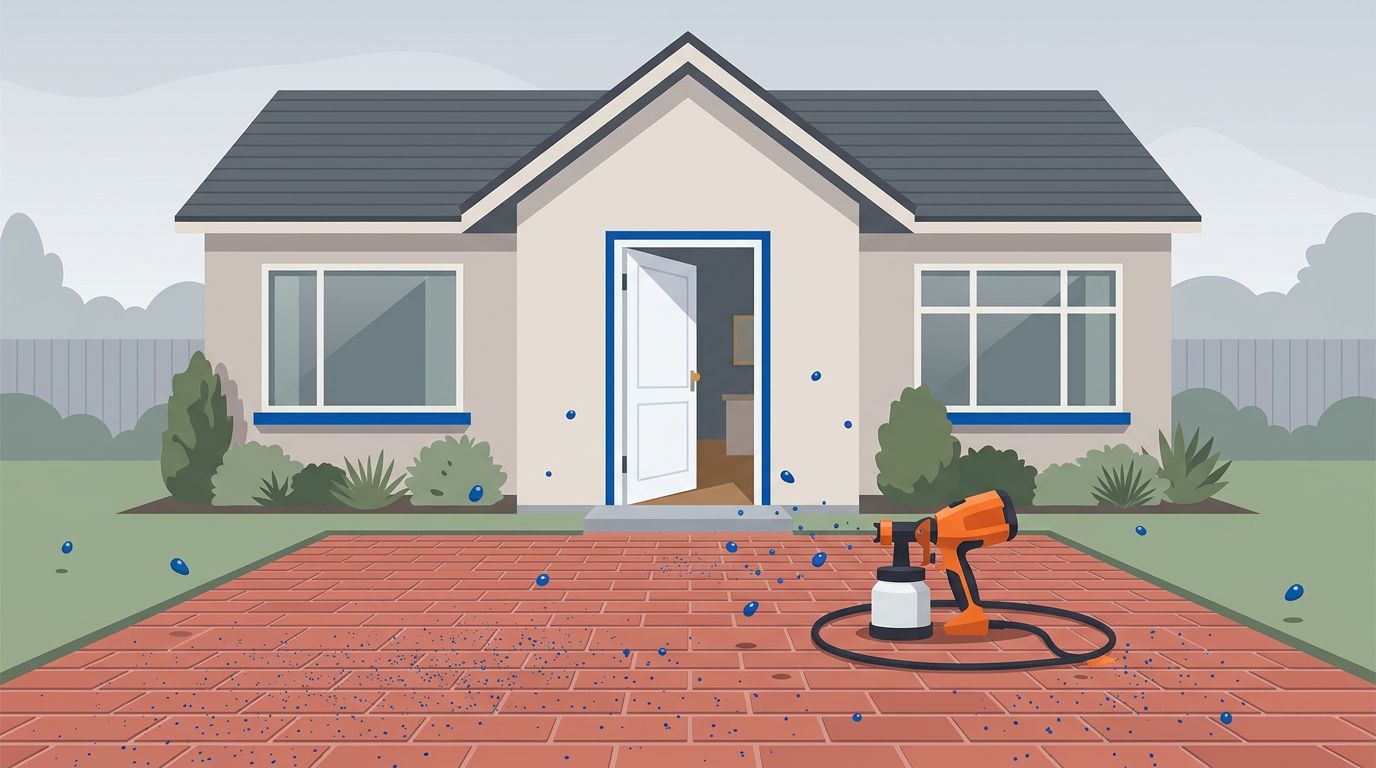
Fresh paint on a house should make the property look refreshed and clean, not leave unsightly specks all over your driveway. When paint overspray brick pavers happens, it can quickly turn a beautiful outdoor space into a spotted, frustrating mess.
I frequently see this issue following exterior painting jobs, detailed trim work, or even quick touch-ups that have gone sideways. Often, the trouble starts with a fine mist from an airless sprayer that drifts further than intended. Because the pavers are located so close to the work area, they are highly susceptible to damage. Whether it is oil-based finish or common latex paint, once the substance dries deep within the porous surface and joints of the pavers, it can be incredibly stubborn to remove.
Key Takeaways
- Dealing with fresh overspray as soon as it happens makes it significantly easier to remove paint from your patio or walkway.
- Cleaning brick pavers requires a gentle touch because aggressive scrubbing can damage the surface material and dislodge the joint sand.
- The most effective cleaning method depends on the type of paint, how long it has been sitting, and whether your surface was already protected with a sealant.
- Extensive stains or older installations often show the best results when you combine deep cleaning with professional driveway sealing.
- Proper preparation before you begin a house painting project is the best way to prevent overspray from becoming a problem in the first place.
How Paint Overspray Gets onto Brick Pavers
Overspray usually happens when paint mist drifts farther than expected. A windy day, poor masking, or a spray pattern that runs too wide can put tiny droplets right onto the pavers.
Brick pavers are not like smooth concrete or standard concrete pavers. They have texture, joints, and porous spots that catch paint fast. That is why a little overspray can look worse on brick or patio pavers than it does on a flat wall.
I also pay attention to nearby surfaces during a painting project. Trim, garage doors, soffits, and even lower roof edges can collect mist. If the project includes roof cleaning, soft wash work, or power washing before painting, the order matters. Clean surfaces are easier to protect, but they still need to be covered the right way.
The biggest mistake is trying to blast paint off brick with a pressure washer using too much force. That can strip joint sand and turn a cleanup job into a repair job.
What I Do Before I Scrub a Single Spot
I never start with the most aggressive method first. I first determine what kind of paint landed on the pavers and how long it has been there.
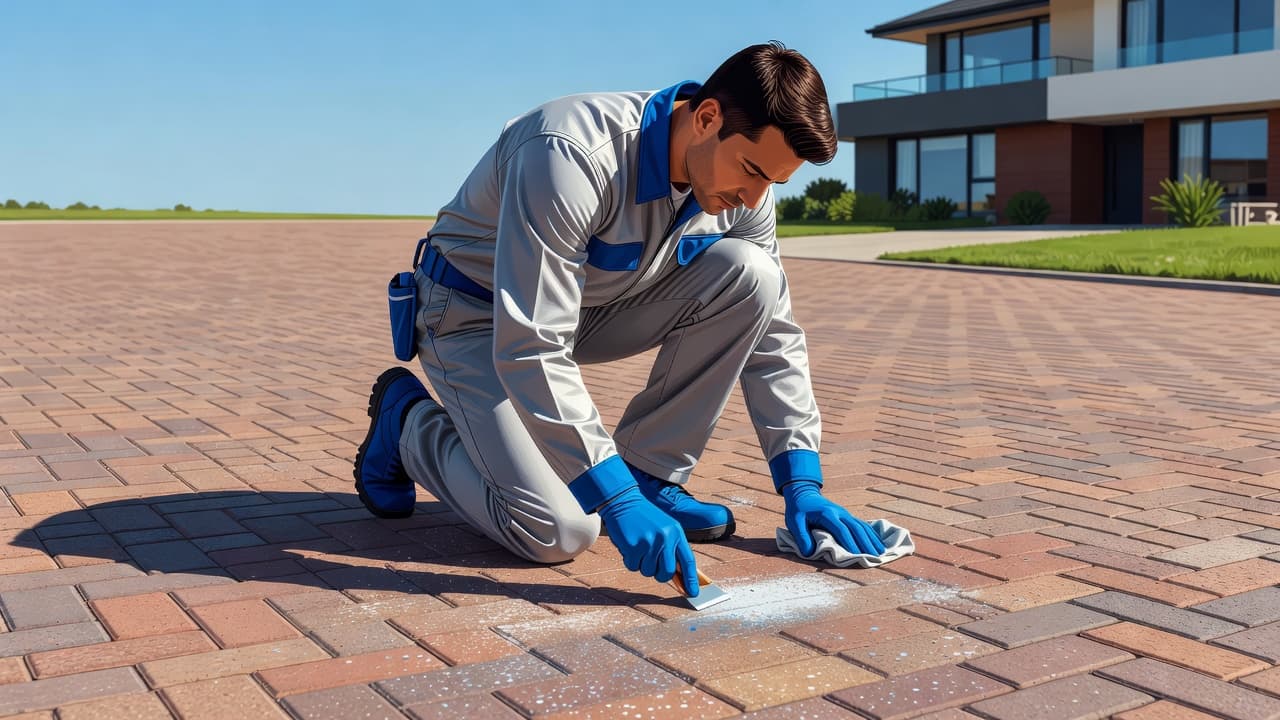
If the paint is fresh, I start by cleaning latex paint with simple soap and water. I use a soft broom or a dry cloth to lift any loose material before testing a small, inconspicuous area. If the stain is recent, this gentle approach often handles the majority of the overspray.
If the paint has already cured, I slow down and work in manageable sections. A plastic scraper is effective for lifting raised paint spots, while a soft brush is ideal for the textured surface of the brick. Before moving to stronger solutions, I test specific cleaners on small spots to gauge the reaction. For stubborn stains, I might try mineral spirits for oil-based paint, denatured alcohol, or isopropyl alcohol depending on the composition of the spill.
I always stay away from aggressive scrubbing tips and high-pressure settings unless I am certain the surface can handle the impact. My rule is simple: use softer methods first, and only move to stronger chemical solvents if absolutely necessary. This strategy protects the integrity of the brick and prevents the sand in the joints from washing out.
When the Stain Needs More Than Spot Cleaning
Some overspray comes off without much drama. Other times, it settles into old pavers, faded areas, or worn joints and becomes a bigger job. That is when I look at the whole surface instead of chasing tiny dots one by one.
If the pavers already have uneven color, staining, or sand loss, cleaning brick and restoring the surface makes more sense than just removing the paint. When dealing with stubborn spots, I often turn to a strong degreaser or a solution of trisodium phosphate to break down the surface tension of the paint. For heavily cured spills, professional-grade lacquer thinner or a specialized graffiti remover is often necessary. If the paint has bonded deeply to painted brick surfaces, a stiff wire brush provides the mechanical agitation required to lift the pigment from the pores.
This is also where driveway sealing can help. Once the pavers are clean and dry, sealing can make future cleanup easier and help protect the color. It will not solve every problem, but it does give the surface a better chance against stains, fading, and day-to-day wear.
If the overspray is widespread, I would rather look at the full driveway, patio, or walkway and plan the work the right way. A partial fix often leaves the surface looking patchy, so I prefer to approach the project as a comprehensive restoration rather than a spot treatment.
How I Keep Overspray Off the Pavers Next Time
The best cleanup is the one you never have to perform. Before any house painting project begins, I make sure the pavers are covered, blocked off, and fully protected from accidental overspray. Taking these steps avoids the need for aggressive cleaning later, which is vital because using a pressure washer at 3000 psi can easily damage your hardscape. If you use a 15-degree nozzle or even a 25-degree nozzle at that intensity, you risk etching the brick face and causing permanent aesthetic damage.
A few simple steps go a long way in prevention:
- Move cars, planters, and furniture away from the work area.
- Cover pavers with heavy-duty drop cloths or high-quality plastic sheeting.
- Tape and mask all edges near walls, garage doors, and trim.
- Check wind conditions before spraying to avoid drift.
- Walk the property thoroughly before the paint starts coming out of the sprayer.
I also like to inspect the driveway, patio, and walkway immediately after the painting is complete. Catching fresh overspray is significantly easier than finding it after the paint has cured for a week in the sun.
If you discover that the mess is more extensive than you can handle, I am here to help. Get a Quote for professional cleaning, restoration, or sealing services if you need a safe and effective way to remove paint.
Frequently Asked Questions
Can I use a pressure washer to remove dried paint from my pavers?
Using a high-pressure washer is generally discouraged because it can easily etch the brick surface and blast away the sand in your paver joints. I recommend starting with gentle manual methods and only using specialized cleaners to avoid permanent damage to your hardscape.
Does the type of paint affect how I remove it?
Yes, the composition of the paint determines which solvent will be most effective. Latex paint can often be cleaned with soap and warm water when fresh, while oil-based paints may require stronger solvents like mineral spirits once they have cured.
Is it possible to completely remove paint that has soaked into porous bricks?
If the paint has settled deep into the pores, it becomes much more difficult to remove without affecting the appearance of the brick. In these cases, a deep cleaning or professional restoration service is often more effective than attempting to spot-clean individual specks.
Should I seal my pavers after removing the overspray?
Applying a high-quality sealant is a great way to protect your pavers after a deep cleaning. It helps prevent future stains from bonding as easily and can restore the natural color and finish of your walkway or driveway.
Conclusion
Dealing with paint overspray on brick pavers can start as a minor mishap, but it can quickly turn into a stubborn problem if left unattended. The sooner I catch the spill, the easier it is to remove paint without risking damage to the brick surface or the mortar joints.
When the paint has already cured, spread out, or settled into the pores of older pavers, I shift my focus toward professional restoration rather than aggressive scrubbing. This approach keeps the surface looking its best and ensures that the long term process of cleaning brick remains safe and effective for years to come.