
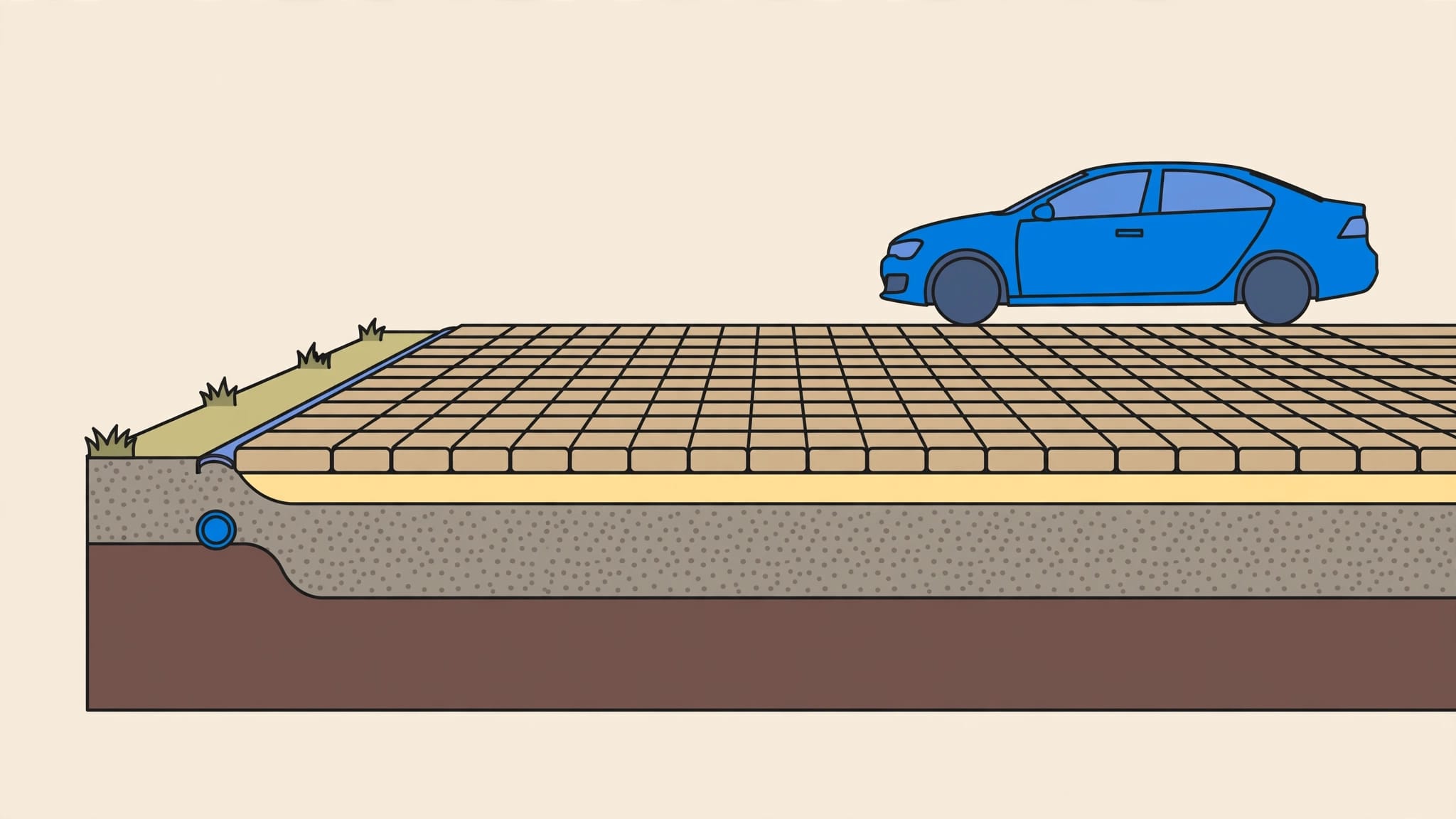
A typical paver base for a driveway is 6 to 12 inches of aggregate after compaction, depending on soil conditions and vehicle weight. Passenger vehicles need at least 6 inches, while heavy vehicles, RVs, and weak soil can require 8 to 12 inches or more.
Plan the complete assembly before digging. To determine how deep to dig, excavate for the base, bedding, and paver thickness. Base depth alone doesn’t tell you how much soil to remove.
Key Takeaways
- Base thickness means the aggregate thickness after compaction, not the total excavation.
- Sand provides a thin setting layer and can’t replace structural stone.
- Soil, vehicle loads, drainage, and compaction determine whether the driveway stays firm.
Paver Driveway Base Depth by Soil and Load
These ranges distinguish lighter pedestrian installations from surfaces built for daily vehicle traffic.
| Application | Aggregate base thickness |
|---|---|
| Patio or walkway on firm soil | 4 to 6 inches |
| Passenger vehicles on suitable soil | 6 to 8 inches minimum guidance |
| Heavier vehicles, RVs, or weak soil | 8 to 12 inches or more |
| Clay-soil driveway, MMConcrete guidance | 12 to 14 inches |
The thinner ranges assume a suitable soil type. Extra aggregate alone can’t guarantee stability over weak or saturated ground.
Patios and walkways need less support
MMConcrete recommends 4 to 6 inches of base for a patio or walkway on firm soil, increasing to 6 to 8 inches on clay. A patio needs less support than a vehicle-use surface, while a walkway on clay or weak ground may need more than the firm-soil range.
Western Interlock describes excavation instead: at least 7 inches below finished grade for pedestrian areas and 10 inches for heavier-use areas around grills and fire pits. Those measurements include space beyond the aggregate base, so they aren’t interchangeable with base thickness.
Driveways need support for vehicle loads
The CMHA aggregate-base guidance gives a 6- to 8-inch minimum range for vehicular loads. MMConcrete recommends 10 to 12 inches, increasing to 12 to 14 inches on clay exposed to Midwest freeze-thaw cycles.
Western Interlock recommends at least 13 inches of total excavation for vehicular applications within its 7- to 13-inch traffic-based guidance.
I wouldn’t choose the shallowest option simply because it requires less digging. Heavy vehicles and expansive clay need a design that addresses the actual load and ground conditions.
Calculate Excavation Before Removing Soil
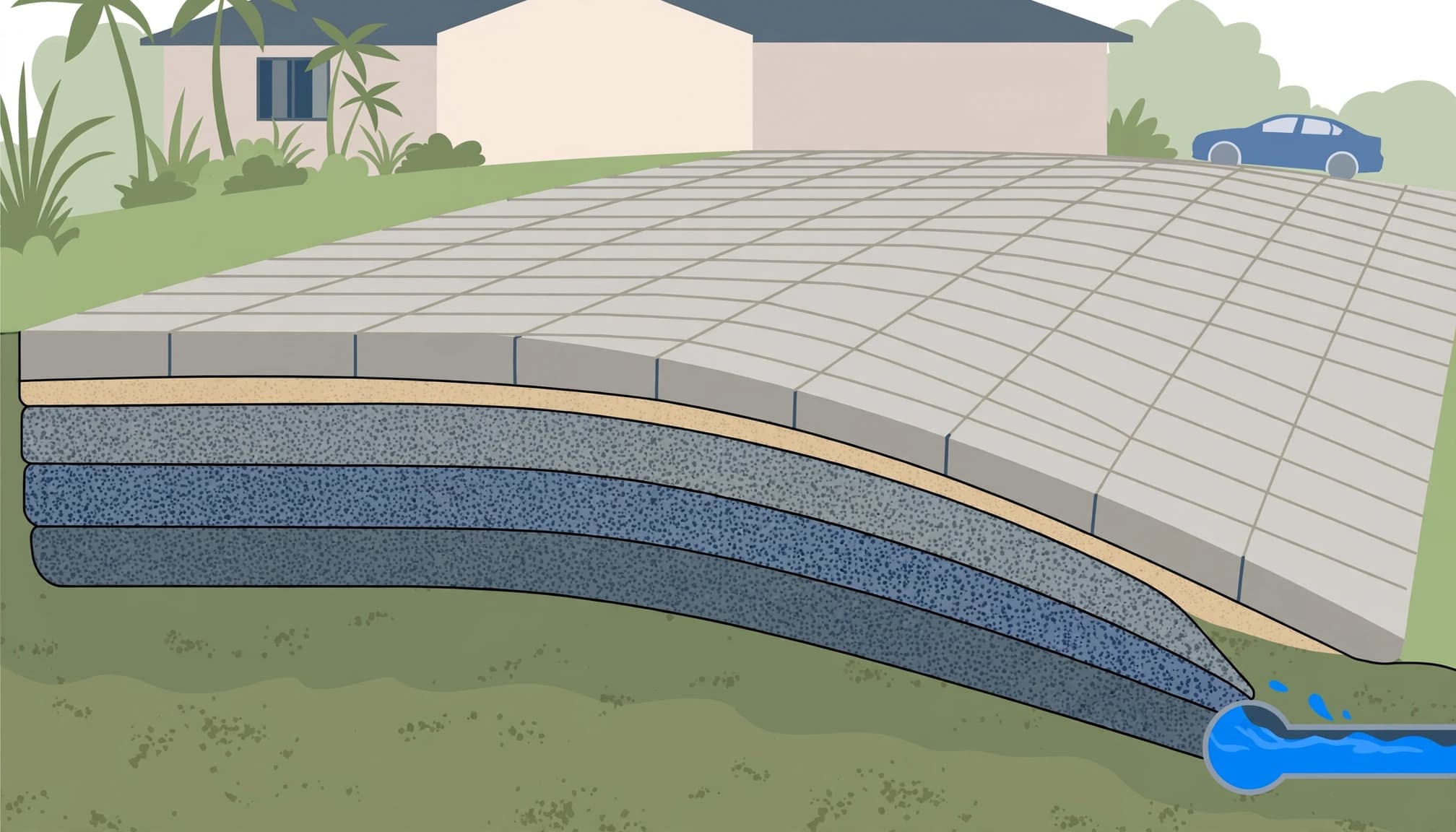
Add the base, bedding, and paver thickness
To calculate how deep to dig, measure down from the planned finished grade and check that the surface is level. For a conventional installation, use this formula:
Compacted base + bedding layer + paver thickness = total excavation.
An 8-inch base, 1-inch bedding layer, and 2 3/8-inch pavers require 11 3/8 inches of excavation. With a 6-inch base, that same assembly needs 9 3/8 inches.
Use the total to determine how far to excavate below the finished surface. These are layer calculations, not universal installation specifications. Vehicular pavers are commonly about 2 3/8 inches (60 mm) thick, but thickness alone doesn’t establish load capacity.
Keep bedding thin and consistent
The paver base is the structural layer of compacted aggregate, or sub-base, beneath the bedding. Sand alone can’t support a driveway reliably. Use approximately 1 inch of clean, properly graded bedding sand over the compacted aggregate.
Small chip stone belongs in a compatible open-graded system, rather than being substituted casually. Screed the bedding without pre-compacting it before placing pavers. Final seating happens after the pavers are installed.
My guide to what goes under brick pavers explains how these supporting layers work together.
Prepare and Compact the Base in Stages
MMConcrete estimates that base preparation can take about 70% of the project time. I recommend allowing enough time for this work rather than rushing to the visible surface.
Follow this order for a conventional aggregate-base installation:
- Call 811 before excavation, then remove grass, roots, and organic topsoil to expose supporting soil.
- Prepare and compact the subgrade. Remove soft or washed-out material before adding aggregate.
- Establish drainage during excavation and base work. Use a slope of about 1 inch per 4 to 8 feet, away from the house toward a suitable outlet.
- Place compatible crushed stone or dense-graded aggregate in roughly 2- to 4-inch lifts. Crushed gravel is suitable only when its size and gradation fit the project. Compact each lift with a flat-plate vibrator, using at least two passes as a starting point. Each compacted lift adds stability to the base.
- Check the finished grade with a level, install secure edge restraints, and add the thin bedding layer before paver installation.
The listed base depth is the thickness after compaction, not the loose pile delivered to your property. Loose material settles as it’s compacted.
In Southwest Florida, heavy rainfall and disturbed soil deserve close attention. Poor preparation can leave sinking pavers, washed-out bedding, and recurring low spots. Cold-climate installations also face frost heave.
Common Questions About Driveway Bases
Can extra sand fix a shallow base?
No. Thick bedding can shift and leave uneven support. I recommend rebuilding missing aggregate support rather than filling deep depressions with sand.
If the driveway is already settling, signs of hidden driveway voids can help distinguish surface wear from missing support. Joint sand and sealer won’t stabilize a failed base.
Do permeable driveways use the same depth?
Not necessarily. Permeable pavement needs a separate design that addresses water storage and vehicle loading. Its stone layers and bedding can differ from a conventional dense-graded installation.
Don’t combine conventional sand-set instructions with an open-graded assembly. Each system needs compatible materials and a working drainage outlet.
Build Support Before Protecting the Surface
A dependable driveway starts with firm support and drainage. Choose the base for your soil and vehicles, then add bedding and paver thickness to calculate excavation.
Driveway sealing protects a properly prepared surface; it can’t repair unstable ground. Once repairs are complete, you can Get a Quote for professional paver sealing or pressure washing.