
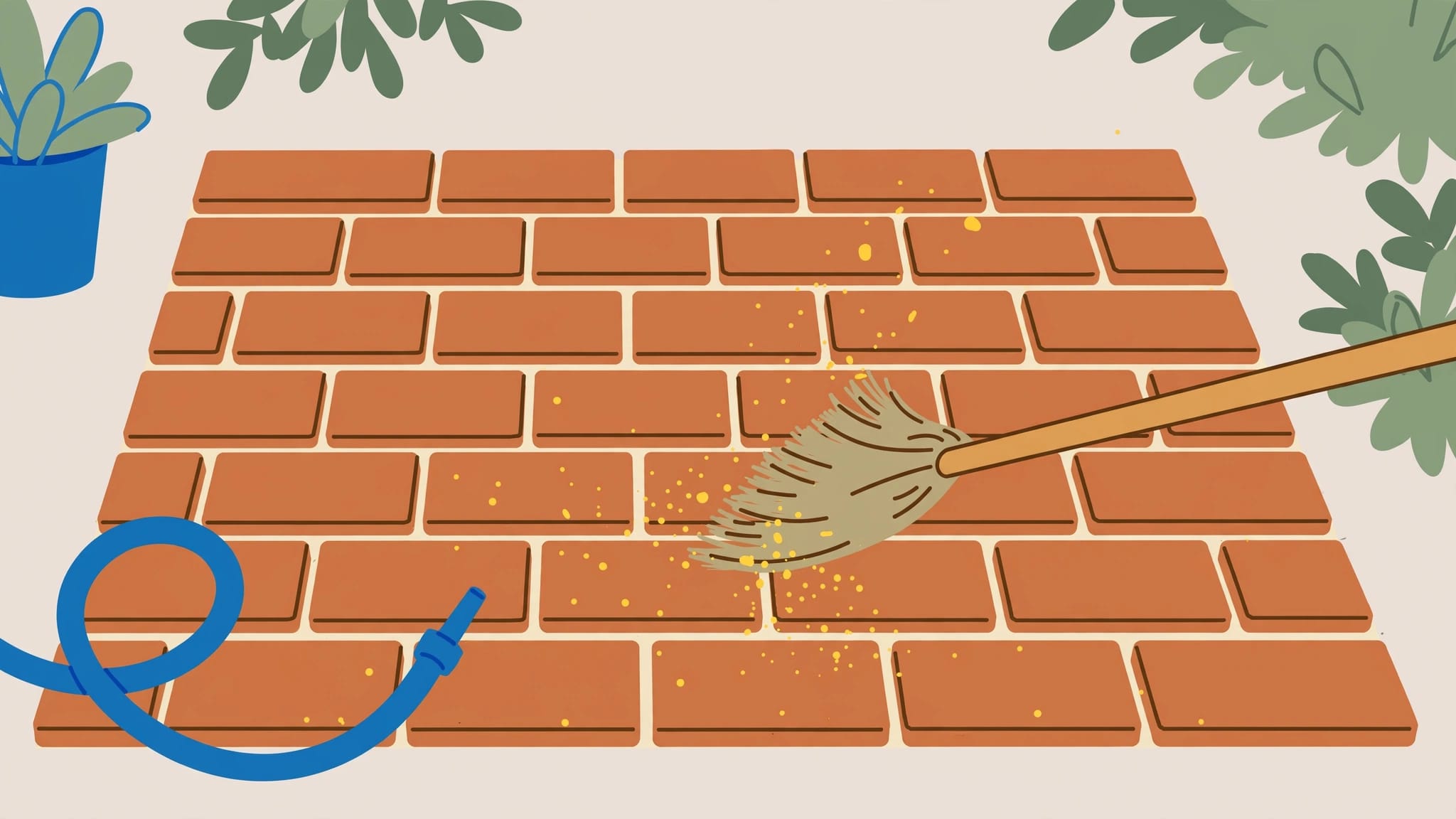
I recommend a soft broom and gentle garden-hose rinsing to remove loose pollen from brick pavers. To protect the joint sand, keep the cleaning focused on the paver faces and stop if sand starts moving.
A yellow coating can make your driveway, patio, or walkway look neglected, but stronger cleaning can create unnecessary repairs. The right approach starts with understanding the condition of your pavers and the material between them.
Key Takeaways
- Remove loose pollen with light sweeping instead of scrubbing through the joints.
- Use gentle rinsing and watch where the runoff travels.
- Stop if sand collects along borders or drains during cleaning.
- Repair missing joint material before sealing, and address loose pavers or drainage problems separately.
Why Joint Sand Needs Protection During Pollen Cleanup
Joint sand helps interlocking pavers resist movement. Cleaning should remove surface buildup while leaving sound joint material in place.
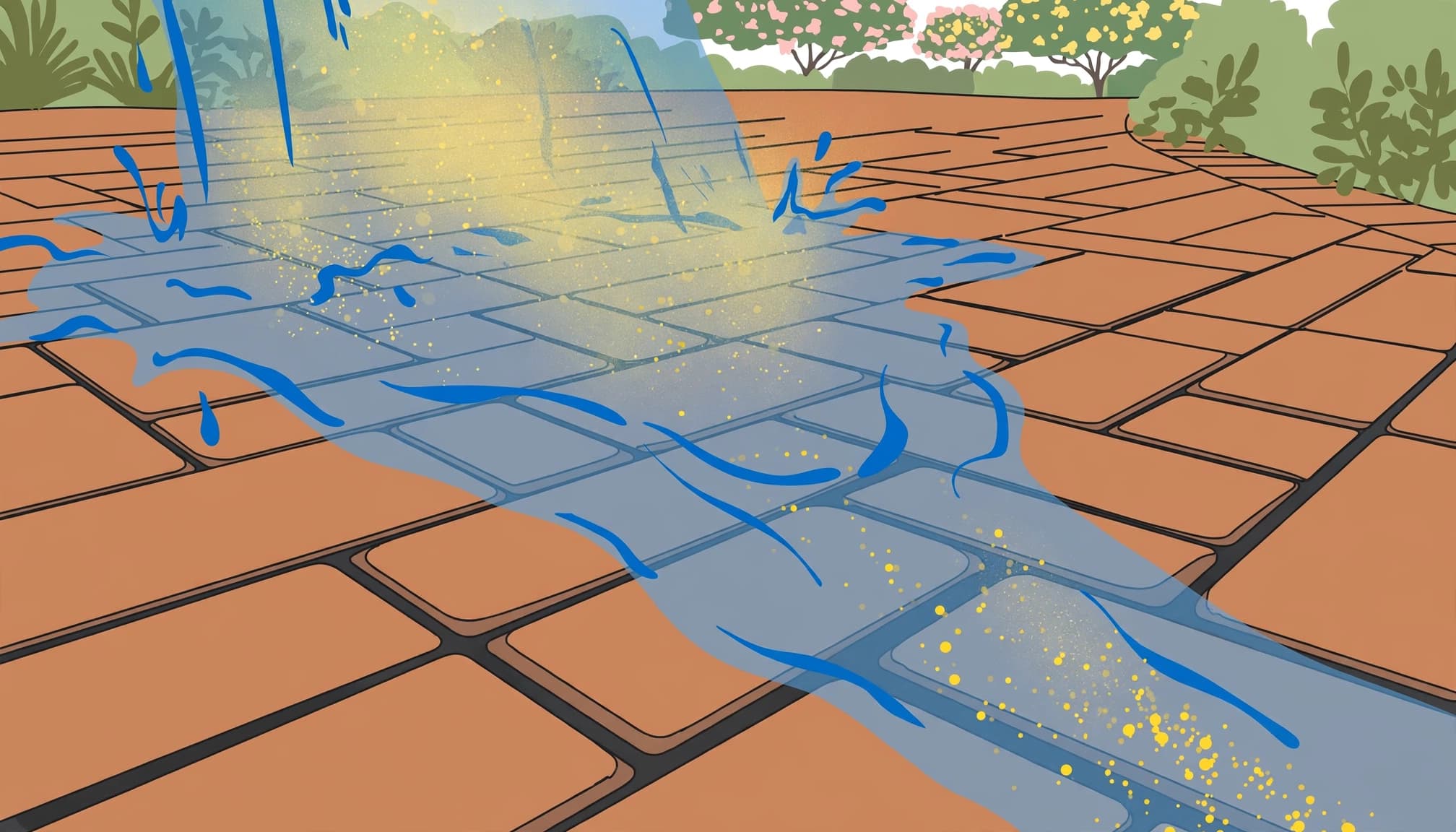
Loose sand and polymeric sand respond differently
Regular joint sand remains loose, so water and aggressive brushing can displace it. Polymeric sand contains binders that firm up after proper water activation and curing.
That added resistance doesn’t make polymeric joints immune to cleaning damage. Forceful washing can still remove or weaken the material.
I recommend understanding the existing joint system before choosing a cleaning method. Our comparison of polymeric and regular joint sand explains how those materials differ.
Existing gaps change the cleaning decision
Look for empty seams, cracked joint material, displaced sand, and pavers that move underfoot. These conditions deserve attention before a full cleaning.
An open joint gives water a path into the installation. Aggressive washing can remove additional sand and push debris deeper into the base.
A slight recess below the paver face isn’t automatically a failure. Focus on missing material, changes in joint condition, and movement rather than appearance alone.
Remove Loose Pollen Without Digging Into the Joints
Dry surface pollen may come away with a soft broom before water is needed. Keep your strokes light and across the paver faces. Don’t work the bristles down into the seams.
Collect the loose debris instead of pushing it into corners, pool edges, or drainage openings. Removing nearby leaves at the same time also reduces the material that can collect between pavers.
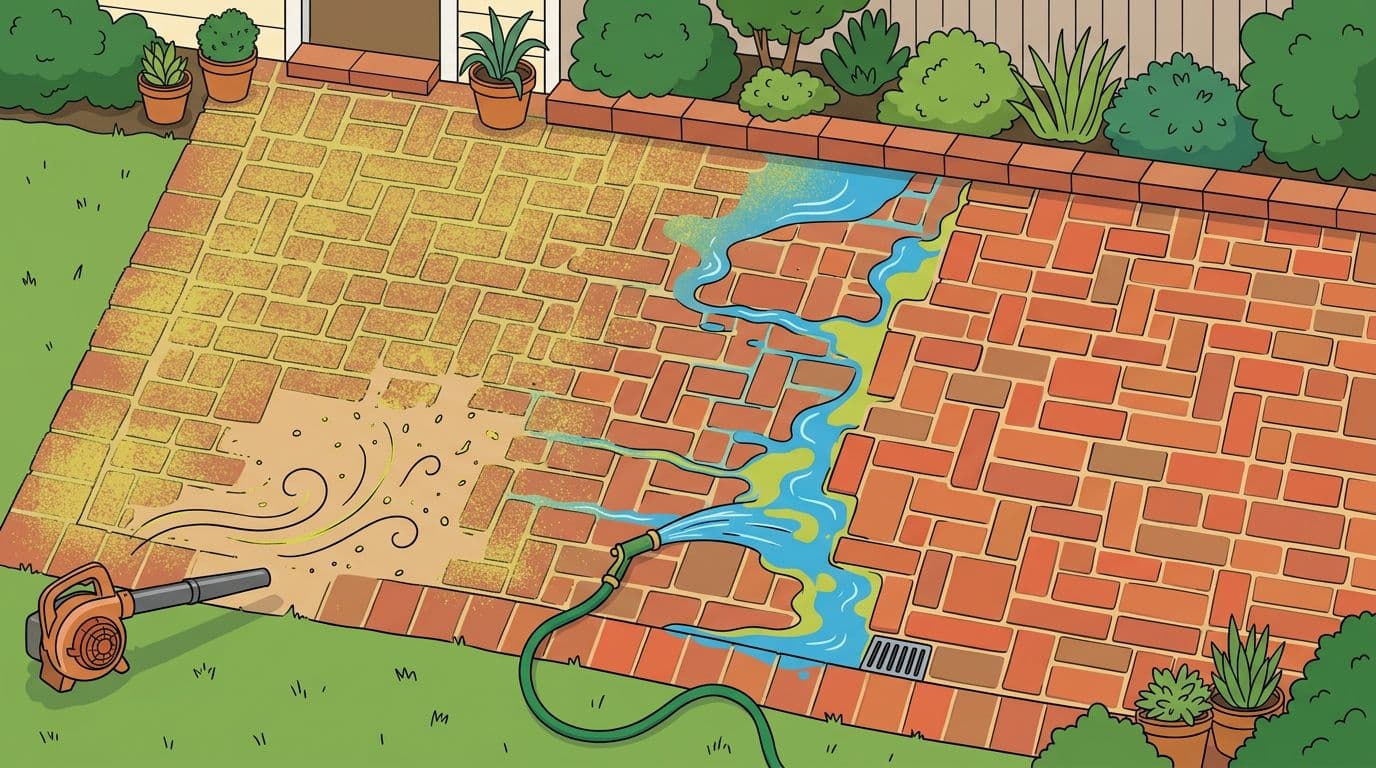
A leaf blower can help on an open area, but airflow can disturb loose sand. Keep it moving across the surface rather than directing it into the joints. If sand starts lifting, stop and return to gentle sweeping.
I wouldn’t use a wire brush or metal scraping tool for this job. Those tools add abrasion that loose pollen doesn’t require. The goal is a cleaner surface with the existing finish and joints left undisturbed.
Use Gentle Rinsing and Control the Runoff
Water should carry away loosened pollen without cutting into the joints. For ordinary surface buildup, a garden hose is a practical starting point. Occasional hose washing is also recommended in this paver patio maintenance guidance for removing dirt and pollen.
Keep water moving across the surface
Use a gentle flow over the paver faces rather than directing water into gaps. Avoid holding the stream over one joint to chase out every visible particle.
Watch the cleaning area as you rinse. Loose grains moving with the water are a reason to reduce the flow or stop.
Don’t try to complete the entire driveway if one small area shows that the joints are unstable. Preserving the installation matters more than finishing the rinse.
Watch low spots, edges, and drains
Joint sand can wash out even without direct spraying. Water collecting at a border or repeatedly crossing the same seam can carry loose material away.
Keep drainage openings clear of leaves and collected debris. Don’t force dirty water into an already weakened edge.
Sand collecting near a drain can reveal runoff damage even when the joints farther uphill still look full.
Repeated washout calls for attention to the water path. Replacing sand alone won’t correct drainage that keeps removing it.
Treat Remaining Residue With a Compatible Cleaner
If gentle rinsing leaves a film, I recommend reassessing the surface before increasing the cleaning strength. Remaining discoloration may involve dirt, organic growth, or an existing coating rather than loose pollen.
Choose a cleaner labeled for the paver material and any sealer already present. A product suitable for one masonry surface isn’t automatically suitable for every brick, concrete paver, or natural stone installation.
Test an inconspicuous area before broader use. Follow the cleaner’s application and rinsing directions, and don’t leave it on longer for extra strength.
Use an appropriate nonmetal brush on the paver faces without grinding into the joints. Keep the cleaner from drying on the surface, then remove the loosened residue with controlled rinsing.
Let the area dry before judging the result. Wet pavers can hide film, uneven color, and changes in the finish. Stop if the surface becomes rougher, lighter, or streaked rather than repeating the treatment.
When Pressure Washing Creates More Work
Pressure washing can be useful for embedded buildup and broader restoration. It isn’t my first recommendation for a light coating of loose pollen.
Poorly controlled pressure can mark paver faces, strip sealer unevenly, and remove joint sand. Directing force into open seams can also push dirt below the surface.
There isn’t one cleaning setting that suits every installation. Material, coating condition, joint stability, and existing damage all affect the approach.
For stubborn contamination, I recommend professional assessment rather than repeatedly increasing force. Our paver cleaning and maintenance guidance covers the same priority: use the gentlest effective method for the surface.
A professional cleaning plan should also account for any sand removed during the work. Cleaning and joint repair need to be considered together when restoration is necessary.
Inspect the Joints After the Pavers Dry
Once the surface dries, look at the areas you cleaned and the places that received runoff. This is the time to identify missing sand before another rain carries away more material.
Replace missing material with the right joint product
Fresh sand should suit the paving system, joint dimensions, and installation condition. Don’t assume every gap needs polymeric sand or that new material can simply cover a damaged joint.
Polymeric products have requirements for preparation, depth, compaction, surface cleanup, watering, and curing. Water activates their binders, but the correct watering method varies by product. A light mist isn’t a universal installation rule.
Our guidance on replacing sand after paver cleaning explains why joint restoration matters before sealing. Sound joints help maintain a stable, finished surface.
Address movement and washout before adding more sand
Joint sand can’t repair an unstable base or missing edge restraint. If pavers rock, settle, or spread apart, the installation needs more than a refill.
The same applies when sand repeatedly collects at one corner after rinsing or rain. Drainage may be directing too much water through that area.
I recommend correcting those underlying problems before scheduling another cleaning or coating. Otherwise, fresh joint material can disappear through the same route, leaving you with the same maintenance problem.
Keep Pollen Cleanup Separate From Sealing and Other Services
Sealing can reduce staining and make routine maintenance easier, but it doesn’t stop pollen from landing on your property. A sealed patio still needs light sweeping and appropriate rinsing.
I treat driveway sealing as a separate maintenance decision. The surface should be clean, properly prepared, dry, and repaired before coating. Empty joints or unstable pavers shouldn’t be covered up to make the driveway look finished.
Coordinate nearby exterior cleaning as well. Roof cleaning and soft wash treatments need runoff control around pavers, landscaping, screens, and fixtures. Chemicals used elsewhere on the house shouldn’t be allowed to interfere with a paver restoration project.
For ongoing care, our Southwest Florida maintenance calendar connects routine cleaning with inspections and drainage maintenance. Condition-based care helps avoid unnecessary heavy cleaning while keeping small joint problems visible and manageable.
Frequently Asked Questions
Will a garden hose remove every trace of pollen?
A garden hose can remove much of the loose surface pollen, especially after gentle sweeping. It won’t necessarily remove an embedded stain, existing organic growth, or residue associated with a failing coating.
If discoloration remains after drying, identify the remaining problem before choosing a stronger treatment. Repeated forceful rinsing can damage joints without improving the mark.
Does every pollen cleanup require new joint sand?
No. Sound joints that remain intact after gentle cleaning don’t automatically need replacement.
Re-sanding becomes necessary when cleaning reveals or creates missing material. Look for open gaps, displaced sand, and weakened joints. Avoid adding material simply because the pavers have been washed.
Should pavers be sealed immediately after cleaning?
Sealing should wait until cleaning, repairs, joint work, and the required drying or curing are complete. Polymeric sand activation and paver sealing are separate operations.
Peeling, tacky, whitened, or uneven old sealer also needs assessment before another coating is applied. A new layer won’t correct poor preparation underneath.
Clean the Pavers While Protecting the Joints
For routine pollen removal, I recommend light cleaning and controlled water. Stop when joint material starts moving, and assess the dry surface before deciding whether more treatment is needed.
Sound joints are worth preserving. Missing sand, unstable edges, and repeated washout need repair rather than stronger washing.
For help with cleaning, joint restoration, or sealing, Get a Quote from Kingsway Paver Sealing. The right service should leave your pavers clean and ready for dependable maintenance.