
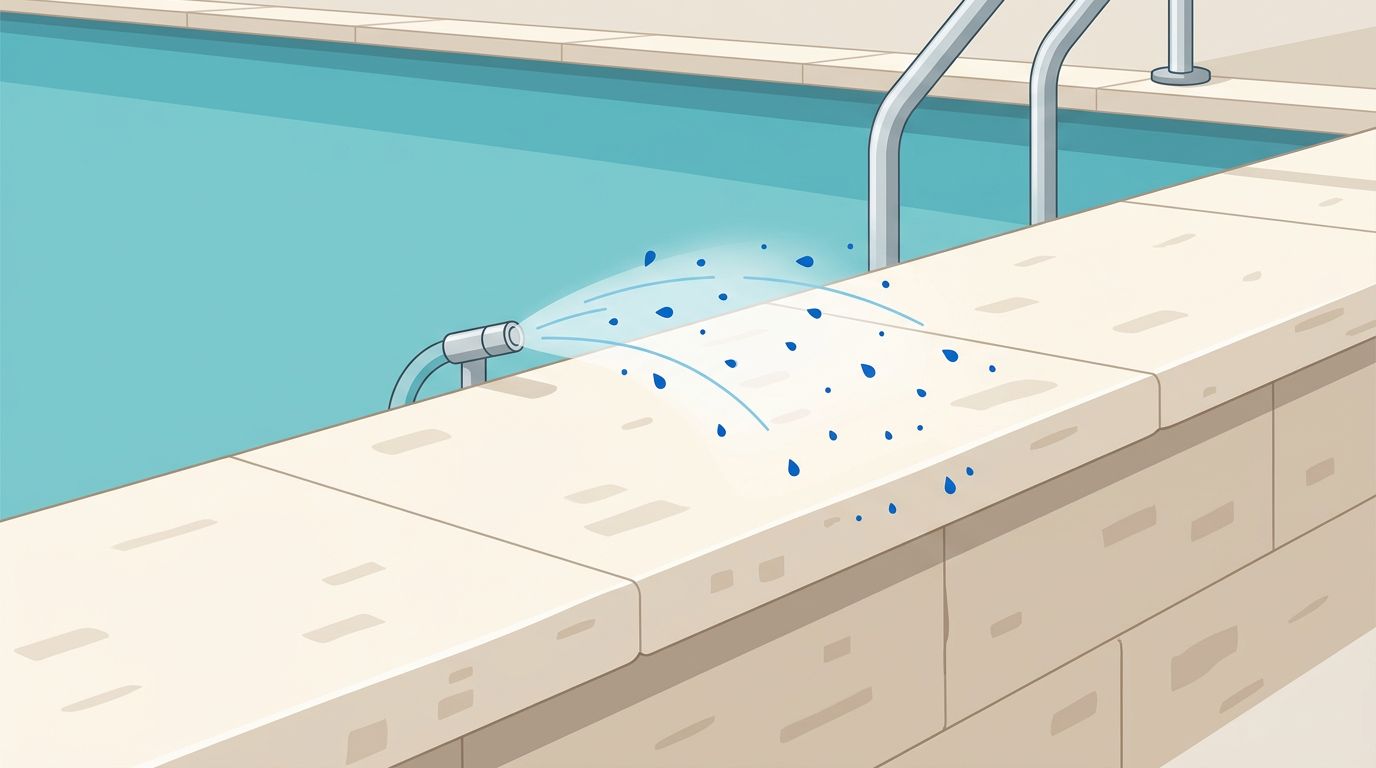
A lot of homeowners look at dirty pool coping and think the same thing: grab the washer and blast it clean. I get the instinct. It works on plenty of travertine pavers.
But pressure washing travertine isn’t the same as washing plain concrete on your pool deck. Travertine is softer, more porous, and a lot less forgiving when the pressure is too high.
If you’re standing there wondering whether a quick cleaning will help or hurt, here’s the straight answer.
Key Takeaways
- Travertine is delicate: Unlike concrete or brick, travertine is a porous, natural stone that is highly susceptible to etching, pitting, and chipping if subjected to high-pressure water.
- Avoid aggressive settings: Never use rotating nozzles or high-PSI blasts on travertine; always opt for low-pressure settings, wide-angle spray tips, and consistent motion.
- Chemistry over force: Instead of relying on brute force to remove stubborn stains, use pH-neutral cleaners or professional-grade solutions to break down grime, allowing for a gentle rinse.
- Seal for protection: After cleaning, applying a high-quality penetrating sealer is crucial to protect the stone from pool chemicals, UV rays, and moisture, which prevents future staining and premature wear.
Yes, pressure washing can damage travertine pool coping
It can, and I would not treat that as a maybe. While many people use the term power washing interchangeably with pressure washing, the risks to your pool deck remain the same regardless of the terminology.
Travertine pool coping sits right at the edge of the pool, where sun, water, salt, chlorine, and bare feet all meet. Over time, that travertine tile gets more vulnerable. When high pressure hits it, the surface can roughen, small pits can widen, edges can chip, and old filler can wash right out. Furthermore, using too much force creates a high risk of etching and scratching the stone surface permanently.
Sometimes the damage is obvious right away. You see fresh lines, a fuzzy-looking face on the stone, or missing material along the edge. Other times it is slower. The coping starts holding more dirt after cleaning because the surface got opened up.
Travertine is not concrete. If you clean it like concrete, it can look worse when you are done.
The machine itself is not always the problem, but bad settings certainly are. A pressure washer used gently is one thing, but a narrow tip held too close is another story. You should also be careful to avoid using a rotating nozzle, as the concentrated, spinning force of these attachments is far too aggressive and will almost certainly cause surface damage.
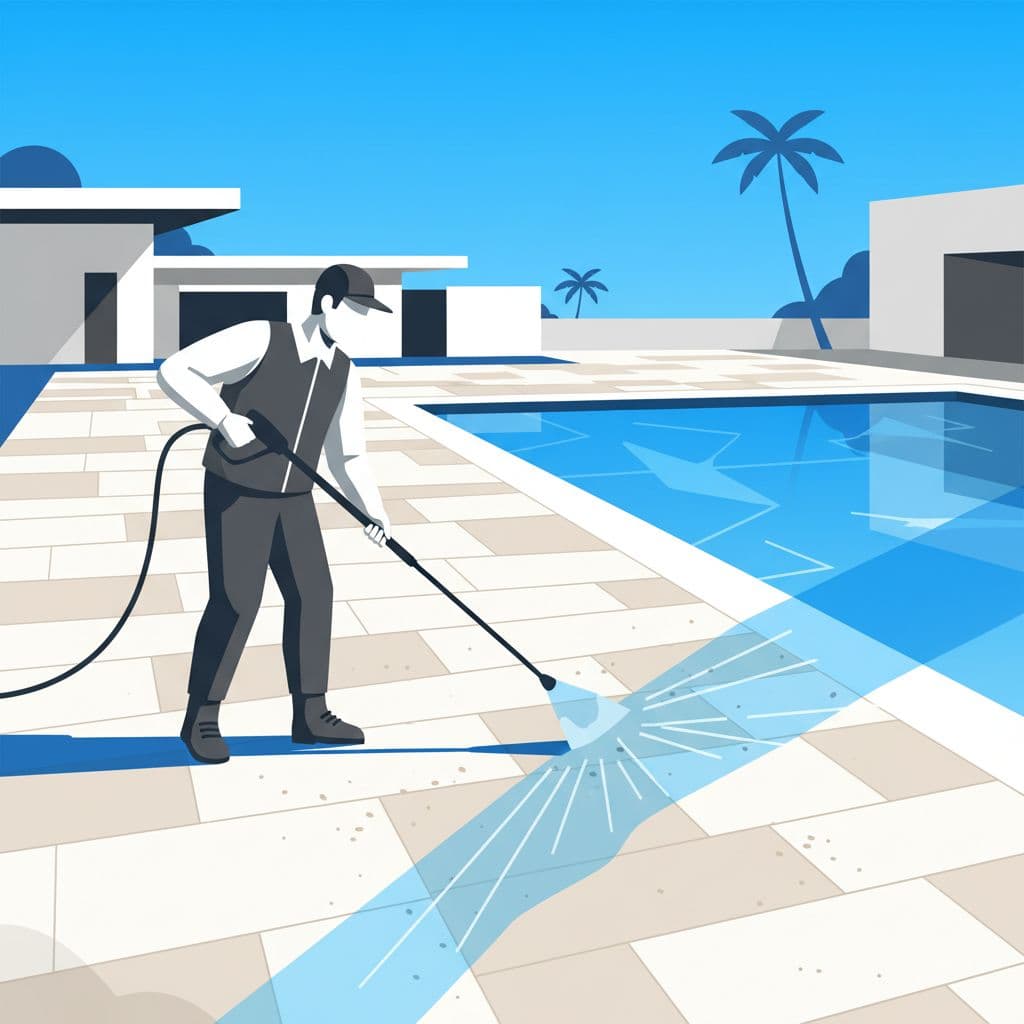
Older coping is where I see the biggest problems. If the stone already has worn edges, loose joints, or a faded sealer, aggressive cleaning can push it over the line. What started as a cleaning job becomes a repair job.
That is why I do not answer this question with a blanket yes or no. Can a pressure washer be part of cleaning travertine coping? Yes. Should travertine be blasted the way someone might wash a driveway? No chance.
The safer mindset is simple. Use the least force that gets the surface clean. Anything stronger is a risk you do not need.
Why high pressure and travertine don’t get along
Travertine is a beautiful natural stone with a uniquely porous surface that features natural voids and veins, making it softer than many homeowners realize. That is exactly why it adds so much character to a pool deck. However, these same features mean it is more susceptible to damage than denser masonry materials.
Pool coping faces additional challenges because it is exposed on multiple sides. Water splashes the face, settles into joints, and wears away at the material. When you combine this with constant sun and temperature fluctuations, outdoor travertine can become brittle in specific areas. If you then apply a concentrated spray from a pressure washer, the water acts like a tiny chisel that can cause significant surface damage.
Here is the basic difference between surfaces people often clean around the home:
| Surface | How it handles pressure | Common risk |
|---|---|---|
| Travertine pool coping | Needs a gentle approach | Etching, pitting, chipped edges, lost filler |
| Poured concrete | Usually handles more force | Striping if the wand is uneven |
| Brick pavers | Moderate pressure only | Joint sand or polymeric sand loss, surface wear |
The table tells the story clearly. Travertine leaves very little room for error. A common mistake is assuming that tough grime requires more power, but I see it differently. If dirt does not come off travertine with a careful cleaning pass, the answer is usually a better soap, more dwell time, or a second light rinse. It is rarely the application of more force.
Aggressive pressure washing also presents a risk to the integrity of your installation. High pressure can easily displace joint sand or even specialized polymeric sand, which is essential for stabilizing the stones and preventing weed growth. Furthermore, if the coping was sealed previously, harsh washing can strip that protection prematurely. Once the sealer is compromised, the stone becomes more vulnerable to water absorption and staining. This leads to a frustrating cycle where the surface starts looking dirty again much faster than it should.
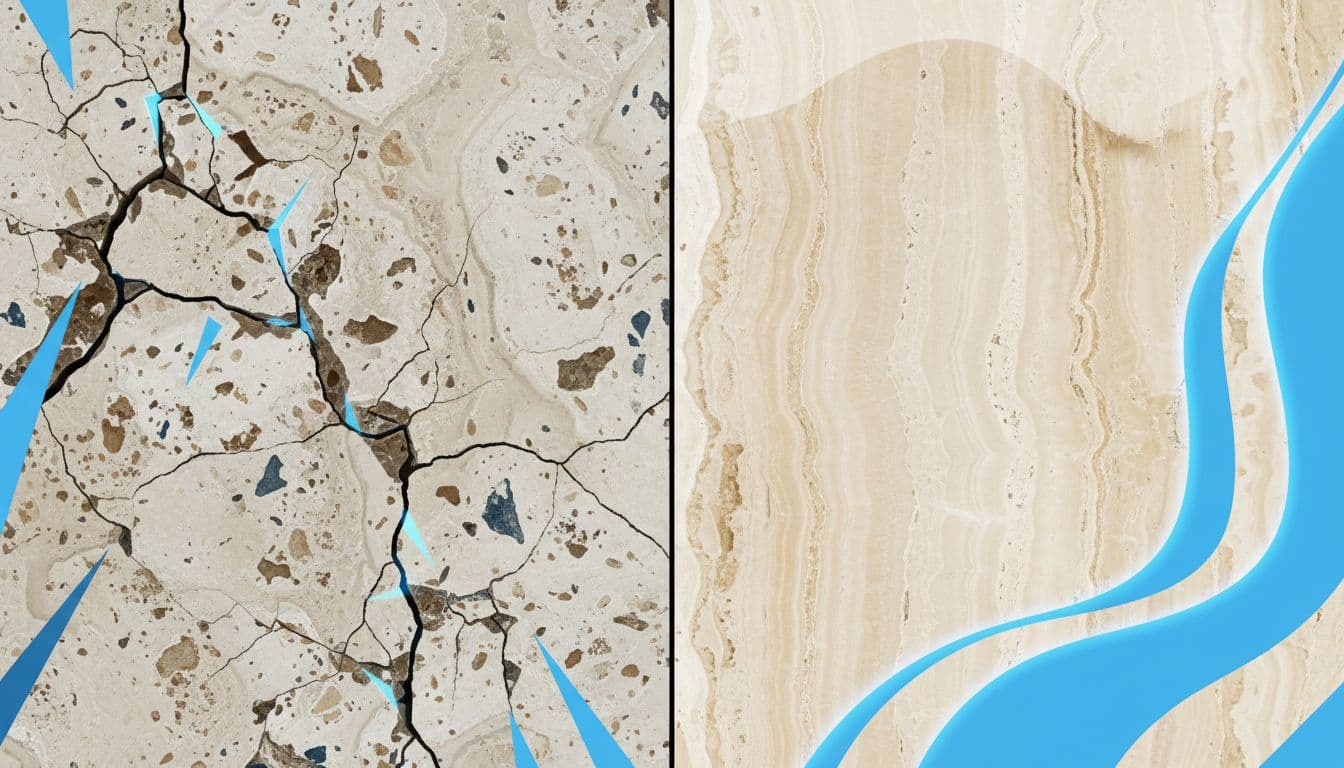
That is the part homeowners hate most. They clean it hard one time, it looks brighter for a day, and then it gets dingy faster than before. The stone is not just dirty; the surface face has been worn down and opened up, making it a magnet for new debris.
How I clean travertine pool coping without ruining it
I always start by inspecting the stone and performing a test a small area to see how the surface reacts before I commit to cleaning the entire perimeter. When cleaning travertine, my focus is on the condition of the material rather than the power of the machine.
If the coping has loose pieces, cracked mortar, or old patches, I know it requires a gentle touch. For most jobs, effective maintenance is a combination of a pH-neutral stone cleaner or mild soap, patience, and controlled power. I want the solution to lift away algae, sunscreen, and grime, allowing me to rinse the surface clean without carving into the stone.
To achieve this, I use a wide-angle nozzle and adjust the PSI to safe, low pressure levels. If I need a machine, an electric washer is often a better choice than a gas-powered one because it provides more consistent, manageable output. Using the right spray tip is essential, and I always maintain constant movement to ensure I never park the spray in one spot.
On many projects, a soft wash approach is the most effective way to protect the integrity of the stone. If you have ever had professional roof cleaning done, the process is very similar. I let the solution do the heavy lifting, and for stubborn organic stains, I might use a diluted sodium hypochlorite solution to break them down safely.
This approach is vital because every stain is different. Leaf tannins, spilled drinks, and hard-water marks react differently to various treatments. Turning up the intensity treats every issue like it is simple dirt on concrete, but travertine does not reward that kind of guesswork.
I remain vigilant for warning signs while I work. If the surface looks lighter in streaks, if grit starts washing out of the joints, or if the finish feels rougher underfoot, the pressure is too aggressive. That is my cue to back off immediately. Ultimately, one rule has saved more stone than any gadget ever will: if a stain resists the first pass, I change the cleaning method before I ever consider changing the pressure.
Cleaning helps, but sealing protects the coping afterward
Many homeowners stop at the wash, and I understand why. The stone looks better and the job feels complete. However, if the cleaning removed old grime and stripped away worn-out product, your coping may now be more absorbent than before. That leaves the stone vulnerable to moisture, body oils, pool chemicals, and everyday stains. In Southwest Florida, the intense sun and frequent rain do not give exterior stone much of a break.
I think of it the same way I think about driveways. Cleaning is the reset, but consistent stone maintenance is what helps the surface hold up over time. Applying a high-quality penetrating sealer is the best way to safeguard your investment. This type of sealer penetrates deep into the pores of the stone to prevent moisture absorption while allowing the material to breathe. It helps slow down staining and makes future upkeep much easier, provided the stone is completely dry and the product is specifically formulated for natural stone.
You do not always need a new coat of sealer after every cleaning, but there are clear signs when it is time. If water darkens the stone quickly, if the color looks chalky, or if your travertine patio grabs dirt too easily, your protective barrier is likely wearing thin.
This is especially important around a pool because the coping takes constant abuse. Wet feet, furniture movement, sunscreen drips, and splash-out all add up. While a sealed surface is not bulletproof, it is significantly easier to manage and less likely to become grimy in a hurry.
If your coping already looks worn, or if you are not sure whether it needs cleaning or a fresh application of protection, it is smarter to pause before reaching for more pressure. For complex jobs, hiring a professional cleaning service is a wise choice. Experts will use a specialized surface cleaner set to the correct pressure to ensure the stone is cleaned thoroughly without risking damage. If you are concerned about the state of your pool area, you can Get a Quote and have the surface inspected by a professional before a simple wash turns into permanent stone damage.
Frequently Asked Questions
Can I use a rotating or turbo nozzle on my travertine?
No, you should strictly avoid using rotating or turbo nozzles. These attachments concentrate water into a spinning, high-force stream that is far too aggressive for natural stone and will almost certainly cause permanent gouging or surface scarring.
How can I tell if my pressure is too high?
Watch for immediate warning signs such as the stone surface appearing lighter in streaks, sand or grit washing out of the joints, or the texture feeling rougher to the touch than it did before. If you notice any of these indicators, stop immediately and reduce your pressure settings.
Is it necessary to seal my travertine after every cleaning?
You do not necessarily need to re-seal after every minor cleaning, but you should re-apply a high-quality penetrating sealer whenever the stone shows signs of wear. If water darkens the surface immediately upon contact or if the stone begins to collect dirt much faster than usual, your protective barrier has likely failed and requires a new application.
Should I use a gas-powered or electric pressure washer?
An electric pressure washer is generally the better choice for travertine because it provides a more consistent, lower-output flow that is easier to control. Gas-powered machines often produce excessive power that can easily exceed the tolerance limits of natural stone, increasing the risk of accidental damage.
Final thoughts
A quick blast can clean your pool area, but it can also scar the stone. That is the trade-off many homeowners overlook when deciding how to maintain their pool deck.
My rule is simple: low pressure, good chemistry, and a careful test spot beat brute force every time. While power washing is a common maintenance task, cleaning travertine requires a delicate touch to avoid permanent damage. If the coping is in good shape, a gentle approach works well. If it is aged, brittle, or already worn, aggressive cleaning is a significant gamble.
Pool coping is a surface that looks tough until it is not. Treat your travertine like fine stone rather than a concrete sidewalk, and it will stay looking beautiful for much longer.