
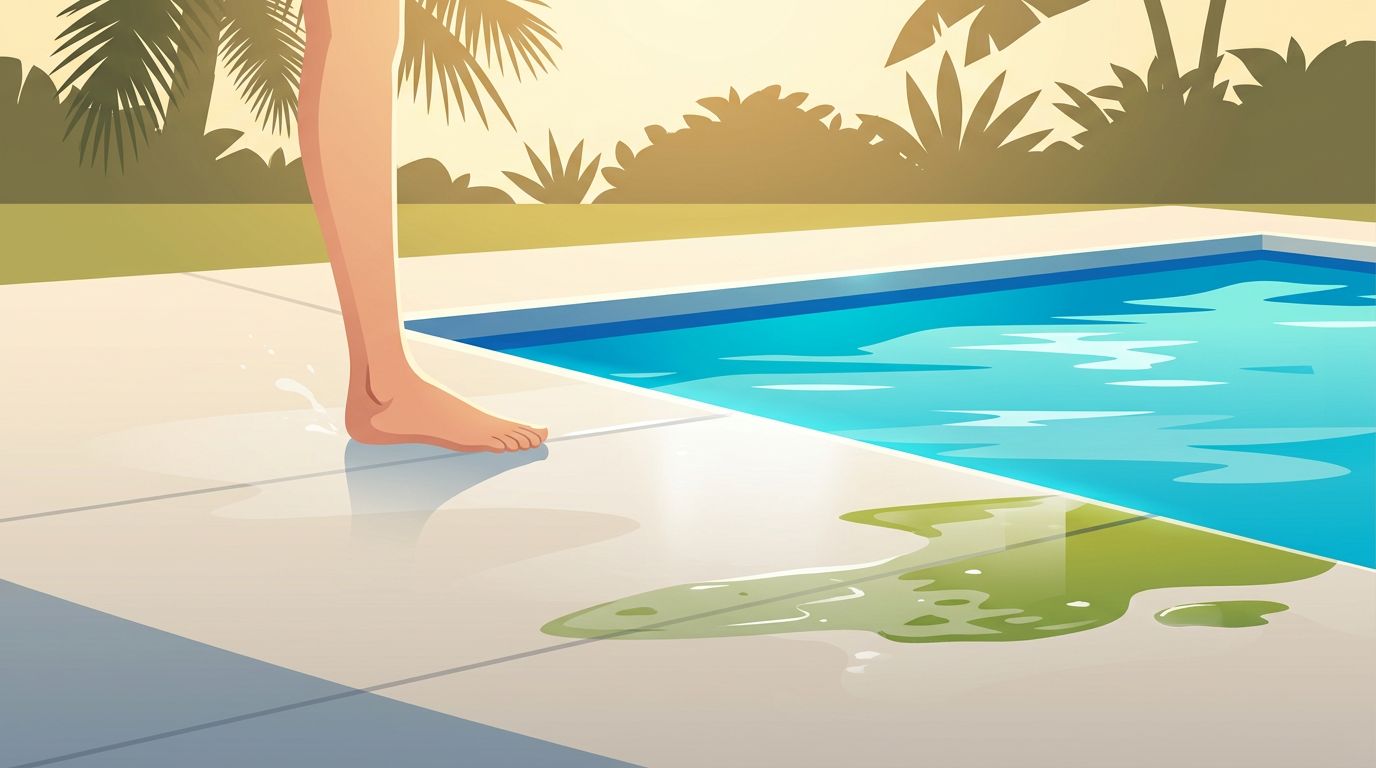
A pool deck can look clean and still feel like a slip waiting to happen. If you have ever taken two wet steps and felt your foot skate sideways, you know that dealing with slippery pool decks is a problem you cannot afford to ignore.
In Southwest Florida, these hazards usually come from a stack of issues rather than one single cause. Heat, humidity, rain, algae, chemical residue, worn sealer, and poor drainage all contribute to the problem. Prioritizing pool deck safety is essential because, once these factors combine, a nice backyard starts acting like a skating rink, which compromises outdoor concrete safety for your family and guests.
Key Takeaways
- Climate-Driven Hazards: Southwest Florida’s combination of high humidity, frequent rain, and shade creates an ideal environment for algae, mold, and mildew, which form thin, invisible films that make surfaces dangerous when wet.
- Beyond Surface Dirt: A slippery deck often results from more than just grime; chemical residue from sunscreen, pool water, and improper cleaning products can degrade surface textures and create persistent slick spots.
- Surface Integrity Matters: Over time, natural wear on pavers and concrete can smooth out textures that were once slip-resistant. If a deck remains slick despite cleaning, the original sealer may have failed or the material itself may require resurfacing.
- Proactive Maintenance vs. Quick Fixes: Simply blasting a deck with high-pressure water can cause damage. A long-term solution involves identifying root causes like poor drainage, applying the correct non-slip sealers, and occasionally considering professional resurfacing to restore necessary traction.
Southwest Florida weather does most of the setup
I see this pattern all the time. Our weather gives pool decks exactly what they need to get slick, moisture, heat, and time.
Humidity hangs in the air for months. Afternoon rainstorms soak the surface. Shade from a screen enclosure, palms, or the house slows drying. When a deck stays damp longer than it should, algae growth and mildew get comfortable fast.
That is even more true with porous materials. Concrete pavers, poured concrete, and even travertine can hold moisture below the surface. Because of their water permeability, these materials may look dry on top while the pores and joints remain damp. Add organic debris, and the deck starts building a slippery film little by little.
Pool decks also deal with constant splash-out within the aquatic environment. Chlorinated water, saltwater, sunscreen, body oils, and wet feet all leave something behind. Over time, that residue changes how the surface feels under bare feet, which directly impacts your level of barefoot comfort.
This quick breakdown shows the usual mix I look for:
| Cause | What it does | What I usually notice |
|---|---|---|
| Heat and humidity | Keeps surfaces damp longer | Dark patches that dry slowly |
| Rain and splash-out | Feeds algae growth and mildew | Green edges, slimy joints |
| Chemical residue | Leaves a thin slick film | Deck looks clean but feels slippery |
| Worn texture | Reduces grip underfoot | More slipping when the deck is wet |
| Bad drainage | Creates standing water | Puddles near corners or low spots |
The key point is simple. A slippery deck in Southwest Florida is rarely random. It is usually a moisture problem mixed with surface wear.
I have seen the same Florida-specific pattern described in this piece on pool decks becoming slippery over time. The climate does not let neglected surfaces stay neutral for long.
The slick layer is often thin, and easy to miss
A lot of homeowners expect slippery decks to look dirty. Sometimes they do, but often they do not.
The most common culprit is a thin biological film. Algae, mildew, mold, and grime can build up in the joints and on the surface. That layer may only be noticeable when the deck is wet, or when sunlight hits it at an angle. This thin film creates a dangerous hydroplaning effect, which is why a surface that feels perfectly fine when dry can turn hazardous the moment you step onto it with wet feet.
Sunscreen is another sneaky factor. It mixes with water, dust, and body oils to leave a faint residue that ruins your slip-resistant surface. Pool chemicals can do the same. After enough splash, rinse, and dry cycles, the top of the deck starts feeling smooth in the wrong way.
Using the wrong cleaner can make things worse. Harsh products can strip protection, bleach the surface unevenly, or leave the deck more porous than before. That is one reason I do not treat pool decks the same way I treat every other exterior surface.
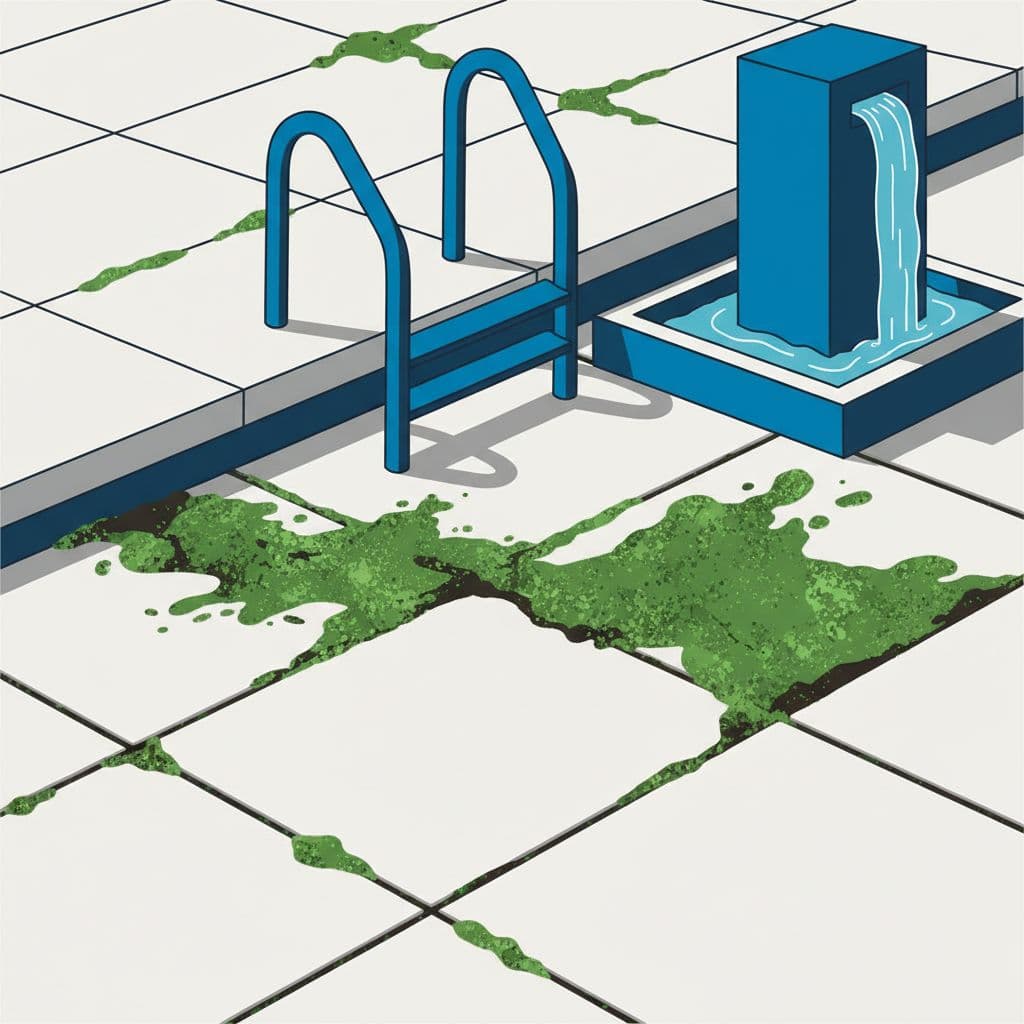
Pressure helps, but it is not magic. Professional pressure washing can remove buildup, but too much pressure can damage pavers, strip joint sand, and rough up softer material in all the wrong places. Because improper cleaning techniques can negatively impact pool deck safety, a deck that is blasted carelessly may clean up for a week, then hold even more grime later.
I have also found that the deck itself is not always the only source of the problem. Nearby walls, cage framing, planters, and the roofline can keep feeding organic growth back onto the pool surround. In some homes, a soft wash on surrounding surfaces or even roof cleaning helps reduce the grime and spores that wash onto the deck during storms.
If you want another Florida based look at the problem, this guide on slippery pool decks in Florida also points to worn surfaces and chemical residue as repeat offenders.
Sometimes the surface itself is the problem
Not every slippery deck is dirty. Some are simply worn out.
As pavers age, the surface texture can flatten, and concrete can get smoother. Old sealers can wear unevenly. In the wrong conditions, that leaves you with less grip than you had a few years ago. Stamped concrete and pool deck tiles, in particular, can lose their intentional surface texture over time, becoming dangerous as they degrade.
This shows up a lot on older pool decks that have been cleaned many times but never properly protected with a textured finish. A surface can lose the balance it needs: clean enough to look good, textured enough to stay safe, and sealed enough to resist moisture.
Then there is the sealer issue. The wrong sealer can make a pool deck look shiny, but that does not always mean it is a good fit. Around a pool, high gloss without the right slip resistance can be a dangerous trade. What looks great from the patio door can have a low coefficient of friction, feeling sketchy under wet feet.
That matters because driveway sealing and pool deck sealing are not the same job. A driveway deals with tires, oil, and traffic, while a pool deck deals with bare feet, splash zones, sunscreen, and constant moisture. Professional applicators must prioritize slip-resistance standards when choosing products, as the material choice has to match the specific use of the area.
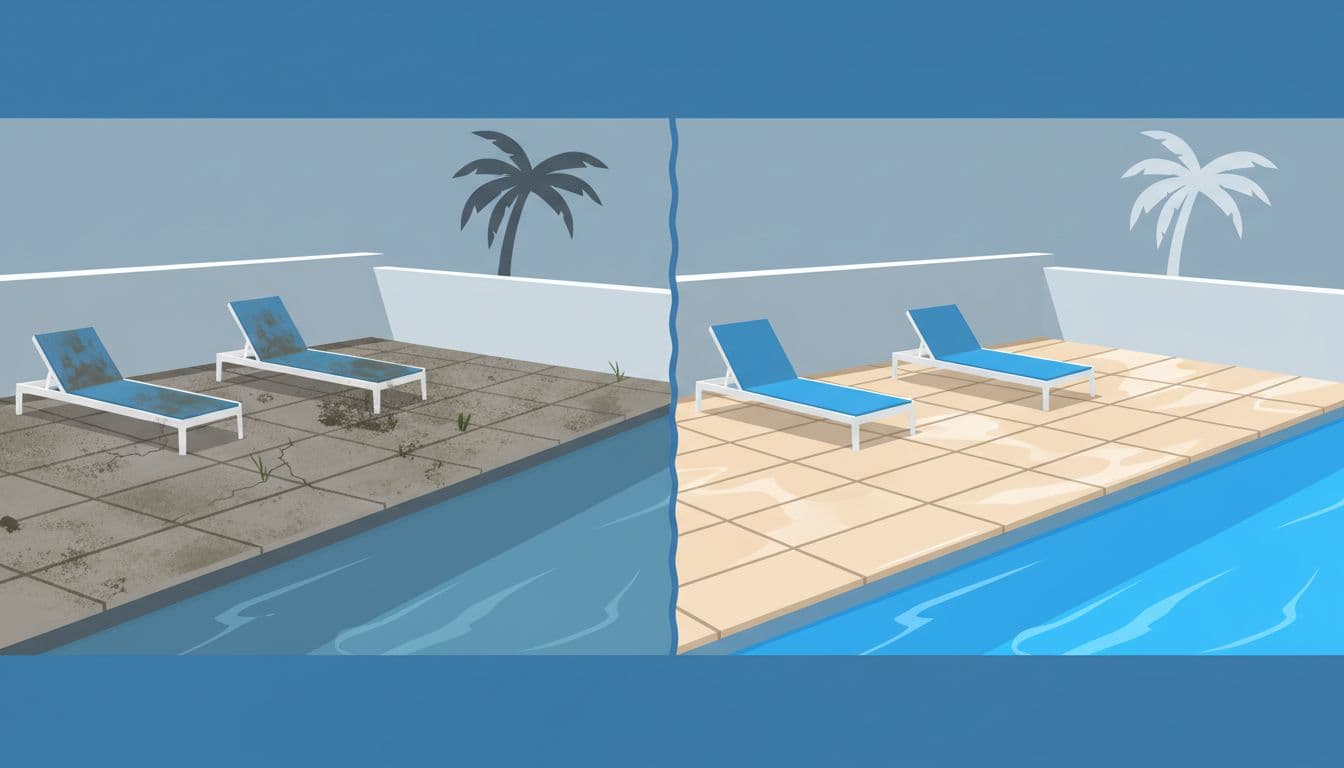
Drainage can push the problem even further. If the deck has low spots, weak slope, clogged joints, or settled pavers, water sits where it should not. Standing water feeds algae, softens the look of the surface, and keeps the slip risk hanging around long after the rain stops.
I also watch for empty joints. When sand washes out, pavers can shift slightly and hold more water at the edges. That does not always create a dramatic trip hazard, but it does create more damp pockets, and damp pockets are where slick buildup starts winning.
What I do to keep a pool deck safer year-round
The first thing I do is stop treating slipperiness like a one-time cleaning issue. If the cause stays in place, the problem comes back fast.
A good maintenance routine starts with keeping debris off the deck. Leaves, mulch dust, pollen, and dirt feed biological growth. Regular rinsing helps, but I do not rely on plain water if the surface already feels slimy. When buildup is established, the cleaning method matters. Gentle but thorough is better than blasting away at the surface. For some decks, controlled pressure washing is the right move. For others, lower pressure cleaning, the right solution, and careful rinse work get a better result with less damage.
I also look beyond the deck. If the lanai frame, screen, walls, or nearby roof edges are dirty, they can reintroduce grime every time it rains. That is where a soft wash around the pool area can help. On some homes, roof cleaning reduces runoff stains and organic residue that keep finding their way back to the deck.
If the surface is clean but still lacks a slip-resistant surface, I start asking harder questions. If the deck has lost its texture, pool deck resurfacing is often the most effective way to restore safety. During this process, we can use a non-slip concrete sealer or incorporate anti-slip additives to ensure the area remains secure even when wet. For those seeking a long-term upgrade, a concrete overlay utilizing polymer-modified cement provides durability, while options like rubberized surfacing offer excellent fall height protection. These modern solutions often include UV resistance and heat-resistant surfacing to keep your deck comfortable under the Southwest Florida sun.
Sometimes, the best approach involves mechanical texturing or applying a specialized coating to create a truly slip-resistant surface. If you are exploring options, rubberized surfacing featuring durable rubber granules is a great alternative to traditional finishes. For areas that require immediate safety, especially near entry points, high-quality pool mats offer a reliable temporary solution.
A few signs tell me it is time for a professional assessment or professional pool deck resurfacing:
- The deck feels slick even after it looks clean.
- Dark patches return fast after rain.
- Water sits in the same spots every storm.
- The surface looks glossy in some areas and dry in others.
- The existing finish has worn away, making pool deck resurfacing necessary to regain traction.
If you would rather have the surface, joints, and sealer checked properly, you can Get a Quote for cleaning, sealing, or upgrade help. Whether you need simple maintenance or a complete deck overhaul, identifying what your deck actually needs is the first step toward a safer summer. If you just need a quick fix for a high-traffic zone, adding pool mats is a simple way to improve stability while you decide on a permanent solution.
Frequently Asked Questions
Why does my pool deck feel slippery even when it looks clean?
A thin, clear biological film of algae or mildew often forms in the pores of concrete and pavers. Because this layer is microscopic, it isn’t always visible to the naked eye, but it creates a dangerous, hydroplaning effect the moment it gets wet.
Can I just pressure wash my deck to fix the slipperiness?
While pressure washing removes surface dirt, it is not a permanent fix and can actually damage your deck if done with too much force. If the underlying cause—such as worn-out texture or poor drainage—isn’t addressed, the grime and slipperiness will quickly return.
Is it normal for my pool deck to stay wet for a long time after rain?
No, a pool deck should drain and dry relatively quickly. If water consistently pools or the surface stays damp, you likely have drainage issues or a build-up of organic debris in the joints, both of which provide the perfect environment for slick algae growth.
How do I know if I need to resurface my pool deck?
If your deck feels slick even after a deep, professional cleaning, or if the surface texture feels significantly smoother than it was when it was installed, it is time to consider resurfacing. A professional can apply specialized non-slip coatings or cement overlays to restore safety and grip to the area.
Conclusion
Most slippery pool decks in Southwest Florida come down to the same bad combo of moisture and buildup, with surface wear making it significantly worse. The deck may not look dangerous, but wet feet quickly expose the risks. Prioritizing pool deck safety is essential to ensure that your outdoor space remains a secure area for family and friends.
When I assess a slick pool deck, I look beyond simple dirt. I evaluate algae growth, chemical residue, drainage patterns, and the overall integrity of the surface texture. Creating a slip-resistant surface is the real fix. By addressing the root cause, you can better protect the pool surround and prevent the same hazardous conditions from returning a month later. Investing in proper maintenance not only enhances pool deck safety but also guarantees that your deck remains a slip-resistant surface that provides reliable barefoot comfort for years to come.