
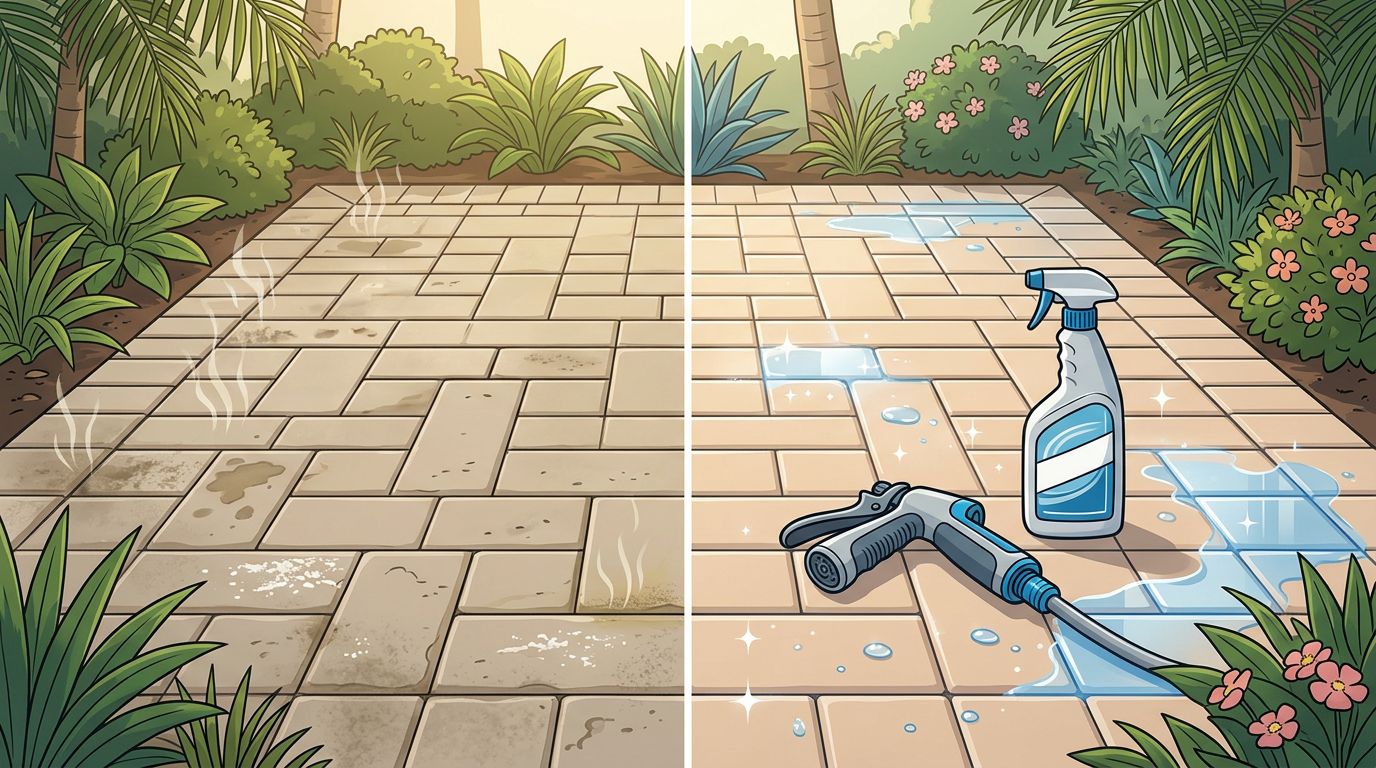
Dog urine brick pavers can develop dark marks, strong odors, and white mineral deposits that do not disappear with a quick rinse. The longer urine sits on porous surfaces, the more time it has to move into outdoor pavers and joints.
I have cleaned many paver driveways, patios, walkways, and pool decks in Southwest Florida. The safest approach is to flush fresh urine quickly, use a cleaner made for outdoor masonry, and avoid damaging the paver surface with excessive pressure. The right cleanup depends on how old the stain is and how deeply it has settled.
Key Takeaways
- Rinse fresh urine as soon as possible to limit absorption and odor.
- Use an outdoor enzyme based cleaner or pH-neutral cleaner that is labeled for masonry.
- Test every product in a hidden area before cleaning the full surface.
- Avoid mixing bleach, ammonia, acids, or other chemical cleaners.
- Use controlled cleaning on unsealed pavers before considering paver sealing.
Why Dog Urine Stains Brick Pavers
Brick and concrete pavers are durable, but they are not completely nonporous. Their surface and joints can absorb liquid, especially when the sealer has worn down or the pavers have never been sealed.
Dog urine contains salts and compounds that can leave a yellow or darkened mark after the liquid dries. In warm weather, the water evaporates quickly while urea crystals and organic urine residue remain behind. Rain may rinse the top of the stain, but it doesn’t always remove what has entered the paver or joint sand.
Odor is another concern. A paver may look clean after drying and still fail to eliminate odors when humidity rises or the surface becomes wet again. This is common on shaded patios, covered lanais, and narrow side walkways where air movement is limited.
Fresh urine is easier to handle than an old stain. If you see your dog use the same area, rinse it with a garden hose right away to help remove pet urine stains, as described in this guide to cleaning pet urine from concrete and pavers.
How to Clean Dog Urine Brick Pavers Safely
The first step is to remove loose dirt, leaves, and sand from the area. Sweeping prevents grit from spreading while you scrub or rinse. If you are dealing with a fresh pet mess, rinse the pavers before applying any cleaning product.
For an older stain, I recommend a careful process instead of applying the strongest chemical or blasting the area with a narrow nozzle.
- Wet the surrounding pavers first. This helps control runoff and protects nearby landscaping from concentrated cleaner.
- Apply a suitable outdoor cleaner. Choose an enzyme-based product or pH-neutral cleaner that clearly states it is safe for brick, concrete, or pavers.
- Allow the product to work. Follow the label directions for dwell time. Do not let the cleaner dry on the surface.
- Agitate lightly. Use a soft scrub brush or medium nylon brush. Avoid wire brushes because they can scratch the brick face and disturb joint sand.
- Rinse thoroughly. Move the rinse water away from doors, walls, pool water, and planted areas.
Always test the cleaner in a small hidden section first. Look for color change, whitening, surface roughness, or damage to an existing sealer. If the test area looks different after drying, do not use that product on the whole driveway or patio.
Never combine cleaning products. Be cautious with unverified natural home remedies like a harsh vinegar solution or strong hydrogen peroxide, because these can etch surfaces or damage pavers when used incorrectly. Keep pets away until the cleaned area has been fully rinsed and dried according to the product directions.
A homeowner discussion about this problem is available in this paver urine stain cleaning thread. Advice from online discussions can be useful, but every paver type and sealer reacts differently. A small test spot is still necessary.
Choosing a Cleaner for Pavers and Joints
The cleaner should match both the stain and the surface. Brick pavers, concrete pavers, travertine, and sealed surfaces don’t all respond the same way. This is especially true for a concrete patio or other porous surfaces where pet waste easily soaks in.
| Cleaning option | Best use | Main caution |
|---|---|---|
| Enzyme cleaner | Organic odor and fresh pet residue | Use only a product labeled for outdoor masonry |
| pH-neutral cleaner | Routine cleaning and light residue | May not remove old discoloration by itself |
| Mild detergent | Loose dirt around a recent spot | Rinse well so film isn’t left behind |
| Acidic cleaner | Certain mineral deposits | Can etch surfaces and damage nearby materials |
| High-pressure rinse | Final removal of loosened residue | Excessive force can remove sand or sealer |
For most homeowners, an outdoor urine odor eliminator or a pH-neutral product is the safest place to start. An enzyme cleaner may reduce odor, but it cannot always restore the original color when urine has caused permanent discoloration.
Acid-based products need extra care. They may affect the color of concrete pavers, weaken cement-based materials, damage travertine, or burn nearby plants. I don’t recommend reaching for muriatic acid or strong chemical stain removers because the label mentions stains.
A clean surface also needs time to dry before you decide whether the stain is gone. Wet pavers can look darker than they really are. Wait until the area is dry, then check the color and odor again.
When Pressure Washing Helps, and When It Causes Damage
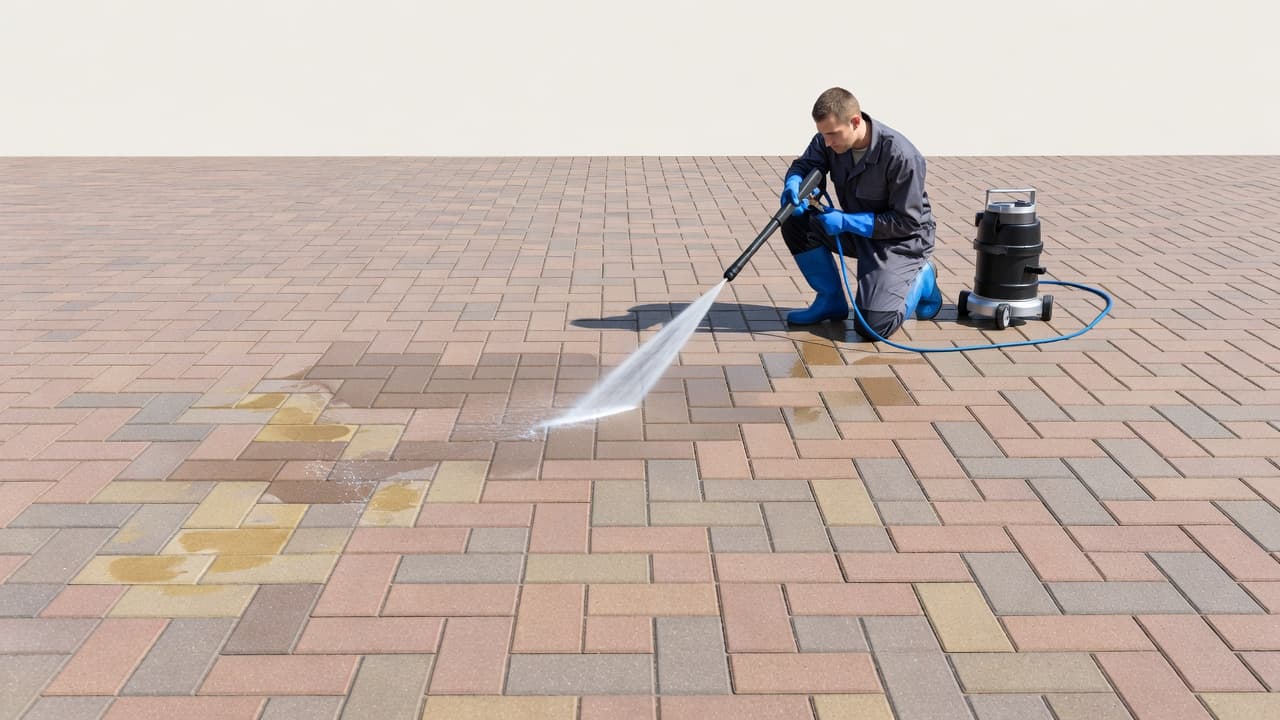
Pressure washing can help remove loosened residue from brick pavers, but it is not a replacement for proper treatment. A narrow spray held too close can chip the brick face, cut lines into the surface, strip old sealer, and remove more joint sand than necessary.
A strong blast can remove the visible stain while also damaging the paver and washing out the joints.
I prefer a controlled cleaning process. On flat areas, that may include a chemical pre-treatment, a wide spray pattern, professional surface cleaning attachments, and a careful final rinse. The goal is to loosen residue and remove it without creating a new repair problem.
The right pressure depends on the paver material, condition, age, and sealer. Interlocking concrete pavers also need attention around the joints. If too much sand is removed, the pavers may shift or allow weeds and water to enter more easily.
A soft wash uses lower pressure and cleaning solution to remove organic buildup from surfaces that cannot handle heavy force. I use that type of approach for appropriate exterior materials, much like soft wash methods used for roof cleaning. It is not the same as using maximum pressure on every surface.
Protective equipment matters as well. Wear closed-toe shoes, gloves, and eye protection when applying cleaner or rinsing contaminated water. Keep the spray pointed away from people, pets, doors, electrical fixtures, and screened areas.
DIY Cleanup or Professional Paver Restoration?
A small, fresh spot on an unsealed paver walkway may be manageable with prompt rinsing and a labeled cleaner. DIY cleaning becomes less practical when the odor returns, stains cover a large area, or you struggle to remove pet urine stains and eliminate odors from your outdoor pavers permanently.
Professional cleaning is also the safer choice when pavers are uneven, joint sand is already missing, or the surface includes travertine. These materials can show marks quickly when the wrong nozzle or chemical is used, and a standard store bought urine odor eliminator is often not enough for deeply embedded problems.
At Kingsway Paver Sealing & Pressure Cleaning, I look at the surface before choosing a cleaning method. The process may include power scrubbing, a controlled rinse, stain treatment, drying, and restoration of the joints when needed. Pavers should be clean and dry before any driveway sealing or other protective coating is applied.
Sealing over urine residue does not solve the problem. It can trap odor, highlight discoloration, or make future restoration more difficult. Cleaning comes first, followed by a review of the paver condition and the type of sealer that fits the property.
Kingsway serves homeowners in Fort Myers, Cape Coral, Naples, Bonita Springs, Port Charlotte, Sanibel Island, and nearby Southwest Florida communities. If the odor or staining keeps returning, you can Get a Quote for professional paver cleaning and restoration.
Preventing Repeat Urine Stains
Cleanup is easier when the same area does not receive repeated use. Watch where your dog prefers to go and promptly clear any pet waste while rinsing those sections regularly with a garden hose, especially during hot, dry weather. A quick rinse is easier than waiting until the residue has dried several times.
Keep the area clear of leaves and debris so you can spot new stains. Organic debris can hold moisture against the pavers and make odors last longer.
If the pavers are clean, stable, and fully dry, a suitable sealer may help reduce absorption and prevent stubborn stains from setting in, making routine maintenance easier. Sealer is not a substitute for rinsing, and it will not stop urine from reaching unsealed joints or worn areas. Proper preparation matters more than applying a coating quickly.
For patios and pool decks, pay attention to drainage. Standing water can move residue across a larger section and leave uneven marks. If water consistently pools in one area, cleaning may need to be combined with joint repair or paver re-leveling.
Frequently Asked Questions
Can dog urine permanently ruin brick pavers?
Yes, if left unaddressed for too long, the acids and salts in dog urine can cause permanent discoloration and lingering odors that penetrate deep into the porous material and joint sand.
Can I use bleach or household vinegar to clean pet urine?
Avoid mixing bleach or using harsh home remedies like strong vinegar solutions, as these chemicals can damage the paver surface, etch the brick, or harm nearby landscaping.
When should I hire a professional for paver cleaning?
Professional restoration is recommended if the odor persists, stains cover a large section of your patio or driveway, or your pavers require specialized care like travertine handling and joint re-sanding.
Conclusion
Maintaining dog urine brick pavers and concrete pavers needs prompt attention, the right cleaner, and a measured rinse. Start with water for fresh spots, test any chemical in a hidden area, and avoid aggressive pressure that can damage the brick or remove joint sand.
When stains cover a large area or the smell returns after cleaning, professional paver restoration is the better option. Clean, dry, stable pavers are the proper starting point for any sealer and for a cleaner-looking outdoor space.