
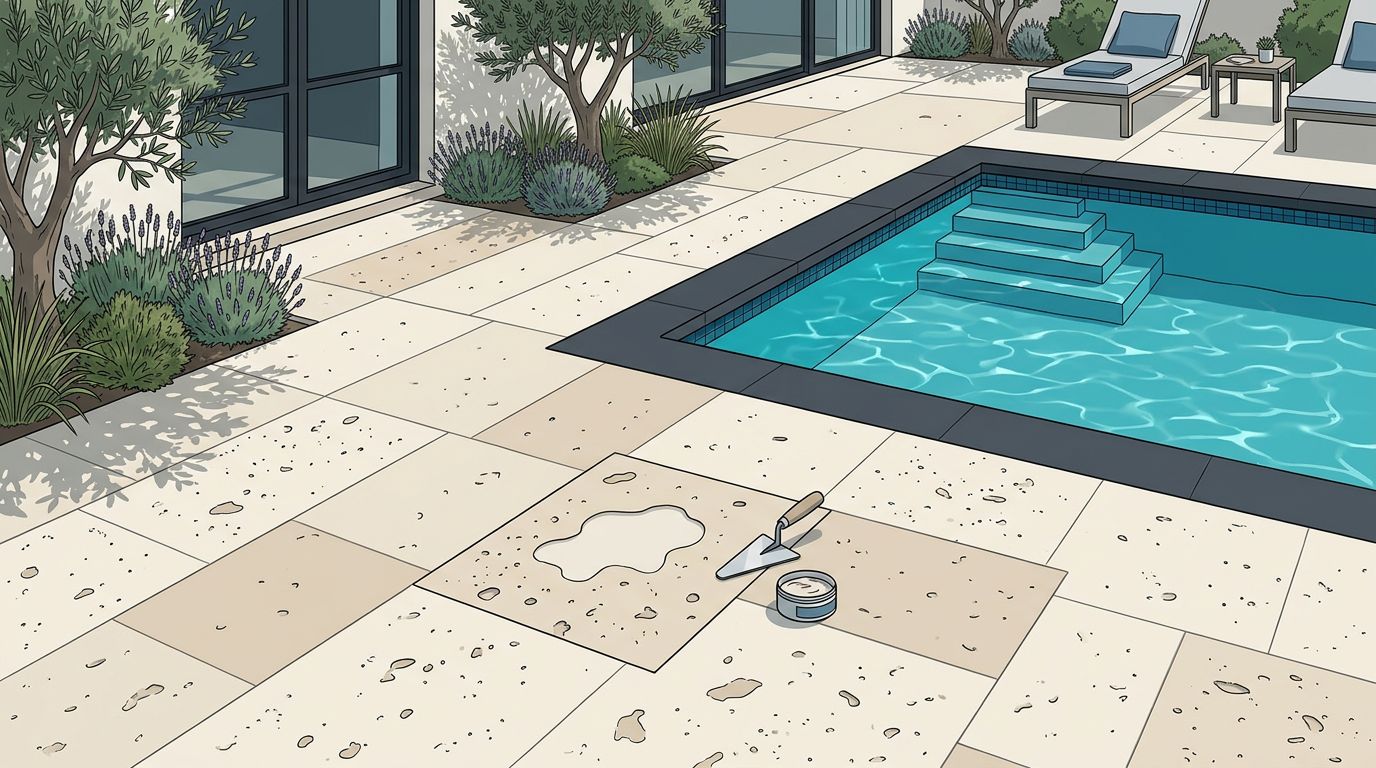
Natural stone is not supposed to look perfectly uniform. If you notice outdoor travertine holes across a patio, pool deck, or walkway, you may be looking at part of the natural stone character rather than actual damage.
In most cases, small natural pits can remain open without causing a problem. Larger holes, crumbling areas, and deep voids need closer attention. I look at the size, location, condition, and cause before recommending a repair for travertine pavers.
Key Takeaways
- Small, stable travertine holes usually don’t need filling.
- Large or deep voids on patios and pool decks can collect dirt, hold water, and become trip hazards.
- Cleaning should happen before any filling or sealing work.
- The repair material must suit outdoor stone and Florida weather.
- Filling every hole can change the natural appearance and create maintenance problems.
Why Travertine Has Holes in the First Place
Outdoor travertine is a natural limestone formed around mineral springs. As it develops, gases and minerals leave small openings through the stone. These openings are called pits, voids, or holes.
Some travertine pavers are filled at the factory with cement-based material or resin. Other pieces are sold with the natural holes exposed. Both finishes are normal. An unfilled surface is not automatically low quality, damaged, or unfinished.
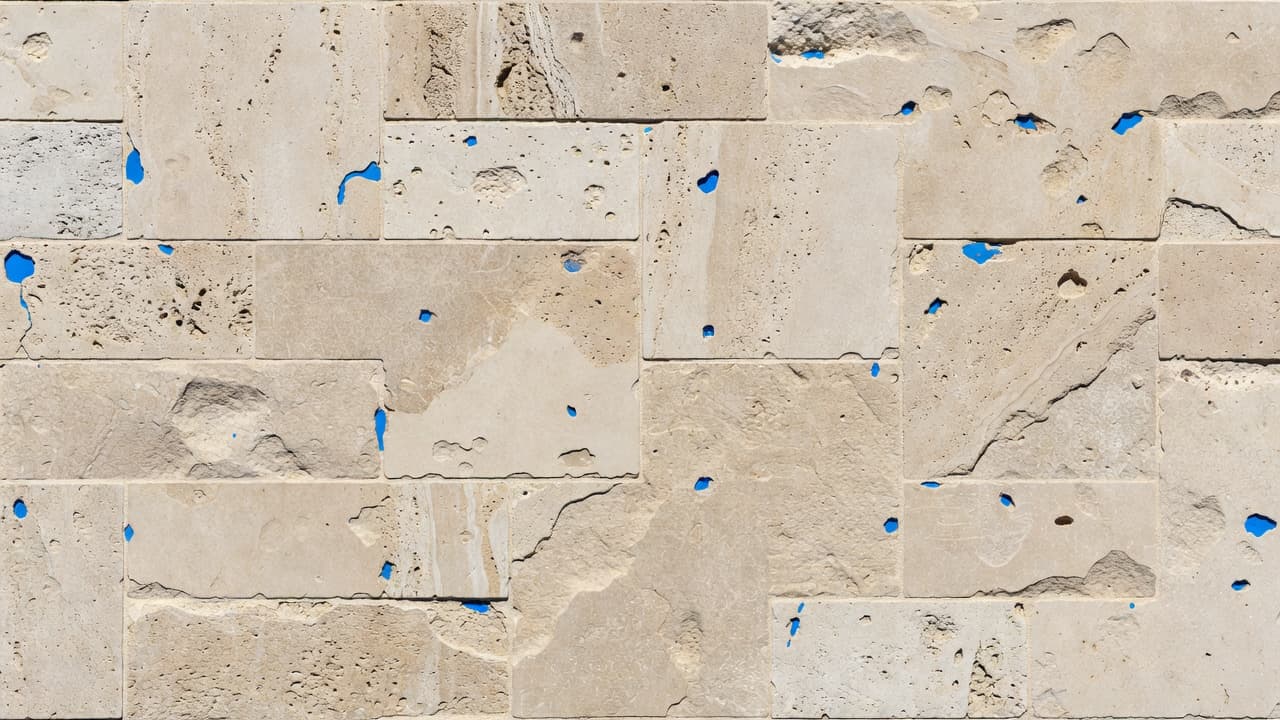
Small pits often add texture and help give this natural stone its soft, natural appearance and natural character. Many homeowners choose travertine because it doesn’t have the repeated pattern found in manufactured concrete surfaces.
Problems usually begin when the openings are large enough to trap debris or weaken the stone around them. Dirt, leaves, sand, and organic growth can settle inside this porous stone. In Southwest Florida, regular rain and humidity can keep that material damp for long periods.
The surface also changes over time. Pool chemicals, standing water, heavy furniture, storm debris, and improper cleaning can enlarge existing voids. A hole that was harmless when the patio was installed may later become rough, deep, or unstable.
I don’t recommend filling natural pits only because they look different from one stone to the next. The first question is whether the opening affects safety, drainage, cleaning, or the condition of the surrounding stone.
When Outdoor Travertine Holes Need Filling
The decision depends more on the hole’s condition than its appearance. A shallow pit in the center of a paver usually has a different repair need than a deep void along a walking path.
I normally recommend considering whether to fill holes when:
- The opening is deep enough to catch shoes, chair legs, or pool furniture.
- Water remains inside the hole after the surface dries.
- Dirt and organic growth keep returning in the same spot.
- The edges are breaking, flaking, or becoming wider.
- The hole runs across a paver joint or affects the edge of the stone.
- A large void makes the paver difficult to clean or maintain.
A hole on pool decks deserves extra attention because bare feet and wet surfaces make sharp edges more noticeable. A deep opening in a walkway can also create a small but avoidable trip concern.
The same advice applies to outdoor travertine holes on driveways, though vehicle traffic adds more stress. Tires, turning movements, and heavy loads can worsen a weak repair for outdoor pavers. If the paver rocks, has a cracked corner, or sits lower than nearby stones, filling the hole alone won’t fix the underlying issue.
I also inspect the base and joints. A shifting paver may need to be lifted, leveled, and reset. Missing joint material may need replacement before the surface receives a sealer.
A homeowner discussion on travertine patio repairs shows why this decision often depends on the specific surface. A repair that works for one patio may not suit another stone, installation method, or climate.
When Leaving the Holes Open Makes More Sense
Small, clean, stable travertine holes can usually remain open. They are part of the stone and don’t always reduce the life of the patio.
Leaving them alone often makes sense when the holes are:
- Shallow and spread across the surface.
- Free of loose edges and crumbling material.
- Not located in a high-traffic walking area.
- Not causing standing water or repeated staining.
- Consistent with the natural finish of the travertine.
An attempt to fill holes everywhere can create an uneven repair pattern. The filler may not match the stone perfectly, and the finished patio can look patched instead of natural. Some repair products also wear differently from travertine, so filled spots may become visible after regular use.
There is another concern. If the void contains dirt, moisture, water absorption, or loose material, filler may bond poorly. The repair can crack, loosen, or pop out later. In areas with temperature changes, movement between the stone and repair material can make that problem worse. Florida patios don’t face the same severe freeze-thaw cycles as northern states, but wet weather, heat, heavy rain, and surface movement still affect repairs.
I prefer to preserve the original look when the stone is sound. A thorough cleaning and suitable sealer may be all the surface needs. The goal is not to make every paver identical. The goal is to keep the area safe, clean, stable, and attractive.
Deep Cleaning Comes Before Filling
Never fill dirty travertine. Soil, algae, old sealer, and loose stone particles can prevent the repair material from bonding properly.
For a flat patio or pool deck, I use a controlled cleaning process rather than blasting the stone with maximum force. That may include a chemical pre-treatment using pH-neutral products, a wide spray pattern, a surface cleaner, and a careful final rinse.
Travertine surfaces are porous and softer than many concrete surfaces. Excessive pressure can mark the stone, remove more joint material than needed, or damage an existing sealer. Good cleaning removes the buildup without creating a new repair problem.
This is where professional cleaning and sealing techniques matter. The correct pressure, nozzle, distance, and cleaning solution depend on the stone’s finish and condition. I always pay close attention to loose edges and previously repaired areas.
A soft wash is often better for nearby walls, screens, or exterior areas with organic growth. The cleaning method should match the material. A roof cleaning approach is not the same as cleaning a porous travertine pool deck.
After cleaning, the surface needs time to dry. Drying allows the full condition of the holes, cracks, color variation, and joints to become visible. It also prevents sealing moisture into the stone.
I then check whether the opening is solid around the edges. If the surrounding travertine continues to break away, the repair needs more than a quick application of filler.
How Professionals Fill Travertine Holes
The repair process should be measured and clean. When professionals approach filling holes, the material must bond to the stone, handle outdoor exposure, and fit the look of the existing surface.
A typical repair includes these steps:
- Inspect the hole and surrounding paver. Loose stone, cracks, movement, and joint problems need attention first.
- Clean the opening. Dirt and weak material are removed so the repair has a firm surface to bond with.
- Choose a compatible filler. The product may be a color-matched cement-based grout, an epoxy resin travertine filler, or another product approved for outdoor travertine.
- Apply the material carefully. Using a putty knife, the hole is filled without spreading excess product across the surrounding face.
- Allow proper curing time. The area should remain undisturbed for the period recommended by the product manufacturer.
- Seal after repairs are complete. The surface must be clean and dry before the final protective treatment.
Not every product labeled for stone is suitable for a wet pool area or an exposed outdoor patio. Product color, texture, flexibility, and finish all matter. A shiny repair in a matte surface can stand out as much as a mismatched color.
I also recommend testing a small area first. Travertine varies in shade, porosity, and finish, even within the same installation. A test section helps confirm the appearance before repairs continue across the entire patio.
Homeowners asking about silver travertine often receive different advice because the material can have open pores, filled sections, or previous coatings. A silver travertine maintenance discussion shows why the stone’s existing condition should guide the repair choice.
Should Travertine Be Sealed After Filling?
Sealing is usually helpful after cleaning and repair, but it doesn’t replace filling. A sealer can reduce absorption and make future maintenance easier. It won’t reliably bridge a deep hole or hold together loose stone. When you decide to seal your travertine, you provide an extra layer of protection against the elements.
I choose the sealer based on the location and finish the homeowner wants. A pool deck may need a different product than a driveway or covered lanai. Applying a penetrating sealer is often ideal for outdoor surfaces because it guards the stone from within without changing its natural texture. Some homeowners prefer a natural appearance, while others want a darker wet-look finish.
The surface must be completely clean and dry. Sealing over trapped moisture, residue, or organic growth can leave discoloration and shorten the life of the coating.
Timing also matters. The filler must cure before sealing. If sealer is applied too soon, it may affect the repair or create visible differences around the filled area.
Regular care helps the finished surface stay in better condition. Sweep away sand and leaves, rinse spills before they settle, and avoid harsh cleaners that can affect the stone or sealer. Maintaining outdoor pavers often involves professional treatments, and a scheduled driveway sealing service that includes fresh sand and sealer can also protect repaired areas when the travertine is exposed to vehicle traffic and weather.
At Kingsway Paver Sealing & Pressure Cleaning, I focus on cleaning, restoration, repair, and sealing as connected steps. A clean surface makes the condition easier to inspect. Proper repairs give the sealer a better foundation.
What Homeowners Should Avoid
The most common mistake is filling holes before understanding why they are there. Natural pits, surface erosion, cracked stone, and movement under the paver can look similar at first.
Avoid using household caulk, random concrete patch, or interior restoration compounds. These materials may not match the stone or hold up under outdoor moisture and traffic.
I also don’t recommend forcing filler into every small pit. That creates extra work without always improving the patio. The repair should solve a real issue, such as a deep opening, loose edge, recurring debris, or unsafe walking surface.
Do-it-yourself pressure cleaning creates another risk. Holding a nozzle too close can etch outdoor travertine, strip joint material, or leave visible lines. Careless cleaning can turn a simple maintenance job into a restoration project.
If the patio has widespread crumbling, rocking travertine pavers, faded sealer, or dark organic buildup, a professional inspection is the safer starting point. Kingsway serves homeowners in Fort Myers, Naples, Cape Coral, Bonita Springs, Port Charlotte, Sanibel Island, and nearby Southwest Florida communities.
Frequently Asked Questions
Do all outdoor travertine holes need to be filled?
No, small and stable natural pits do not need to be filled. They are part of the stone’s natural character and only require filling if they are deep, hold water, collect debris, or create a safety hazard.
Can I use regular household caulk or concrete patch to repair travertine?
Avoid using household caulk, interior products, or random concrete patches. These materials will not match the stone, hold up to outdoor weather, or bond properly to porous travertine surfaces.
Why is cleaning necessary before filling travertine holes?
Cleaning removes dirt, algae, old sealer, and loose particles that can prevent the repair material from bonding securely. Applying filler to a dirty surface usually results in cracking, loosening, or popping out later.
Conclusion
Small natural pits don’t need to be filled simply because they are visible. Outdoor travertine holes should be repaired when they are deep, unstable, difficult to clean, holding water, creating a safety concern, or when you need to fill holes to prevent structural weakening.
Cleaning comes first. After the surface is dry and inspected, the right repair material can be selected, cured, and protected with a compatible sealer. If you’re unsure whether your patio needs filling, Get a Quote for professional cleaning and sealing.