
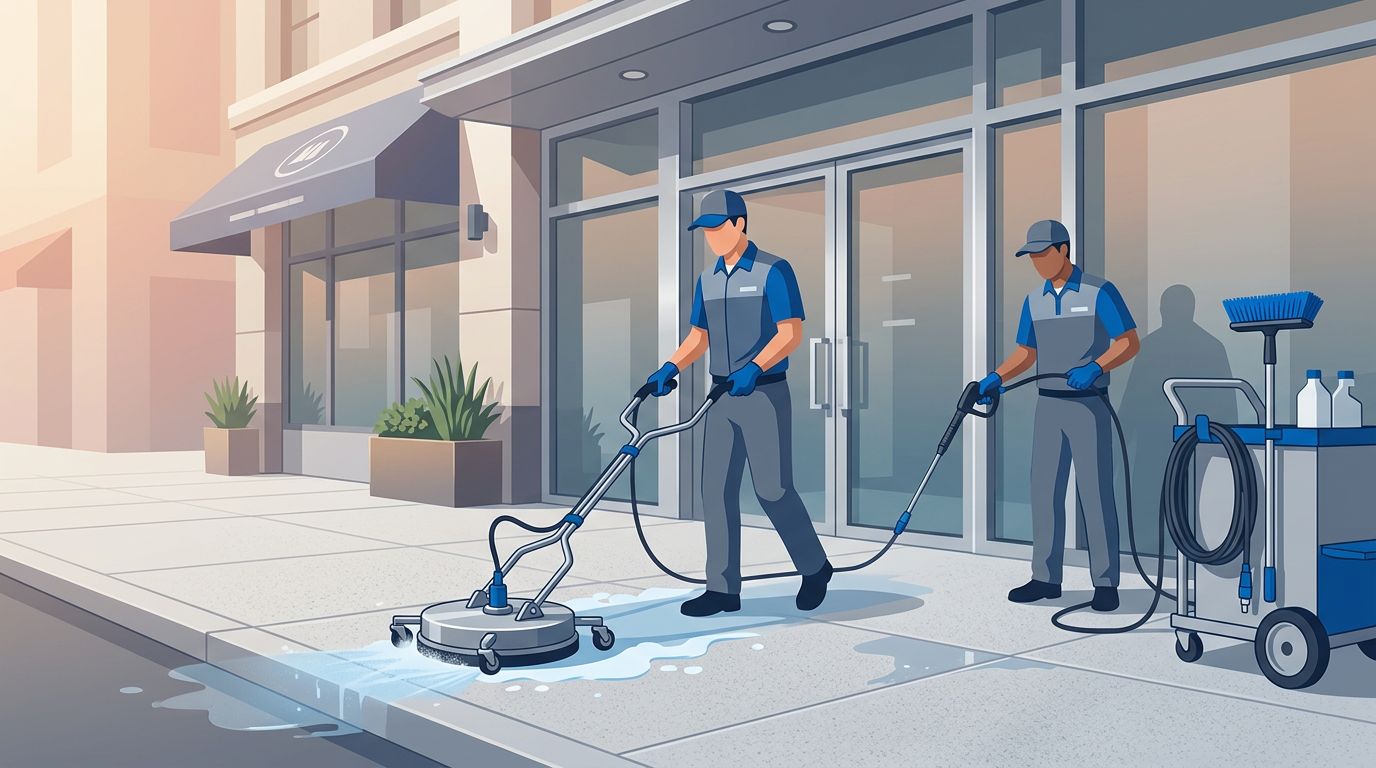
I treat a storefront entrance like a handshake. If the concrete is stained, slick, or speckled with gum, people notice that before they notice the display window, making your storefront sidewalk cleaning essential for leaving positive first impressions.
Effective storefront cleaning is not just about chasing a bright white finish. It is about improving traction, boosting curb appeal, and keeping dirt from settling into the surface. The same habits that improve home walkways work wonders for rentals and various retail properties, which is why these details matter for anyone focused on professional storefront cleaning.
Key Takeaways
- First Impressions Matter: A storefront entrance acts as the “handshake” for your business, where clean concrete and debris-free walkways signal professional management and attention to detail.
- Technique Over Force: Avoid common pressure washing mistakes like “zebra striping” by using a surface cleaner for large areas rather than aggressive wand spraying, which can etch concrete or damage pavers.
- Right Tool for the Job: Utilize soft washing for delicate surfaces like painted trim, stucco, and wood to prevent damage, while reserving high-pressure cleaning for hardy materials like concrete.
- Maintenance Beats Heroics: Establish a regular cleaning and sealing schedule to address stains, organic growth, and gum removal early before they become difficult, permanent blemishes.
Why storefront entryways get dirty so fast
A storefront entry takes the hit for the whole property. Between customer foot traffic and the daily grind of city life, every shoe, stroller, hand truck, and wind-blown leaf ends up there. People pause at the door, and that pause zone collects the worst of it. Because these are high-traffic areas, they see more than their fair share of wear and tear.
I see the same trouble spots over and over. Gum removal is a constant battle near the threshold, and food and drink spills create sticky patches that trap even more dust. Dark mildew grows where shade and humidity meet, and rust often drips down from metal furniture or planters. In the context of shopping center cleaning, if sprinklers hit the area, you can get mineral stains that look harmless at first but soon settle in like they pay rent.
In Southwest Florida, moisture makes everything move faster. A little grime plus high humidity can turn a clean-looking walkway into a slick one, which is why consistent storefront cleaning is vital for retail properties. This matters more than most people think because dirty concrete is not only ugly, it can become a safety hazard in a hurry.
Pavers and textured stone make this even trickier. Brick and travertine look great at an entry, but they hold dirt in joints and tiny surface pits. Wait too long, and the whole area starts looking flat, dingy, and older than it is.
I compare it to a front porch at home. Ignore it for a few weeks, and suddenly the whole house feels less cared for. Professional storefront cleaning is no different. The entrance sets the tone for your business, and it does so in one glance.
How I use pressure washing without leaving stripes
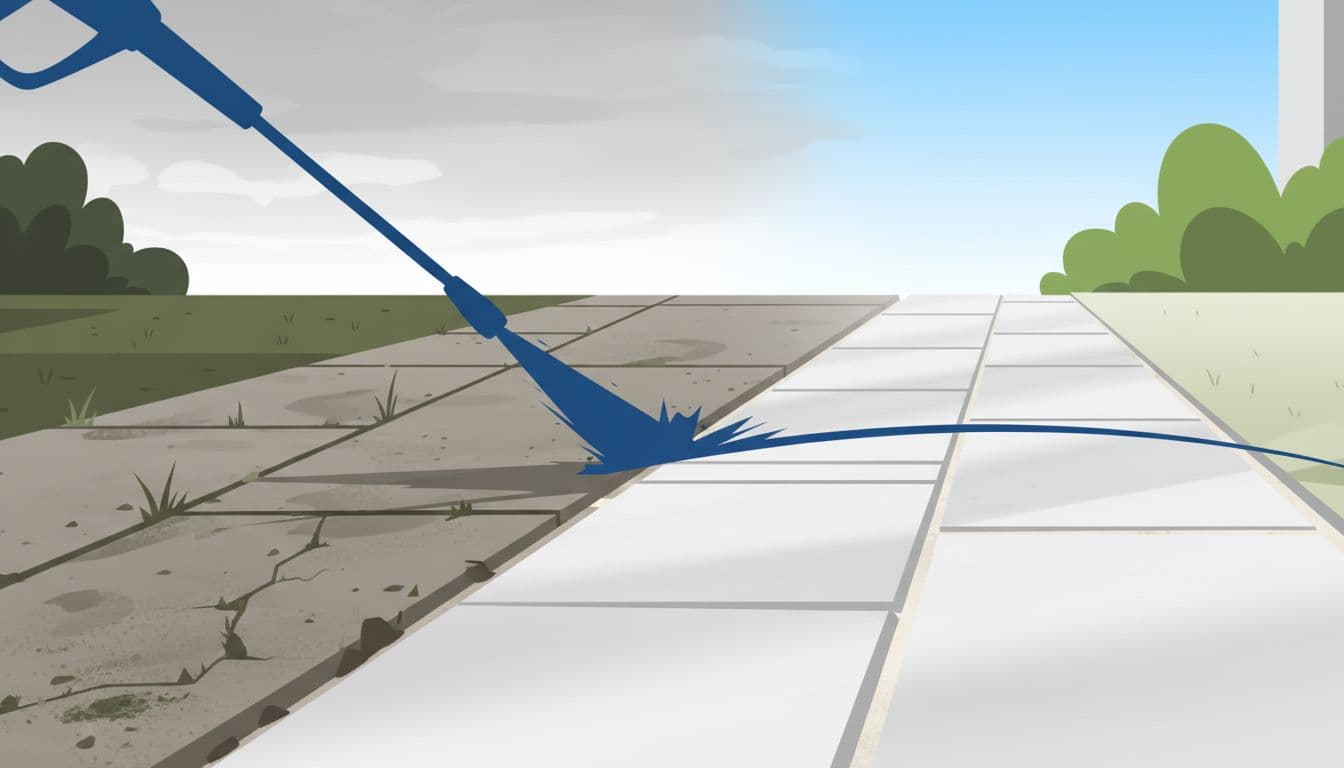
Commercial pressure washing is the most effective way to maintain most flat sidewalks, but I never treat it like a brute force job. The biggest mistake I see is simple: too much pressure. People often assume more force means faster cleaning, but it usually results in etched lines, streaks, blown out sand joints, and a surface that looks worse once it dries.
Concrete can handle more than painted trim or soft stone, but even concrete has its limits. If I am cleaning pavers, I become even more careful because a hard blast can strip joint sand and leave the surface uneven. For effective concrete cleaning, I prefer a surface cleaner over a single spray tip for large open sections. It keeps the passes even and significantly cuts down on zebra striping. I still use a wand for corners, edges, and tight spots around posts, mats, and door thresholds during professional pressure washing.
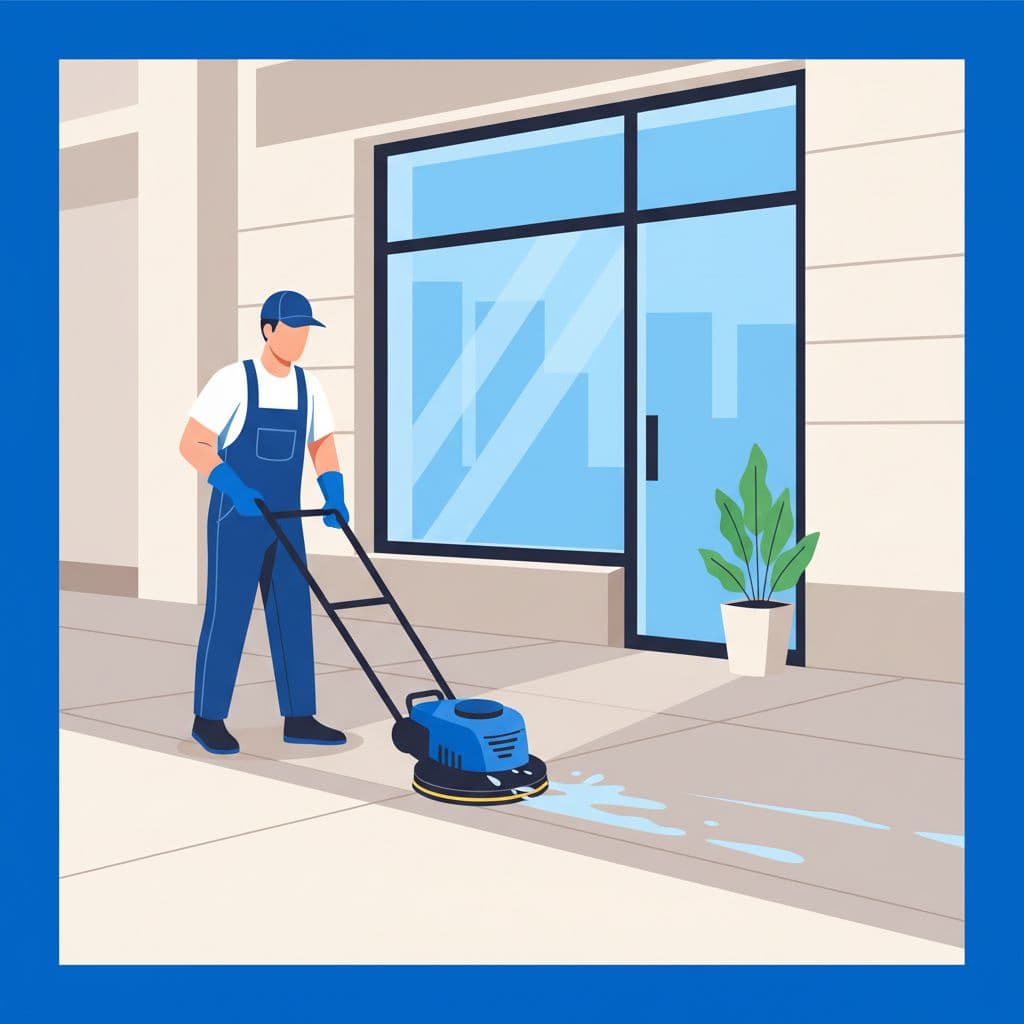
Before I start my retail plaza cleaning process, I keep the steps consistent:
- I clear loose grit, sand, leaves, and trash first.
- I pre-treat gum removal, grease stains, algae, and rust instead of trying to blast them away cold.
- I use hot water pressure washing for deep-set grime that a cold spray cannot lift.
- I test a small area to see how the surface reacts.
- I perform concrete cleaning with steady, overlapping passes, pushing dirty water away from the doorway.
If the nozzle is carving lines into the surface, I am too close or the setup is too aggressive.
That one rule saves a lot of concrete. Good technique is mostly about pace, angle, and patience. I do not linger in one spot, and I do not point water where it can slip under doors or soak mats. If the business is open during storefront cleaning, I keep runoff in check and mark wet areas so customers stay safe. A freshly cleaned walkway is not much help if the next person slips on it.
This is where smart storefront cleaning separates itself from rushed work. The best result looks perfectly even, with no stripes, no blown joints, and no random bright circles left behind by an impatient operator.
When a soft wash is the smarter move
Not every part of an entrance can withstand high pressure. That is where soft washing earns its keep. I use this low-pressure method around painted walls, building facades, stucco, awnings, decorative stone, wood trim, signage bases, and any finish that can chip, pit, or fade under a hard stream.
Soft washing works more through specialized cleaning solutions and dwell time, rather than physical force. This makes it a superior choice for clearing organic buildup, especially when you need effective algae and mildew removal on vertical surfaces. If you have ever noticed a dingy entry wall next to a clean sidewalk, you know how distracting that contrast can look.
The same principle applies to roof cleaning. A roof does not need to be hammered with high pressure to look like new, and neither do the delicate architectural features around your entryway. You simply let the cleaning agent do the heavy lifting, then rinse it away with a gentle flow.
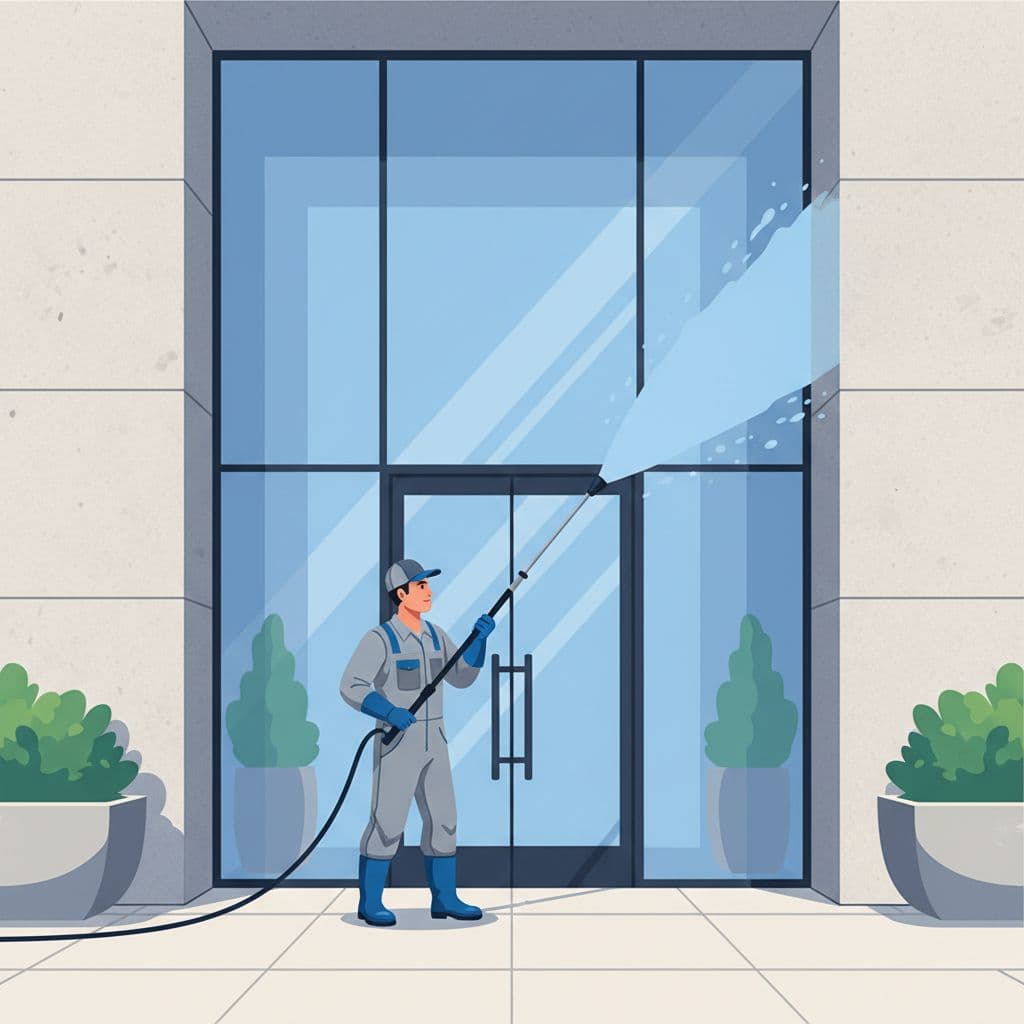
Most of the time, the best storefront cleaning approach is a combination of techniques. I use pressure washing on the flat sidewalk where grime is ground in, then switch to soft washing for the surfaces framing the entrance. That way, the entire area looks refreshed, not just half-finished.
I also pay close attention to the small details that others often overlook. Plants need to be rinsed before and after cleaning, and glass must be protected to ensure detergent does not spot the surface. Metals and coated finishes also require a test area first. One careless pass can turn a simple storefront cleaning job into a costly situation involving touch-up paint, damaged stone, or streaked trim.
If you own a home, the same rule applies to front porches and covered walkways. Match your cleaning method to the material at hand. Always take a moment to assess the surface before you begin.
Keep the walkway clean longer with sealing and a simple schedule
Deep cleaning matters, but the real win comes after. Once the surface is clean, I want to keep it that way with a consistent maintenance plan. That means sweeping often, rinsing off spills fast, and dealing with stains before they settle in for good. Implementing a regular schedule for storefront maintenance is essential for property management and is often a standard requirement for businesses involved in strip mall cleaning.
A simple schedule beats a heroic once-a-year cleanup. This is the pattern I come back to most:
| Surface | Cleaning rhythm | Extra step |
|---|---|---|
| Plain concrete sidewalk | Rinse as needed, deep clean every few months | Spot-treat oil and rust early during storefront cleaning |
| Brick or travertine pavers | Sweep weekly, wash before stains darken | Re-sand joints if needed, then seal for storefront cleaning |
| Shaded entry zones | Check after rainy stretches | Treat algae before it turns slick during storefront cleaning |
Paver entrances need special attention. Cleaning removes the grime, but it does not protect the surface on its own. I think about it the same way I think about driveway sealing at home. The wash gets rid of buildup. The sealer helps slow down stain absorption, color fade, and sand loss. If the storefront has brick or travertine, sealing after the surface is fully dry can make walkway cleaning much easier.
That does not mean every job is a DIY afternoon. Some issues are stubborn for a reason. Heavy grease stains, baked-in gum, rust, efflorescence, and uneven pavers can get ugly fast. If joint sand is already washing out, or the entry needs both specialized sidewalk stain removal and protection, I would not wing it.
This is also where matching exterior cleaning services helps. A property that needs concrete cleaning might also need nearby pavers sealed, siding cleaned with a soft wash, or even roof cleaning if mildew is showing up across the whole exterior. One dirty area rarely stays isolated for long, so integrating professional exterior cleaning services ensures your commercial storefront exterior cleaning provides lasting curb appeal.
If you would rather skip the trial and error, Get a Quote for professional walkway cleaning or sealing help.
Frequently Asked Questions
Can I use a high-pressure nozzle for all storefront surfaces?
No, using high pressure on every surface often leads to damage like etched concrete, blown-out sand joints in pavers, or stripped paint. It is crucial to switch to a soft wash method for delicate materials to clean them effectively without causing physical wear.
How often should a storefront sidewalk be professionally cleaned?
While the frequency depends on foot traffic and local climate, a general rule is to rinse off spills immediately and schedule a deep professional cleaning every few months. High-traffic areas or shaded spots prone to mildew may require more frequent attention to maintain both curb appeal and safety.
Should I seal my storefront pavers after cleaning?
Yes, sealing is highly recommended after a professional wash once the surface is completely dry. A quality sealer helps protect brick or travertine from future stain absorption, prevents color fading, and keeps the joint sand securely in place.
Why does my entryway get slippery even when it’s not raining?
Slippery storefronts are often caused by the growth of algae and mildew, which thrive in humid or shaded entry zones. Consistent cleaning removes these organic buildups, which is essential for preventing slip-and-fall hazards and maintaining a safe environment for your customers.
Conclusion
A business entrance cleaning project is about more than just hygiene. Your storefront creates a first impression in mere seconds, as customers instinctively judge your brand by the cleanliness of your entryways and walkways. When you focus on boosting your curb appeal, you signal to every visitor that your shop is well-managed and professional.
When I keep up with stains early, use pressure washing where it belongs, and switch to a soft wash around delicate materials, the whole entry looks better and stays safer. Professional storefront cleaning protects your investment and prevents long-term damage to your surfaces. Whether you choose to handle the maintenance yourself or hire professional exterior cleaning services, regular walkway cleaning is the most effective way to ensure your storefront cleaning routine delivers lasting results. Clean concrete and well-kept pavers do not need to shout; they simply tell people that your place is cared for.