
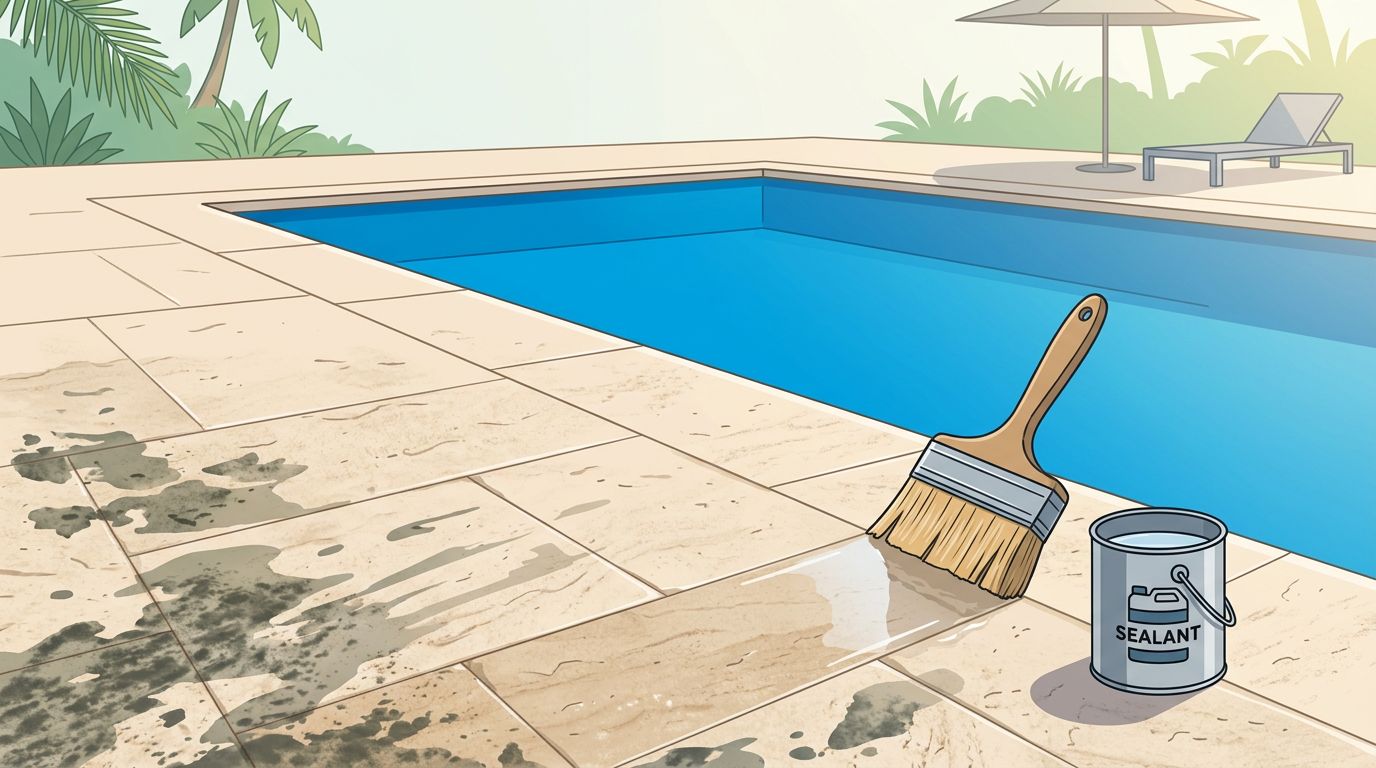
A travertine pool deck can look clean and bright one season, then show dark spots, algae, and fading after months of Florida weather. That is why travertine pool deck sealing needs a regular schedule instead of being treated as a one-time project for outdoor living spaces and travertine pool decks.
Most homeowners should plan to seal travertine every one to three years, with yearly inspections between services for this natural stone. The right timing depends on sun exposure, pool water, rain, traffic, cleaning methods, and the condition of the existing sealer. I look at those factors before recommending a maintenance schedule for your pool deck.
Key Takeaways
- Frequency: Most travertine pool decks need to be resealed every one to three years, though Florida’s climate can shorten this timeline to 12 months for high-exposure areas.
- The Water Test: A simple water drop test helps determine if your sealer is failing; if the water quickly absorbs and darkens the stone, it is time for a new coat.
- Proper Preparation: Travertine must be thoroughly cleaned and completely dry before applying a new sealer to prevent trapping moisture and causing cloudy or uneven finishes.
- Slip Resistance: Choosing the right product—such as a penetrating or enhancing sealer with an anti-slip additive—ensures the pool deck remains durable and barefoot-friendly.
How Often Should Travertine Pool Deck Sealing Be Done?
For many Southwest Florida homes, professional travertine pool deck sealing is needed every 12 to 24 months. A deck with limited use, some shade, and a quality protective coat may go closer to three years before you need to seal travertine surfaces again. A busy pool area exposed to full sun, heavy rain, sunscreen, chlorine, and foot traffic may need attention sooner.
There isn’t one calendar date that works for every property, but checking the water absorption rate of your stone helps you decide when to reseal travertine using the right travertine sealer. If water still beads on the surface and the color remains even, the product may still be working. If moisture absorbs quickly, the travertine darkens when wet, or stains are becoming harder to remove, it is time for an inspection.
| Pool deck condition | Typical sealing schedule |
|---|---|
| Covered or lightly used travertine pavers | About every 2 to 3 years |
| Typical residential pool deck | About every 1 to 2 years |
| Full sun, heavy use, or frequent moisture | About every 12 months |
| Faded, stained, or poorly sealed surface | Clean and evaluate before resealing |
A new sealer shouldn’t be applied over dirt, algae, old residue, or moisture. The surface must be cleaned and allowed to dry first. Applying sealer too soon can trap moisture and create cloudy areas, uneven color, or poor bonding.
Why Florida Weather Shortens the Sealing Timeline
Travertine is a natural stone with pores that can absorb water, dirt, organic growth, and spilled liquids. In Fort Myers, Naples, Bonita Springs, Port Charlotte, and nearby areas, travertine pool decks face strong sunlight, high humidity, frequent rain, and long periods of outdoor use.
Pool water also leaves behind more than moisture. Chlorine, salt, sunscreen, body oils, and pool chemicals can build up around the waterline and traffic areas. These substances can wear down the protective finish over time. Heavy rain adds another problem by carrying soil and organic debris across outdoor surfaces.
Warm, damp conditions also support mold, mildew, and algae. Sealing travertine can help reduce absorption and make routine cleaning easier, but it won’t stop all surface growth. The deck still needs regular rinsing and cleaning.
I often recommend scheduling a professional inspection before the start of the busiest swimming months. This gives you time to clean, repair, and seal the natural stone surface before family gatherings and regular pool use increase.
A covered lanai may protect part of the deck, but enclosed areas can still hold moisture and organic growth. Open pool decks usually receive more sun and rain, while shaded areas may stay damp longer. Both conditions affect the service interval, which is why UV resistant products are often needed for exposed areas.
Signs the Travertine Needs to Be Resealed
You don’t need to wait for the old sealer to disappear completely. Several visible changes can show that protection is wearing down.
The simplest test is a [water-beading check on pavers](https://kingswaypaversealing.com/water-beading-pavers/) to read how your sealer is holding: place a few drops of clean water on an inconspicuous area and see whether they stay rounded. If the water sits on top for a while, the surface may still have some protection from your travertine sealer. If the stone quickly darkens and absorbs the water, the deck may need to be resealed to protect vulnerable pool surfaces. This test doesn’t replace a professional evaluation, especially when multiple sealer layers are present.
Look for these common signs:
- Water absorbs into the stone instead of beading.
- Travertine looks dull, faded, or uneven after cleaning.
- Dark spots remain after the deck dries.
- Algae and mildew return quickly.
- Food, drinks, sunscreen, or leaves leave stains due to failing stain protection on the travertine tiles.
- The surface feels rougher in high-traffic areas.
- Previous sealer appears patchy, cloudy, or worn.
- Joints or edges collect dirt that no longer rinses away easily.
Color change alone doesn’t always mean the sealer has failed. Travertine can naturally vary in tone, and some finishes are designed to create a darker wet look. I check absorption, surface condition, residue, and the type of coating already present before suggesting another application for natural stone.
A new coat of sealer won’t correct a dirty or damaged surface. Proper cleaning and preparation for sealing travertine determine how the finished deck looks and how long it lasts.
What Happens Before a New Sealer Is Applied?
Good travertine pool deck sealing starts with proper preparation of your natural stone. The first step is to inspect the stone, joints, drains, coping, and nearby surfaces. Loose pieces, cracked areas, deep stains, or failing joint material may need attention before sealing.
Cleaning must match the stone. Travertine is softer than many concrete surfaces, so maximum pressure isn’t the correct approach. At Kingsway, I prefer a controlled process that may include a pH-neutral stone cleaner, a wide spray pattern, a surface cleaner on suitable flat areas, and a careful final rinse to protect your travertine pavers.
Pressure washing can be useful when the equipment is properly adjusted. The wrong nozzle, excessive force, or holding the wand too close can mark the stone, remove too much joint material, or strip an existing finish unevenly. The goal is to remove buildup without creating new damage.
Organic growth may respond better to a chemical treatment and gentle rinsing than aggressive blasting. This is similar to the controlled approach used for a soft wash on natural stone surfaces that cannot handle heavy force. Sealing travertine should never involve harsh acids, wire brushes, random solvents, or high heat.
After cleaning, the deck needs enough time to dry. Moisture can remain inside porous stone even when the top feels dry. Weather conditions, shade, stone thickness, and the amount of water used all affect drying time. Applying a fresh stone sealer before the surface is ready can lead to whitening, streaks, or an uneven finish.
The final preparation may also include removing loose old sealer or addressing sections where the previous coating is peeling. If the existing product is failing, applying another layer over it can make the problem more visible.
Choosing the Right Sealer and Finish
The best travertine sealer depends on the stone, the deck’s exposure, and the finish you want. Some homeowners prefer a natural appearance that keeps the stone close to its original color. Others want an enhancing sealer or wet-look finish that brings out the stone’s variation.
Pool decks need a product intended for exterior natural stone and a surface that may become wet. The finish should not leave a heavy, slick film. Sealing does not automatically make a pool deck slippery, but poor product selection, excess sealer, residue, or improper application can affect slip resistance. Choosing the right formulation helps ensure a durable finish that remains barefoot friendly.
A penetrating sealer soaks into the stone and helps reduce absorption without creating a thick surface layer. Alternatively, an enhancing sealer provides a stronger visual change while protecting the surface, though film-forming products require careful preparation. You can also mix an anti-slip coating or non-slip coating additive into your travertine sealer to maintain reliable slip resistance. Existing coatings also matter because products that do not bond properly can peel, haze, or leave lap marks.
I also consider the deck’s location. A penetrating sealer works well in areas with frequent moisture, while a sunny deck that dries quickly might benefit from a different approach. Pool coping and vertical edges may require careful hand application instead of the same method used across the main walking surface.
Keeping a Sealed Pool Deck Looking Good
Regular care helps extend the time between sealing services for outdoor surfaces. Remove leaves, dirt, and standing water when possible. Rinse areas around the pool after heavy use, especially when sunscreen and pool chemicals have built up, to maintain dependable stain protection.
Use a mild, stone-safe cleaner instead of strong acids or abrasive powders. Avoid dragging metal furniture, sharp tools, or heavy planters across the travertine. These actions can scratch the surface or wear down the finish in small areas, which helps preserve the slip resistance and non-slip coating provided by a quality penetrating sealer.
Cleaning equipment also matters. Routine pressure washing should not be done with a narrow nozzle held close to the stone. A measured approach is safer for pool surfaces, joints, and nearby screens. The same rule applies to other exterior services, including driveway sealing, where surface preparation and product selection affect the result, especially when choosing a UV resistant travertine sealer.
Pool deck sealing is also separate from roof cleaning or house washing. Each surface needs the correct cleaner, pressure level, and protection for nearby plants, screens, furniture, and pool water. Properly sealing travertine requires distinct methods that should never be treated as interchangeable with other exterior washing tasks.
If your deck is in Fort Myers, Naples, Bonita Springs, Port Charlotte, or Sanibel Island, I can inspect the surface and explain whether travertine pool decks need cleaning, restoration, sealing, or a combination of services. You can Get a Quote for your travertine pool decks or other paver maintenance needs.
Frequently Asked Questions
How often should I seal my travertine pool deck?
Most homeowners should plan to seal their travertine pool deck every one to three years. However, decks exposed to full sun, heavy foot traffic, and frequent moisture in Southwest Florida may need to be resealed every 12 to 24 months.
How can I tell if my travertine needs to be resealed?
You can perform a simple water drop test by placing a few drops of water on the stone. If the water beads up on the surface, your current sealer is still working, but if the stone quickly absorbs the water and darkens, it is time for a new application.
Can I apply a new sealer over my old travertine sealer?
No, you should never apply a new coat of sealer over dirt, algae, moisture, or a failing old finish. The surface must be properly cleaned, prepped, and allowed to dry completely to ensure proper bonding and avoid cloudy or patchy results.
Does sealing make a travertine pool deck slippery?
Sealing does not automatically make a pool deck slippery, provided the right product is used correctly. You can also mix an anti-slip additive into your travertine sealer to help maintain reliable traction and a safe, barefoot-friendly surface.
Conclusion
Most travertine pool decks should be resealed every one to three years, but Florida exposure can shorten that schedule. A yearly inspection helps catch absorption, stains, fading, algae, and worn areas before they become larger problems.
The strongest results come from proper cleaning, full drying, suitable sealer, and careful application. If water absorbs quickly or the finish looks uneven, don’t apply another coat over the problem. Have the natural stone evaluated first, then decide if it is time to seal travertine or schedule complete travertine pool deck sealing when the surface is clean, dry, and ready.