
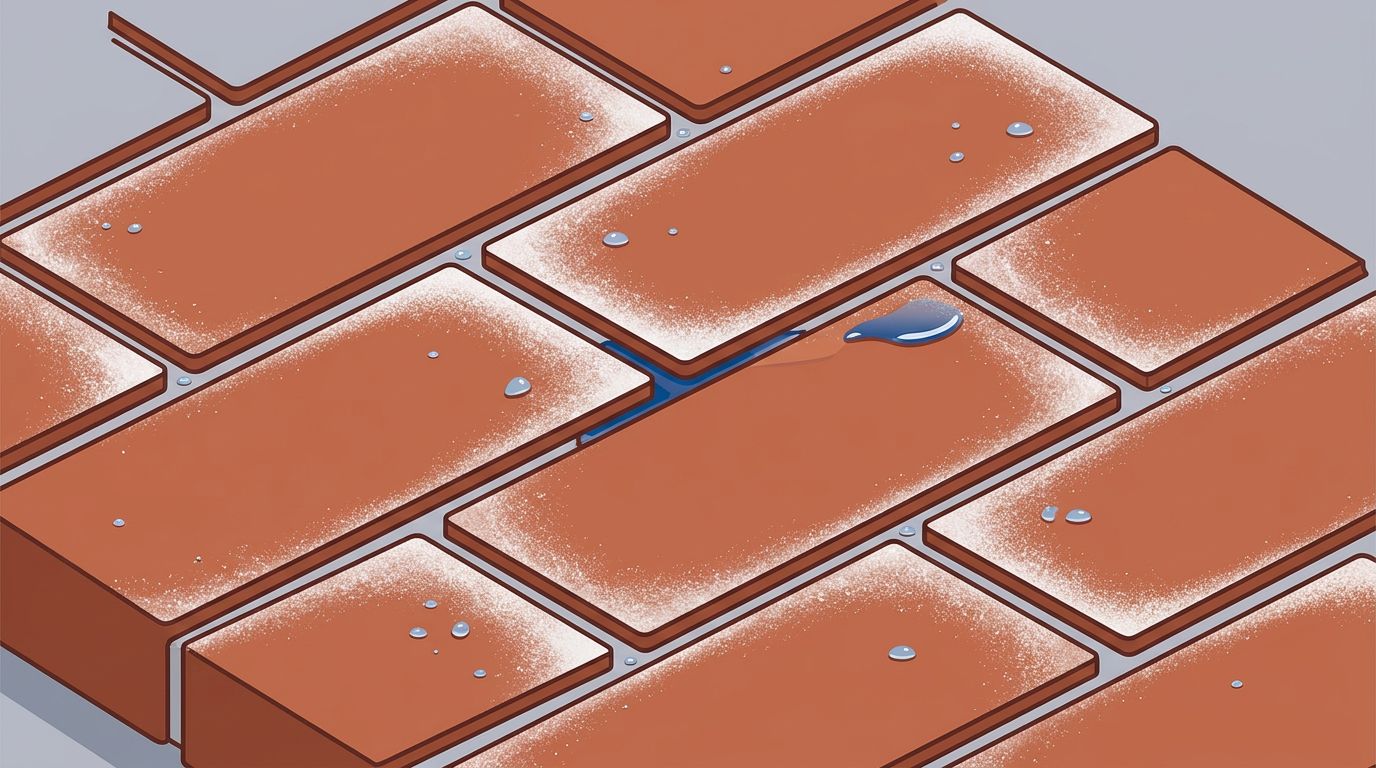
That pale film on your pavers can look bad fast. I get why people worry when a clean driveway suddenly looks dusty, faded, or blotchy.
Most of the time, that white powdery deposit is brick paver efflorescence, not a ruined surface. It is essentially a moisture problem with a visible clue. Once you understand that this common type of efflorescence is just a natural reaction to water, the situation makes a lot more sense.
Key Takeaways
- Natural Phenomenon: Efflorescence is a white, powdery mineral deposit that occurs when moisture carries soluble salts to the surface of pavers, typically appearing as a harmless surface symptom rather than structural failure.
- Moisture Indicator: While often cosmetic, a persistent white haze serves as a red flag that water is lingering or infiltrating where it should not be, which may eventually lead to structural damage like spalling if left unaddressed.
- Proper Diagnosis: It is essential to distinguish efflorescence from other issues like mildew, algae, or sealer haze to ensure the correct cleaning and prevention methods are applied.
- Proactive Solutions: Removing efflorescence involves dry brushing or chemical treatment, but long-term prevention requires addressing the root moisture source, such as correcting poor drainage, fixing irrigation overspray, or applying a breathable paver sealer.
The white haze is usually a moisture story
When I see a light, powdery coating on brick pavers, I don’t assume the material is failing. I assume water has been moving through the materials below and inside the pavers. Efflorescence is a natural phenomenon that occurs when moisture carries minerals to the surface. This is common in porous surfaces, including concrete pavers and clay pavers, as they allow moisture to migrate through the material.
The white chalky substance you see is often calcium hydroxide. When water infiltration occurs, this compound is pulled from the base materials or the pavers themselves, moving toward the surface. As the water evaporates, it leaves behind soluble salts, creating that signature hazy look. Think of it like a hard water mark on a faucet, only spread across your patio or driveway.
New installations often show it first. That is because fresh pavers, bedding sand, mortar, and even the base can all hold these minerals. Add rain, irrigation, humidity, or poor drainage, and those minerals start traveling.
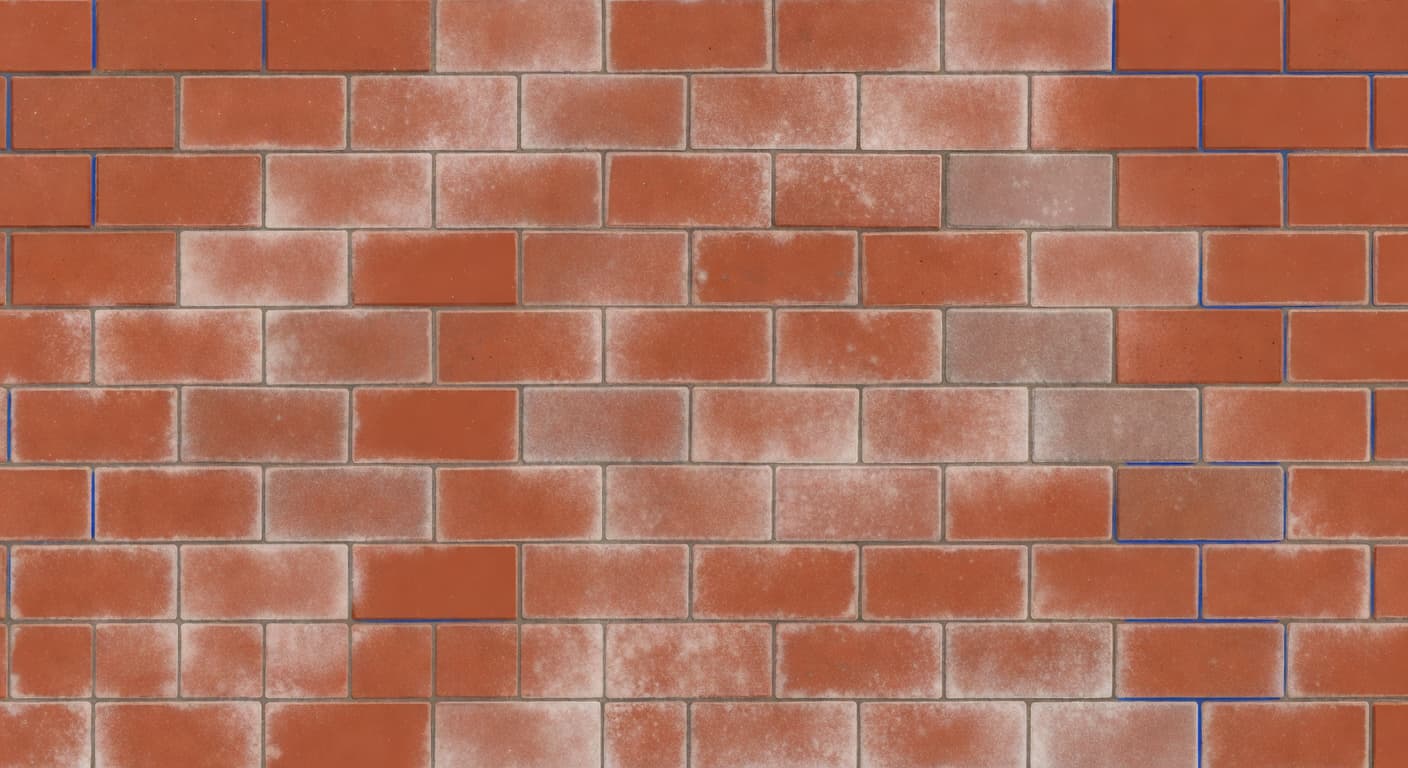
What matters most is how it behaves. True efflorescence usually looks dry and dusty. It often sits on top of the paver instead of soaking into it. If I rub it with a dry hand or stiff brush, some of it usually comes off.
That does not mean it should be ignored. This white haze tells me water is getting where it should not, or at least getting there more often than it should. In a rainy climate, that can happen from below, from sprinklers, from roof runoff, or from water sitting too long in low spots.
The good news is simple. In many cases, the pavers themselves are fine. The presence of efflorescence is visually unappealing, but it is usually a surface symptom rather than a sign of structural damage.
When it’s normal, and when it’s pointing at a bigger issue
A little efflorescence after installation is common. However, a heavy buildup or the same patch returning repeatedly warrants a closer look.
If the bloom is light and fades with weather or cleaning, it is often just part of the curing cycle. If it keeps building in one corner, along a border, or within a specific traffic lane, I start evaluating the site for proper drainage. A healthy hardscape surface requires water to move away from the installation, not settle within it.
A few warning signs tell me the haze is more than a cosmetic nuisance:
- The same area stays damp long after the rest of the patio dries.
- The jointing sand keeps washing out after rain or routine cleaning.
- The residue feels crusty and hard rather than soft and powdery.
Those clues point to persistent moisture infiltration. Maybe landscape irrigation hits the same section every morning, or moisture is wicking up from the base of nearby retaining walls. Perhaps the slope is too flat, causing water to linger instead of flowing off the edge. If this white mineral deposit keeps returning in the same spot, the real problem is usually an underlying water issue, not the brick itself.
I also do not confuse every white mark with efflorescence. Mildew and algae usually look darker, greener, or blotchier. Sealer haze, sometimes called blushing, can look cloudy and trapped under the finish. Mineral deposits from hard water can feel harder and more scale-like.
That difference matters because the solution depends on the cause. If the efflorescence is actually sealer haze, simple scrubbing will not solve it. If the issue is organic staining, the approach may look more like pressure washing than mineral removal. Getting the diagnosis right the first time saves you time, money, and a great deal of frustration when dealing with persistent efflorescence.
How I’d clean it and keep it from coming back
I always start gently. Using a stiff scrub brush for an initial dry brushing is a smart first move because it tells me how much of the efflorescence is sitting loose on the surface. Sometimes a large part of the haze lifts right off.
If it does not, I move to a quality efflorescence remover and test a small area first. Concrete pavers can vary in color and porosity, so I do not treat the whole driveway like a science experiment. The goal is to dissolve the residue without etching the face of the paver. For particularly stubborn deposits of calcium carbonate, some professionals turn to acid washing or a diluted muriatic acid solution, but these require extreme caution and proper neutralization to avoid damaging the surrounding landscape.
Controlled power washing can also help, but it must be precise. Too much pressure can scar the brick or blow out the joint sand. That is why I do not treat pavers like a dirty sidewalk and blast away blindly. Good power washing is targeted, not reckless.
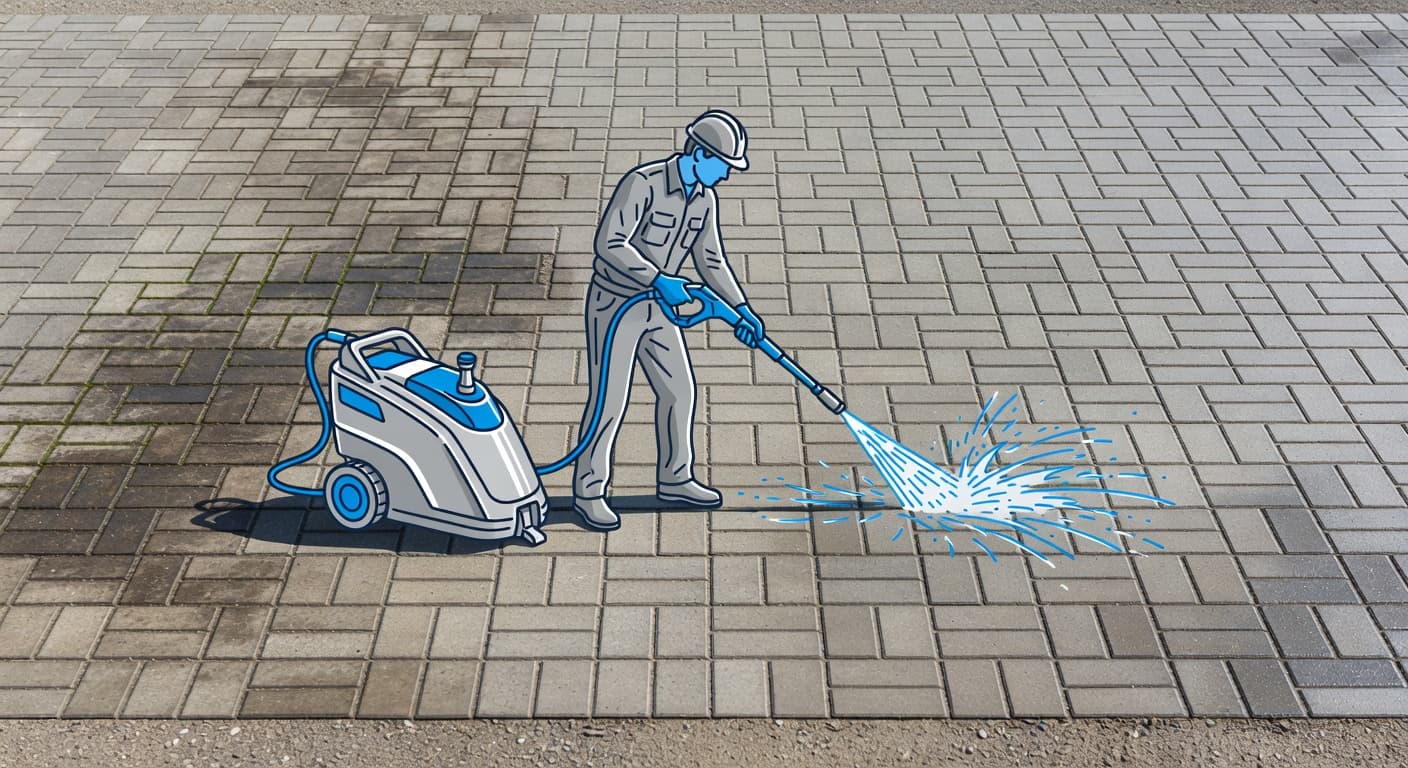
I also would not use the same method here that I would use for roof cleaning. A roof often calls for a soft wash because shingles and tile do not like force. Pavers are different. The right cleaner, a proper rinse, and careful pressure cleaning usually make more sense than a blanket soft wash approach.
Once the salts are gone, I look at prevention. That might mean fixing irrigation overspray, improving runoff, re-sanding joints, or correcting a low area that holds water. If the pavers are on a driveway, applying a high-quality paver sealer can help with capillary blocking to limit moisture entry, which keeps efflorescence from reaching the surface and makes future cleanup easier. However, I only apply sealant once the surface is fully clean and dry, as I never want to trap active efflorescence under a finish.
If the haze is stubborn or keeps coming back, Get a Quote for sealing or professional cleaning services. A good inspection can tell you whether you need specialized efflorescence removal, sanding, drainage correction, or all three.
Frequently Asked Questions
Is efflorescence a sign that my pavers are ruined?
In most cases, no. It is typically a surface-level cosmetic issue caused by moisture moving through the materials, not an indication that the pavers themselves are structurally failing.
Can I just power wash the white haze away?
While controlled power washing can be effective, you must be careful not to use excessive pressure that could scar the brick or wash away joint sand. It is often better to start with dry brushing or a dedicated efflorescence cleaner before resorting to high-pressure water.
Why does the white haze keep coming back after I clean it?
If the residue returns repeatedly, you likely have an underlying moisture issue that has not been resolved. You need to investigate potential causes like poor drainage, irrigation hitting the patio, or roof runoff to stop the water from moving through the pavers in the first place.
Is it safe to seal my pavers if they have efflorescence?
You should never seal pavers while they have active efflorescence. Trapping moisture and salts under a sealer can cause the finish to cloud or fail, so ensure the surface is completely clean and dry before applying any protective products.
Final thoughts
That white haze is not a sign that your pavers are failing. It is simply efflorescence, a common byproduct of the chemical process known as cement hydration occurring within your masonry products. This surface residue is essentially moisture leaving a calling card, and the patterns it creates usually tell the story of your concrete mix.
If the residue is light, powdery, and recent, the fix is often straightforward. However, it is important to address the root cause of the moisture. If you allow persistent dampness to remain, you risk long term structural damage like spalling, where the surface begins to flake or peel away. If the efflorescence keeps returning, the smartest move is to stop chasing the powder and start chasing the water to protect your investment.