
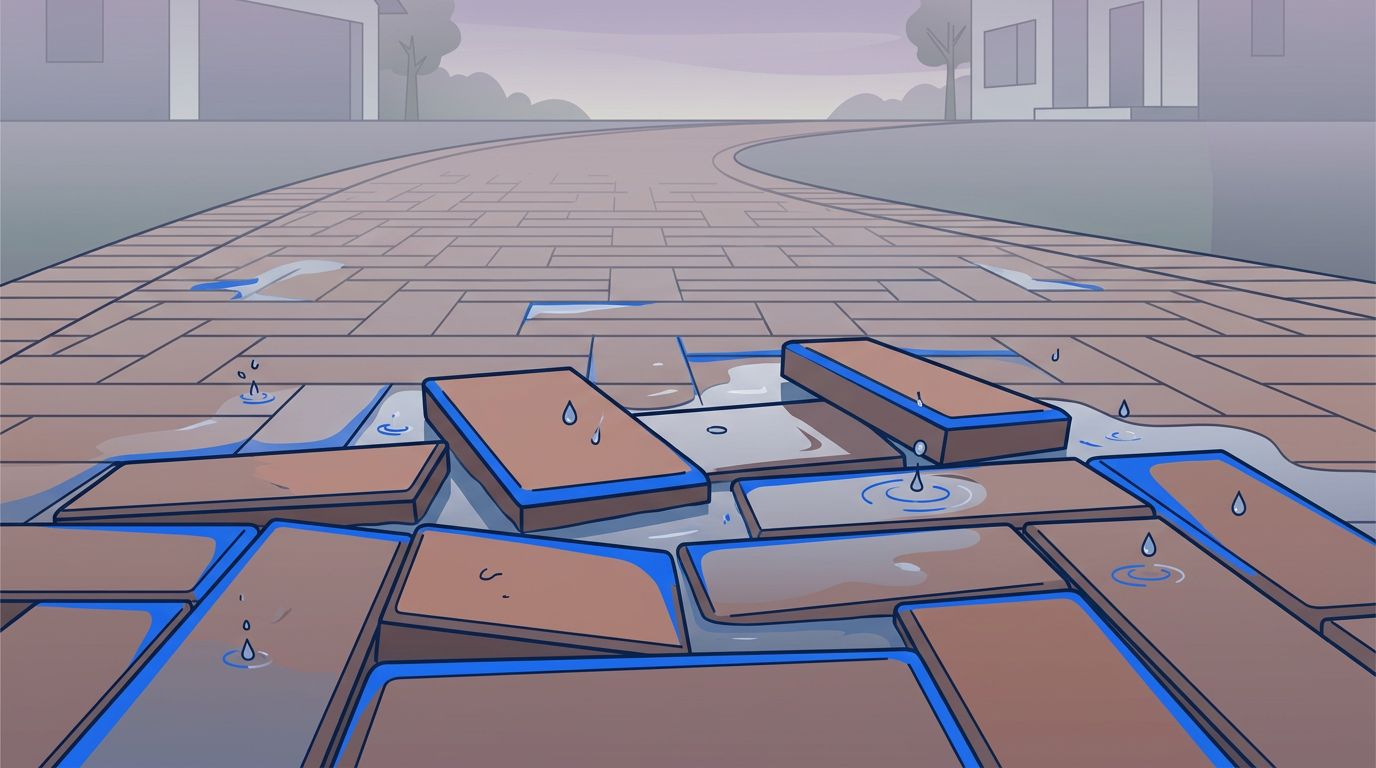
When you notice brick paver driveway instability after a heavy rain, the problem usually started long before the storm ended. Water slipped into the joints, softened the base, and left a few pavers free to move under foot or tire.
I have seen homeowners blame the bricks themselves, but the real trouble is usually underneath. Once rain starts pooling, the driveway starts acting like a loose puzzle, and one small shift can spread fast.
If your driveway feels solid on dry days but moves after a storm, the cause is usually hiding below the surface. Addressing these issues quickly is essential to protect your home curb appeal and long-term property value. In this guide, I am going to break down why brick driveway rocking occurs after storms, what makes it worse, and what steps you can take to restore stability.
Key Takeaways
- Surface movement is a symptom: A rocking brick paver usually indicates underlying issues with the bedding sand or base layers rather than a defect in the brick itself.
- Drainage is critical: Persistent water runoff from gutters or improper slopes accelerates the breakdown of the base, causing pavers to shift after rainstorms.
- Don’t ignore the spread: While a single loose brick may be minor, a cluster of moving pavers often signals significant base settlement that requires professional intervention.
- Restoration is more than just resetting: A permanent fix involves re-leveling the base, filling joints with high-quality polymeric sand to lock the surface together, and potentially sealing to prevent future water intrusion.
What heavy rain does to the base below the bricks
A brick driveway depends on layers working together. The driveway pavers sit on bedding sand, and that sand sits on a firm base material or subbase rock. When heavy rain keeps hitting the same area, water starts working through the joints and into those lower layers.
The first thing I look for is washed-out joint sand. Once that sand thins out, the pavers lose support at the edges. A brick that was flat yesterday can start to tip today, and that tiny movement is enough to make the whole surface feel off.
Poor drainage makes it worse. While permeable pavers are specifically designed for water infiltration, standard driveway pavers require a solid compacted gravel foundation to stay level. If the driveway slopes the wrong way, or if runoff keeps coming back onto the surface, water hangs around longer than it should. The longer it sits, the more it loosens the base and the more likely the bricks are to move.
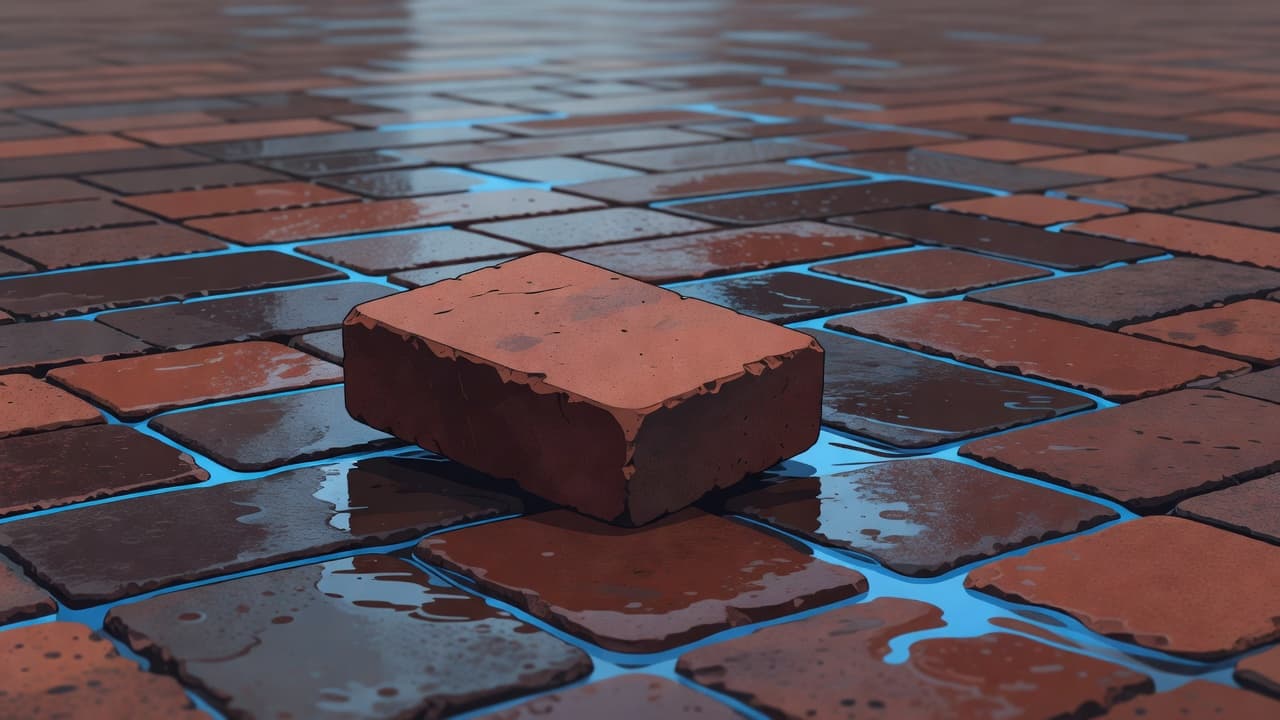
That kind of movement usually starts small. One low corner catches water, one joint empties out, and then the surrounding pavers begin to shift like tiles on a wet floor.
A driveway can look fine from the street and still be unstable under pressure. That is what makes this problem so frustrating. The damage often hides until the rain makes it obvious.
Why one loose paver can mean a bigger problem
A single rocking brick is annoying, but a cluster of them serves as a warning. Often, a single loose brick is the result of poor paver installation or excessive vehicular traffic that has compromised the surface. When I inspect a driveway, I pay close attention to the patterns of movement. If one paver rocks because of a chip or a minor void under the corner, that is usually an isolated issue. However, if three or four nearby pavers move in unison, I start looking deeper at the base, the edges, and the overall drainage path.
Here is a simple way to read the signs:
| What you notice | What it often means |
|---|---|
| One paver rocks when you step on it | Sand loss or a small void under that brick |
| Several pavers move in the same area | Base settlement or water washout |
| Gaps opening along the edge | Edging material failure or soil movement |
| Puddles forming after rain | Drainage is pushing water into the problem spot |
The big clue is whether the movement stays local or spreads across the driveway. A loose brick can be a small repair, but a whole section that rocks after storms usually points to a deeper issue. It is important to remember that custom brick pavers should not shift as easily as cracked poured concrete if the foundation is sound.
A rocking paver is a symptom. The problem is usually the base, the joints, or the water route.
That is why I never look at the top layer alone. The driveway is only as stable as the layers underneath it. If those foundation layers are breaking down, the bricks will continue to shift and tell the story of the underlying instability.
Drainage problems that make the rocking come back
Rain itself is not the enemy. Standing water is.
I see this happen faster when gutters are clogged, roof runoff is dumping in the wrong place, or the driveway lacks a proper drainage slope to move water away from the structure. Although many homeowners view brick as a low maintenance material, ignoring water runoff is a significant mistake. Water does not need much time to start moving sand and softening the base, as it only requires a path.
Roof cleaning can matter here more than people think. If a roof is loaded with debris, the runoff gets dirty and heavy, and it often spills over the same edge again and again. A proper soft wash on the roof helps clean the surface without beating up the shingles, and it can reduce the amount of mess washing toward the driveway.
The same idea applies to the rest of the exterior. Clogged gutters, overgrown beds, and poorly directed downspouts all send water where it should not go. If you are unsure about your setup, a professional landscape contractor can assess whether your current grade is sufficient to prevent water buildup. Protecting the foundation of your driveway is essential because it helps maintain your property value over time.
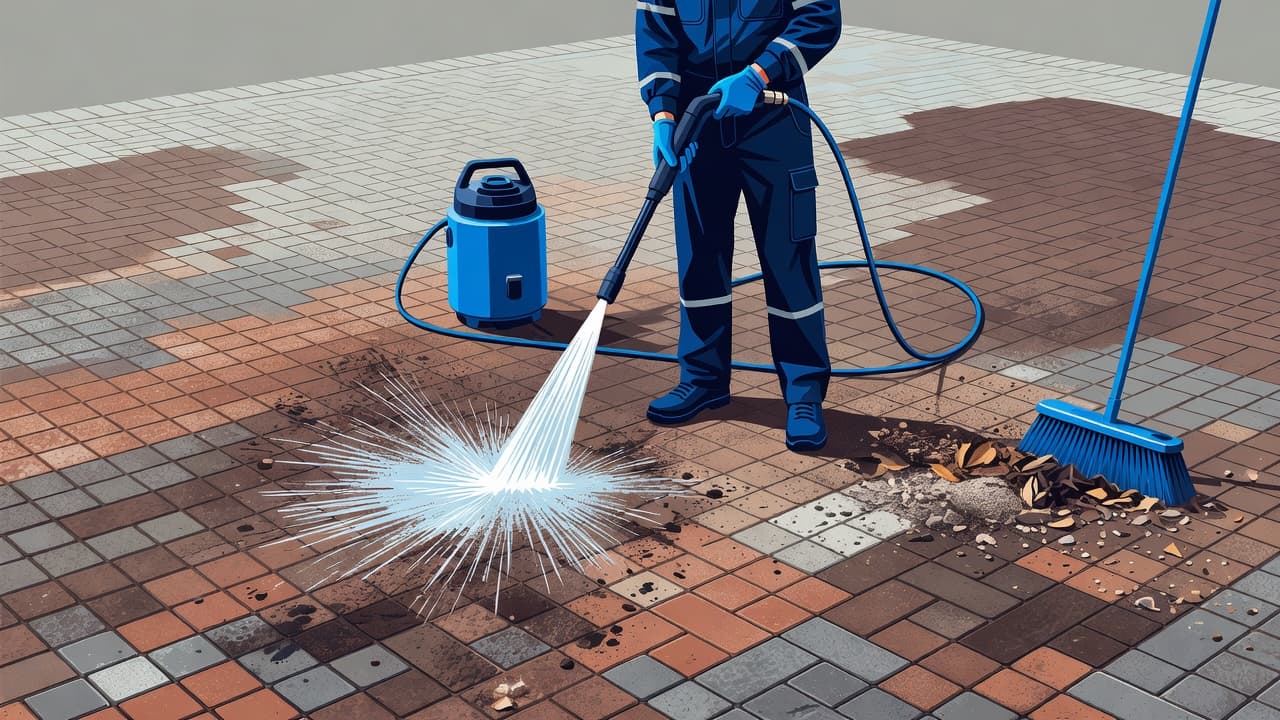
Pressure washing can help clean a brick driveway, but it must be done with care. Too much force can blow out joint sand and make the rocking worse. I have seen driveways look cleaner on top and become weaker underneath after a rough wash.
The takeaway is simple. If water keeps arriving from the same direction, the pavers will keep shifting in the same spot.
How I fix a rocking brick driveway and keep it stable
I start by lifting the loose pavers and checking what is under them. If the bedding sand is thin, displaced, or uneven, I rebuild that layer before the bricks go back down. If the base has settled, I check the excavation depth to ensure there is enough subbase rock to provide a solid foundation. Proper support is critical, whether I am working on brick pavers or natural stone installations, so the base must be leveled and compacted correctly rather than just patched on top.
Then, I refill the joints with high-quality polymeric sand and use a plate compactor to ensure the area is solid. That step matters more than most people think. The polymeric sand creates a firm bond that locks the pavers together, allowing the surface to act as one cohesive unit instead of a collection of separate bricks.
After that, I look at drainage. If water is pouring onto the driveway from a gutter, roof edge, or low spot in the yard, I want that fixed too. Otherwise, the same storm will bring the same problem right back.
A small repair can turn into a bigger reset when the surface has been neglected for a while. That is where sealing pavers can help. Once the driveway is clean, repaired, and dry enough, sealing helps protect the joints, slow sand loss, and keep water from penetrating the surface too quickly.
I also like to clean the driveway the right way before sealing. Gentle pressure washing removes dirt and mildew without tearing up the joint sand. If the surface needs roof cleaning, house washing, or a soft wash in the same project, I handle that first so clean runoff does not undo the repair.
| Step | What I’m looking for |
|---|---|
| Lift and reset pavers | Broken edges, voids, and soft spots |
| Rebuild the base | Excavation depth and subbase rock quality |
| Refill joints | Polymeric sand application and plate compaction |
| Seal the surface | Extra protection after repairs |
If your driveway is already moving after storms, I would start there instead of guessing. Get a Quote and I will take a look at what is causing the movement before it spreads.
Frequently Asked Questions
Why do my brick pavers only feel loose after it rains?
Rainwater acts as a lubricant that washes away the fine joint sand and softens the base layer beneath your bricks. Once this support material is compromised, the pavers lose their structural integrity and begin to shift under the weight of foot or vehicle traffic.
Can I just fill the gaps with sand to stop the rocking?
Simply adding sand to the surface is usually a temporary patch that does not address the void created beneath the paver. To stop the rocking, you must lift the affected bricks, re-compact the bedding layer, and use specialized polymeric sand that hardens to bond the pavers together.
Should I pressure wash my driveway to clean out the weeds and debris?
While pressure washing can improve aesthetics, using excessive force can blast out the joint sand and weaken your driveway’s foundation. It is best to use a gentle approach or hire a professional to ensure the cleaning process does not accelerate the movement of your bricks.
How do I know if the damage is serious enough to call a professional?
If the movement is limited to one or two isolated bricks, it may be a minor maintenance task, but if entire sections are shifting or gaps are forming along the edges, you likely have a deeper drainage or subbase failure. In these cases, a professional inspection is recommended to prevent the instability from spreading across your entire driveway.
Conclusion
When brick driveway rocking starts after heavy rains, I do not blame the brick first. Instead, I look at the water, the base, and the joints, because that is where the real problem usually starts.
A storm can expose a weak spot fast, but it rarely creates the problem on its own. Once the sand washes out or the base settles, the driveway pavers lose their support and begin to move. However, a brick paver driveway remains a durable and long-lasting choice when it is maintained correctly.
The good news is that the solution is usually clear once you identify the root cause. If you address drainage issues, reset the loose areas, and commit to ongoing care, your driveway will return to feeling solid underfoot. Ultimately, professional paver installation and consistent maintenance are the best ways to ensure your driveway remains stable for years to come.