
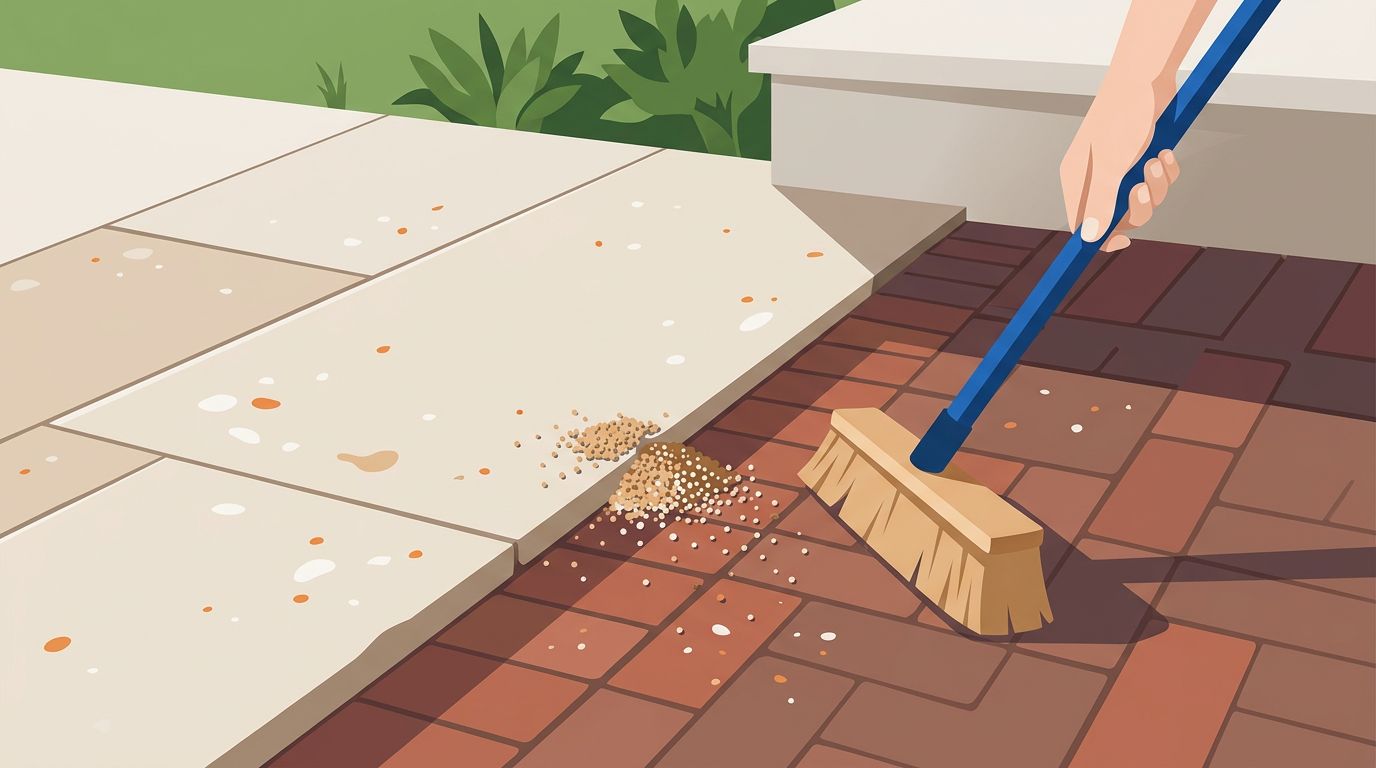
A little spill from granular fertilizer can leave a lasting impact on your hardscaping. While we often associate a fertilizer burn with damaged grass, these chemical reactions affect stone and brick in a similar way. On travertine and brick, those white, orange, or rust-colored marks caused by over-application can show up quickly and remain much longer than you would like.
I see these stains after lawn work, after overfeeding a flower bed, and after rain pushes residue across a patio or driveway. The surface may look fine at first, then the damage appears later like a persistent sunburn.
If you are staring at a fresh spill, the next few minutes matter. The wrong cleaner can make the situation worse, and the wrong scrub can grind the mess deeper into the porous material. Knowing how to react when fertilizer burns travertine brick surfaces is the best way to preserve the look of your home.
Key Takeaways
- Act Immediately: Speed is critical when fertilizer hits stone or brick; sweep up loose granules and perform a gentle water rinse before the chemicals have time to dissolve and penetrate the surface.
- Avoid Harsh Cleaners: Skip household acids like vinegar or bleach, which can etch travertine and worsen the damage; stick to pH-neutral stone-safe cleaners instead.
- Choose Soft Methods: Never use high-pressure washing on fresh fertilizer stains, as it can scar soft stone and push residue deeper into the porous material.
- Prioritize Prevention: Regularly sealing your masonry and keeping spreader settings calibrated are the best defenses against future chemical burns and salt buildup.
What fertilizer damage looks like on stone and brick
Fertilizer burns do not always look dramatic at first. Sometimes they show up as a pale outline where granules sat, much like the brown patches you might see on a neglected lawn. Other times they leave a rusty ring, a chalky patch, or a dark blotch that seems to soak into the surface. These markings are often a stark contrast to the yellow streaks or scorched grass that appear when fertilizer chemicals sit too long on nearby turf.
On travertine, the mark can look cloudy or etched. The stone loses that clean, natural finish and starts to look tired, creating brown patches that disrupt the aesthetic of your patio. On brick, the stain often follows the porous texture, so it spreads in an uneven way that catches your eye from across the yard.
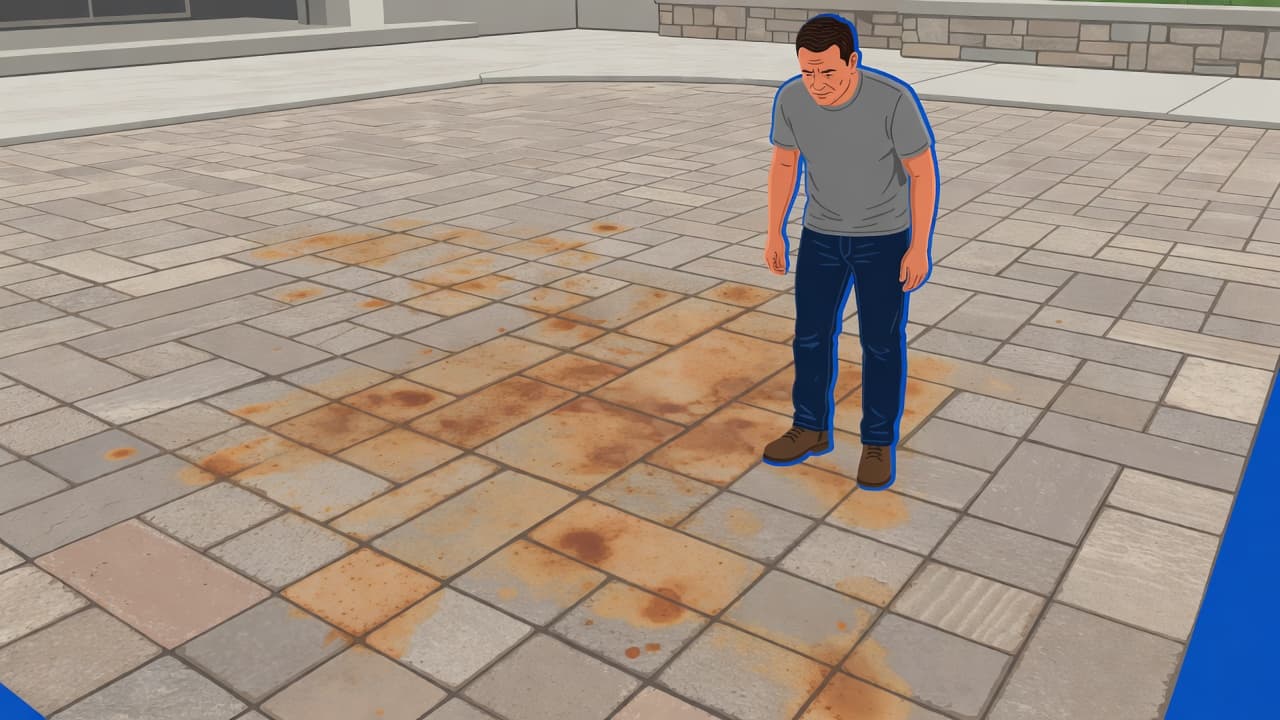
The tricky part is that fertilizer damage does not always stay on the surface. If the granules sat wet for a while, the fertilizer residue can work its way into tiny pores and joints. That is why a quick rinse sometimes helps, but a late rinse may not.
Travertine and brick also age differently. Travertine is softer and more sensitive. Brick is tougher, but it still absorbs and holds stains in the small spaces between grains and joints.
Why travertine reacts faster than brick
Travertine is a natural stone with plenty of character, but that beauty comes with a high level of sensitivity. Many fertilizers contain excess salts and other reactive ingredients that can compromise the integrity of the stone. If the product has a harsh NPK ratio, the concentrated nutrients can cause chemical etching upon contact. When combined with ambient soil moisture, these chemicals penetrate the porous surface, often leading to unsightly spots or dull patches.
Brick behaves differently, though it still has distinct vulnerabilities. While the face of a brick might resist damage better than travertine, the porous edges and mortar joints are magnets for residue. If you fail to follow the label directions regarding application, you may end up with salt buildup trapped deep within the joints. This persistent salt buildup is what turns a minor accidental spill into a much more difficult cleanup project.
A sealed surface provides a layer of protection, but it is not an impenetrable shield. If your sealer is worn, thin, or applied unevenly, excess salts can still work their way into the material. Once water and chemical residue remain on the surface for too long, the reaction becomes significantly harder to reverse.
It is important to understand that the surface may not be burned in the way a hot pan damages a countertop. Instead, the area is often stained or chemically altered. Regardless of the specific mechanism, the end result is a rough, discolored appearance that detracts from the look of your hardscape.
What I do the moment fertilizer lands on a surface
Speed matters here. If I catch fertilizer on travertine or brick early, I treat it like a spill, not a stain.
- I sweep up every dry granular fertilizer pellet I can reach before it has a chance to dissolve.
- I rinse the area with clean water to flush salts away from the porous surface.
- I keep the water flow gentle, and I make sure to water deeply so the moisture helps neutralize the potential for staining without pushing residue deeper into the substrate.
- I blot or rinse again instead of scrubbing hard.
- I test a small hidden spot before using any cleaner.
Don’t grab the strongest cleaner first. Flush the area, then decide what the stain actually needs.
That first rinse is the difference between a light cleanup and a stubborn mark. If the fertilizer is still sitting on the surface, water can lift a lot of it before it reacts. If you are dealing with liquid fertilizer, the absorption happens much faster, so you must act immediately to prevent the pigment or chemicals from setting into the stone.
I do not reach for vinegar, bleach, or a strong acid cleaner on fresh damage. Those products can turn a small spot into a larger problem, especially on travertine. If the area is warm from the sun, I work even more carefully because heat can dry the residue and lock it in faster. As you clean the hardscape, remember to water deeply around the perimeter to ensure the adjacent grass roots are not overwhelmed by the concentrated runoff.
A soft brush can help on brick, but I keep it light. On travertine, I use even less pressure. The goal is to move the residue off the stone, not grind the surface.
Cleaning methods that help, and the ones that hurt
Once the surface has dried and the stain is set, I slow down and choose the cleaner carefully. For most fertilizer marks, a pH-neutral cleaner made for stone or masonry is a better starting point than anything harsh. It is important to remember that damage often depends on the product used. A quick-release fertilizer typically causes immediate, aggressive etching, while a slow-release fertilizer can leave behind stubborn, long-term discoloration if it sits on the stone for too long.
I like to think in this order:
- Gentle rinse first: Water clears loose residue and keeps the stain from spreading.
- Stone-safe cleaner next: A mild product can help lift remaining residue without attacking the surface.
- Soft brushing after that: Nylon bristles are safer than stiff wire or abrasive pads.
- Spot testing before a full pass: One hidden test patch can save the whole surface.
Pressure washing has a place, but fresh fertilizer burns are not it. A hard blast can scar travertine, widen a weak spot in brick, and pull material from the joints. This is especially risky during peak summer, as drought stress leaves porous masonry vulnerable to structural damage and chemical absorption. If the stone is suffering from drought stress, the surface becomes more brittle, making it much harder to repair the lasting fertilizer burn that develops. It can also make the stain look bigger by spreading the residue across the face of the stone.
That is why I prefer soft wash methods for delicate exterior work and reserve pressure washing for surfaces that can take it. The tool matters, but the pressure matters more.

If a stain is deep, a cleaner alone may not finish the job. Sometimes the mark sits in the pores, and sometimes the surface has already etched. At that point, a careful restoration approach is better than more scrubbing.
That is also where nearby services matter. If you are already handling roof cleaning or a soft wash on the house, it makes sense to look at the hardscape too. Runoff from roof work, irrigation overspray, and yard chemicals can all end up on the same patio or walk.
The safest fix is usually the one that removes the stain without changing the stone.
Sealing, driveway care, and keeping the next spill small
Once the surface is clean, I look at protection. On brick driveways and patios, driveway sealing can make a big difference in how the next spill behaves. A high-quality sealer prevents salt buildup and keeps the stone from undergoing the dehydration that occurs when porous materials absorb harsh chemicals. A good sealer helps the surface shed residue instead of drinking it in.
Travertine needs the right sealer, not just any product off the shelf. I want something that fits natural stone and still lets the surface breathe. If the wrong sealer traps moisture, it can create a new set of problems.
Prevention is simple, but it takes a little discipline.
- Keep fertilizer bags off the stone and brick.
- Sweep up stray granules right away.
- Check your broadcast spreader and calibrate your spreader settings to avoid unnecessary over-application.
- Water deeply after spreading lawn feed to move the nutrients into the soil.
- Always follow the manufacturer label directions for application rates.
- Watch the wind on application day to minimize drift.
- Don’t let the product sit near joints or edges.
I also tell homeowners to think about timing. Fertilizer spread on a calm, dry morning is easier to control than fertilizer tossed out before a storm. Rain can drag the product across the hardscape and leave a trail of stains in all the wrong places. Even if you choose to use an organic fertilizer, it is still crucial to clean up any stray granules, as the organic matter can still cause discoloration if allowed to break down on the surface.
If the area already looks dull, faded, or patchy after a spill, the surface may need more than a rinse. It may need cleaning, re-sanding, or sealing so the next accident does less damage. That is where a full exterior maintenance plan pays off. One spill is bad enough, but repeated spills turn into a pattern.
When the marks are on a driveway, patio, or pool deck, I treat the whole surface, not just the stain. A small burn on one paver can blend into a larger field of faded stone if the surface around it is already worn.
Frequently Asked Questions
Can I use a pressure washer to remove set-in fertilizer stains?
It is generally recommended to avoid high-pressure washing on fertilizer stains, especially on travertine. High pressure can scar the stone surface and force the chemicals deeper into the pores or joints, making the stain harder to remove.
Why does my brick patio have orange rings after fertilizing the lawn?
These rings are usually caused by granular fertilizer sitting on the surface, which reacts with ambient moisture to create chemical residues. The porous nature of brick and mortar allows these chemicals to settle, leading to rust-colored staining that follows the texture of the material.
Is it safe to use vinegar or lemon juice to clean stone stains?
No, you should never use acidic cleaners like vinegar or lemon juice on travertine or certain types of brick. Because travertine is calcium-based, acidic substances will cause chemical etching, which leaves a permanent, dull mark that is often more noticeable than the original fertilizer stain.
How often should I seal my travertine or brick to prevent these stains?
While the frequency depends on your local climate and usage, you should generally inspect your sealer annually to ensure it is still effective. A high-quality, breathable sealer will provide a protective barrier that helps the surface shed chemical residue instead of absorbing it.
Conclusion
Fertilizer stains on travertine and brick are frustrating because they happen so fast. Whether you are dealing with a localized spill or runoff from an over-fertilized lawn, one rinse too late can result in a permanent fertilizer burn. These marks often look much larger than the initial spill, and a single fertilizer burn can quickly detract from the curb appeal of your hardscape.
The fix starts with speed, gentle cleaning, and the right products. After that, protection matters just as much. Seal the surface, keep fertilizer granules off the stone, and avoid using high pressure that turns a surface stain into structural damage.
As you restore your outdoor space, consider a soil test to ensure your plants actually need the nutrients you are applying. If you are also repairing thin patches, remember that healthy grass roots help prevent soil erosion and runoff. By coordinating your cleaning routine with careful reseeding and maintenance, you ensure your patio, driveway, and walkway stay looking their best throughout the season.