
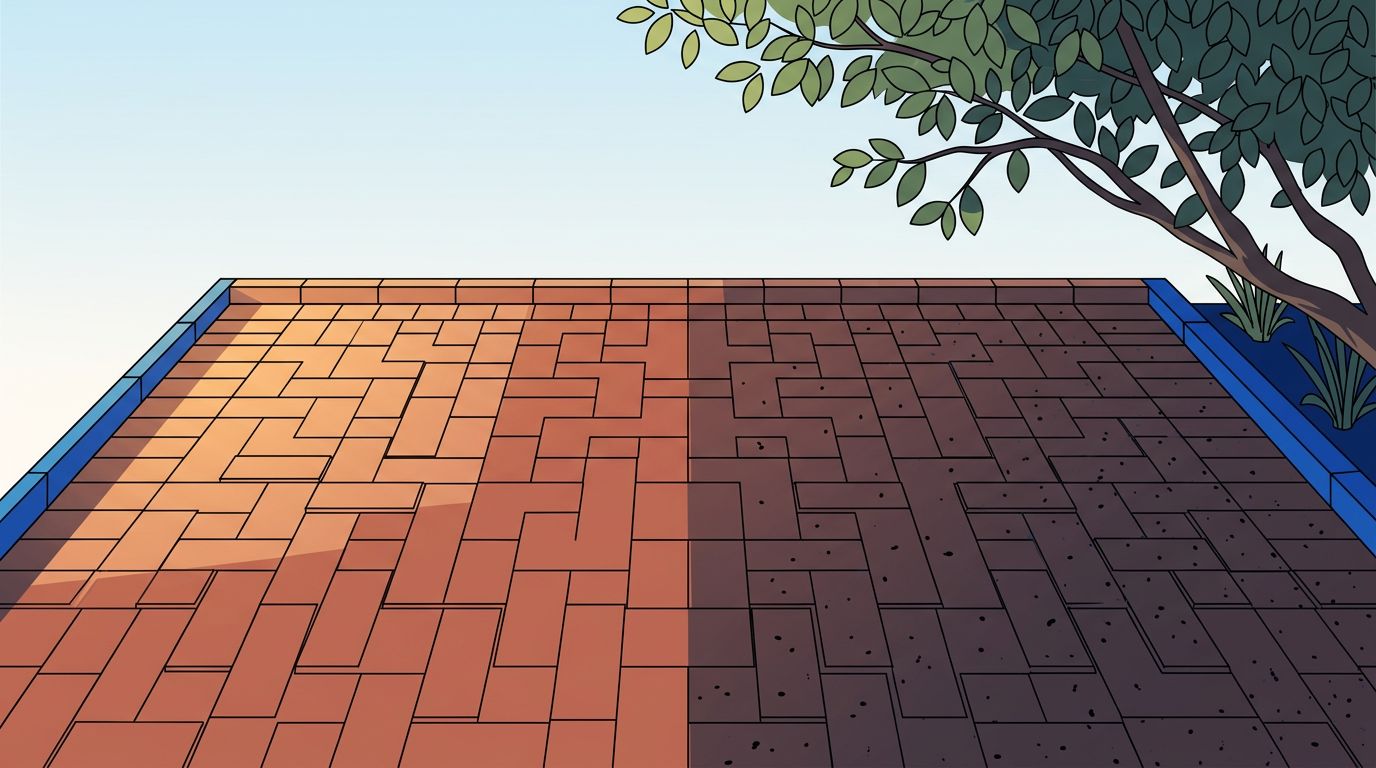
I see this all the time in Southwest Florida. A patio or driveway looks fine in full sun, then the shaded sections start going dark, almost overnight.
That black color usually isn’t just dirt sitting on top. Shade holds moisture, and moisture gives algae, mildew, and grime the perfect place to stick around. When black brick pavers keep darkening in the same spots, there’s always a reason behind it.
Why shaded pavers turn black
Why does the darkest patch always show up under a tree, beside the house, or along the fence line? Because shade changes how the surface dries. Sunlight helps pavers dry fast. Without it, water lingers in the pores, in the joints, and on any rough spot where debris can settle.
That damp film is where black buildup starts. It can be algae, mildew, mold, or a mix of all three. Once it gets established, the surface starts looking stained even when the pavers aren’t truly dirty in the usual sense.
Brick pavers are not sealed, smooth tile. They’re textured and porous, which means they grab onto moisture and hold fine organic material. A little leaf tannin, a little pollen, a little dust, and suddenly the shade looks worse than the rest of the driveway. If the area also gets runoff from a roof edge or gutter line, the problem gets stronger. That’s why roof cleaning and gutter maintenance often matter more than people think.
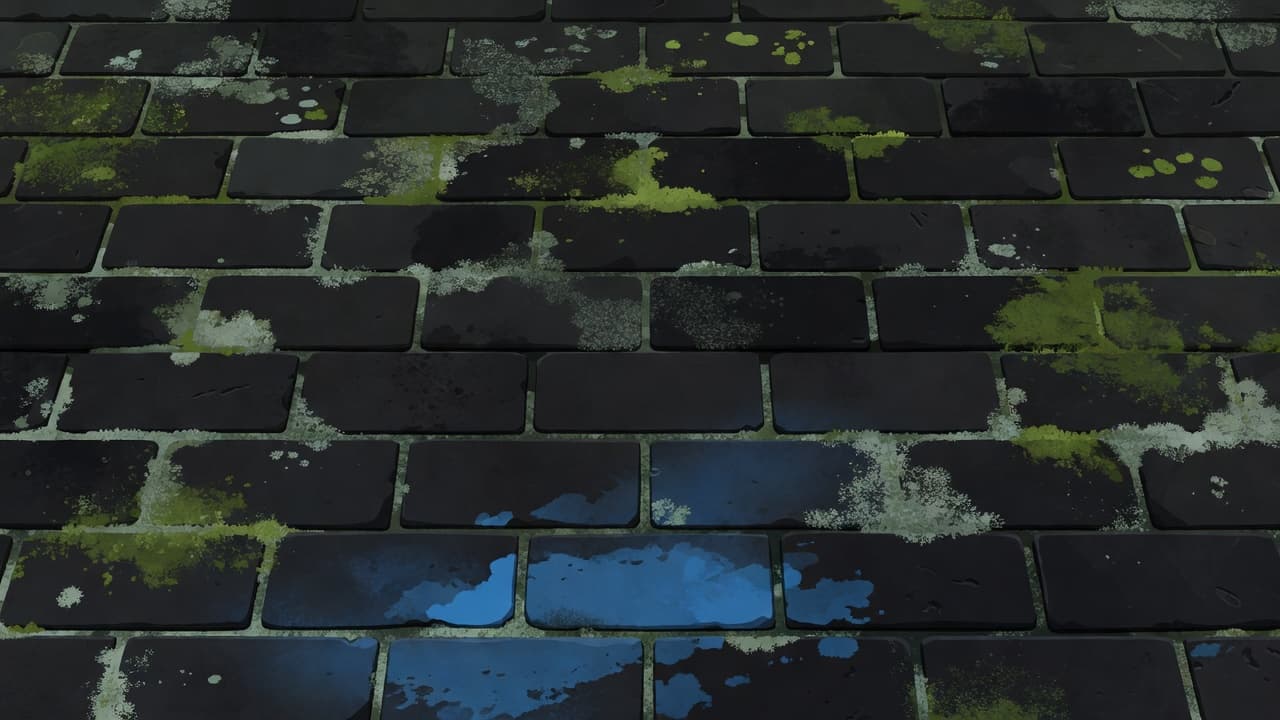
I’ve also seen this happen faster on pavers that sit under thick tree cover. Branches block sun, but they also drop organic debris. That debris breaks down, feeds growth, and settles into the joints like kindling waiting for a spark.
The little things that feed the stain
A shaded paver doesn’t turn black because of one big mistake. It usually comes from a few small problems working together.
The usual culprits look like this:
- Constant moisture from shade, poor drainage, or slow-drying corners.
- Irrigation overspray that keeps one section damp day after day.
- Roof runoff that sends dirty water across the same path.
- Leaves, pollen, and mulch dust that feed surface growth.
- Old joint sand or failing sealer that lets grime settle deeper.
Each one sounds minor. Put them together, and the pavers start changing color fast.
I also pay attention to where the black starts. If it begins near downspouts, I look at drainage. If it starts under shrubs or trees, I look at shade and trapped debris. If it hugs the edge of a house, I check for runoff from the roofline or splashback from gutters.
There’s another factor homeowners miss. Some pavers were never sealed after installation, or the old sealer broke down unevenly. Once that protective layer fades, the pavers absorb more moisture and dirt. The dark color then shows up faster after every rain.
This is why black brick pavers in shaded areas keep coming back, even after a quick rinse. The surface isn’t just dirty. It’s being fed.
How I clean black brick pavers without damaging them
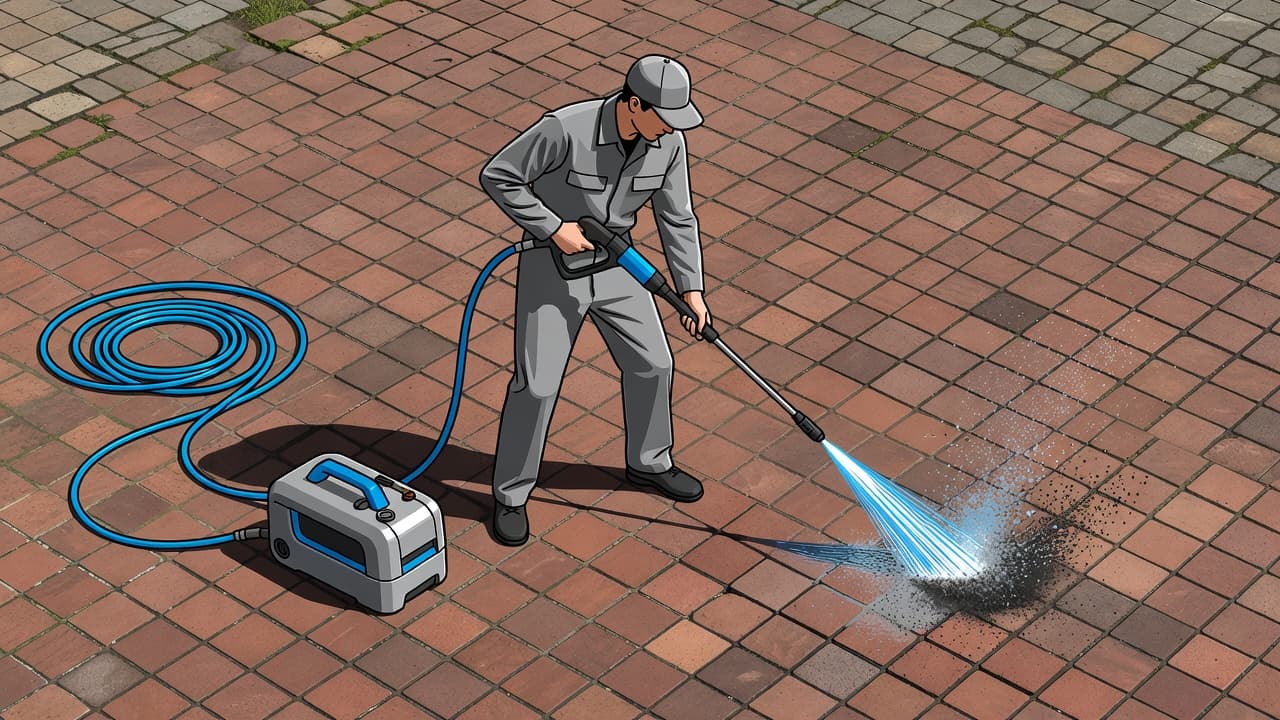
A lot of people reach for the strongest pressure they can find. That usually causes a new problem. Too much pressure can strip joint sand, scar the brick, and leave the surface rougher than before. Rougher pavers trap more dirt. Then the same dark stain returns even faster.
That’s why I start by matching the cleaning method to the surface. For organic growth, a soft wash is often the better first step. It treats the algae and mildew without beating up the pavers. After that, I can rinse the surface and, if needed, follow with controlled pressure washing to lift the loose grime.
If the pavers turn black again within weeks, the problem usually wasn’t solved at the surface.
I also look at what sits around the pavers before I clean them. If the roof is leaving streaks, roof cleaning may be part of the fix. If the gutters are dirty or overflowing, the runoff will keep staining the same areas. If the nearby driveway collects tire residue or dust, that can add another layer of grime.
After cleaning, I check the joints. If the sand has washed out, it needs to be replaced before the area is sealed. Missing sand leaves small gaps where water settles and weeds take root. That’s one of the fastest ways for shaded pavers to go black again.
If you’re staring at dark spots and wondering where to start, I can help with that. Get a Quote for sealing or pressurecleaning services, and I can take a look at what’s really causing the buildup.
How to slow the darkening in shady spots
Once I get pavers clean, I want them to stay that way as long as possible. Shade may always be shade, but the surface doesn’t have to stay black.
The first thing I look at is water. If sprinklers hit the pavers every morning, that schedule needs to change. If a downspout dumps water onto the same corner, it needs to be redirected. If the area stays damp because of poor slope or blocked drainage, that should be corrected before the next cleaning.
I also keep an eye on nearby surfaces. A dirty roof can send debris and runoff onto pavers below. That’s one reason roof cleaning can help more than people expect. It cuts down on the grime that keeps washing back onto the hardscape.
Driveway sealing is another piece of the puzzle. A good sealer won’t stop shade from existing, but it does help limit how much moisture and dirt soak into the paver face. It also makes regular cleaning easier. The surface sheds grime instead of holding it like a sponge.
Still, sealing isn’t magic. If the area stays wet and dark all the time, black growth can return. That’s why I like to pair cleaning with a real fix for the moisture source, not just a rinse and hope.
A simple maintenance routine goes a long way:
- Blow off leaves and debris before they break down.
- Trim back plants that block airflow.
- Watch for sprinkler overspray.
- Keep gutters and roof runoff under control.
- Reclean before buildup turns thick and slick.
That’s how I keep shaded pavers from sliding back into the same cycle.
Conclusion
Black pavers in the shade are usually telling a simple story. The area stays damp, organic growth settles in, and the surface slowly turns dark. If you keep seeing the same stain in the same place, the shade and the moisture are doing the heavy lifting.
The fix is rarely one quick rinse. It’s the right cleaning method, the right drying conditions, and, when needed, driveway sealing or other protection that slows the return. If you handle the cause, the pavers stop looking tired every time the sun disappears.