
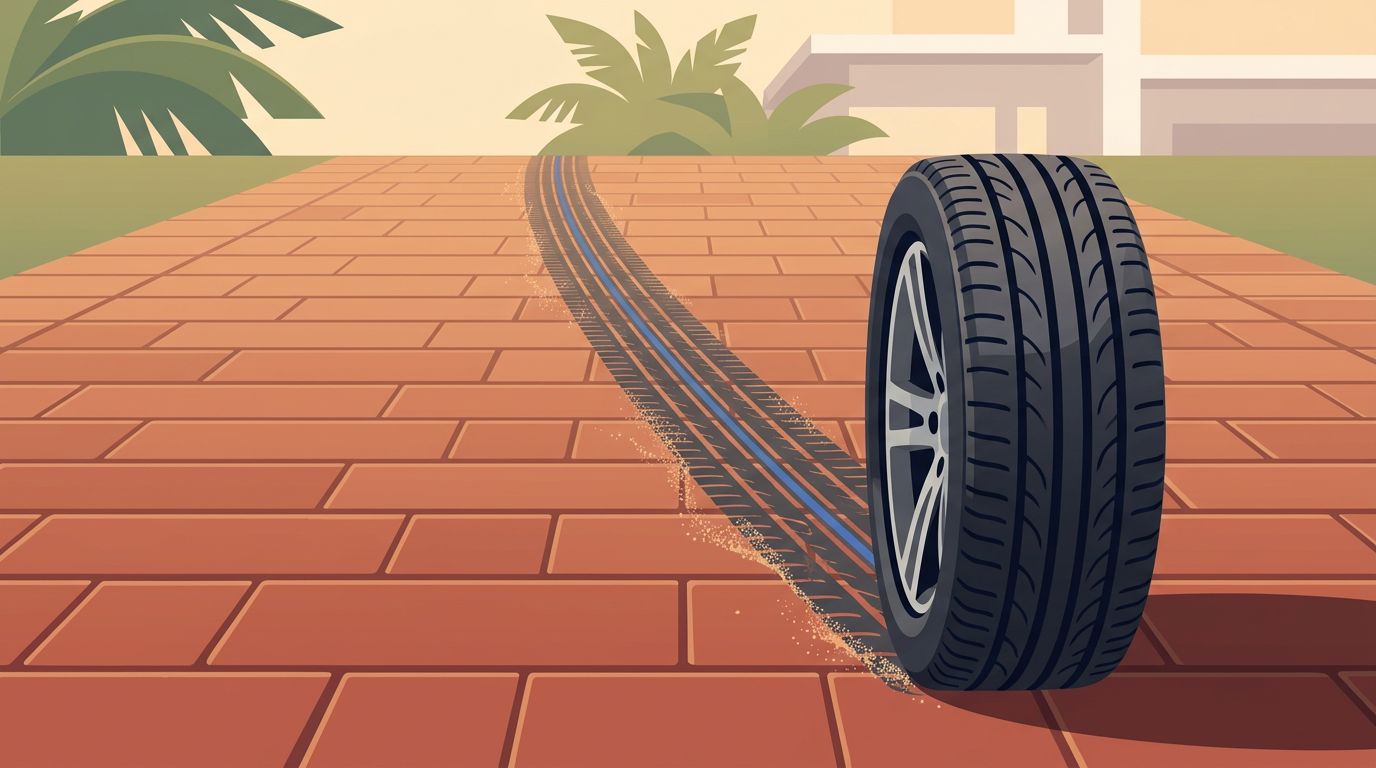
A black tire mark on a brick driveway looks simple, but it rarely is. In Florida, the combination of intense heat, sand, and humidity works like glue to bond tire marks to your brick driveway.
I see this happen after a sharp turn, a quick backup, or when hot tires sit on a hot driveway for too long. The rubber sinks in faster than most homeowners expect, and a basic rinse usually misses the point. Once you understand the challenge, you can learn the right steps to remove tire marks effectively and restore your curb appeal.
Key Takeaways
- Florida Heat Effects: Intense sunlight and high temperatures lead to ‘hot tire pickup,’ where rubber compounds bond to porous brick surfaces, making marks difficult to remove with simple water rinsing.
- Surface Porosity: Brick pavers and their sand-filled joints have natural textures that trap rubber residue more easily than smooth concrete, often necessitating specialized cleaning methods.
- The Role of Sealants: A failing acrylic sealer allows rubber to penetrate deeper into the brick, whereas a fresh, high-quality penetrating sealer acts as a protective shield against future staining.
- Strategic Cleaning: Rather than relying solely on high-pressure washing, which can damage joints and surfaces, it is best to use a quality degreaser to loosen rubber before applying gentle pressure.
Florida heat softens rubber and leaves a film
The intense Florida sun essentially turns your driveway surface into a griddle. When tires reach high temperatures, it leads to a phenomenon known as hot tire pickup. This occurs because tire rubber contains various chemical additives, including plasticizers, which help maintain the flexibility of the material. When you park a vehicle, plasticizer migration occurs as these chemicals move from the rubber onto the porous brick, leaving behind a dark, oily, and stubborn residue.
That is why a tire mark often looks more like a permanent stain than simple dirt. It is not sitting on the surface like loose dust; instead, the plasticizer migration bonds the rubber remnants to the brick, darkening as the material oxidizes in the sun.
I think of it like a crayon dragged across warm paper. The harder the tire turns, the more material gets left behind. Using your power steering to crank the wheel while backing out is a primary culprit. So is making a tight turn in the same spot every day. When hot tires meet a textured driveway, the friction increases significantly, leading to a much heavier transfer of tire marks.
A tire mark is usually rubber, oil, and heat working together.
That mix gets worse on brick pavers because the surface is not smooth. The mark has a textured, porous structure to hold onto right away, making it significantly harder to remove than a mark on sealed concrete.
Brick pavers trap more than dirt
Brick driveways have a natural texture that defines their aesthetic, but it also creates the perfect environment for grime to settle. Whether you have concrete pavers or traditional clay brick, the small pits and irregular edges catch rubber much faster than a smooth concrete slab would.
The joints between your interlocking pavers make it even easier for residue to stick. These sand-filled seams are functional, but they also act like tiny shelves for debris. Once rubber gets worked into those porous edges, a quick spray of water simply will not pull the stain out.
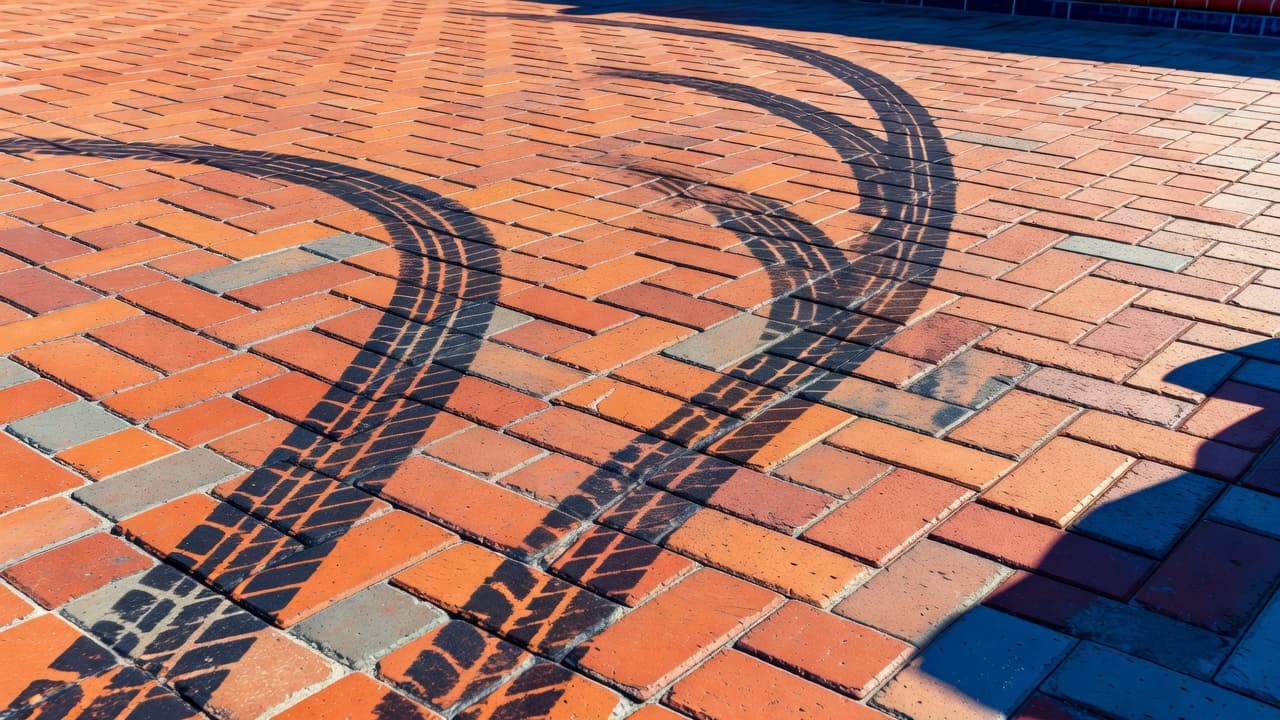
A failing acrylic sealer often makes the problem worse. When this protective acrylic sealer begins to break down, the brick loses its barrier, allowing tire marks to penetrate deep into the driveway surface rather than staying on the top layer. That is exactly when a smudge stops looking like a surface stain and starts looking baked into the material.
If I am evaluating a driveway with stubborn streaks, I always inspect the surface condition first. The brick may be holding the mark, but the real issue is often that the protective coating has eroded, leaving the pores and joints vulnerable to damage.
Rain, sand, and turning wheels push the stain deeper
Florida weather does not help once the mark is there. Afternoon rain creates trapped moisture that can pull rubber residue deeper into the porous surface of the brick. Once the sun reappears, the water evaporates quickly and the stain settles even further into the material.
Windblown sand is another troublemaker. It works like fine grit on sandpaper, and every time hot tires roll over the debris, that grit acts as an abrasive that grinds the rubber into the driveway surface.
That is why the same driveway can keep showing the same dark tire marks near the garage or gate. The vehicle is not just passing through; it is pressing, turning, and polishing the rubber into the brick over and over.
The longer these tire marks sit, the harder they become to remove. Fresh marks are one thing, but old, heat-cured marks are another. Once the rubber has had time to bond with the pavers, it stops acting like a surface smudge and starts acting like part of the driveway itself.
The cleaning method I trust most
This is where technique matters. I do not treat concrete pavers the same way I treat a standard concrete slab. Pressure washing has its place, but too much force can scar the surface or wash out joint sand. When you need to remove tire marks from brick, it is vital to balance power with safety.
A smart way to clean is to start with a quality concrete degreaser. This helps loosen the rubber before using a pressure washer at a lower setting. This process is far more effective for cleaning tire marks than high pressure alone. Unlike garage floors where you might use polyaspartic coatings or epoxy coatings to resist damage, exterior brick requires a more breathable approach. If you rely on the wrong chemicals or too much force, you might strip the material instead of simply removing tire marks.
To prevent tire marks in the future, I always recommend applying a penetrating sealer after the surface is spotless. These protective coatings act as a shield, ensuring that hot tires do not bond with the porous surface. This is critical for avoiding hot tire pickup, which is a common issue when driving onto pavers after a long trip. The curing process of these protective coatings is essential; if you drive on the area before the seal has fully set, the finish will not hold.
If you struggle to remove tire marks on your own, remember that the curing process of your sealant will dictate how well your driveway resists future stains. Using specialized cleaning tire marks solutions is far better than aggressive scrubbing, which can damage the bricks. While you might see neighbors using epoxy coatings in their garages, driveway sealing with a high-quality product is the best way to prevent tire marks from becoming a permanent eyesore. If the stains persist, Get a Quote to learn how professional care can restore your curb appeal.
Frequently Asked Questions
Why do tire marks appear more on brick than on concrete?
Brick pavers have a textured, porous surface and sand-filled joints that trap rubber particles more effectively than smooth concrete. This physical structure allows hot, softened rubber to lock into the brick, making it appear as a deep stain rather than simple surface debris.
Can I use a high-pressure washer to blast the marks away?
While pressure washing is a common cleaning tool, using too much force on brick pavers can scar the surface and wash away the sand in your joints. It is better to use a dedicated degreaser to break down the rubber first and then use a lower pressure setting to rinse the area safely.
How does a penetrating sealer prevent future tire marks?
Penetrating sealers fill the microscopic pores of the brick, creating a barrier that prevents hot rubber from bonding with the masonry. When the surface is properly sealed, tire residue is less likely to adhere, making routine cleaning much easier and preventing the ‘baked-in’ look of older stains.
Why do tire marks seem to get darker over time?
Exposure to the Florida sun causes the rubber residue to oxidize, effectively ‘curing’ the material to the brick. Additionally, environmental factors like humidity and windblown sand grind the rubber further into the porous surface, making older marks significantly harder to remove than fresh ones.
Conclusion
While it is difficult to prevent tire marks entirely in the intense Florida heat, these streaks are rarely permanent. The combination of softened rubber, porous pavers, and weather cycles often makes them feel like a permanent fixture, but they are manageable with the correct approach.
Understanding that you can effectively remove tire marks with the right cleaning method and some patience is the first step toward restoring your curb appeal. Once the brick is clean, applying a quality sealant helps protect the driveway surface from future buildup. A dark streak on your brick may look concerning, but it is usually just a sign that your home exterior needs a bit more care than a standard rinse.