
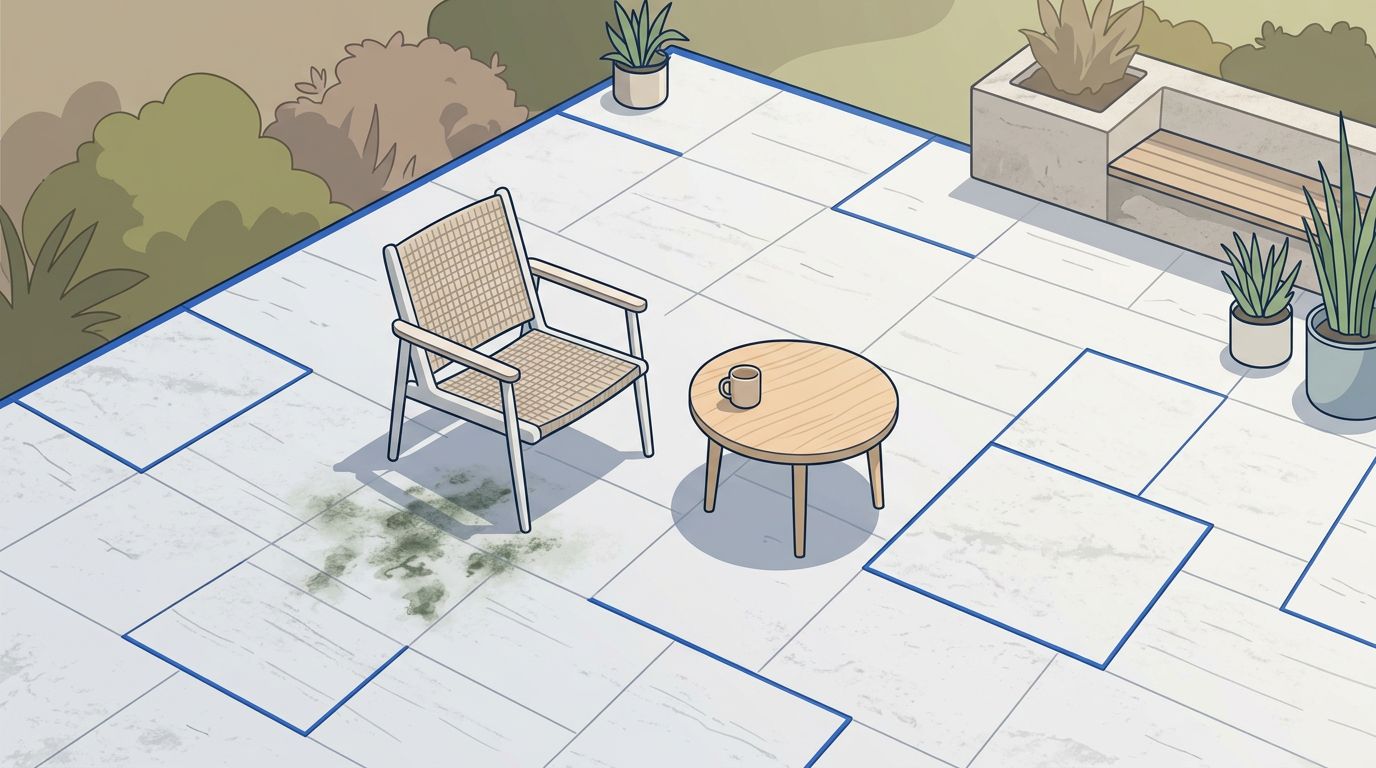
Mold under patio furniture is one of those stains people miss until they move a chair and see a dark patch of mold and mildew staring back. On travertine, it shows up fast because the stone holds moisture and the outdoor furniture blocks essential airflow.
I see this a lot in Southwest Florida. Shade, humidity, spilled drinks, and trapped leaves all work together under patio furniture, including chairs, tables, and loungers.
The good news is that the problem usually starts small. Once you know what causes it, you can clean it the right way and keep it from coming back.
Key Takeaways
- Travertine is porous: The stone naturally absorbs moisture, making it highly susceptible to mold growth when airflow is blocked by patio furniture.
- Moisture management is key: Mold thrives on the combination of trapped water, organic debris, and shade found under tables, chairs, and cushions.
- Use gentle cleaning methods: Avoid harsh pressure washing or aggressive chemicals, which can etch and damage the surface of travertine stone.
- Prioritize prevention: Regularly rearranging furniture, keeping the patio clear of leaves, and ensuring the surface stays dry are the best ways to prevent recurring stains.
- Know when to call a professional: Persistent mold or deep-seated staining may require professional equipment and specialized sealing to fully restore the stone without causing damage.
Why Mold Shows Up Under Patio Furniture
Travertine is a porous material, which means it can hold water in tiny surface openings. When a chair leg, table base, or decorative item blocks the surface, moisture buildup occurs because water stays trapped beneath the furniture longer than it should.
That small pocket under the furniture prevents proper air circulation, creating the perfect environment for a mess. Dust settles there, pollen sticks to the damp surface, and leaves begin to break down. Eventually, mold and mildew find exactly what they need: shade, trapped water, and organic food.
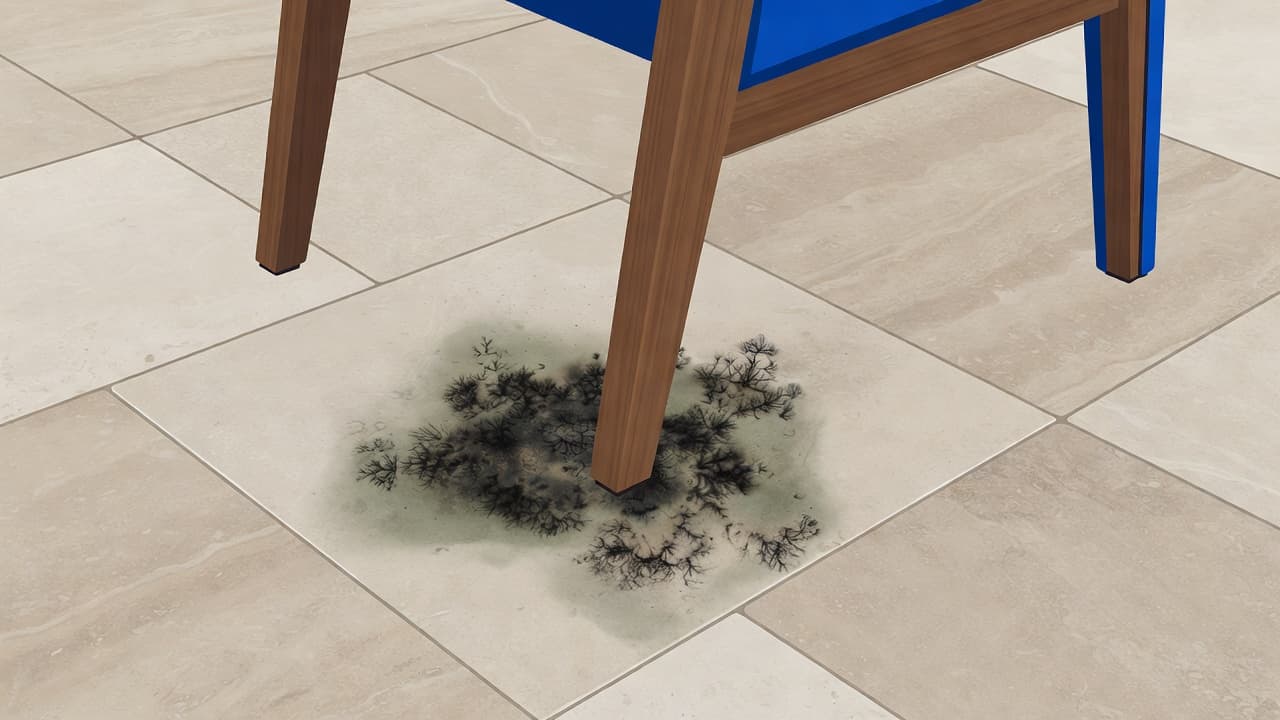
I see this same pattern in other exterior spots, such as around roof edges, on shaded walkways, and in corners that never fully dry out. A local guide on how mold and mildew settle on pavers breaks down how these debris issues lead to staining in a simple way.
A few common triggers for mold growth stand out:
- Heavy shade keeps the surface damp for extended periods.
- Plastic chair feet or rubber pads trap water against the stone.
- Outdoor cushions and rugs hold in moisture and collect pollen.
- Nearby landscaping drops organic debris directly onto the patio.
- Rain splatter and sprinkler overspray keep the area consistently wet.
If one chair keeps staining the same spot, the chair is not the real issue. The trapped moisture is.
What Mold Does to Travertine
Travertine looks strong, but it still needs proper care. Left alone, moisture trapped under your furniture leads to mildew stains that can dull the stone finish and make your patio look prematurely aged.
The first thing most homeowners notice is a visible color change. The spot under the furniture may turn dark green, brown, black, or gray. Sometimes it blends into the natural variations of the stone at first, only to become more obvious after a rainstorm. Because travertine is porous, microscopic mold spores can accumulate deep within the stone, which may also create a lingering musty odor on your lanai or deck.
The next problem is slipperiness. Mold growth creates a fine, slick residue that can make the patio dangerous. This is a significant safety concern around pool decks, walkways, and high-traffic areas where people often move around barefoot.
There is also a long-term issue to consider. If the conditions remain unchanged, the accumulation of mold and mildew will persist. If the patio stays shaded and damp, the staining will return quickly even after a simple rinse. Furthermore, many homeowners mistakenly confuse mold with plain surface dirt. This distinction is important because while surface dirt wipes up easily, biological growth requires a more specialized cleaning method to reach into the pores of the stone.
How I Clean It Without Damaging the Stone
Travertine needs a gentle hand. I do not start with high pressure and I do not reach for the strongest chemical on the shelf when I need to remove mold and mildew.
A safe cleanup usually starts with dry work first. I move the furniture, sweep away loose debris, and let the surface dry completely. If the patio is soaked, I give it time, as cleaning wet mold often just smears the problem around. Before applying any agent, I always perform a colorfastness test in an inconspicuous corner to ensure the stone does not discolor.
For light cleaning, I prefer gentle, natural alternatives. A paste made of baking soda or a light application of white vinegar can often lift surface growth without damaging the stone. For stubborn, deep-seated stains, a very diluted bleach solution can be used, though you must be extremely careful as bleach can etch or discolor natural travertine if left too long.
When applying these, I use a soft-bristled scrub brush to agitate the area. While some people reach for a pressure washer, a soft wash approach is always safer for travertine. Excessive pressure can erode the porous surface or damage the joint materials.
Here is the simple order I follow:
- Move the furniture and clear loose debris.
- Dry the surface as much as possible.
- Perform a colorfastness test with your chosen cleaner.
- Apply your cleaning agent, scrubbing lightly with a soft-bristled scrub brush.
- Rinse thoroughly to ensure no residue remains.
- Let the patio dry completely before putting the furniture back.
A lot of homeowners make the job harder by scrubbing too aggressively or using the wrong chemicals. A paver cleaning guide like these common cleaning mistakes is a good reminder that harsh pressure and rushed cleanup can create more damage than the mold itself.
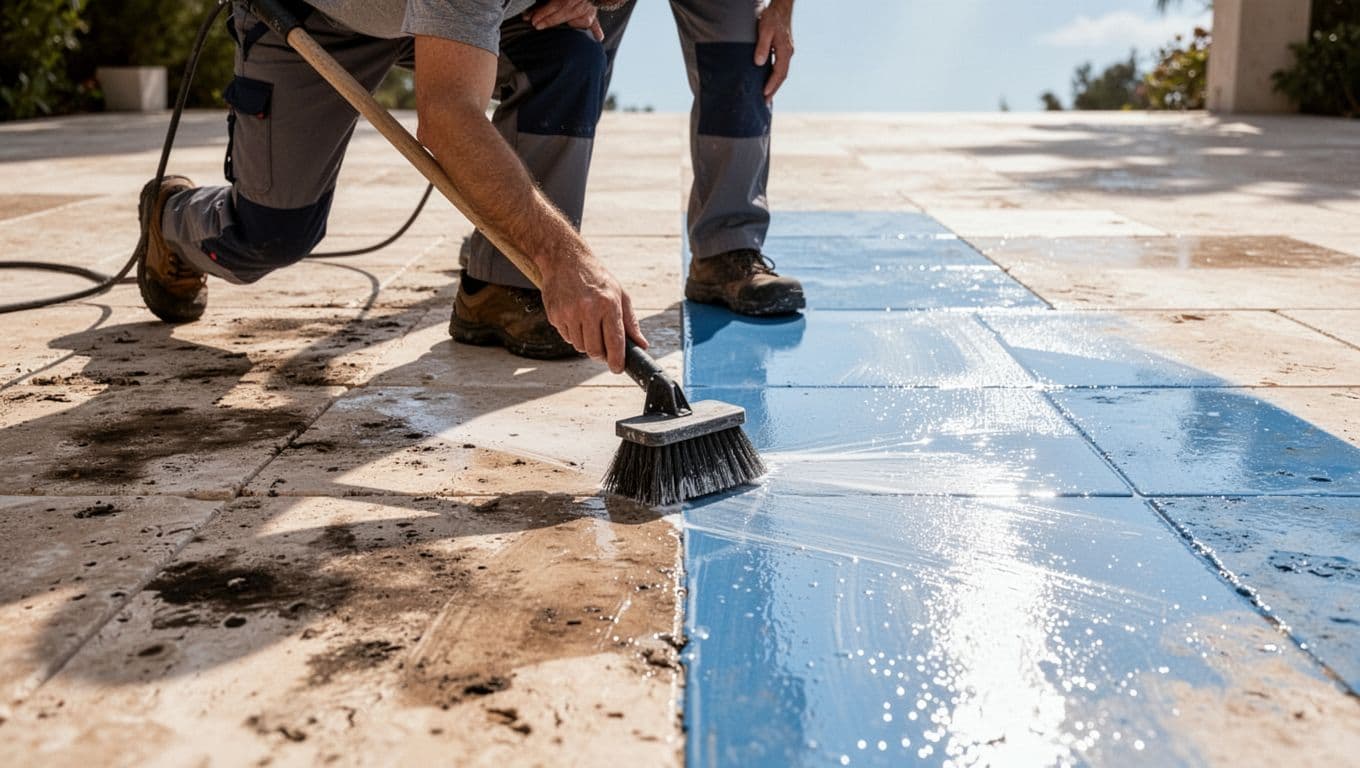
If the mold has reached a larger area, I treat the whole section instead of one tiny patch. Spot cleaning a single square sometimes leaves a noticeable ring, which often looks worse than the original stain.
How I Keep It From Coming Back
Once the mold is gone, the real job begins. If the patio stays damp and blocked off, the stain will return. Taking proactive steps is essential if you want to prevent mold growth on your stone surfaces.
I like to start with the furniture layout. Even small changes help significantly. A chair that gets shifted a few inches every few days allows sunlight and air to reach the stone. Whenever possible, I try to rearrange pieces into direct sunlight to help dry out the travertine completely.
I also keep an eye on nearby water sources. Sprinklers should not hit the patio every morning, and planter saucers should never sit directly on wet stone. Additionally, outdoor cushions should be dry before they are placed back on chairs. If you use premium materials like Sunbrella fabric for your outdoor cushions, regular maintenance is still required to ensure they remain mold-free.
Here are the habits that make the biggest difference:
- Move furniture periodically so the same spot does not stay covered.
- Keep the patio swept so leaves and pollen do not trap moisture against the stone.
- Use breathable covers for your pieces when they are not in use. This is particularly important for high-end teak furniture or wicker furniture, which can trap dampness underneath.
- Dry spills quickly, especially sugary drinks and standing water.
- Trim nearby plants that block sunlight and airflow.
- Rinse the patio when dirt starts building up.
Sealing can help too, especially on porous travertine. It does not make the stone bulletproof, but it provides a protective barrier and makes future cleanup much easier. The same maintenance logic applies to other exterior home tasks, such as driveway sealing, roof cleaning, and routine pressure washing. When moisture and grime sit for too long, they settle deeper into the material and require more intensive work to remove.
The point is not to chase every single speck of dust the moment it appears. The goal is to eliminate the damp, shaded conditions that allow mold to thrive.
When a Pro Makes More Sense
Some patios need more than a quick scrub. If the mold keeps coming back, the stone may need a deeper clean, a proper rinse, or fresh sealing after the surface dries.
I also call in help when the patio has old sealer failure, stubborn black staining, or sand loss between joints. Whether you have resin wicker or classic wicker furniture pieces, a pro knows how to handle the specific accumulation that builds up underneath. At that point, the cleanup is less about one stain and more about restoring the surface the right way.
That is where a professional can save time and avoid damage. A trained team knows when to use soft washing, when to use a pressure washer, and when to leave the stone alone. They are equipped to safely remove mold and mildew using a commercial-grade bleach solution if the situation requires it. That matters on travertine, because one bad pass can etch the finish or spread the stain.
If your patio furniture keeps leaving mold behind, I would rather handle it before it gets worse. You can Get a Quote for sealing or pressure cleaning service and get the stone looked at before the problem spreads.
Frequently Asked Questions
Is pressure washing safe for my travertine patio?
While a pressure washer can be effective on concrete, it is often too harsh for travertine. Using excessive pressure can erode the porous surface of the stone and damage the joint materials, so a soft wash approach is much safer for long-term stone health.
Can I use bleach to remove mold from my stone?
You can use a very diluted bleach solution for stubborn stains, but you must be extremely cautious. Leaving bleach on natural travertine for too long can cause permanent etching or discoloration, so always test an inconspicuous spot first.
How often should I move my patio furniture?
To prevent moisture buildup and mold growth, you should shift your furniture every few days or weeks. Even moving a chair a few inches allows sunlight and air to reach the stone, effectively drying out the area before mold has a chance to take root.
Will sealing my travertine prevent mold permanently?
Sealing your stone provides a protective barrier that makes future cleaning much easier, but it does not make the surface completely bulletproof. You will still need to manage airflow and keep the patio free of organic debris to keep biological growth from returning.
Conclusion
Dealing with mold and mildew under patio furniture is usually a moisture problem first and a cleaning problem second. Once you clear the area, dry the stone, and treat it gently, your travertine can look good again.
The bigger fix is simple, too. Keep air moving, keep debris off the surface, and do not let one damp spot sit untouched for weeks. That is how a small dark patch turns into a stubborn stain.