
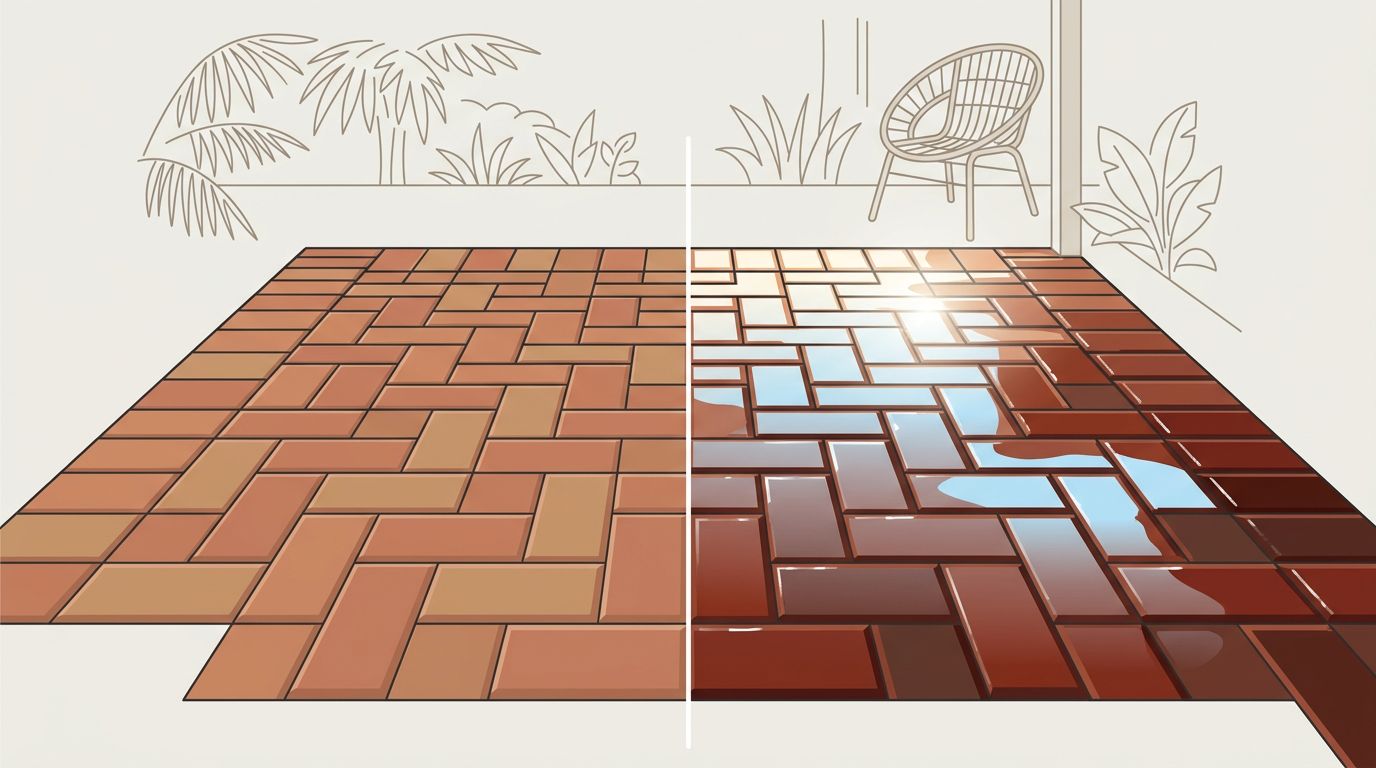
A quality paver sealer Florida project can make a clean driveway, patio, or pool deck look truly finished, but choosing the wrong finish can drastically change the appearance of your property. I often hear Florida homeowners ask whether a matte sealer or a wet-look sealer is better for their brick paver sealing projects on surfaces like brick pavers and travertine.
The right choice depends on your specific paver type, location, daily use, and the aesthetic result you want to achieve. Florida sun, heavy rain, high humidity, pool water, and coastal air also significantly affect how the sealer performs over time. Before choosing a product for your home, it helps to understand exactly what each finish does.
Key Takeaways
- Matte sealer keeps pavers looking natural and close to their original color.
- Wet-look sealer brings out color and creates a richer, darker appearance.
- Choosing the right sealer for your pool deck or walkway is essential to ensure proper traction.
- Proper cleaning, surface drying, the quality of your joint sand, and professional application are as important as the finish.
- A professional evaluation helps prevent common issues like haze, uneven color, and premature wear.
Florida Weather Changes How Paver Sealer Performs
Florida pavers deal with the challenges of a tropical climate that can be particularly harsh on hardscape surfaces. Strong sunlight often fades vibrant colors, making UV protection essential for maintaining a long-lasting aesthetic. Heavy rain can wash out joint sand, while high humidity keeps surfaces damp for longer periods, especially in shaded areas. Near the Gulf Coast, salt air adds another source of constant surface wear.
Pavers also collect sunscreen, food spills, leaf stains, dirt, mold, and mildew. Pool decks can pick up chlorine residue and mineral deposits. Driveways deal with tire marks, oil, vehicle fluids, and water runoff. A sealer helps reduce absorption, but it does not make pavers stain-proof or maintenance-free.
This is why I do not recommend choosing a sealer based on appearance alone. The product must match the surface and the location. A driveway sealer may not be the right choice for a wet pool deck. A product that works well on concrete pavers may not produce the same result on natural stone, which is why professional travertine restoration often requires specific, specialized sealers.
Moisture is another concern. If pavers are sealed before the surface and joints are properly dry, moisture can become trapped beneath the sealer. That may lead to a cloudy or whitish appearance. The EPA’s mold and health guidance also shows why controlling outdoor moisture and organic buildup matters around the home.
At Kingsway, I look at the paver condition, drainage, shade, traffic, and nearby landscaping before recommending a finish. This helps the sealer perform better and keeps the final appearance consistent.
Matte and Wet-Look Sealers Give Different Results
The simplest difference is appearance. A matte sealer keeps the pavers looking natural. A wet-look sealer makes the surface look richer, darker, and more enhanced, even when the pavers are completely dry.
A matte finish is a good choice when you want the surface to look clean without a strong coating effect. It usually preserves the original color and texture, often achieved through a breathable water based sealer that maintains the integrity of your natural stone. This works well for homeowners who prefer a natural stone appearance or want the pavers to blend with the rest of the landscaping.
Wet-look sealer is more noticeable. It can bring out the color variation in brick pavers and make faded areas look refreshed. Reds may look deeper, tan pavers may look warmer, and travertine can appear more defined like polished natural stone. Depending on the product, such as a high-performance urethane sealer, the wet-look can range from a mild color enhancement to a stronger glossy finish.
| Feature | Matte sealer | Wet-look sealer |
|---|---|---|
| Appearance | Natural and low-sheen | Richer, darker, more enhanced |
| Color effect | Keeps original color closer | Intensifies existing color |
| Surface style | Subtle and understated | Noticeable and decorative |
| Best fit | Natural-looking patios and walkways | Colorful driveways and feature areas |
| Maintenance appearance | Dust and light wear are less noticeable | Marks and buildup may stand out more |
| Pool deck use | Suitable with the right traction product | Must be selected carefully for wet areas |
Neither option is automatically better. The finish should match the overall style of your hardscape surfaces and the way you use the space.
One point needs to be clear: wet-look does not always mean slippery, and matte does not always mean slip-resistant. Slip resistance depends on the sealer formula, the paver texture, surface conditions, and whether a traction additive is used. For a pool deck, lanais, and areas that stay wet, I recommend choosing a product specifically made for that setting.
You can also review Concrete Network’s sealer guide for general information about how sealers affect appearance and surface protection. Product labels still matter because different sealers have different application requirements.
Which Paver Sealer Fits Your Florida Home?
Your home does not need the same finish in every location. I often recommend looking at each area separately instead of sealing the entire property with one general product.
A matte finish usually fits homes with natural landscaping, light-colored walls, or natural stone surfaces. It keeps the patio or walkway from looking overly coated. If your goal is to protect the pavers without changing their character, matte is often the safer visual choice.
Wet-look sealer may fit better when the pavers have strong color variation or have become faded after years of sun exposure. It can give an older driveway a refreshed appearance after proper cleaning and restoration, significantly boosting your home curb appeal. Wet-look is also popular on decorative patios where the pavers are meant to stand out.
Here are a few common situations:
- Driveways: Both finishes can work. A wet-look product can make brick pavers look richer, but a matte product used during driveway sealing may hide daily dust and tire marks better.
- Pool decks: Choose a pool deck sealer rated for high-moisture environments and traction. Appearance should always come after safe footing.
- Covered lanais: Matte often looks natural in shaded areas, where a heavy shine may feel out of place.
- Outdoor patios: Wet-look can highlight a fire pit area, seating space, or colorful paver design.
- Travertine: A matte finish can preserve the soft stone appearance, while professional travertine restoration can bring out more color and protect the surface.
The condition of the pavers also matters. If the surface has black algae, mold, old sealer, efflorescence, or uneven fading, applying a new coat will not solve the underlying problem. Cleaning and preparation must come first.
I also check whether the pavers need repairs, leveling, or fresh joint sand. Sealing loose or rocking pavers only covers the problem for a short time. A proper paver restoration may include cleaning, replacing damaged material, re-leveling sections, and adding polymeric or compatible joint sand before sealing.
What to Know Before Sealing Pavers
The finished appearance depends heavily on preparation. Before I begin cleaning and sealing, the pavers must be clean and free of oil, dirt, mold, mildew, algae, old coating residue, and cleaning chemicals.
Pressure washing is often a vital part of the cleaning process, but the intensity must match the paver material and condition. Too much pressure during the pressure washing phase can damage the surface, remove joint sand, or leave visible marks. Travertine and older brick pavers require extra care because their surfaces can be sensitive.
After cleaning, the pavers must dry properly. Florida humidity can make this process take longer than expected. Shaded sections, narrow joints, and areas beneath furniture or plants may hold moisture even after the rest of the surface appears dry.
I also inspect the weather before scheduling the application. Rain after sealing can affect the final appearance, and high humidity, wet pavers, or sudden storms can create problems with proper curing. The manufacturer instructions should always dictate the required drying time and weather window.
A small test area is helpful, especially when you are deciding between matte and wet-look finishes. The same sealer can appear different on faded concrete pavers, dark brick, or light travertine. A test patch shows the color change before the entire driveway or patio is coated.
The professional cleaning and sealing process often includes:
- Inspecting the pavers, joints, drainage, and surrounding areas.
- Performing stain removal and treating any mold and mildew.
- Applying an efflorescence cleaner to ensure the surface is chemically balanced.
- Repairing or re-leveling sections that need attention.
- Replacing missing joint sand with high-quality silica sand when appropriate.
- Allowing the surface to dry according to product requirements.
- Applying the selected sealer evenly and avoiding heavy puddling.
- Checking the finish after curing and discussing maintenance needs.
A professional service should also protect nearby walls, landscaping, pool equipment, screens, and doors during the work. Sealer overspray can leave unwanted marks on surfaces that were not part of the project.
The same property may need other exterior cleaning services as part of regular maintenance. House washing, gutter cleaning, roof cleaning, soft wash treatments, and general pressure washing each address different surfaces. Roof cleaning, for example, should use a method suited to specific roofing materials rather than the same pressure used on a driveway.
How to Maintain Matte or Wet-Look Pavers
Sealed pavers still need regular cleaning. Leaves, dirt, food, sunscreen, and standing water should not sit on the surface for long periods. Sweeping helps remove abrasive debris before it gets ground into the pavers, which also discourages weed growth between the joints.
Clean spills promptly, especially oil, grease, rust, and drinks with strong color. For effective stain removal, use a surface cleaner approved for sealed pavers, and avoid harsh chemicals unless the product manufacturer allows them. A strong cleaner can dull the finish or create uneven spots. When addressing specific issues, proper rust removal techniques should be handled carefully to avoid damaging the protective sealer.
Keep irrigation heads pointed away from the pavers when possible. Repeated sprinkler water can leave mineral deposits and keep the surface wet. Trim plants that block airflow across shaded patios and walkways to ensure the pavers dry efficiently.
The finish may need reapplication after several years, but timing depends on traffic, sun, moisture, cleaning habits, and the sealer used. Professional driveway sealing often needs more attention than a lightly used covered patio. I look for fading, absorption, loss of color enhancement, and areas where water no longer beads on the surface as it did after the initial application.
If the surface turns cloudy, peeling, or uneven, do not apply another coat over it. The old coating may need to be removed or corrected first to ensure the best results.
Frequently Asked Questions
Can I apply a wet-look sealer to my pool deck?
While a wet-look sealer can be used on pool decks, it requires careful selection of a product that includes high-quality traction additives. Safety is the priority in wet areas, so ensure the sealer is specifically rated for pool environments and offers slip resistance to prevent accidents.
How often should I have my pavers resealed in Florida?
In the Florida climate, most pavers require resealing every two to four years depending on sun exposure, traffic, and maintenance habits. Signs that it is time for a refresh include visible fading, reduced color enhancement, or water no longer beading on the surface after a rain shower.
Will a matte sealer change the color of my brick pavers?
A matte sealer is designed to provide protection without creating a glossy or darkened appearance, keeping the pavers looking as natural as possible. While it may slightly enrich the stone’s existing tone, it generally preserves the original look rather than creating the intense color enhancement associated with wet-look products.
Why do my pavers look cloudy after being sealed?
A cloudy or milky appearance is typically caused by trapped moisture or applying the product while the surface and joints were not completely dry. Because Florida humidity can keep surfaces damp for extended periods, it is essential to ensure total dryness before application or to use a breathable sealer.
Conclusion
Choosing between a matte and wet-look finish comes down to the aesthetic you want and the environmental conditions your pavers face. A matte finish preserves the natural appearance of your stone, while a wet-look sealer enhances color intensity and creates a sophisticated visual finish.
Effective paver sealer Florida projects require more than just picking a product off the shelf. Proper cleaning and sealing, joint preparation, moisture management, and surface traction all play a critical role in the final result. By investing in professional paver restoration, you ensure that your hardscape surfaces receive a high-quality protective barrier capable of withstanding our unique climate. Utilizing commercial grade products also provides added value, as many professional services include a three year warranty for your peace of mind.
When you are ready to compare options for your driveway, patio, pool deck, or lanai, Get a Quote for expert guidance and a clear plan to revitalize your outdoor space.