
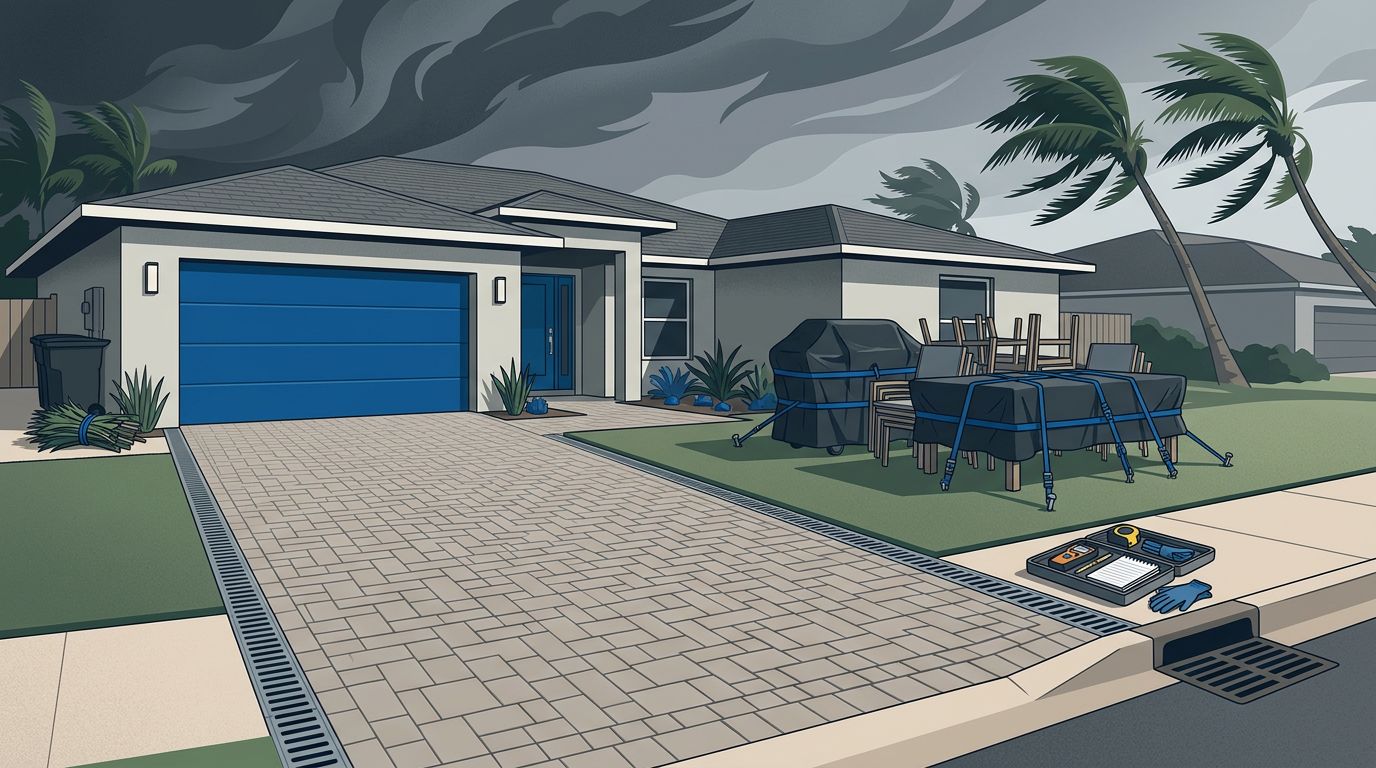
Proper paver driveway hurricane preparation is essential for homeowners looking to protect their property from the severe weather common in the region. Every hurricane season can leave your driveway covered in debris, sand, branches, standing water, and loose joint material. Taking proactive steps not only helps safeguard the surface but also makes the cleanup process much easier after the storm passes.
I recommend checking your paver driveway before the next storm threat arises, especially if you live in Southwest Florida. Small drainage problems, loose pavers, and clogged edges can quickly escalate into larger repair issues when heavy rain arrives. Start by conducting a careful inspection, then proceed to clean, repair, and seal the surface correctly to ensure it stays in top condition.
Key Takeaways
- Inspect for rocking pavers, low areas, open joints, cracks, and potential issues with proper drainage.
- Clear leaves, palm fronds, furniture, and loose objects before strong winds arrive.
- Use controlled pressure washing, not excessive force, to protect brick and travertine.
- Replace missing joint sand and allow proper drying before applying driveway sealing products.
- Schedule cleanup after the storm if sand, stains, or storm debris settle into the pavers.
Inspect Your Paver Driveway Before the Storm
The first step in hurricane preparation is a detailed inspection of your paver driveway. Walk the entire surface and look at it from several angles. A paver that appears fine from the car may rock under foot traffic or move when water runs across the joint.
I look for pavers that have shifted, settled, cracked, or become uneven. Low areas are especially important because they collect water during heavy rainfall. Standing water can leave dirt rings, move joint sand, and expose weak spots around the driveway edges.
Pay close attention to the following areas:
- Loose or rocking pavers that may need to be reset
- Open joints where sand has already washed away
- Low spots that hold water after normal rainfall
- Cracked or damaged pavers that may break under pressure or impact
- Driveway edges where soil, mulch, or landscaping can wash onto the surface
- Nearby drains and curb lines that may be blocked by leaves or debris
A driveway does not need to look perfect before a hurricane, but it does need to be stable and set up for proper drainage. If pavers are already moving, heavy rain can carry sand away and leave the surface less supported.
I also recommend checking your gutters and downspouts. Water should not pour directly onto one small section of pavers during a storm. If your system is filled with leaves, professional gutter cleaning can help keep roof water moving away from the driveway and walkways.
Do not ignore a small depression simply because it has been there for years. A low spot may not cause trouble during a short rain, but several inches of water can keep the area saturated for hours. That moisture can disrupt water drainage by carrying soil and debris into the joints, making the driveway harder to clean once the storm passes.
Clear the Driveway and Protect Drainage Paths
Loose objects are a major concern before hurricane conditions arrive. Patio furniture, planters, decorations, trash bins, tools, and lawn equipment become hazardous flying projectiles when high winds move them across the property. Securing outdoor belongings by moving these items to a garage or a reinforced storage area is essential to protecting your paver driveway from damage.
Proactive tree trimming is also important, as falling branches can scratch pavers, block drains, and create heavy stains as they break down. However, prioritize your safety and avoid working near unstable trees once the weather begins to deteriorate.
Prioritize yard waste removal and clear all loose yard debris from:
- Driveway drains
- Curb edges
- Channel drains
- Gutter outlets
- Low points beside the driveway
- Walkways that direct water toward the pavers
Water needs a clear path to leave your property. When leaves or organic material block a drain, rainfall spreads across the driveway and may carry dirt into every joint. Pooling water also makes post-storm pressure washing more difficult because the surface remains wet and muddy. Furthermore, ensuring these paths are clear is vital for preventing garage flooding, which often occurs when water is forced backward due to obstructed drainage routes.
If soil or mulch sits higher than the driveway edge, rake it back before the storm. Heavy rain can wash the material onto the pavers and create stubborn brown stains. This is common around driveways bordered by planting beds, especially when tropical rain falls for several hours.
Avoid placing sandbags directly on delicate paver surfaces without protection. Sandbags can rub against the pavers, trap moisture, and leave dirty marks. If they are needed near an entry point, use a protective material under them and be careful not to block the driveway’s normal drainage route.
The same preparation applies to your home’s other exterior surfaces. A clogged gutter, dirty lanai, or blocked walkway can send extra water toward the driveway. Roof cleaning and house washing should be scheduled during a safe weather window, never while a storm is approaching.
Clean and Repair Pavers Before Applying Sealer
Cleaning before hurricane season removes the dirt that can hold moisture and hide existing damage. However, pressure washing pavers requires control. The wrong nozzle, excessive pressure, or a wand held too close can chip the brick face, cut lines into the surface, and remove more joint sand than needed.
I prefer a measured cleaning process. On flat areas, a surface cleaner can provide more even results than a narrow wand. A chemical pre-treatment helps loosen organic growth, dirt, and staining before the final rinse. The goal is to remove the buildup without damaging the paver surface.
For many driveways, the cleaning process includes:
- Removing loose debris and surface dirt.
- Applying a suitable pre-treatment for the type of staining.
- Cleaning with a wide spray pattern or surface cleaner.
- Rinsing the driveway thoroughly.
- Inspecting joints, edges, and low areas after the surface dries.
A narrow, high-pressure blast may seem like the fastest option, but it can leave visible damage. Brick and travertine are not the same as a solid piece of untreated concrete. Whether you have thick pavers intended for standard traffic or thin pavers used in an overlay, remember that the specific quality of the paver installation requires a different level of care for the surface texture and joints.
Organic growth on nearby walls, curbs, and other surfaces may respond better to a soft wash. Soft washing uses cleaning solutions and lower water pressure to remove mold, algae, and mildew without relying on heavy force. This method is useful for surfaces that can be damaged by aggressive pressure.
For more information about choosing the right equipment and protecting yourself, review these pressure washing safety tips. Wear eye protection, gloves, sturdy shoes, and clothing that protects your skin. Keep children and pets away from the work area, and never direct water toward electrical fixtures.
After cleaning, allow the pavers and joints to dry before making repairs. Damp sand can make it difficult to see whether a paver is properly seated. It can also interfere with the application of a sealer.
Replace Missing Joint Sand
Joint sand supports the edges of interlocking pavers. When it washes away, pavers may shift and weeds can grow more easily between them. Replace missing sand after cleaning, but use a product that fits the condition of your driveway.
If the driveway contains polymeric sand, avoid assuming that it can handle unlimited pressure. High-pressure water can displace or break down joint material when the nozzle is too close. This guide on pressure washing pavers with polymeric sand covers the concern in more detail.
Sand should be installed into clean, dry joints. Sweep it evenly across the driveway, work it into the spaces, and remove excess material from the paver faces. Follow the product directions for activation and drying. Rain arriving too soon can damage the result.
Seal Only When Conditions Are Right
Driveway sealing adds a protective layer that can reduce water and stain absorption. It can also make future cleanup easier after dirt, algae, or storm residue reaches the surface. Sealing won’t stop a hurricane from moving water across the property, but it can help limit how quickly contaminants enter porous pavers.
The driveway must be clean and dry before sealing. Do not apply sealer immediately before a storm. Rain and high humidity can affect the finish, and the product needs time to dry according to its instructions.
A professional can check the paver condition, joint sand, weather forecast, and surface moisture before applying the product. Homeowners in Fort Myers, Naples, Bonita Springs, Port Charlotte, and nearby communities can Get a Quote for comprehensive hardscaping solutions including paver cleaning, repairs, sanding, and driveway sealing.
What to Do During and After a Hurricane
Never attempt to clean or pressure wash your driveway during a storm or when lightning, flooding, or hurricane force winds are present. Wet electrical connections, flying debris, and slippery surfaces create hazards that simply are not worth the risk.
After the storm has passed, wait until the property is safe before you begin your inspection. Take photographs of your driveway to document any storm damage before moving large debris, as this evidence is essential for insurance claims and ongoing hurricane preparedness. Keep children and pets away from standing water, mud, and damaged areas.
Start cleanup by removing large branches and loose material by hand. Avoid dragging heavy objects across the pavers. Dragging items can scratch the surface, loosen individual stones, and spread unsightly staining.
Look for:
- Washed-out joint sand
- Pavers that shifted or settled due to storm surge
- New cracks or chipped edges
- Dirt lines left by receding standing water
- Oil or fuel stains from equipment
- Organic debris stuck between joints
- Erosion beside the driveway
Light dirt may rinse away with a garden hose. Heavier buildup may require professional pressure washing using the correct pressure and cleaning treatment. Oil, rust, fertilizer, and decaying plant material often require specialized solutions rather than plain water.
If the driveway has widespread sand loss or significant uneven areas, cleaning should be completed before re-sanding and sealing. Applying sealer over mud, stains, or unstable pavers can trap problems beneath the finish.
Storm cleanup may also reveal structural damage to your roof, siding, gutters, and your outdoor living space. Carefully inspect your lanai, checking screen enclosures for tears or bent frames. If your home features impact-resistant screens, verify that the mountings remain secure. Keep roof cleaning and soft wash work separate from your driveway repairs so each surface receives the appropriate treatment. High pressure that may be suitable for some concrete areas can damage screens, painted surfaces, and masonry.
Frequently Asked Questions
How soon before a hurricane should I seal my driveway?
You should avoid sealing your driveway in the days immediately preceding a storm. Sealer requires specific drying times and humidity levels to cure properly, and applying it too close to rainfall can compromise the finish. It is best to complete the cleaning, repair, and sealing process well before the threat of a hurricane develops.
Can I use sandbags to protect my pavers from floodwater?
While sandbags can redirect water, you should never place them directly on your pavers without a protective barrier underneath. The rough texture of the bags combined with moisture can cause staining, abrasion, and surface damage. If you must use them, place a protective material beneath the bags and ensure they do not block critical drainage paths for your property.
What should I do if my pavers look uneven after a storm?
If you notice significant shifting or unevenness following a hurricane, it is important to document the damage with photos for your records before attempting any repairs. Small adjustments can sometimes be made by resetting the affected pavers, but widespread unevenness may indicate sub-base damage that requires a professional assessment. Avoid driving over unstable or sunken areas to prevent further damage to the driveway surface.
Conclusion
A hurricane-ready paver driveway starts with simple, proactive maintenance. Before the height of hurricane season arrives, check your surface for movement, clear all drainage paths, remove loose objects, and repair weak areas to prevent damage from heavy rain.
Use controlled pressure washing, replace missing joint sand, and schedule driveway sealing only when the surface is clean and dry. When the storm passes, inspect your paver driveway carefully before starting cleanup. Good preparation protects your outdoor surfaces and significantly reduces the amount of repair work left behind after the weather clears.