
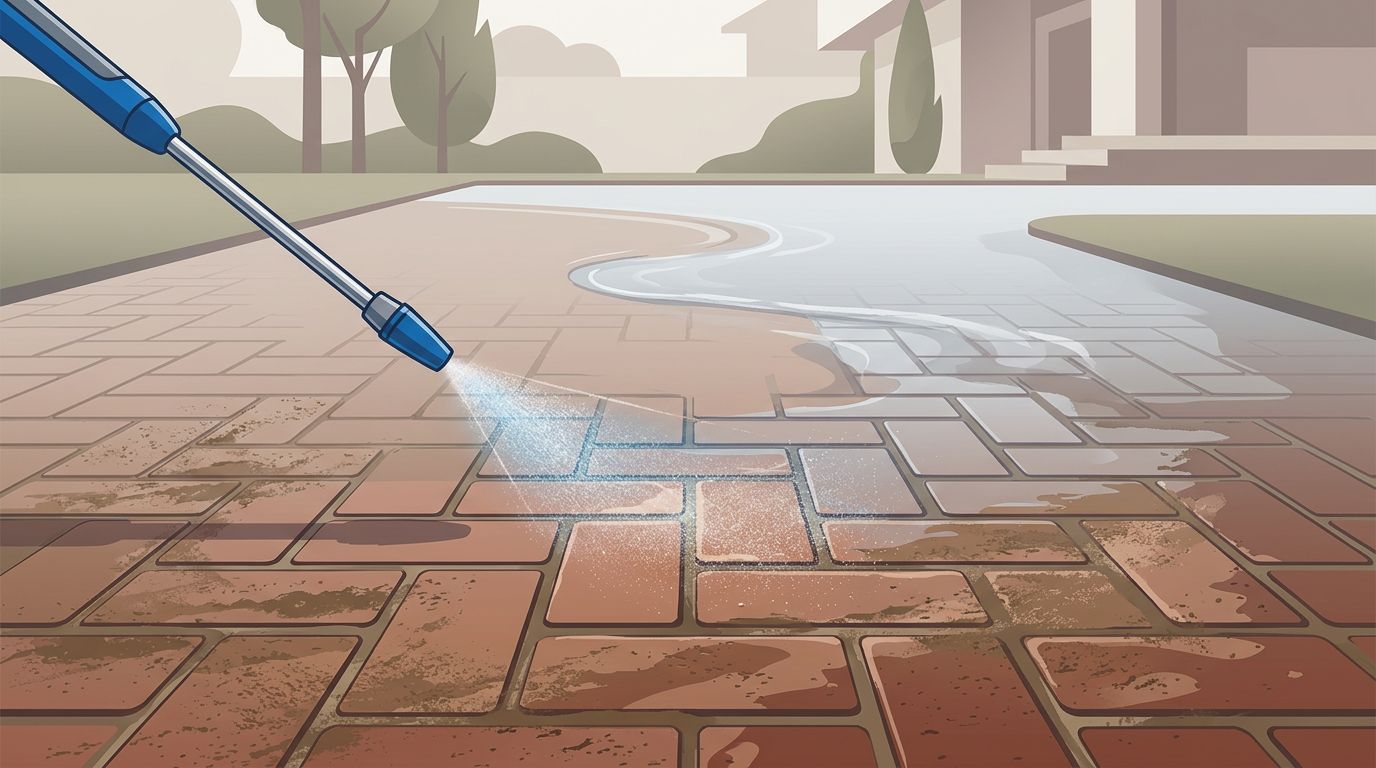
Floodwater brick pavers deal with much more than just a layer of surface dirt. When the water finally recedes following driveway flooding, it leaves behind a hazardous mix of mud, silt, organic debris, oil, bacteria, unsightly stains, and eroded joint sand. I often see homeowners simply rinse the surface, notice that it looks cleaner, and assume the job is finished. In reality, the cleanup process is rarely that simple.
Floodwater brick pavers need much more than a quick rinse. The surface, joints, drainage, and surrounding landscape all need to be carefully assessed before any cleaning begins. Using the right restoration process can remove the mess without turning a necessary flood cleanup into a disaster involving chipped bricks, loose pavers, or washed out joint sand.
Key Takeaways
- Floodwater frequently leaves behind a hazardous mixture of silt, organic matter, oil, and mineral deposits on brick pavers.
- Using a pressure washer too soon or with excessive force can cause lasting damage to the brick faces and strip away the essential joint sand.
- Effective cleaning protocols should begin with thorough debris removal, a careful surface inspection, and gentle rinsing techniques.
- Once the pavers have fully dried, you may need to focus on joint sand replacement, leveling the surface, treating stubborn stains, and applying a new sealer.
- Prioritizing safety is essential during flood cleanup, particularly when addressing contaminated water, potential electrical hazards, and the stability of your pavers.
What Floodwater Leaves on Brick Pavers
Floodwater carries whatever it meets along the way. Driven by storm water runoff, materials like mulch, leaves, grass, trash, road dust, and landscape debris often settle across driveways or patios. Even clear looking water may leave a thin film of silt once it dries.
Silt is one of the most common problems after a flood. These fine particles, often originating from soil erosion in adjacent flower beds or hillsides, settle into the texture of brick pavers and collect inside the joints. If they dry in place, a simple rinse may not remove them completely. Walking and driving over these hardscape surfaces can press the sediment farther into the brick.
Floodwater may also bring petroleum residue from roads and driveways. Small amounts of oil, gasoline, and automotive fluids can create dark patches that do not respond to ordinary soap. Organic debris can leave brown or green discoloration, especially when it sits in warm, damp conditions.
Minerals are another concern. As floodwater evaporates, it can leave behind white or gray deposits called efflorescence. This powdery material comes from salts moving through masonry with moisture. It is not the same as dirt, so aggressive pressure washing may not solve the problem.
If floodwater entered a home or mixed with sewage, animal waste, or other contaminants, I treat the cleanup differently. The CDC’s flood cleanup guidance explains why protective equipment, handwashing, and safe handling matter after a flood. Brick pavers may be outside, but contaminated sediment can still be unsafe to touch or spread around the property.
Flood Damage Goes Beyond Stains
A flood can affect the structure of a paver installation, not only its color. Moving water often leads to significant water infiltration, which washes out the sand between pavers and leaves open gaps. In more severe conditions, the base material beneath the pavers can shift or erode due to the volume of storm water runoff.
That is when homeowners may notice sinking pavers, uneven pavers, rocking bricks, or depressions that no longer drain correctly. A paver driveway can look acceptable from a distance while individual bricks shift under foot or vehicle traffic. I always check for this structural integrity before starting any cleaning process.
Floodwater can also push debris into drainage systems and low areas. If those paths stay blocked, standing water may continue to collect during the next rain event. This subsurface water creates more opportunity for algae, mildew, staining, and joint erosion.
Brick pavers are porous, which means they can absorb moisture and contaminants. The longer mud, leaves, or oily water remain on the surface, the harder cleanup becomes. This does not mean every stain is permanent. It means the cleaning method must match the material and the specific type of residue left behind.
A clean-looking surface can still have loose joints or unstable pavers underneath. Flood inspection should cover the entire installation.
Nearby features may show flood effects as well. Pool decks, patios, walkways, retaining edges, walls, and garage entrances can collect the same material. Gutters may overflow during a storm and leave concentrated dirt along the edges of the pavers. Downspouts can create channels where water removes joint sand faster than it does across the rest of the surface.
How I Clean Flood-Affected Brick Pavers
I do not begin with the highest pressure setting. I start by making the area safe and removing what can be cleared by hand. This methodical approach is the first step in effective paver restoration.
First, I look for unstable pavers, exposed base material, broken edges, electrical hazards, sharp debris, and standing water. Floodwater may cover nails, glass, branches, or other materials that can cause injury. If the water came from a contaminated source, I use the proper protective equipment and recommend professional remediation when necessary.
Next, I remove leaves, mulch, trash, and thick mud with hand tools. A shovel, stiff outdoor broom, and plastic rake can clear heavy debris without grinding it into the brick. Metal tools can scratch the paver surface, so I use care around visible finishes and decorative edges.
Once the loose material is gone, I rinse the surface with controlled water flow. This helps move remaining silt without forcing it into the joints or damaging the existing joint sand. I work toward an approved drainage area and avoid pushing dirty water into places where it can create another problem.
After the first rinse, I inspect the pavers again to check for remaining hazards or standing water. This is when hidden oil spots, organic staining, efflorescence, and joint loss become easier to see. Different stains may need different cleaners. Using one strong chemical on the whole driveway can create fading, discoloration, or damage to nearby plants.
For general dirt and biological buildup, a suitable cleaning solution can loosen the residue before rinsing. For areas near screens, painted walls, doors, or delicate landscaping, I use extra care. The same approach applies to nearby exterior surfaces. House washing and roof cleaning should not be handled with the same pressure used for a concrete driveway.
The EPA’s mold cleanup information is also useful when flood moisture has created visible mold or mildew concerns. A surface wash can improve appearance, but it does not replace proper remediation when contamination has spread into a building or porous interior materials.
Pressure Washing or Soft Wash for Flood Cleanup?
Pressure washing can be effective on brick pavers when the equipment is properly calibrated to the surface. Using the wrong tip, holding the nozzle too close, or applying excessive pressure can chip the brick face, strip existing sealers, cut lines into the surface, or remove more joint sand than necessary. Most residential driveways and walkways consist of interlocking pavers, which require a measured approach to cleaning.
I prefer a controlled cleaning process. This typically includes a wide spray pattern, the use of a surface cleaner on flat areas, a chemical pre-treatment, and a final rinse. My goal is never to blast every stain away in a single pass. Instead, the focus is to loosen residue and remove it without creating new damage.
A soft wash is a highly effective alternative for removing organic growth from surfaces that cannot withstand heavy force. It is often the preferred method for treating algae or mildew on nearby walls and screens. While soft wash techniques are essential for roof cleaning, they are also safer for old brick, worn surfaces, or loose mortar. Understanding the difference is vital because a roof is not cleaned in the same way as a brick driveway.
We must also consider how water interacts with your specific installation. On non-permeable surfaces, water has no choice but to pool and leave behind layers of silt and debris. In contrast, permeable pavers or pervious concrete systems are designed to manage water differently, often allowing it to filter through the sub-base. These materials require specialized care during flood remediation to ensure the drainage gaps remain clear.
I always evaluate the age and condition of the materials before starting. If the area has a previous coating, I check whether the floodwater or the cleaning process has caused whitening, peeling, or uneven wear. Pressure washing is not always the correct first step. Sometimes dry debris removal and a gentle rinse do most of the work, while other instances involving compacted silt or deep biological staining require a more targeted treatment. A careful assessment prevents unnecessary force and helps produce a cleaner, more consistent result.
Replacing Joint Sand and Restoring the Surface
After cleaning, the pavers need time to dry before I make decisions about sanding or sealing. Wet brick can hide remaining stains, damp joints, and uneven color. Sealing too early can trap moisture and leave the surface cloudy or blotchy. Before starting any brick paver repair, it is essential to ensure the foundation remains intact.
If floodwater removed joint sand, the gaps must be filled again. The joints should be clean and dry before new sand is installed. I check whether the pavers have shifted first, as adding sand will not correct a low area or stabilize bricks that are rocking on an eroded base. If the water has washed away the crushed stone base under your driveway or patio, you may need professional help to reset the stones. The stability of your hardscape depends entirely on the integrity of this base material.
Once the surface is stable, fresh joint sand can help lock the pavers together and reduce movement. The right product depends on the paver type, joint width, drainage conditions, and existing installation. I do not treat every driveway or patio as if it has the same needs.
Paver sealing can be helpful after flood cleanup, but it should come after proper cleaning and drying. A suitable sealer can make future stains easier to remove, help maintain color, and reduce the amount of moisture and soil absorbed by the surface. It will not correct poor drainage or repair a damaged base.
Homeowners sometimes use the words paver sealing and driveway sealing interchangeably. The process is related, but the product and finish still need to match the surface. Brick pavers, travertine, and concrete areas can react differently to cleaners and sealers.
The biggest mistake is sealing over flood residue. A coating can make stains harder to remove and may lock in moisture. I would rather take the time to clean, inspect, sand, and dry the surface correctly.
Common Mistakes After a Flood
Many cleanup problems begin with good intentions. Homeowners want to remove the mess quickly, but rushing the process often causes more work later.
Avoid scrubbing wet silt across the surface with a hard metal brush, as this can grind debris into the pores of the brick. Do not use a narrow pressure washer tip close to the surface, and never mix bleach, acids, or degreasers unless the product directions explicitly allow it. Dangerous chemical reactions can harm your pavers, kill nearby landscaping, and pose a health risk to you.
I also recommend taking photos before cleanup begins. These pictures document displaced pavers, washed out joints, staining, and debris lines. This documentation is essential for insurance claims and helps track the success of your restoration efforts.
Do not ignore your property’s stormwater management. If a blocked gutter, damaged downspout, or poor landscape grading sent water toward your pavers, the same problem will likely return during the next storm. Cleaning the brick without correcting the water path only addresses the symptoms, not the cause. If you leave behind compacted soil around your patio or walkway, you also risk future damage during the freeze thaw cycle as the ground expands and shifts.
For long term water control, consider installing a French drain, a drywell, or a rain garden to redirect runoff away from your hardscapes. If you are starting from scratch or repairing a high traffic area, a grid paver system offers excellent structural stability.
For a driveway, patio, pool deck, or walkway that needs a professional assessment, homeowners can Get a Quote for comprehensive paver restoration, expert cleaning, sealing, and the installation of upgraded drainage systems or permeable pavers to protect your investment for years to come.
Frequently Asked Questions
Can I use a pressure washer to clean my brick pavers after a flood?
While you can use pressure, it must be carefully calibrated to avoid damaging the brick face or stripping away essential joint sand. Always use a wide spray pattern and start with the lowest effective pressure, as excessive force can leave your pavers loose or uneven.
Why is it important to wait for pavers to dry before applying sealer?
Sealing damp or wet bricks can trap moisture beneath the surface, which often results in a cloudy, hazy, or blotchy finish. Allowing the pavers to dry completely ensures that you are not locking in lingering contaminants or moisture that could lead to future structural issues.
How do I know if my pavers have suffered structural damage from floodwater?
Look for signs such as sinking, uneven surfaces, or bricks that rock when you walk or drive over them. These issues often indicate that the base material beneath the pavers has been washed away by floodwater and will require professional leveling rather than just a cosmetic cleaning.
Conclusion
Floodwater leaves behind much more than just simple mud. It can deposit silt, oil, organic residue, and mineral buildup while simultaneously stripping away joint sand and shifting the foundation of your hardscape.
I recommend starting with safety, debris removal, a thorough inspection, and controlled cleaning techniques. Once the surface has fully dried, your floodwater brick pavers may require professional repairs, a fresh application of joint sand, specialized stain treatment, or a new protective sealant. Remember that floodwater brick pavers should be restored in the right order, because cleaning a damaged or unstable surface without proper inspection can create more long-term problems than the storm left behind.