
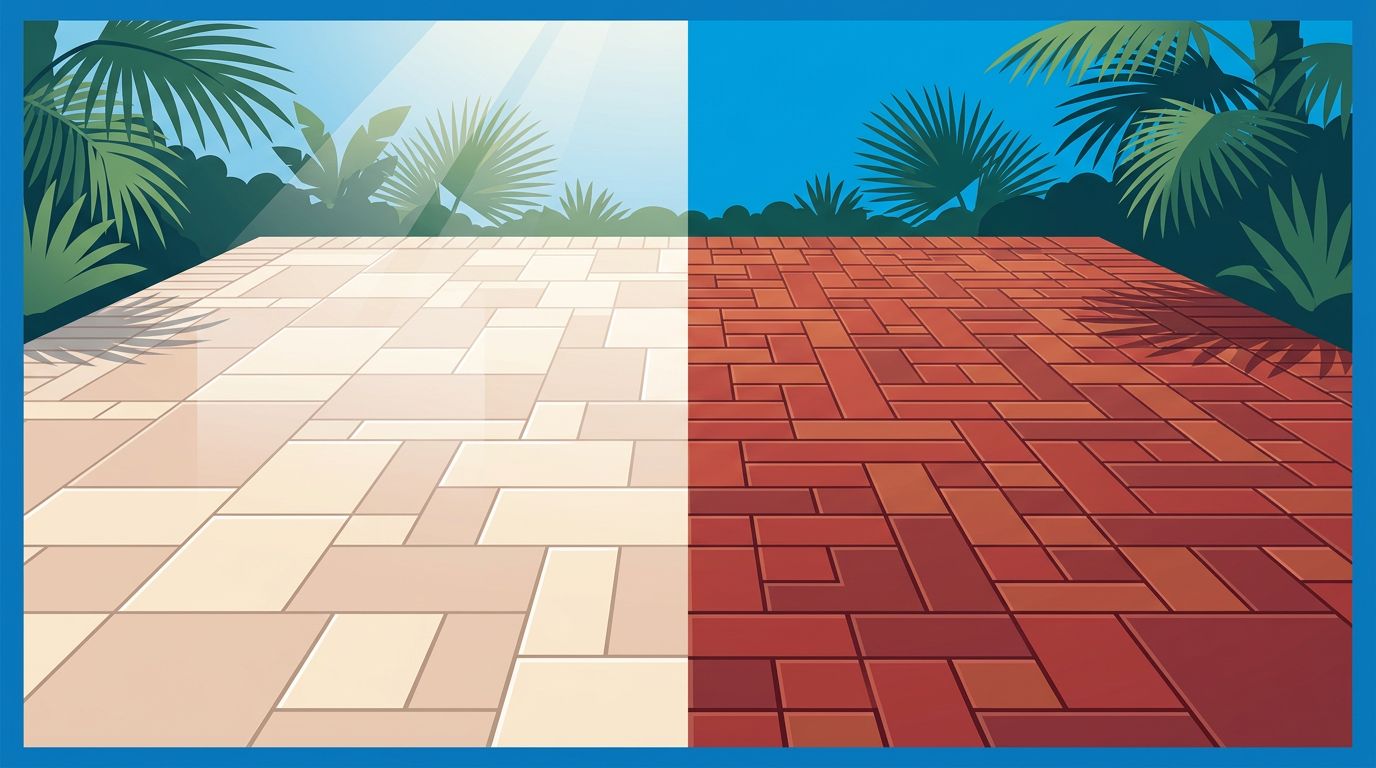
Choosing the right paver sealer Florida homeowners need isn’t as simple as picking the product with the biggest promise on the label. The intense Florida tropical climate, characterized by relentless heat, heavy rain, high humidity, salt air, and constant exposure to strong sunlight, significantly impacts how a sealer performs on your driveway, patio, or pool deck.
When evaluating your options, I look at the paver material, the desired finish, the condition of the surface, and how the area is used. Both water-based and solvent-based sealers can provide essential protection for your pavers, but they do not produce the same aesthetic or functional result. Choosing the best product begins with a clear understanding of the differences between these two options.
Key Takeaways
- Water-based sealers typically offer lower odor and allow for easier cleanup during the application process.
- Solvent-based sealers often provide a much richer color enhancement for brick paver sealing projects, resulting in a more vibrant appearance.
- Florida’s high humidity levels make thorough surface preparation and optimal drying conditions essential for a successful project.
- Penetrating sealers are often a safer, more reliable choice for porous materials like brick and travertine.
- The best paver sealer depends on your specific surface type, expected foot traffic, desired finish, and moisture exposure, all of which work together to create a durable protective barrier for your outdoor space.
How Water-Based and Solvent-Based Paver Sealers Differ
The main difference lies in the carrier liquid used to distribute the protective ingredients across the paver surface. Regardless of the type chosen, both options create a durable protective barrier for hardscape surfaces to defend against the harsh Florida elements.
Water-based sealers use water as the carrier. A high-quality water based sealer usually has less odor, cleans up more easily, and is more comfortable to use near doors, windows, pets, and landscaping. Many water-based formulas leave a natural finish, although some can create a satin or glossy appearance. These products work well for homeowners who want color protection without a strong wet look. Furthermore, a water based sealer is a practical choice for patios, walkways, and pool decks where a heavy shine may look out of place or create concerns about traction.
Solvent-based sealers use solvents to carry resins into the paver. These products often deepen the color while providing essential UV protection for your outdoor surfaces. They create the darker, wet-look finish many homeowners desire and provide strong resistance against water, oil, grease, and food stains.
The tradeoff is that solvent-based products usually have a stronger odor during application. They may also require more care around plants, enclosed areas, ignition sources, and nearby property. The EPA’s information about volatile organic compounds is useful when comparing products and understanding why ventilation matters.
Neither type is automatically better. A high-quality product can outperform a poor one regardless of the base. The formula, preparation, application thickness, and curing conditions all affect the final result for your hardscape surfaces.
Which Paver Sealer Works Best in Florida?
Florida pavers deal with conditions that can shorten the life of an improperly applied sealer. Afternoon storms often follow hours of intense heat, while high humidity levels slow down the drying process. UV exposure can fade color, and standing water often leads to the growth of mold and mildew, which can create cloudy areas or uneven curing across your surfaces.
For this reason, I do not choose a sealer based only on whether it is water-based or solvent-based. I first inspect the pavers and ask how the area is used.
A driveway needs protection against vehicle traffic, tire marks, oil, and repeated moisture. A penetrating water-based sealer may be a good fit when the homeowner wants a natural appearance. A solvent-based product may be better when deeper color and stronger stain resistance are the priority, provided the pavers and site conditions are suitable.
Pool decks need a different approach. A slippery, glossy finish is not a good choice around wet feet. I usually recommend a low-sheen or natural-look product with traction in mind. The sealer also needs to match the type of paver, as natural stone such as travertine requires specific care and compatible products to maintain its integrity.
Covered patios have less direct rain exposure, but they can still collect food stains, grease, dirt, and mildew. Thorough stain removal is a critical precursor to the sealing process in these areas. A color-enhancing sealer can make older pavers look refreshed, while a penetrating product may preserve a more natural appearance.
Florida’s coastal properties also face salty air and wind-blown moisture. Homeowners in Fort Myers, Cape Coral, Naples, Bonita Springs, and nearby areas should pay close attention to drainage. Sealer cannot correct water that remains trapped beneath or between pavers.
I also consider the weather forecast before application. The surface needs time to dry after cleaning, and rain can interfere with curing. Checking local climate patterns through NOAA’s climate normals can help explain why a product that performs well in a dry climate may need more careful scheduling in our humid, tropical climate.
Water-Based vs. Solvent-Based Sealer Comparison
This quick comparison shows how the two options usually differ in residential applications.
| Feature | Water-Based Sealer | Solvent-Based Sealer |
|---|---|---|
| Odor | Usually lower | Usually stronger |
| Cleanup | Often easier with water or mild soap | Often requires the recommended solvent |
| Appearance | Natural, satin, or light enhancement | Richer color and wet-look options |
| Application comfort | More convenient near homes and plants | Requires more ventilation and site control |
| Stain resistance | Depends on the formula | Often strong, depending on the resin |
| Pool deck suitability | Good with the right low-sheen formula | Good only when traction and finish are appropriate |
| Moisture concerns | Still requires a dry surface | Also requires careful moisture control |
| Best use | Natural appearance and lower odor | Color enhancement and stronger visual change |
The product label is only part of the decision. I always recommend reading the technical data sheet before purchasing. It should identify suitable hardscape surfaces, coverage, drying time, temperature limits, and cleaning requirements.
A sealer made for decorative concrete may not be right for travertine. A glossy product designed for a low-traffic patio may not be suitable for a busy driveway, where a commercial grade sealer can often offer better longevity and durability. Matching the product to the material prevents many common problems.
Why Preparation Matters More Than the Sealer Type
Even the best paver sealer can fail if the surface is not prepared correctly. Dirt, algae, old sealer, efflorescence, oil, and loose silica sand can prevent a new product from bonding evenly. Professional cleaning is the most critical step to ensure your surface is properly prepped for a high-quality urethane sealer or other protective coatings.
I start by inspecting the pavers and joints carefully. While pressure washing is often necessary, I typically use a surface cleaner attachment to achieve a uniform clean without damaging the pavers. Using too much pressure can strip away essential joint material, damage older pavers, or leave visible streaks on the surface. If I encounter stubborn mineral deposits, I will apply an efflorescence cleaner to neutralize the surface before proceeding.
Travertine restoration requires extra care, as natural stone is more sensitive to aggressive cleaning methods. Small holes or worn areas in the stone can trap moisture, so I use specialized cleaning techniques that remove deep buildup without roughening the material.
After cleaning, the pavers must dry completely. Florida humidity can make the surface appear dry while moisture remains trapped in the joints. Applying sealer over this moisture often leads to whitening, hazing, bubbling, or uneven color distribution.
The basic process includes:
- Inspecting the pavers, joints, drainage, and any existing coating.
- Removing dirt, mold, stains, old sealer, and loose material through professional cleaning.
- Replacing or adding new joint sand when needed.
- Allowing the entire area to dry thoroughly.
- Testing the sealer in a small, hidden area.
- Applying thin, even coats according to the product instructions.
- Protecting the area while the sealer cures.
Testing a small section helps confirm the color and finish before the entire driveway or patio is treated. This is particularly important with solvent-based color enhancers, as the finished surface can look much darker than the unsealed paver.
At Kingsway, I also look at surrounding areas before starting. House washing, gutter cleaning, or roof cleaning can send dirty water toward newly sealed pavers and ruin the finish. If the home needs a soft wash or roof cleaning, I prefer to coordinate that work before the final paver sealing is complete.
Common Sealing Problems in Florida
Many sealing problems stem from improper timing and preparation rather than the quality of the product itself.
Applying sealer before the pavers are fully dry is one of the most frequent mistakes. Rain, irrigation, morning dew, and damp joint sand can all prevent a proper bond and affect the final finish. Sealing during the hottest part of the day can also cause issues because the product may flash dry before it spreads evenly across the surface.
Overapplication is another common concern. More sealer does not always equate to better protection. Thick layers often remain tacky, turn cloudy, or peel prematurely under heavy traffic. This is especially problematic on smooth areas around pools and outdoor kitchens.
Homeowners must also prioritize surface preparation before beginning any paver restoration. This includes thorough cleaning and specialized rust removal if metal stains are present. Furthermore, do not mix products without confirming compatibility. A new water-based sealer may not bond correctly over an old solvent-based coating, and in some cases, the old finish must be completely stripped first.
Properly installed joint sand is essential for preventing weed growth. When the joints are correctly filled and sealed, it creates a solid barrier that discourages vegetation from taking root between your pavers.
Regular maintenance helps the sealer last longer. Sweep away debris, rinse off spills promptly, and correct any drainage issues around your patio or walkway. If the surface begins losing color or absorbing water quickly, it may be time to inspect the coating. For homeowners comparing driveway sealing options, I recommend focusing on the actual needs of the surface rather than simply choosing the darkest possible finish. A clean, properly prepared surface with the right protection will look far better than a heavily coated driveway with uneven color.
When Professional Paver Sealing Makes Sense
Paver sealing might look like a simple weekend project, but complications arise quickly when the surface contains old coatings, uneven joints, stubborn stains, shifting pavers, or underlying drainage problems. Florida properties often face several of these issues simultaneously, making expert intervention a smart investment.
A professional inspection is the first step in any successful paver restoration project. Specialists can accurately identify whether your surface requires deep cleaning, specialized sanding, structural repairs, chemical stripping, or high-quality sealing. Professional teams also use specialized equipment to prevent damage to nearby plants, walls, screens, pool equipment, and painted surfaces.
By utilizing commercial grade materials, professionals ensure that your surfaces receive the best possible protection against the harsh Florida climate. Many professional service providers even stand behind their work with a three year warranty, giving you peace of mind that your investment will last.
I apply this same careful approach to patios, walkways, pool decks, lanais, and driveways. The goal is to leave the area clean, level, and ready for normal use after the recommended curing period.
If you are ready for professional cleaning and sealing, you can Get a Quote for our comprehensive paver services. A proper quote should always account for your specific paver type, total square footage, the state of any existing sealer, the current surface condition, and your desired final finish.
Choosing the Right Paver Sealer for Your Home
Water-based sealers are often the better choice when you want lower odor, easy cleanup, and a natural appearance. If you are looking for a high-performance, long-lasting finish, a modern urethane sealer can provide exceptional durability and resistance. Meanwhile, solvent-based sealers may be the better fit when you want a richer color enhancement, a wet look, and strong stain resistance.
The Florida climate makes preparation just as important as the specific product you choose. Drying time, surface moisture, intense sunlight, humidity, and drainage all affect the final result. I never recommend treating every paver surface the same way, as proper cleaning and sealing are essential to provide the necessary UV protection required for Florida homes.
The best paver sealer in Florida is the one that matches your specific material, finish preference, traffic level, and moisture conditions. When the surface is prepped correctly and the product is applied with care, professional cleaning and sealing will protect your pavers while keeping your outdoor spaces looking clean and well maintained for years to come.
Frequently Asked Questions
How often should I reseal my Florida pavers?
Generally, paver sealing in Florida should be refreshed every two to three years depending on sun exposure and traffic levels. You will know it is time to reseal when the surface begins to lose its luster or water no longer beads on the surface after a rain shower.
Can I apply a new sealer over an existing one?
It is generally not recommended to apply a new sealer over an old one without checking for chemical compatibility. If the existing sealer is failing or if the new product is a different chemical base, you may need to strip the old layer first to ensure a proper bond.
Is it possible to seal pavers during the rainy season?
Sealing during the rainy season is very challenging because pavers must be bone-dry to avoid whitening or hazy curing. Unless you have access to a completely covered area or a sustained period of dry weather, it is often best to wait for a drier time of year to ensure the best results.
Will sealing my pool deck make it slippery?
Applying a high-gloss sealer to a pool deck can create a very slippery surface when wet, which poses a safety risk. I always recommend using a low-sheen or matte-finish sealer, often combined with an anti-slip additive, to maintain necessary traction around water.
Conclusion
Finding the right paver sealer Florida homeowners can rely on depends on balancing your aesthetic goals with the specific needs of your outdoor surfaces. While water-based sealers are prized for their low odor and natural finish, solvent-based options remain a popular choice for those seeking deep color enhancement and a high-gloss wet look.
Regardless of the product you choose, the long-term success of your project depends on meticulous cleaning and sealing. Professional results require a deep clean, perfectly dry pavers, and an application process that considers your climate and surface usage. By prioritizing proper preparation and selecting a product compatible with your driveway, patio, or pool deck, you can ensure your hardscape remains protected and visually appealing for years to come.