
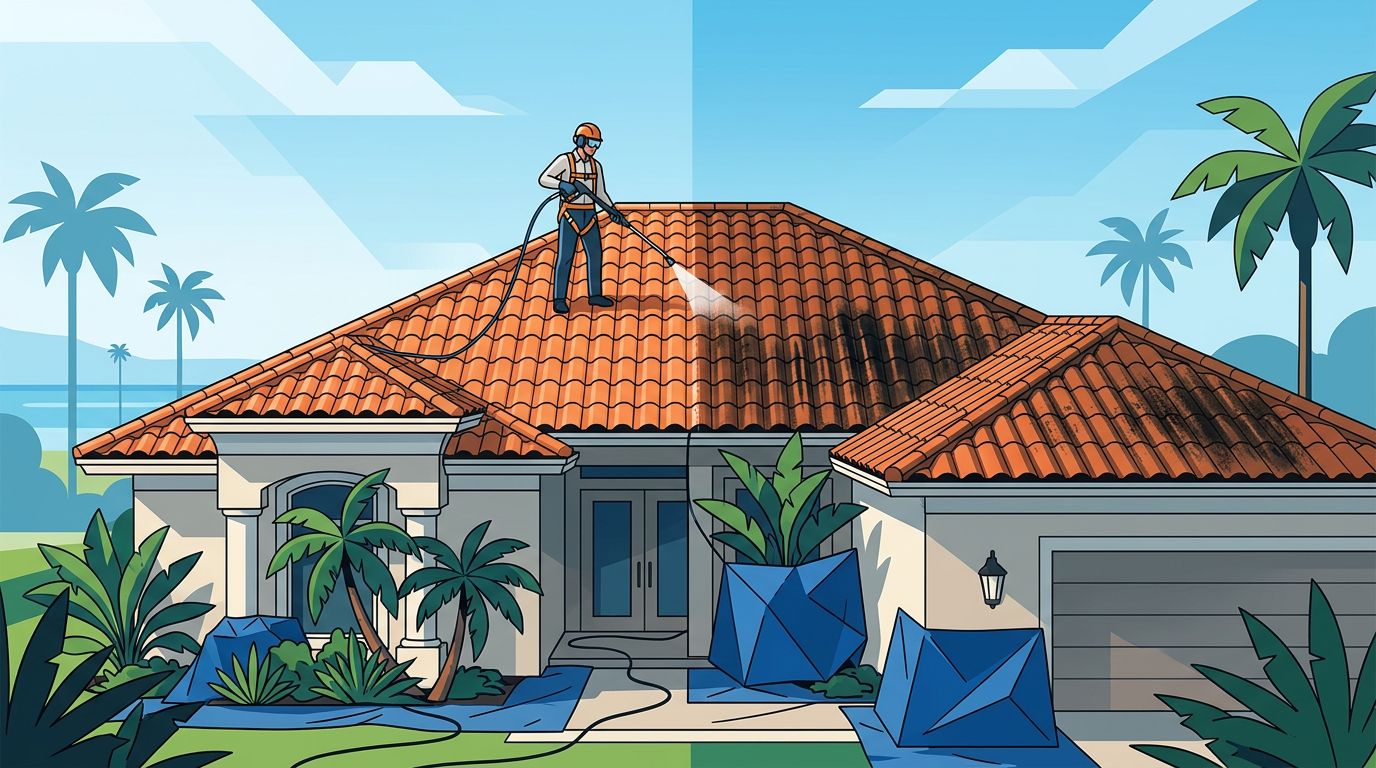
Black streaks can make a clean home look neglected, even when the roof remains structurally sound. The right roof cleaning method can restore curb appeal without cracking tiles, stripping coatings, or harming nearby plants and property.
In Southwest Florida, heat, humidity, rain, shade, and salt air create ideal conditions for algae. I always inspect the roof material first because tile, asphalt, and coated surfaces don’t respond the same way. The safest approach starts with identifying the growth, then using a controlled soft wash instead of blasting stains away.
Key Takeaways
- Identify the dark growth before cleaning because algae, moss, lichen, dirt, oxidation, and coating failure may require different treatments.
- Use a controlled soft wash with roof-compatible chemistry, low pressure, monitored dwell time, and a gentle rinse instead of pressure washing tile.
- Protect plants, metal, windows, walls, pool areas, and gutters from chemical runoff before and after treatment.
- Trim shade, clear roof valleys, improve drainage, and consider zinc or copper strips to help slow algae regrowth.
- Cleaning is appropriate when tiles and the roof system remain sound, but leaks, widespread damage, failed coatings, or deteriorated underlayment may require repair or replacement.
Diagnosing dark growth on tile roofs
Dark marks on a tile roof may appear as black streaks from organic growth, but they aren’t always caused by algae. Thin black or greenish lines that follow rainwater are commonly algae stains. Thick, raised growth at tile edges may include moss and algae, or it may be lichen. Dirt, oxidation, and coating failure can also create dark areas chemicals won’t remove.
The name Gloeocapsa magma is most often used for dark staining on asphalt shingle roofs. This cyanobacterium can feed on limestone filler in some roof shingles, especially on shaded or north-facing slopes. Tile roofs don’t contain the same shingle filler, so I don’t label every dark mark on tile Gloeocapsa magma. Concrete tile, clay tile, painted tile, and glazed tile each need a different level of care.
Look closely for:
- Cracked, chipped, or slipped tiles.
- A chalky or peeling finish.
- Loose mortar, exposed underlayment, or damaged flashing.
- Thick moss that has lifted at tile edges.
- Streaks that disappear when wet but return after drying.
A small test area can help, but a roof inspection should be performed from a safe ground or access position. Tile becomes slick when wet, and walking on the wrong part can cause cracking. A homeowner roofing discussion examines ground-based treatment for dark marks. It also shows why applying from the ground is often safer than climbing onto the roof.
Safe soft wash methods for tile roofs
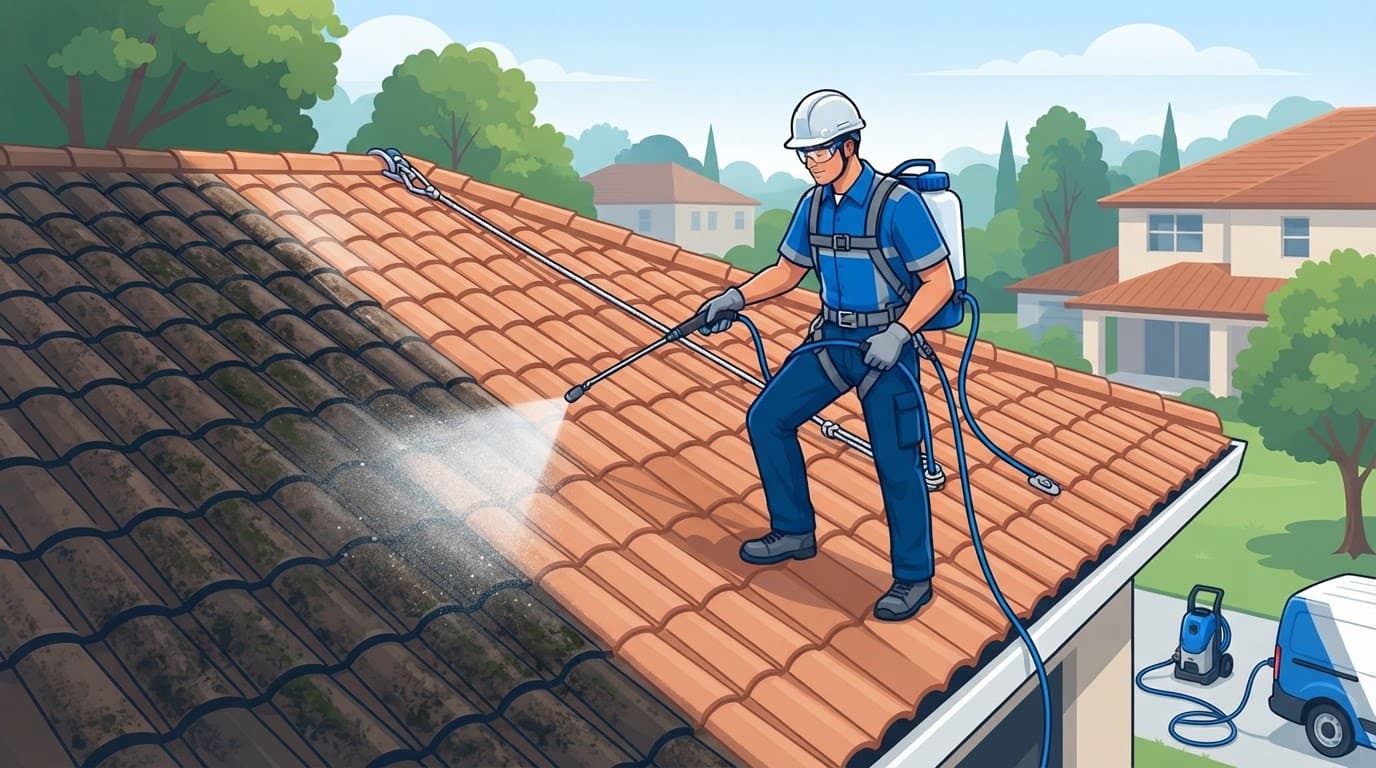
A soft wash uses cleaning chemistry and low pressure. The method relies on the product to loosen algae, mold, dirt, and other organic growth rather than force. The rinse then removes residue without driving water beneath the tiles.
I don’t recommend that anyone pressure wash a tile roof. A strong stream can crack clay or concrete tiles, remove an old protective coating, open weak joints, and drive water under the roof system. It can also create uneven cleaning, where one section looks bright while another still has stains.
If the roof is too wet or steep to stand on safely, it isn’t a DIY walking surface. A clean roof isn’t worth a fall or a broken tile.
For a controlled roof cleaning process, I use the following order:
- Inspect the roof from the ground, ladder edge, or another safe access point. Check tiles, valleys, flashing, gutters, screens, windows, and nearby plants.
- Remove loose leaves and branches without scraping the tile surface.
- Wet surrounding landscaping before applying any cleaning solution.
- Test the selected roof-compatible algae remover on a small, hidden section. Allow it to dry before judging the result.
- Apply the product with a garden sprayer or dedicated low-pressure system. Work in manageable sections.
- Allow the product to dwell for the time listed on its label. Watch the surface so it never dries.
- Rinse with a low-force stream, moving water away from walls, doors, pool areas, and plant beds.
- Inspect the dry roof and repeat only where the product directions allow it.
Most tile roof treatments need about 10 to 15 minutes of dwell time, but there is no universal number. Temperature, shade, tile porosity, algae thickness, and product strength all affect the process. Some maintenance products are designed to remain on the surface and work through later rain. For a bleach-based treatment, I prefer a controlled rinse rather than leaving concentrated residue for the next storm.
Choosing a compatible tile-roof cleaner
A bleach solution can work quickly on organic growth, but it isn’t automatically safe for every roof. Many DIY instructions mention a 50/50 mixture of household bleach and water for asphalt shingles. Products containing sodium hypochlorite may react differently on tile coatings, painted finishes, or glazes. Sodium percarbonate offers a lower-chlorine option, though it usually works more slowly.
A tile roof may have a factory coating, painted finish, or glaze that reacts differently to chlorine products. Older asphalt shingles also deserve caution. Weathered 3-tab shingles and aging architectural shingles may have loose granules, brittle edges, or exposed areas that become more noticeable after treatment. The product may kill algae while revealing shingle deterioration that was already present.
Product choices usually fall into these categories:
- Chlorine-based cleaners work quickly on heavy algae and mold. They also create the greatest concern for plants, metals, painted surfaces, and runoff. Use only the dilution and application method listed for the roof material.
- Sodium percarbonate cleaners are oxygen-based products that can be a useful option when you want to reduce chlorine exposure. They usually work more slowly and may need light agitation or a second treatment.
- Wet & Forget and Spray & Forget are maintenance-style products designed to work over time. Formulas vary, so the label controls dwell time, rinsing, and approved surfaces.
- 30 Seconds Outdoor Cleaner may help with organic staining, but not every outdoor cleaner is suitable for every tile finish. Confirm roof compatibility before applying it overhead.
Never mix bleach with ammonia, acids, vinegar, or other cleaners. Use safety gear, including chemical-resistant gloves, eye protection, long sleeves, and appropriate footwear. Keep children and pets away until the work area has been rinsed and is safe.
A coastal roof-cleaning question also raises an important point for Florida homes: stronger chemical mixtures aren’t automatically better. A moderate application with proper dwell time usually gives more control than a concentrated mixture that dries on the roof.
Protecting plants, metal, and pool areas
Chemical runoff follows water, carrying treatment into flower beds, lawns, pool decks, storm drains, and neighboring areas.
I protect the property before spraying. That includes pre-wetting shrubs and grass, moving outdoor furniture, closing windows, and protecting exposed metal. Protective tarps should cover delicate plants only briefly, since Florida heat can build up underneath and cause damage.
Use a hose to dilute runoff as it reaches landscaping. Keep downspouts directed away from concentrated plant beds when possible. Rinse gutters, walls, screens, windows, and pool-adjacent surfaces after treatment. Pool equipment and water chemistry also deserve attention, especially when the roof drains directly toward the pool deck.
The runoff plan I use for roof work is as careful as the plan I use for driveway sealing. The goal isn’t only a clean surface. It’s a clean property with no damaged plants, stained walls, or chemical residue left behind.
Preventing algae from returning after cleaning
Cleaning removes existing growth, but it cannot remove the moisture and shade that encourage its return. Preventive maintenance helps preserve the improved appearance and curb appeal after treatment. Trim branches that block sunlight, keep leaves from collecting in roof valleys, and clean gutters so water moves away instead of backing up beneath debris.
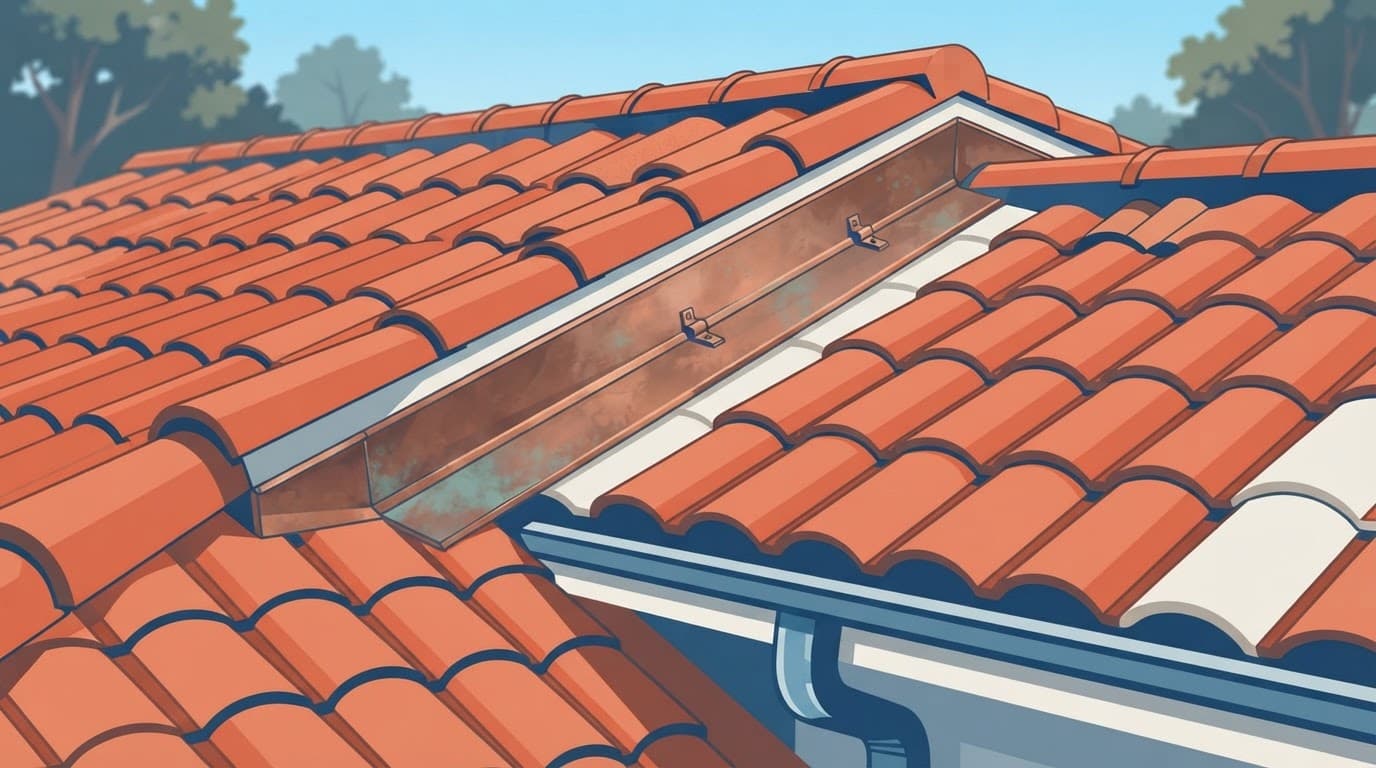
Zinc or copper strips can also help. Installed near the ridge, they release trace metals as rain passes over them. Rain carries those metals downslope, which can slow algae growth below the strip. These products don’t remove existing algae stains, and they won’t protect sections that rainwater cannot reach.
Specialty algae-resistant roof shingles with copper-containing granules can reduce staining compared with standard shingles. They don’t guarantee a spotless roof, especially in heavy shade or a damp coastal climate. If you are replacing an asphalt roof, this feature is reasonable to consider. If your existing tile roof is sound, cleaning, trimming vegetation, and correcting drainage are usually more practical than replacement.
When cleaning is not the right repair
Algae stains alone usually don’t mean you need a new roof. Cleaning is often worthwhile when the tiles are intact, the underlayment is protected, and the dark growth remains on the surface. Before treatment, check your roof warranty and the manufacturer’s guidance.
Roof replacement or repair deserves consideration when you find:
- Repeated leaks or water intrusion.
- Widespread cracked, broken, or badly shifted tiles.
- Severe concrete tile erosion or clay tile spalling.
- A failed coating that is peeling across large sections.
- Damaged flashing, underlayment, or roof penetrations.
- A roof that has reached the end of its expected service life and needs frequent repairs.
A pressure wash may suit some driveways and other hard surfaces, but it’s inappropriate for fragile tile. Roof tile is different. I prefer a soft wash with compatible chemistry, gentle rinsing, and a full inspection after the roof dries. If the tiles are fragile, the slope is difficult, or runoff could affect a pool or sensitive landscaping, professional roof washing is the safer choice.
For homeowners in Fort Myers, Naples, Bonita Springs, Port Charlotte, Sanibel Island, and nearby areas, I provide soft roof washing with careful property protection. You can Get a Quote for roof cleaning or other exterior maintenance services.
Frequently Asked Questions
Can I pressure wash black algae from a tile roof?
Pressure washing is not recommended for tile roofs because the force can crack tiles, remove coatings, damage weak joints, and drive water beneath the roof system. A low-pressure soft wash is safer and relies on compatible cleaning chemistry to loosen the growth.
Is bleach safe for cleaning black algae from tile roofs?
Bleach-based products can work quickly, but they are not automatically safe for every tile coating, painted finish, or glaze. Use only the dilution and application method approved for the roof material, and protect landscaping, metal, windows, and pool areas from runoff.
How long should a roof-cleaning solution dwell on tile?
Many tile roof treatments need about 10 to 15 minutes of dwell time, but the product label should control the process. Temperature, shade, tile porosity, algae thickness, and product strength can change the required time, and the solution should not be allowed to dry on the surface.
How can I keep black algae from returning?
Trim branches that create shade, remove leaves from roof valleys, and keep gutters clear so moisture drains properly. Zinc or copper strips near the ridge may also slow algae growth where rainwater can carry the released metals downslope.
When should I hire a professional for tile roof cleaning?
Professional cleaning is the safer choice when the roof is steep, fragile, difficult to access, or drains toward a pool or sensitive landscaping. A professional can also identify cracked tiles, failed coatings, damaged flashing, leaks, and other conditions that cleaning alone will not repair.
Conclusion
Black streaks on tile roofs usually signal surface growth, not immediate roof-system failure. The safest approach is a controlled soft wash with compatible chemistry, monitored dwell time, gentle rinsing, and runoff control.
Avoid high-pressure roof washing, untested chemical mixtures, and walking on wet tiles. Afterward, trim shade, improve drainage, and consider zinc or copper protection to slow regrowth. Careful treatment protects curb appeal, tile, landscaping, and the roof system beneath it.