
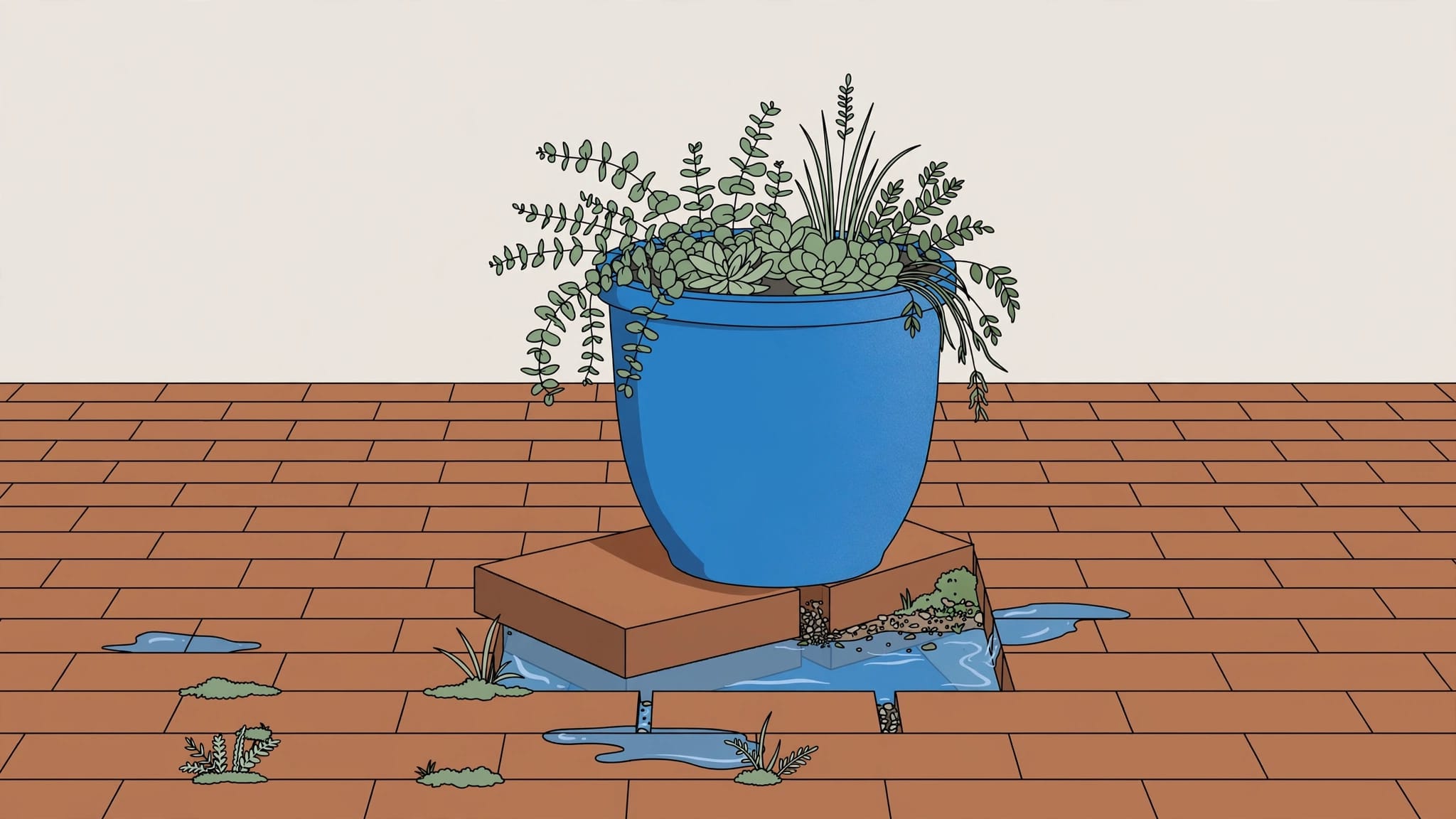
A large planter can make your patio look finished, but its weight may leave the brick pavers beneath it uneven. Heavy planters are most likely to cause trouble when a weak base, poor drainage, or a narrow planter bottom puts extra stress on one spot.
The warning signs are usually small at first: a low brick, an open joint, or water that lingers after rain. I’d rather catch those signs early than wait until a planter has to be moved for a larger repair.
How heavy planters damage brick patio pavers
Brick patio pavers work together as a surface. The pavers, joint material, bedding layer, and base all need to stay firm. A planter places a steady load on that system, often in the same spot for years.
Concentrated weight can expose weak support
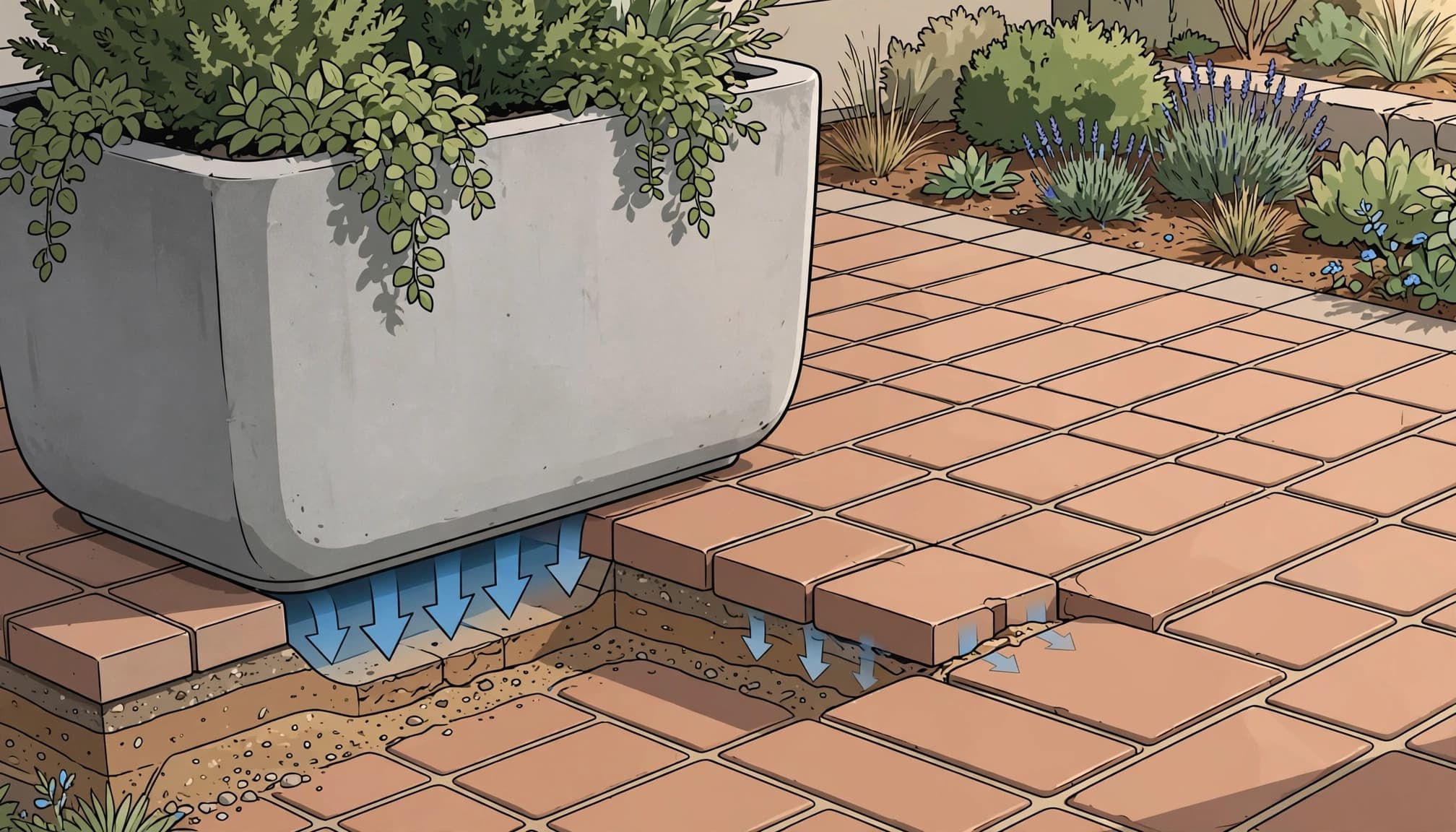
A broad, flat planter bottom spreads weight better than one resting on a few small feet. If a paver sits over soft or missing support, it may settle before the surrounding pavers. The planter can then tilt, placing even more weight on one side.
A sound patio should support normal outdoor use, but there’s no single safe planter weight for every installation. Paver thickness, base preparation, soil conditions, and contact area all matter. The CMHA application guide for interlocking pavements explains how construction and drainage affect performance.
Movement can spread past the planter
One settled paver may open the joints beside it. As nearby pavers lose their tight fit, you may notice rocking or a small dip that collects water. That doesn’t mean heavy planters caused every part of the problem. It means the area needs a closer look before you reset a brick and put the weight back.
The filled planter matters more than the empty pot
It’s easy to compare empty plant pots at a home and garden store and overlook what goes inside them. Potting mix, a mature plant, and water all add weight. Wet soil can make a planter harder to move than you expect.
Material changes the starting weight
Concrete planters and stone planters are substantial before you fill them. Terracotta planters also add weight and can be vulnerable to damage in freezing conditions. Ficonstone planters, fiber stone, and resin and fiberglass containers may start lighter, but the filled weight still matters.
I wouldn’t choose by material name alone. Check actual weight, base shape, and outdoor-use guidance for fluted planters or commercial outdoor planters. Indoor planters may not be rated for patio use. A tall, narrow planter may be lighter than a wide concrete one but less stable in wind.
Size changes where the load lands
A statement planter needs room around it, not simply enough space to fit its rim. Measure the base that will touch the patio, then consider how many sound pavers will support its filled weight. Check that it sits flat across several pavers instead of bearing on one uneven edge.
Before buying extra large outdoor planters, I’d also check the route to their final position. A pot that can’t be moved safely for cleaning or repairs becomes a maintenance problem.
Water can do more damage than weight alone
Most outdoor plant pots need drainage holes to protect the plants. On a patio, runoff needs somewhere to go. Repeated drips beneath a pot can leave dark marks, keep joints damp, and soften or wash out support.
Check the water around the base
A saucer can catch runoff, but it must be emptied. Otherwise, water may sit against the planter and the brick. Irrigation heads, downspouts, nearby slopes, or an expandable hose can repeatedly soak the base.
When I see a low spot under a planter, I follow the water first. Washed-out joint sand or a soft base won’t become firm just because the planter is moved. The Brick Industry Association’s clay paver guidance also shows why the paving system matters: clay pavers set in mortar are built differently from pavers laid over bedding sand.
Watch for stains as well as settlement
Wet leaves, fertilizer, potting mix, and metal stands can mark the surface. A stain doesn’t prove the base has failed, but it deserves attention. Lift smaller pots when you clean so residue doesn’t stay hidden for months.
Tall outdoor planters can make an existing lean more noticeable, even when the pot looks level. Check the pavers around its base, not only the pot itself.
Signs the patio needs a closer look
Move the planter if you can do so safely, then compare the covered area with the surrounding patio. I look for several clues together, especially where heavy garden planters sit, rather than blaming one stain or uneven brick:
- A paver rocks underfoot or sits lower than its neighbors.
- Joints around the planter have widened or lost sand.
- Water stays in the same spot after the rest of the patio dries, especially in a low spot beneath heavy stone planters.
- Tall outdoor planters may lean, or nearby pavers may crack.
Heavy planters aren’t the only possible cause. Roots can lift pavers, while runoff can remove support below them. Settling near an older excavation or a loose edge restraint can also move a section of patio. For a broader inspection, use this checklist for paver drainage and joint sand.
Choosing large outdoor planters for brick patios
You can keep the look you want without adding more weight than the patio can support. Unlike indoor planters, outdoor containers must handle weather and a filled load, so start with the finished size, material, and support.
Pick a material you can maintain
Fiberglass, resin, and lightweight composite can create large outdoor planters with less empty weight than concrete. Fiber stone is another material to compare. Concrete or stone may suit a patio with dependable support, but plan for moving the filled pot later. Choose an organic planter finish or fluted planters for their appearance, not as protection against settlement. No material makes poor drainage safe.
For a windy location, don’t solve stability by placing tall outdoor planters over a known low spot. Choose a suitable container and location together, considering wind, foot traffic, and the pavers’ support. Landscape architects can help plan placement. In public spaces, position commercial outdoor planters and architectural commercial planters carefully where people walk.
Keep the planting practical
Choose garden planters sized for the plant’s roots and expected growth. For boxwood, include the mature plant and its soil when estimating the filled load. Confirm that drainage holes are open before adding soil, since decorative rocks add weight without creating a proper drainage path.
If a large planter is meant to hide a hose or fill an empty patio corner, leave enough access for cleaning and water hose storage. You should be able to inspect the pavers without dismantling the whole space.
How to protect pavers under a heavy planter
The best protection starts before you fill the planter. Unlike indoor planters, patio plant pots need firm, even support. Set the planter on sound pavers, away from a low area, loose border, or downspout outlet.
Spread the load without trapping water
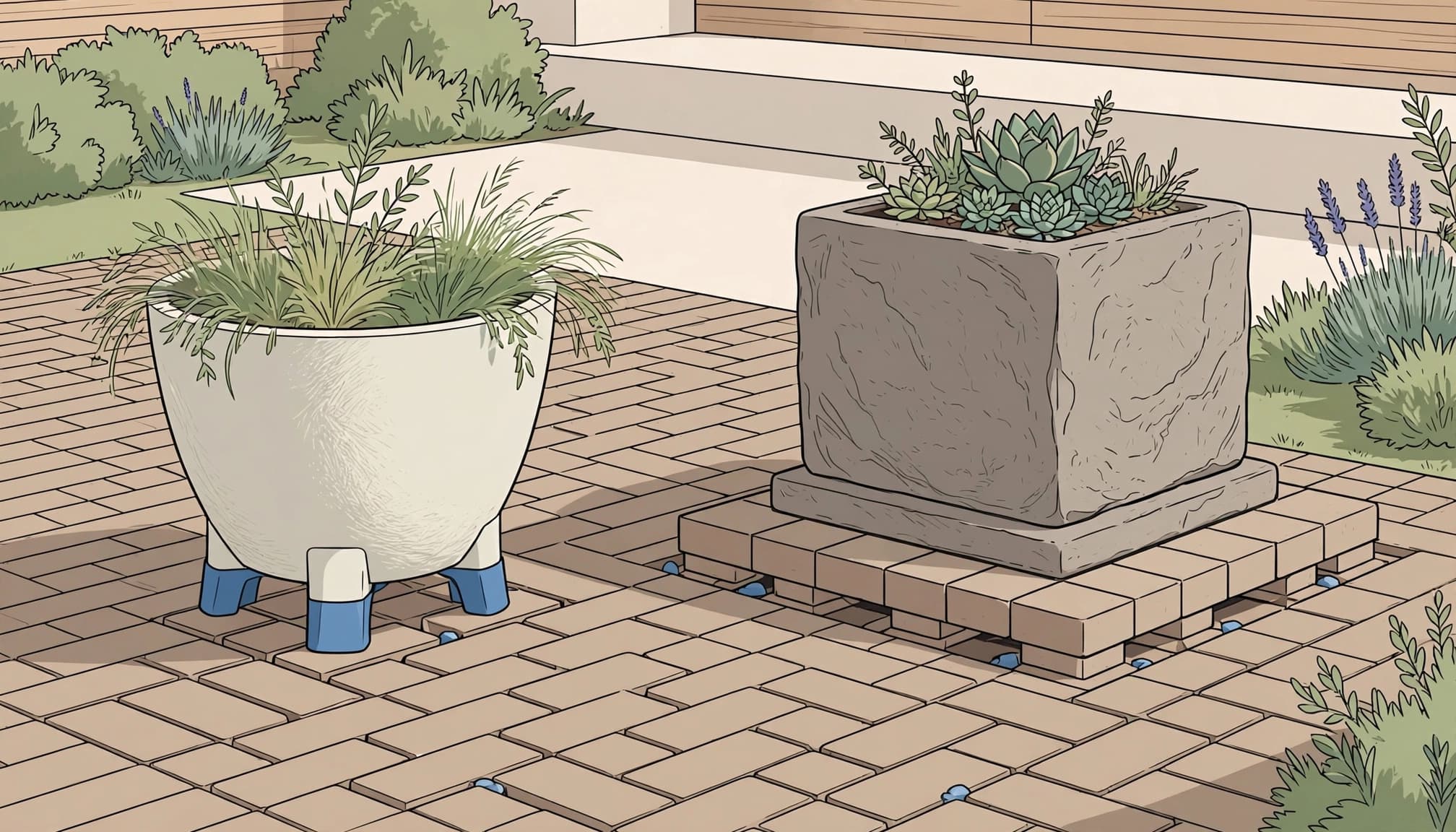
Choose a broad, stable base, especially for tall outdoor planters, fluted planters, or heavy stone planters. A protective platform should be rigid enough to spread the load across sound pavers while leaving water a path out. Small feet can improve airflow, but they also concentrate weight. Check that their contact points are wide and stable.
Avoid a pad that holds moisture against the brick. Lift and inspect it periodically, especially after rainy weather. Installation methods differ, as Masonry Magazine’s paver installation guide explains, so don’t assume a patio over a slab behaves like one over a compacted base.
Move the pot without scraping the brick
Don’t drag a filled planter across the patio. Empty it when practical, or use moving equipment rated for its weight. Protect the travel path with suitable boards so wheels and hard edges don’t catch joints.
Once the pot is in place, check that it sits steady. If it rocks, fix the support problem rather than wedging material under one corner.
Keep the patio clean without weakening its joints
Sweeping away soil and leaves makes it easier to spot early damage. Lift smaller plant pots before cleaning around them, and rinse fresh plant residue before it leaves a stubborn mark. These brick paver maintenance tips are a useful starting point for routine home and garden care.
Pressure washing needs care around a planter stain. A narrow, forceful spray can remove joint sand or mark the brick face. I’d start with the least aggressive method that suits the stain, then check the joints after cleaning. If roof cleaning or a soft wash sends runoff across the patio, move smaller pots out of the flow. Use an expandable hose to rinse the area as appropriate.
Sealing can help with surface protection and future cleanup once the patio is clean, dry, and stable. It won’t lift a sunken paver or rebuild a weak base. The same order matters with driveway sealing: repair and drainage work come before a finishing coat.
Repair the cause before resetting the pavers
If several pavers move together, the problem may be below the surface. Before resetting them, check whether water washed material away, roots lifted a section, or old backfill settled. Also consider concentrated loads, such as stone planters, and check the nearby drain, downspout, planting bed, and patio edge.
A lasting repair may require lifting the affected pavers, removing soft material, rebuilding and compacting the base, then resetting the surface and restoring the joints. Adding loose sand to a deep cavity can hide the dip for a short time, but it won’t replace missing support.
For Southwest Florida properties, brick paver repair, cleaning, and sealing may all be part of the maintenance plan. They still need to happen in the right order. For a free quote on sealing or pressure cleaning once the patio is ready, Get a Quote.
Key Takeaways
- A large container can expose weak support, especially when its weight rests on a small area.
- A filled pot weighs more than its empty container. Check the base shape, not just the material.
- Standing water, open joints, and rocking pavers call for an inspection before cleaning or sealing.
- Choose a stable location, maintain drainage, and repair the base if pavers have settled.
Frequently Asked Questions
Will every heavy planter damage brick patio pavers?
No. A properly supported patio may remain level beneath a large planter. Risk rises when the base is already weak, water stays in the area, or a narrow bottom puts most of the weight on a few pavers. Check the spot over time rather than relying on a weight limit that may not apply to your patio.
Are lightweight composite planters a better choice?
They can be. Fiberglass, resin, and similar composites reduce the container’s empty weight. You still need to account for wet soil, plant growth, wind stability, and drainage. A lighter pot won’t protect pavers if it leaks constantly onto a low spot.
Can sealing fix pavers that sank beneath a planter?
No. Sealer protects the surface; it doesn’t restore missing base material. Move the planter safely, find out why the pavers settled, and complete the repair first. Clean and seal the patio only after the area is stable and dry.
Protect the Patio Beneath the Planter
Tall outdoor planters should sit on firm, even support, not leave a low spot behind. Let water drain, and check nearby brick for movement during regular cleaning.
If the pavers rock or hold water, repair the cause first. That gives your planter a stable place to stand and keeps the patio easier to maintain.