
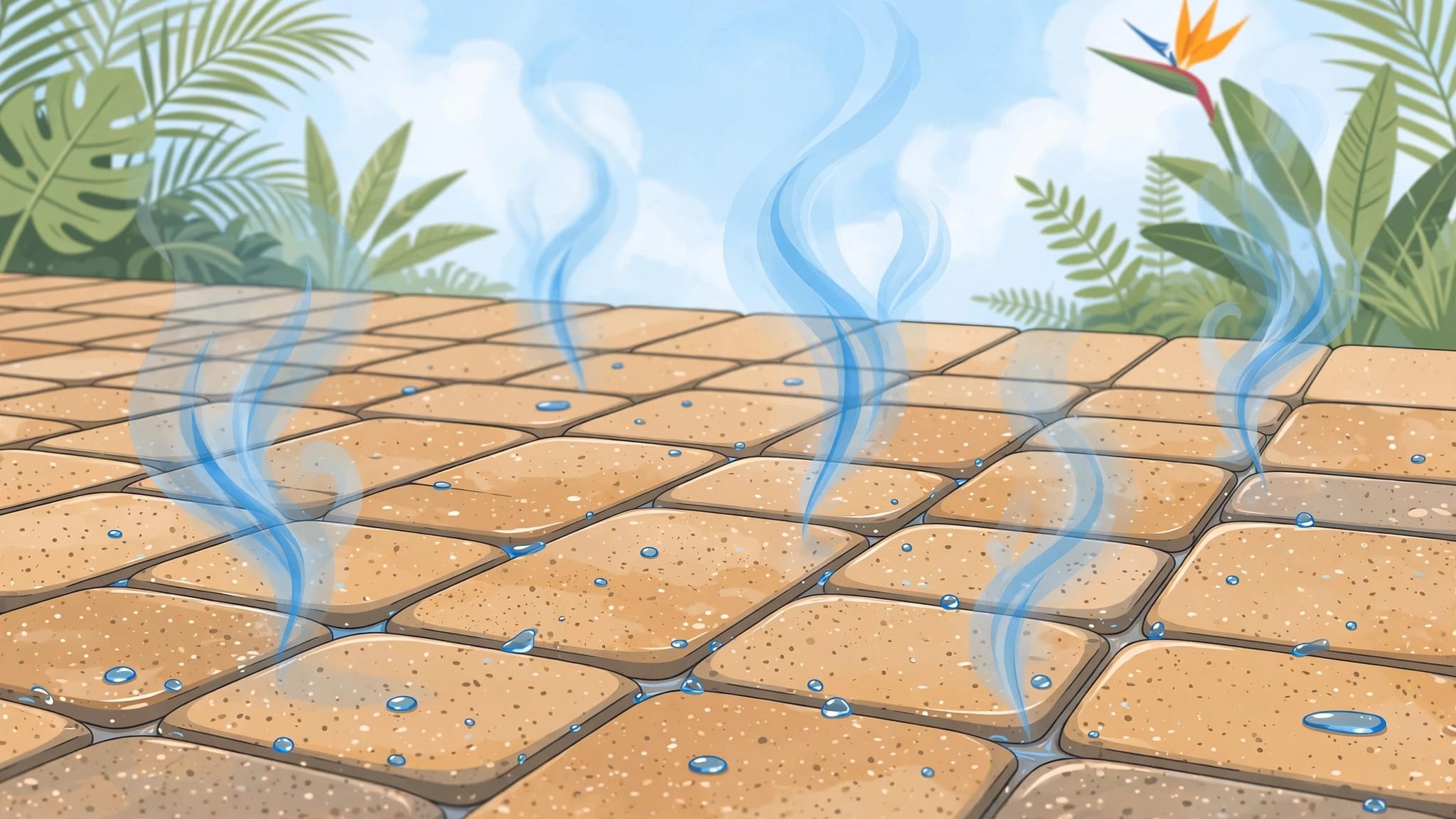
Your pavers can look dry on top while moisture remains in the joints and below the surface. In Florida, that matters when you’re choosing a breathable paver sealer for a driveway, patio, or pool deck. A rushed application can leave you with a cloudy finish instead of the clean, protected look you wanted.
I look at the pavers, the existing coating, and the weather before I recommend a finish. Breathability helps, but preparation still decides how well the job turns out.
Key Takeaways
- A breathable sealer allows some water vapor to pass through the treated surface. That matters where rain, irrigation, and humidity keep pavers damp.
- Water-based, solvent-based, and penetrating products can produce different finishes. The label matters more than the category name alone.
- White haze needs a proper diagnosis before another coat goes on. Moisture, residue, excess product, or an old coating may be involved.
- Clean pavers, stable joints, suitable drying conditions, and even application give the sealer its best chance to perform.
What a Breathable Paver Sealer Does
It allows vapor to leave the pavers
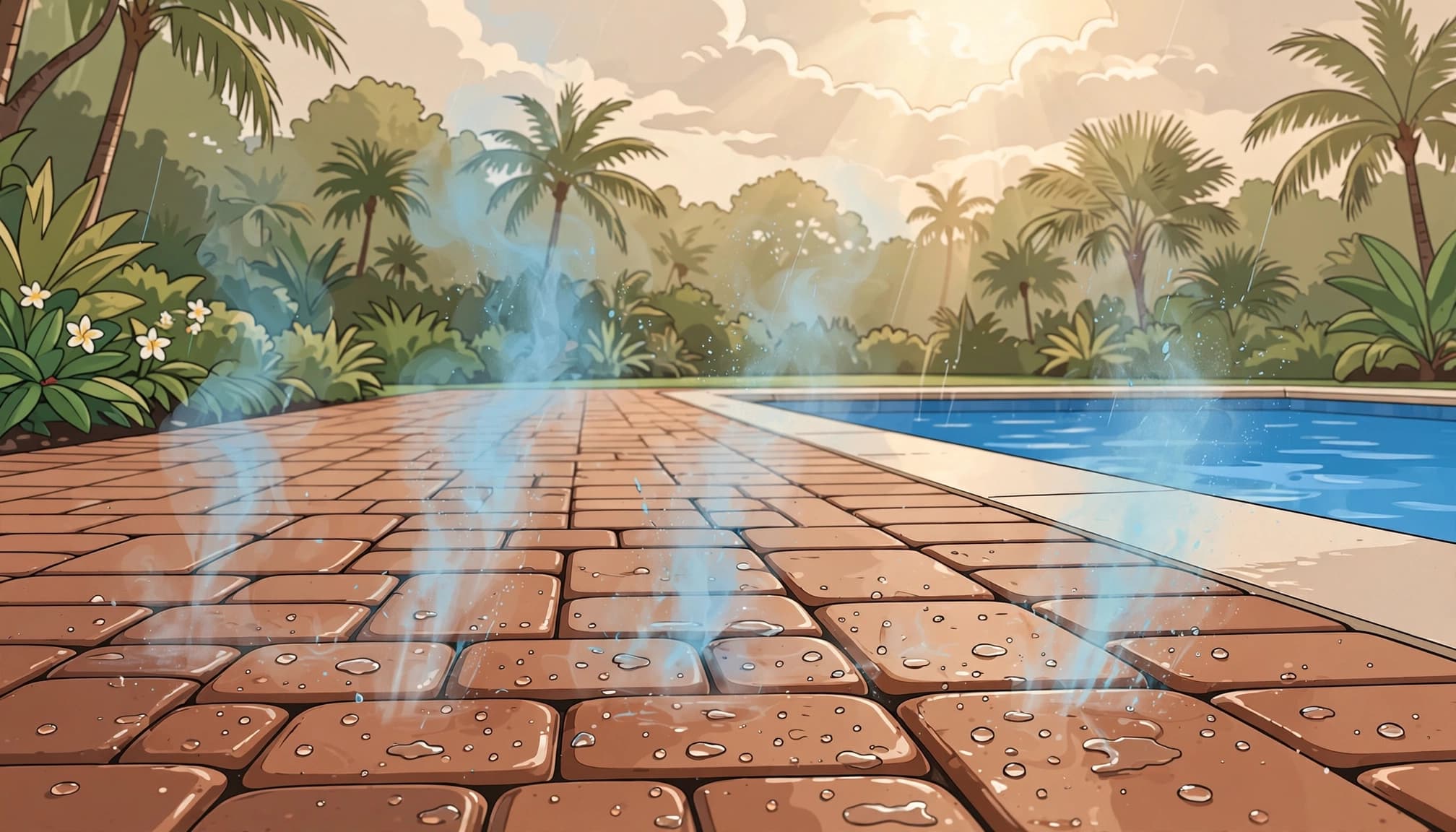
Breathable means a treated surface can release water vapor. The Brick Industry Association describes water-vapor transmission in brickwork as the rate and amount of moisture that evaporates through the exposed face. Differences in vapor pressure help drive that movement.
For your pavers, that distinction matters after rain or irrigation. Moisture vapor can move through the surface, while water may still enter through joints, edges, or the base. A coating with suitable vapor transmission gives moisture a way to leave. A water repellent finish can reduce absorption, but Breathable does not mean waterproof, and no sealer repairs poor drainage.
It protects without ignoring Florida conditions
A suitable concrete paver sealer can reduce absorption and make routine cleaning easier when used as directed. Some formulas enhance color on decorative surfaces or help stabilize joint sand. Results depend on the product and paver material.
I pay close attention to shaded patios and covered lanais. They may avoid direct rain but stay damp longer after washing or morning dew. A breathable paver sealer is a practical choice to consider there, provided it also suits the material, traffic, and finish you want.
Why Pavers Turn White or Peel
A white area isn’t automatically a sign that you bought the wrong sealer or have a sealer failure. I check what the mark looks like, when it appeared, and whether an old coating is already present.
Moisture can interfere with a surface film
A topical sealer forms a surface film near the top of the paver. If moisture remains below it, the coating may develop white haze or lose its bond. Rain arriving before the coating cures can cause trouble, too. Heavy application and incompatible layers are other possible reasons for haze or peeling.
Waterproofing guidance from Hoffmann Architects also discusses vapor transmission through coatings. I use breathability as one check when selecting a product, then give just as much attention to drying and application thickness.
The white mark may be something else
A powdery deposit on the surface may be efflorescence, while a milky look within a coating is different. Efflorescence removal starts with identifying and addressing the deposit, not simply covering it. Peeling can result from moisture, excess product, or incompatible layers. Dirt or cleaner residue left before sealing can also affect the appearance.
A fresh coat can cover a white mark for a short time while leaving the cause untouched.
I wouldn’t seal over a cloudy or peeling area and hope it clears. Let the pavers dry, identify whether the problem sits on or within the coating, and test any correction in a small area. When an old finish is failing, paver restoration and sealing may require removing it before the surface can be resealed properly.
Which Sealer Type Fits Your Finish?
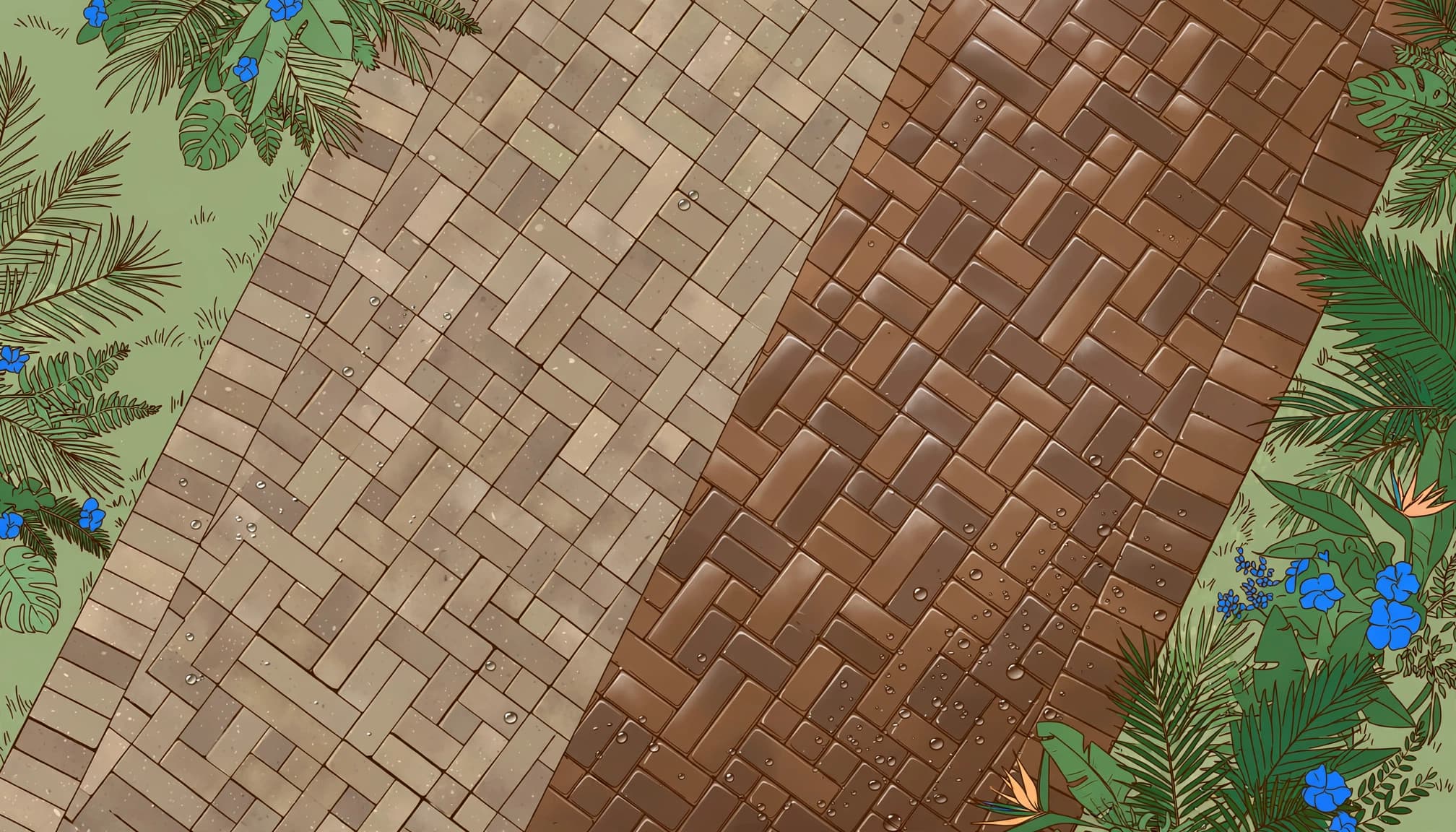
The first question I ask is simple: Do you want the pavers to look much like they do now, or do you want richer color? Then I check whether the product suits the surface, including any previous concrete sealing or existing finish.
Water-based and solvent-based acrylics
Water based paver sealers often have less odor and easier cleanup. Solvent based acrylic sealers may give brick pavers stronger color. Neither category is automatically breathable or suitable, so check traction, compatibility, and drying requirements.
You’ll see names such as Super Seal 25, Super Seal 30, MasonrySaver paver sealer, and Surebond SB-6000 when comparing products. I wouldn’t choose among them by name alone. For a brick paver sealer or concrete paver sealer, check the current technical sheet. Confirm material compatibility, water-vapor transmission, application limits, and approved use over an existing finish.
Solvent products may also be subject to low VOC laws. Check the current label and local requirements before purchasing. VOCs are chemicals that can be released as gases, as explained in the EPA’s information on volatile organic compounds.
Penetrating protection or a visible coating
Penetrating sealers are worth considering when you want a natural appearance without a noticeable surface film. Siloxa-Tek 8510 is one product name you may encounter in that category; verify its current instructions and suitability for your pavers before using it. A topical acrylic may provide visible color enhancement and joint stabilization if its label calls for that use.
Here is how I separate the choices:
| Your priority | Type to consider | Check before buying |
|---|---|---|
| Natural-looking pavers | Compatible penetrating sealer | Material and finish on a test area |
| Richer brick color | Color-enhancing topical sealer | Breathability and existing coating |
| More traction around water | Suitable low-sheen finish | Product guidance for wet surfaces |
A wet look paver sealer can deepen the paver color without creating a high gloss finish. Wet look describes color enhancement; gloss describes shine. I always suggest a test area, especially on a pool deck where wet-foot traction matters.
Preparation Matters as Much as the Product
A breathable paver sealer still needs a clean, stable surface. Sealer won’t hold loose pavers in place or fix water that repeatedly pools in one spot.
Inspect and clean before sealing
I follow a practical order so problems don’t get covered up:
- Check for loose pavers, low areas, worn joints, and signs of an old coating.
- Remove stains and organic growth using a method appropriate for the surface.
- Rinse away cleaning residue and inspect the pavers again after they dry.
- Restore joint material where needed, following its installation and curing instructions. Joint sand stabilization depends on the selected product and proper preparation, not breathability alone.
- Test the selected sealer on a small area before coating the full surface.
Careful brick paver cleaning helps remove grime that could affect the finish. Choose cleaning methods suited to the paver material, especially for decorative surfaces. Control pressure around joints and paver edges, since too much force can create another repair job. I also schedule roof cleaning or soft wash work before paver sealing, so runoff doesn’t land on a fresh finish.
Give the whole surface time to dry
Before paver sealing or concrete sealing, a sunny afternoon doesn’t tell you what’s happening inside a shaded joint. After cleaning or adding joint sand, I check the forecast, the joints, and the least sunny part of the project. The manufacturer’s drying and curing instructions set the schedule.
I don’t start when rain is expected before the product’s required dry period ends. Sprinklers, pool splash, morning dew, and early foot traffic deserve attention as well. Apply the specified amount in even coats. Puddles and thick areas don’t add reliable protection.
Match the Sealer to Each Outdoor Area
I wouldn’t use one finish for every part of your property simply because the pavers match. Each area sees different wear.
A driveway is one of your high traffic areas, exposed to vehicles, oil spots, and runoff. For driveway sealing, I check the product’s traffic instructions and whether the existing finish can accept another coat. A patio sees food spills, furniture, shade, and irrigation. On a pool deck, wet-foot traction comes first. A wet look paver sealer may offer color enhancement, but a glossy appearance isn’t worth compromising traction.
Concrete pavers, brick pavers, and natural stone can absorb products differently. For concrete sealing, check whether a concrete paver sealer or brick paver sealer is labeled for your material. A small test area on decorative surfaces shows the color and sheen you can expect on your surface. If joint sand stabilization is important, ask whether the selected product is designed to provide it. Don’t assume a penetrating sealer will lock joints simply because it repels water.
For homeowners comparing finishes, professional paver sealing services can help connect the product choice to the condition of the driveway, patio, or pool deck.
Compare Quotes and Plan for Maintenance
I prefer a quote that explains the work before the first coat goes down. It should identify the area, cleaning needs, joint repairs, any old-sealer removal, the proposed brick paver sealer, and the expected finish. Ask how weather delays and access will be handled.
To compare costs, divide each complete quote by the square footage being treated. Then check what the price includes. For concrete sealing, as with pavers, a lower price may leave out preparation or old-coating removal, so compare only quotes with matching scopes. Product coverage varies by paver porosity and application directions, so don’t base a material estimate on another surface.
There isn’t one reliable resealing date for every Florida driveway. Sun, traffic, shade, cleaning habits, and the original application all affect wear. I recommend checking for patchy color, stains, and worn areas before choosing a maintenance coat. An existing coating still needs a compatibility check.
If you’re ready for an assessment, Get a Quote for sealing or pressure cleaning. Tell us about any white haze or peeling when you reach out, so the surface can be evaluated before work is planned.
Frequently Asked Questions
Can a breathable sealer stop all moisture problems?
No sealer can correct standing water, poor drainage, or a damp base. Breathability describes how vapor passes through a treated surface. White haze can have several causes, so diagnose the problem before recoating. I still inspect the joints and drainage, then wait for suitable conditions before applying a product.
Should a Florida patio use water-based or solvent-based sealer?
I start with the finish you want and the coating already on the patio. Water-based products can offer easier cleanup; solvent-based options may suit a richer color preference. Penetrating sealers may also be an option, but check that they’re suitable for your pavers and desired finish. Any product needs to be compatible with your pavers and applied within its stated weather limits. Don’t put a new formula over an unknown old coating without checking compatibility.
How do I tell wet look from high gloss?
A wet look paver sealer can make pavers appear darker or more color-rich when dry, while high gloss describes a shiny surface. Products can deliver different combinations of the two. A test patch is the best way to judge the result on your own pavers.
Can I seal pavers during Florida’s rainy season?
You can seal when the surface and forecast meet the product’s instructions. Afternoon storms, damp joints, and morning dew can shorten the available work window. I would postpone the job rather than put a coating on pavers that haven’t dried sufficiently.
Protect the Pavers Before Problems Start
The right finish begins with the right surface assessment. A breathable paver sealer can help moisture vapor escape, but it still needs clean pavers, stable joints, and time to cure.
If your pavers already have white haze or peeling, find out why before adding another coat. Good preparation protects the result you expect to see on your Florida property.