
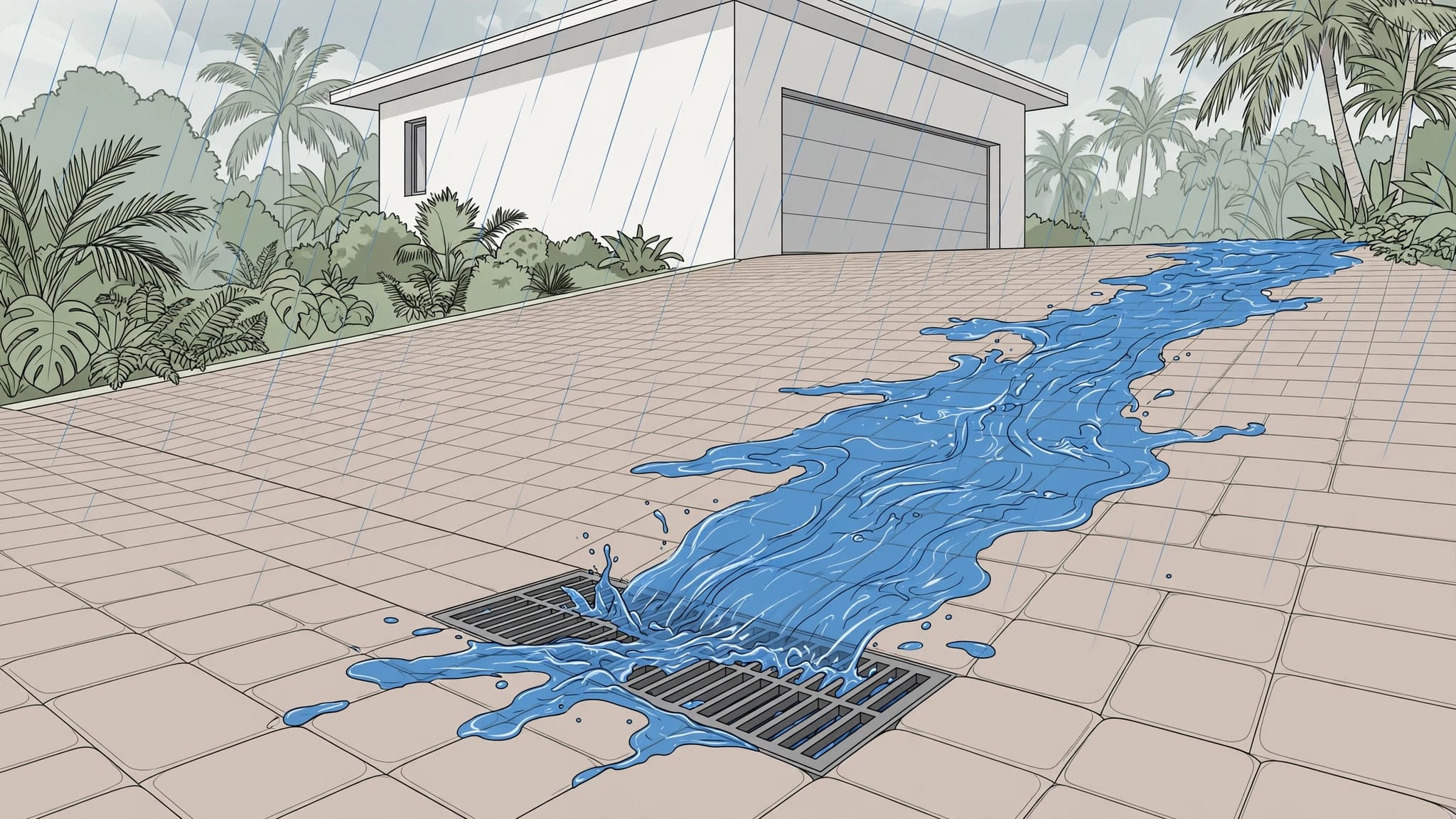
A paver driveway can look clean and level until a Florida storm sends water toward your garage. When that happens, a channel drain can help with drainage for pavers, but it’s only a sound drainage solution if the water has somewhere safe to go.
I look at the slope, the outlet, and the condition of the pavers before choosing a drain. A grate alone won’t fix a low spot or a failing base. Start by following the water during the next heavy rain.
Key Takeaways
- For effective drainage for pavers, place a channel where it catches runoff before water reaches the garage, foundation, or another problem area.
- Choose the channel and grate for the driveway’s actual vehicle traffic, not appearance alone.
- Plan the outlet first. A drain that empties beside the paver base can create another problem.
- Repair settled pavers and washed-out joints before cleaning or sealing the driveway.
Find Out Where the Driveway Water Goes
The Florida Department of Environmental Protection’s stormwater program describes runoff as rainwater flowing over land and hard surfaces. Florida’s heavy rain and soil conditions affect drainage for pavers, while surface drainage follows the driveway grade. Roof discharge or a nearby walkway can add to the flow and increase its speed.
Watch the driveway during rain
I check the garage entrance, the road edge, and the paver field’s edge restraints. Look for water pooling after a storm, sand collecting at the bottom of a slope, or water crossing the driveway toward the house. These signs may point to soil erosion or a drainage issue.
Pay attention to downspouts and overflowing gutters. A channel across the driveway may catch surface runoff, but a downspout that repeatedly empties onto a weak paver edge needs its own correction. Washed-out joints and paver shifting can mean water is reaching the support below, where subsurface drainage may also need attention.
A channel may suit concentrated flow across the driveway. Depending on the flow pattern, French drains or catch basins may be components of a broader plan, not automatic substitutes for a channel.
Measure the grade before changing it
A commonly used drainage benchmark is about a 2% slope away from buildings, unless the approved plan calls for something different. That works out to nearly 2 inches of drop over 8 feet. Your driveway may need another layout because of its entrance, sidewalk, or street elevation.
I wouldn’t treat a puddle as the whole picture when planning drainage for pavers. A shallow dip caused by settlement may need the pavers and base material rebuilt. Otherwise, water can collect again beside the new channel.
Clay soil and sandy soil behave differently, so whether geotextile fabric belongs beneath the base depends on site conditions.
Where Paver Drainage Channels Work Best
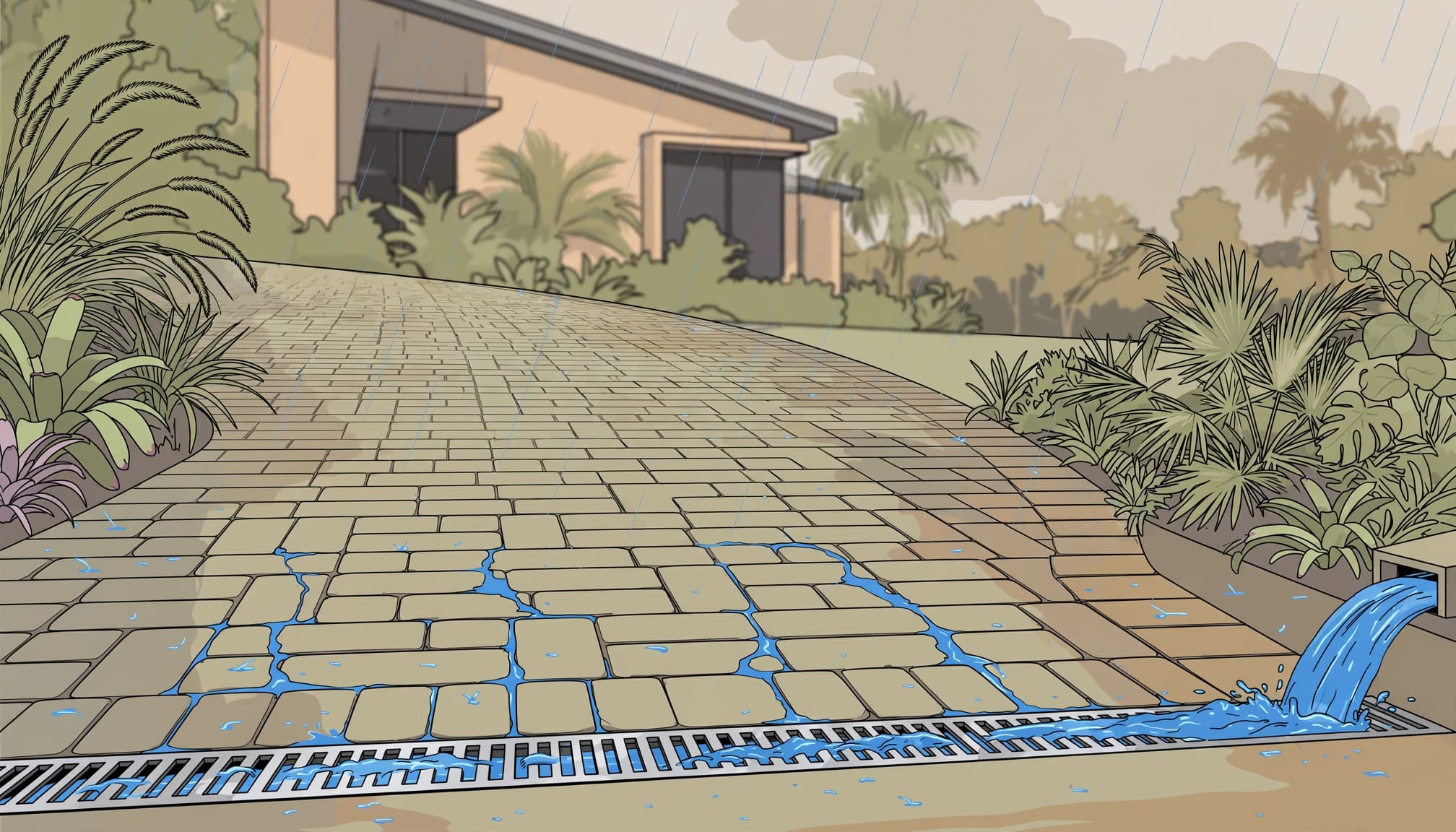
Channel drains collect surface drainage where it crosses the driveway, then carry it through a pipe to a planned discharge point. For effective drainage for pavers, the inlet must intersect the actual runoff path. French drains and catch basins suit other site conditions and aren’t automatic additions.
Alt text: paver drainage channels intercept runoff across a Florida driveway.
Across the driveway before the garage
If the driveway slopes toward the house, a channel across the approach may intercept water before it reaches the garage door. Check where the water comes from and whether it can reach the full length of the grate. A channel that stops short of the flow path leaves water free to go around it.
The grate should meet the finished pavers and edge restraints cleanly. An abrupt raised edge can catch tires or become a trip point.
At a low edge or driveway entrance
Some driveways drain toward one side or collect water where they meet a sidewalk or road apron. A channel can work at that low point if the outlet has a suitable route. Don’t assume the street gutter is an approved place to connect.
If several areas pond independently, one channel may not solve them all. Check for settlement, blocked swales, and changes to nearby landscaping before adding more inlets.
Choose a Channel and Grate That Fit the Traffic
Channel options come in different widths, depths, and load ratings. The right choice depends on how much water reaches the channel and whether vehicle tires cross the grate. For drainage for pavers, channel drains that look tidy may still be too small for the flow or traffic.
Check the complete load rating
NDS offers several channel styles. These examples show why I check the specific channel and grate combination, rather than choosing by width alone.
| NDS channel | Listed width | Listed rating |
|---|---|---|
| Mini Channel | 2¾ inches | Class B |
| Spee-D Channel | 4 inches | Class A |
| Pro Series | 3, 5, 8, or 12 inches | Varies by profile and grate |
Spee-D is commonly presented as a residential driveway option, yet its listed Class A rating shouldn’t be treated as approval for every wheel path. Ask the supplier or installer to confirm the manufacturer’s rating for your exact assembly and traffic, including delivery vehicles if they use the driveway. No single rating is a statewide rule for every Florida home.
Size the opening for the water path
A wider channel can accept more sheet flow, but the grate, channel depth, pipe, slope, and outlet all affect how the drainage system performs. Measure the area draining toward the inlet, including any roof water that reaches the driveway. Ask the installer how the proposed system handles that flow.
If you’re considering permeable pavers, remember that they drain through open joints into a prepared base. They aren’t interchangeable with a conventional driveway and channel drains. A permeable base system may require geotextile fabric and edge restraints, while subsurface drainage can address water beneath the surface. Our guide to maintenance for permeable pavers explains why keeping those joints open matters.
Decide Where the Collected Water Will Discharge
When planning drainage for pavers, I ask about the outlet before choosing a grate. Even an effective drainage solution can cause trouble if its pipe releases runoff beside the house, under the driveway edge, or onto a neighbor’s property.
Follow the pipe to a suitable destination
The inlet, drainage pipes, and approved discharge point should form a drainage system with a clear, maintainable route that fits the property’s grading. Whether you choose channel drains, French drains, or catch basins, collection still needs an approved, workable outlet.
A solid pipe may carry water to an approved drainage area, depending on the site and local rules. It shouldn’t simply disappear beneath fresh landscaping without a known discharge point.
The Southwest Florida Water Management District explains how neighborhood stormwater systems help manage runoff and support stormwater management. Existing swales and drainage features are part of the property’s water management plan. Blocking or bypassing them can move the problem instead of fixing it.
Check permits before work near the road
Rules vary by city, county, road authority, HOA, and the work proposed. In Lee County, driveway connections and changes to front-yard drainage can raise different questions than a simple paver repair. Work in a county-maintained right-of-way or easement may need approval.
Ask the local authority before changing a swale, culvert, sidewalk crossing, or road connection. The FDOT Drainage Manual covers state transportation projects; it isn’t a substitute for your residential permit requirements.
Check the Installation Beneath the Grate
A good-looking grate doesn’t show whether the drain will stay put when cars cross it. For drainage for pavers, the channel support, connections, and surrounding pavers matter as much as the visible finish.
Support the channel and preserve the grade
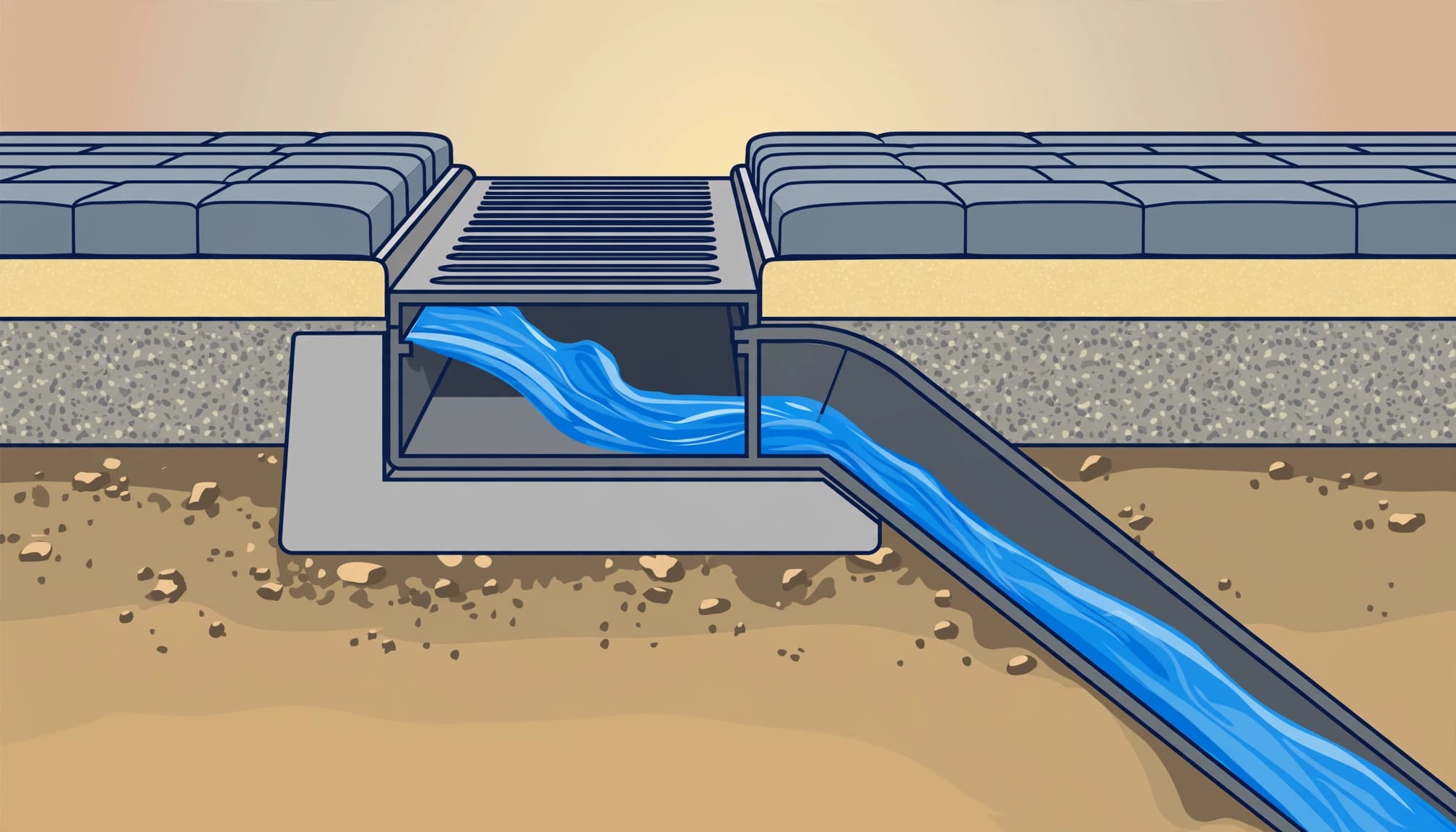
Ask which installation methods the installer will use to excavate, support, and secure the channel. They should follow the manufacturer’s instructions and account for vehicle loads. An unsupported channel can shift into the bedding material and compromise the assembly’s structural integrity. Where specified, geotextile fabric separates the supporting layer from native soil. A designed gravel base may be part of the support, depending on site conditions such as clay soil.
The finished grate should sit properly against the pavers, with water moving into it rather than collecting along its edge. The outlet pipe also needs a suitable fall to carry water through the drainage pipes as part of the subsurface drainage plan. Ask the installer to show the planned elevations before excavation, especially near a flat road apron or garage threshold. A sloped installation can guide water toward the outlet, but it can’t overcome an outlet that sits too high.
Restore the pavers around the drain
Cut pavers should have firm support and neat joints against the channel. If the surrounding pavers have settled, the installer may need to lift them and rebuild weak base material before resetting the surface. Adding sand over a soft spot won’t make it stable. If geotextile fabric is part of the specified assembly, confirm it stays in place during repairs.
Check that any removed edge restraints are restored. Keep the grate removable so you can reach the channel for cleaning. These details help prevent a new strip of loose pavers from developing beside an otherwise solid drain.
Keep the Drain Clear After Installation
Good drainage for pavers depends on keeping the grate and channel clear. Florida storms bring leaves, mulch, grit, and joint sand toward the lowest part of a driveway, where they can block surface drainage.
Once that material covers the grate or builds up in the channel, water pooling can return in the same spot you meant to keep dry.
Inspect after heavy rain
I recommend a quick look after major storms and a more complete driveway inspection twice a year. Remove leaves from the grate, check inside the channel when it’s safe to do so, inspect edge restraints, and watch the outlet during rain. If water backs up despite a clean inlet, the pipe or discharge area may need attention to prevent water damage.
Our Florida paver maintenance checklist covers the joints, edges, and surface changes worth checking at the same time, including around permeable pavers.
Clean and seal in the right order
Careless pressure washing can drive joint sand into the grate and leave pavers less stable. If you schedule roof cleaning with a soft wash, watch where roof runoff travels and follow the cleaner’s directions for handling rinse water around the drain.
Address drainage problems and missing joint material before driveway cleaning or sealing. Sealer can help protect a properly prepared surface, but it won’t correct a low spot. If sand keeps collecting in the channel, check why paver joint sand washes away before refilling the joints.
Ask for a Quote That Covers the Whole Job
A written scope for drainage for pavers should identify the channel, grate, and traffic rating. It should also cover the outlet location, pipe route, paver removal, base repairs, and cleanup. The scope should say who checks approvals and how the installer will keep the drain accessible.
Compare the proposed work with our Florida paver sealing quote checklist. It can help you separate drainage repairs from cleaning and protection. Once the water path is corrected, Get a Quote for paver sealing or pressure-cleaning services.
Frequently Asked Questions
Will a channel drain fix a driveway that slopes toward the garage?
It may catch water before it reaches the door. Channel drains help only if they cross the flow path and have a workable outlet. For drainage for pavers, I would also check for settled pavers and roof runoff. Those problems can remain after the grate is installed.
Can the drain empty into a front-yard swale?
That depends on the approved drainage plan and local rules. Don’t assume a swale, street gutter, or neighboring low area is available for discharge. Confirm the route before choosing the channel location.
Are permeable pavers a replacement for a channel drain?
Sometimes, permeable pavers reduce surface runoff, but they require open joints, a suitable base, and ongoing maintenance. Site conditions may still call for an underdrain or another outlet. An installer should assess whether permeable pavers suit the soil, water table, and driveway layout.
Should pavers be sealed before a drain is installed?
No. Complete excavation, base repairs, paver resetting, and joint work first. Then clean and seal the stable surface if the paver system and conditions allow it.
Choose the Water Path Before the Grate
The next storm will show whether water can leave your driveway without reaching the garage or washing out the pavers. Start with that route, then choose a channel rated for the traffic and installed on firm support to improve drainage for pavers.
A clean grate is a nice finish. Reliable drainage comes from the grade, the outlet, and the work beneath it.