
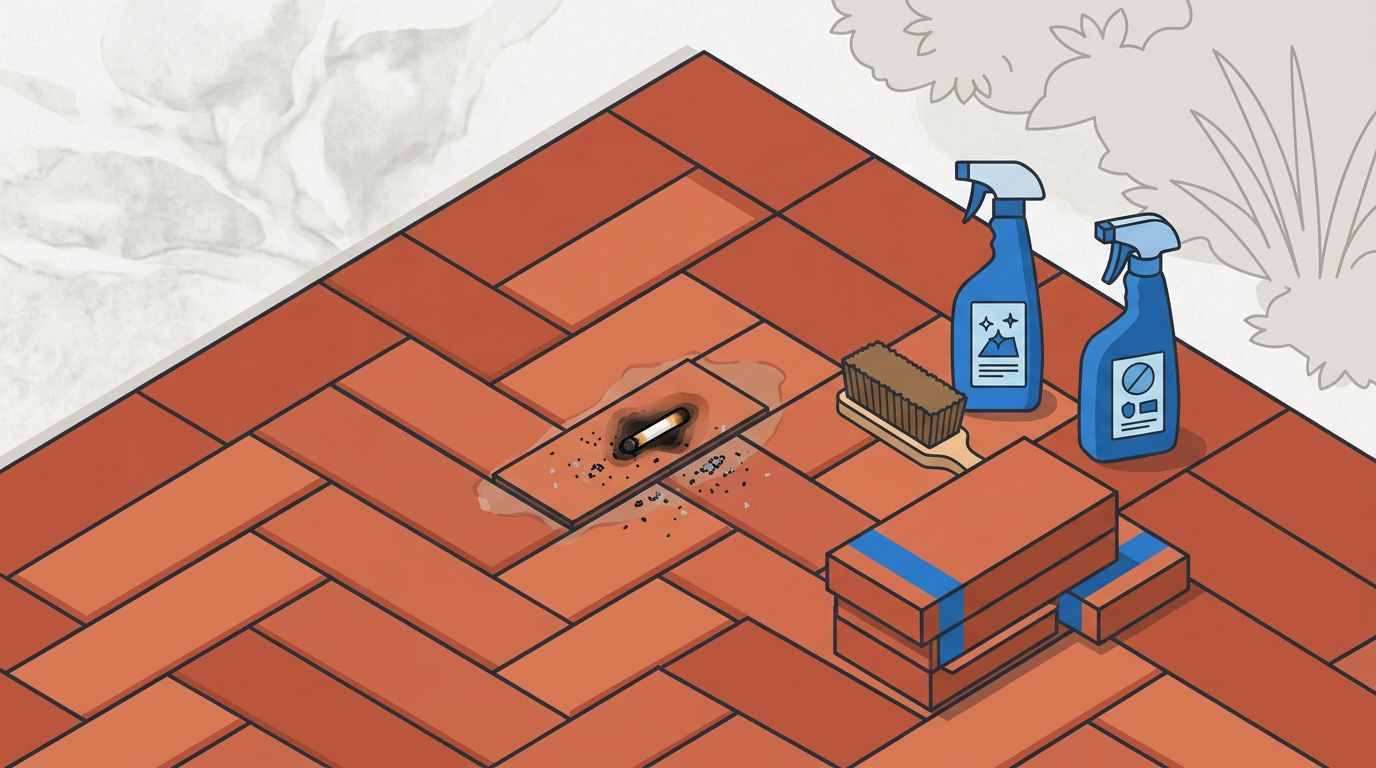
A cigarette can leave more than a small black spot on an otherwise clean patio or driveway. Heat, ash, tar, and melted sealer can discolor porous brick pavers and make the damage look worse after cleaning.
If you are dealing with cigarette burn marks brick pavers, you likely want to know whether the surface can be cleaned or if the damaged paver needs replacement. I inspect the depth of the mark first, then choose the safest repair that restores the appearance without damaging the brick, joint sand, or surrounding pavers.
Key Takeaways
- Light ash and surface residue can often be addressed when you want to remove burn stains using gentle cleaning methods.
- A dark, burned area may have absorbed into the porous brick or damaged the sealer.
- Excessive pressure, harsh acids, and heat can make the repair worse.
- Replacing severely burnt bricks or one or more pavers is often the cleanest option for deep discoloration.
- Cleaning the full area before sealing helps prevent a visible patch.
cigarette burn marks brick pavers: What the Damage Means
Not every dark spot is a true burn. A cigarette butt can leave several types of residue, and each one responds differently to cleaning.
Loose ash usually sits on top of the paver. It may brush away easily, especially if the area has not been exposed to rain or foot traffic. Soot and tar are more difficult because they cling to the brick texture, similar to how soot and creosote build up inside a brick fireplace or on porous concrete surfaces. If the cigarette was left burning, the heat can also discolor the surface or soften a sealer film.
Brick pavers are porous. That means liquids, oils, smoke residue, and melted coating can move into the surface instead of staying on top. A mark that looks small on a dry paver may appear larger after the area gets wet.
I always let the surface dry before judging the full damage. Wet brick can temporarily hide discoloration. A homeowner may think the spot is gone, only to see it return when the paver dries.
Homeowners also confuse cigarette burns with fertilizer, grease, oil, and coolant stains. This paver stain discussion shows how difficult proper stain removal can be when identifying a dark mark by appearance alone. The source matters because an oil stain needs a different treatment than carbon residue or heat damage.
Look closely for these signs:
- A loose black or gray coating that wipes away
- A brown ring or tar-like residue
- A lighter, faded area where the sealer was affected
- Cracking, flaking, or a rough patch on the brick face
- Discoloration that remains after the residue is gone
A cleanable stain is different from a damaged paver. Cleaning can remove residue, but it cannot rebuild brick that has started to spall or crack.
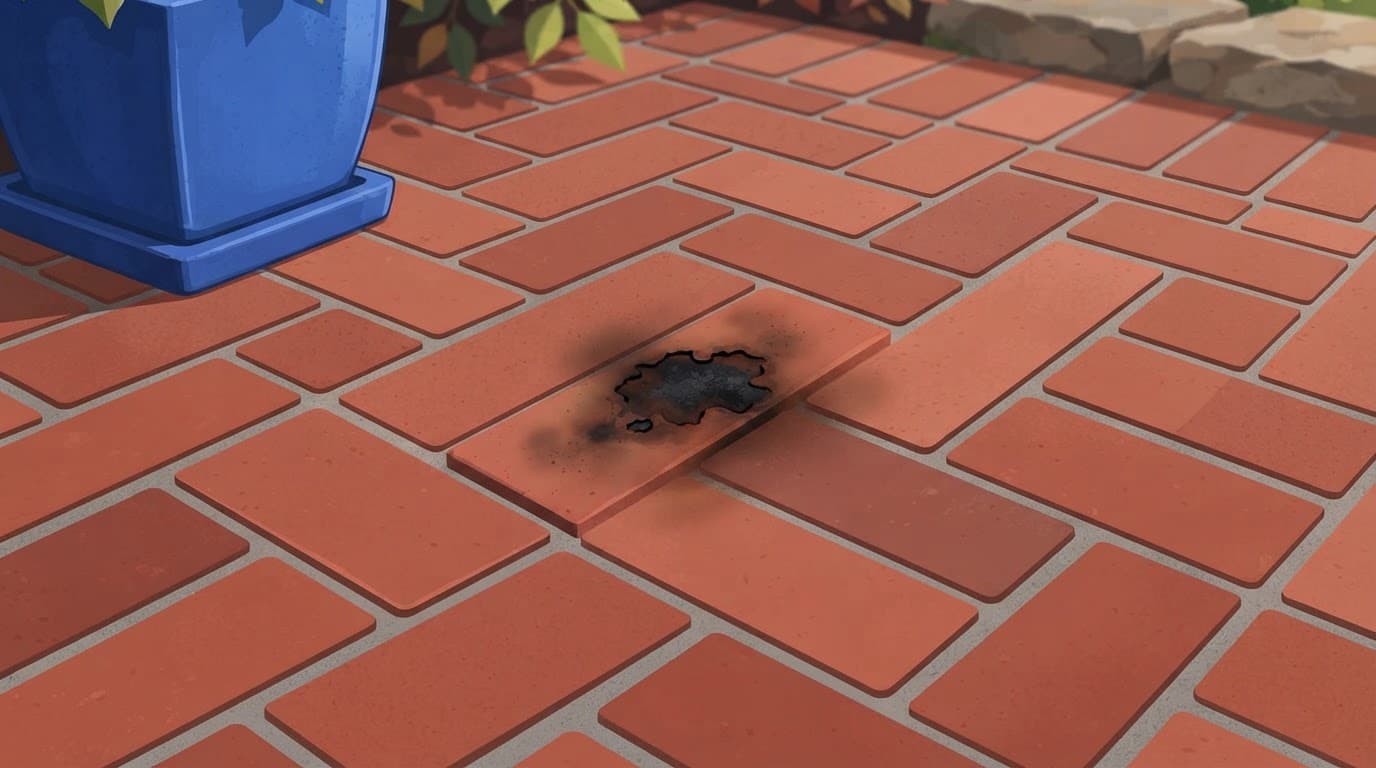
Burn marks should be inspected after the paver dries, when the full discoloration is easier to see.
Repair Options for Burned Brick Pavers
The right option depends on the depth of the mark, the paver color, and the condition of the surrounding area. I use the least aggressive method that can solve the problem.
| Repair option | Best for | Main concern |
|---|---|---|
| Gentle spot cleaning | Ash and light surface residue | May not remove deep discoloration |
| Professional stain treatment | Tar, soot, or absorbed residue | Requires product testing first |
| Single-paver replacement | Cracked or permanently burned brick | A new paver may have a different shade |
| Area restoration and sealing | Multiple stains or worn surfaces | The surface must be fully clean and dry |
Gentle cleaning for light marks
Start by removing the cigarette and loose debris. Sweep the area with a soft brush, then use a homemade cleaning solution composed of warm water mixed with dish soap or baking soda as a natural cleaning agent. Work in a small test spot before treating the entire mark.
Avoid rubbing the residue across clean pavers. Blot and lift the material instead, and consider scrubbing stubborn burn marks with a stiff brush or bristled brush to lift embedded ash without relying immediately on harsh chemicals. Rinse carefully, then allow the brick to dry completely.
A general paver cleaning guide from Unilock’s stain removal instructions recommends starting with dry cleaning, using a gentle solution, and rinsing carefully. That approach helps protect the joint sand and limits unnecessary wear on the paver face.
Professional treatment for deeper residue
If the mark contains tar, soot, or melted sealer, a professional may use a targeted cleaner and controlled agitation. The cleaner needs time to loosen the residue before rinsing. Immediate blasting often spreads the stain or pushes it deeper into the pores.
I avoid treating a dark mark with a random chemical from the garage. Some products can bleach colored pavers, weaken the sealer, or leave a second stain. A small test area gives a much clearer answer than treating the whole patio at once.
Replacing the damaged paver
Replacement is often the best repair when the brick is cracked, spalled, deeply discolored, or visibly different after cleaning. Interlocking pavers are designed to be removed and installed individually, so a single damaged unit does not always require rebuilding the entire surface.
The replacement process usually includes removing the affected paver, checking the bedding material, installing a matching unit, and refilling the joints with sand. An older driveway may have color variation, so the new paver may not match perfectly at first.
For a better blend, I may recommend using a paver from a less visible edge and placing the newer unit in that location. This depends on the layout, age, and availability of the original material.
How Professional Paver Cleaning Handles Burn Marks
Pressure washing can help with cigarette residue, but the pressure washer must be adjusted for the surface. A narrow nozzle held too close can cut lines into the brick, remove joint sand, strip sealer, or chip the surface.
My preferred process starts with an inspection and a controlled test area. I look at the paver type, the existing sealer, the joint condition, and the nearby walls or screens. A lanai, pool deck, or narrow walkway needs more care than an open driveway.
The cleaning process may include:
- Removing loose debris and any remaining cigarette material.
- Applying a suitable pre-treatment to loosen carbon and residue.
- Agitating the area with a safe brush or controlled equipment.
- Rinsing gently with a garden hose or an appropriate spray pattern and pressure.
- Checking the pavers again after they dry.
- Replacing damaged units if the mark has penetrated the brick.
These care principles extend to concrete pavers and stamped concrete as well. For flat areas, a surface cleaner can provide a more even result than a narrow wand. I don’t try to blast one spot until it looks different from the rest of the driveway. The goal is to clean the residue without creating a bright circle, etched lines, or missing joint sand.
A soft wash is often used for roof cleaning and organic growth on exterior surfaces. It isn’t the repair method for a heat mark. Cigarette burns need localized stain evaluation, careful cleaning, or paver replacement when the material itself is damaged.
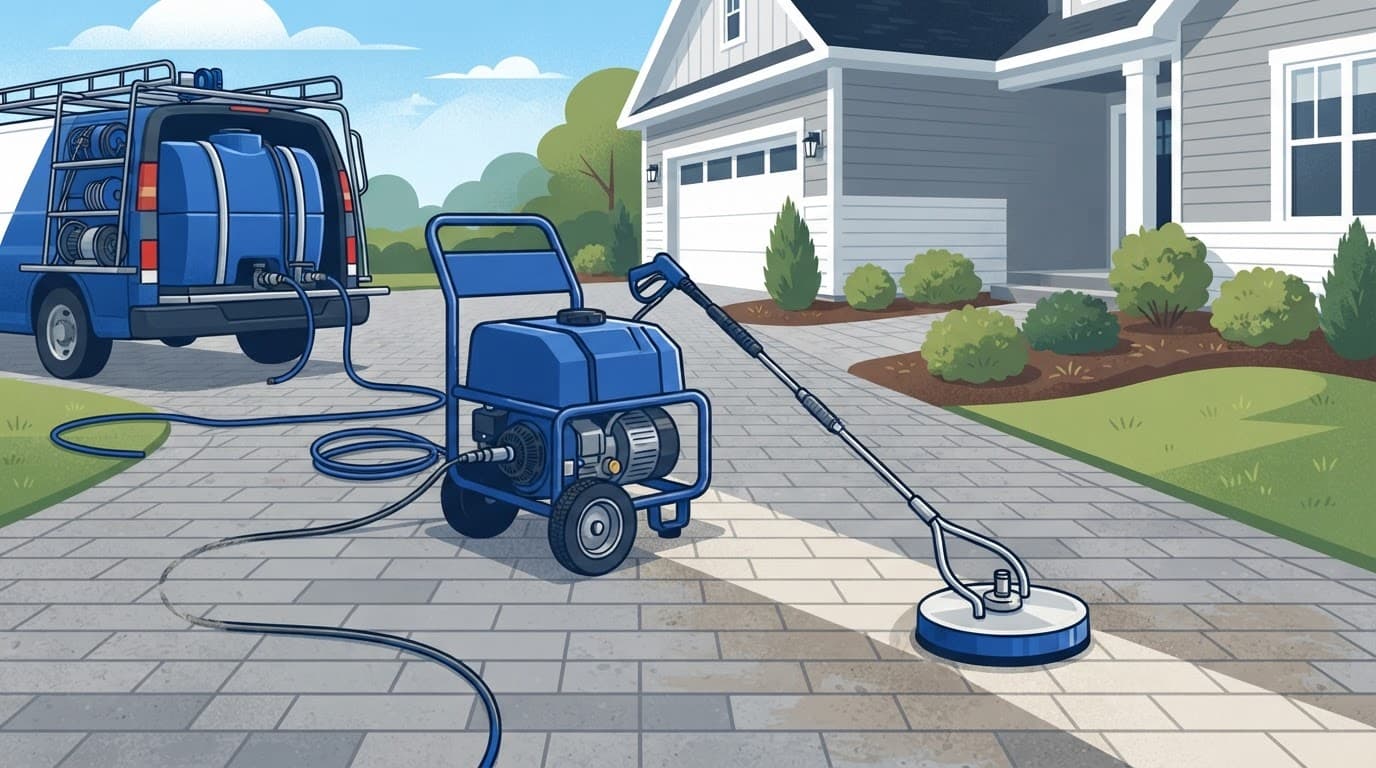
Controlled cleaning equipment helps reduce the risk of etching the brick or removing too much joint sand.
When Sealing Helps and When It Does Not
Sealing should come after cleaning and repairs, not before. If a burn mark remains, applying sealer over it can lock in the discoloration and make future treatment harder. Before applying any protective product, make sure all cleaning agents are rinsed thoroughly from the surface. This rule applies whether you are working with standard pavers or specialized sealers on concrete, as trapped chemical residue can compromise the bond.
When the surface is clean and completely dry, sealing can improve color, reduce water absorption, and help protect the pavers against common outdoor stains. It can also give an older patio or driveway a more consistent appearance.
Sealer won’t restore brick that has cracked or lost its surface. It also won’t guarantee that a future cigarette burn will disappear without a trace. The best protection is still proper use of the space, quick cleanup, and regular maintenance.
If your driveway needs broader care, driveway sealing may be part of a larger restoration service. I first check whether the existing coating needs to be removed, whether the joint sand needs attention, and whether the surface is ready for a new product.
I don’t recommend sealing a single paver by itself. Spot sealing often leaves a visible difference in color or sheen. Cleaning and sealing the surrounding section usually gives a more even result.
Mistakes That Can Make the Mark Worse
A cigarette burn is small, but the wrong repair can spread the damage across a much larger area. Avoid these common mistakes:
- Using a wire brush, which can scratch the brick face and remove color.
- Applying harsh chemicals, such as muriatic acid, which can damage masonry, nearby plants, metal, and joint materials.
- Using a torch or heat gun, which can cause cracking, spalling, or permanent discoloration.
- Blasting with high pressure, which can strip sealer and remove joint sand.
- Applying boiling hot water or concentrated laundry detergent, which can cause irreversible surface wear and fade the masonry.
- Rubbing tar across the surface, which spreads the dark residue.
- Sealing before the stain is removed, which may trap the mark below the coating.
Heat is especially risky. A second round of heat will not reverse the first burn. It can create thermal shock and turn a surface stain into a cracked or flaking paver.
Pressure washing is useful when it is controlled and matched to the material. It is not a substitute for identifying what caused the discoloration.
Preventing Future Burn Marks on Pavers
The easiest repair is the one you don’t need to make. Keep a sturdy ash container near outdoor seating, pool areas, patios, and lanais. A deep metal container with a lid is safer than leaving cigarette waste near dry landscaping or outdoor furniture. These same safe ash handling habits apply whether you are relaxing around an outdoor patio hearth or gathering near a brick fireplace.
Pick up cigarette butts before rain. Water can move ash, tar, and residue into textured brick and nearby joint sand. If you notice fresh ash, quickly washing it away using warm water and dish soap can prevent deep discoloration. Regular sweeping also removes leaves and dirt that can hold moisture against the surface.
If you already have several stains, clean the entire section instead of treating only individual spots. Consistent maintenance keeps one small mark from becoming part of a larger, uneven appearance.
At Kingsway Paver Sealing & Pressure Cleaning, I help homeowners in Fort Myers, Naples, Bonita Springs, Port Charlotte, Sanibel Island, and nearby Southwest Florida communities clean, restore, and protect brick and travertine pavers. If you need help deciding between cleaning and replacement, you can Get a Quote for your property.
Frequently Asked Questions
Can cigarette burn marks on brick pavers be completely removed?
Light ash and surface residue can usually be cleaned completely with mild soap and water. However, if the heat has melted the sealer or deeply discolored the brick pores, a faint mark may remain until the paver is treated professionally or replaced.
Will pressure washing get rid of a cigarette burn?
Controlled pressure washing can help remove loose soot and surface residue when used with the right nozzle and distance. High pressure alone will not reverse heat damage and can actually etch the brick or strip away the joint sand if you are not careful.
Should I seal over a cigarette burn mark to hide it?
Never seal over a burn mark because the protective coating will trap the discoloration permanently beneath the surface. Always clean, repair, or replace the damaged area first and make sure the brick is completely dry before applying any sealer.
Conclusion
Cigarette burn marks on brick pavers may be surface residue, absorbed discoloration, damaged sealer, or actual brick damage. A careful inspection after drying helps separate a cleanable stain from a paver that needs replacement.
Learning how to remove burn stains requires assessing damage depth before using a pressure washer, ensuring successful stain removal without ruining the installation. Gentle cleaning is suitable for light ash and residue, while deeper marks may need professional treatment, controlled pressure washing, or individual paver replacement. The strongest result comes from cleaning the full area, repairing damaged units, and sealing only after the surface is clean and dry.