
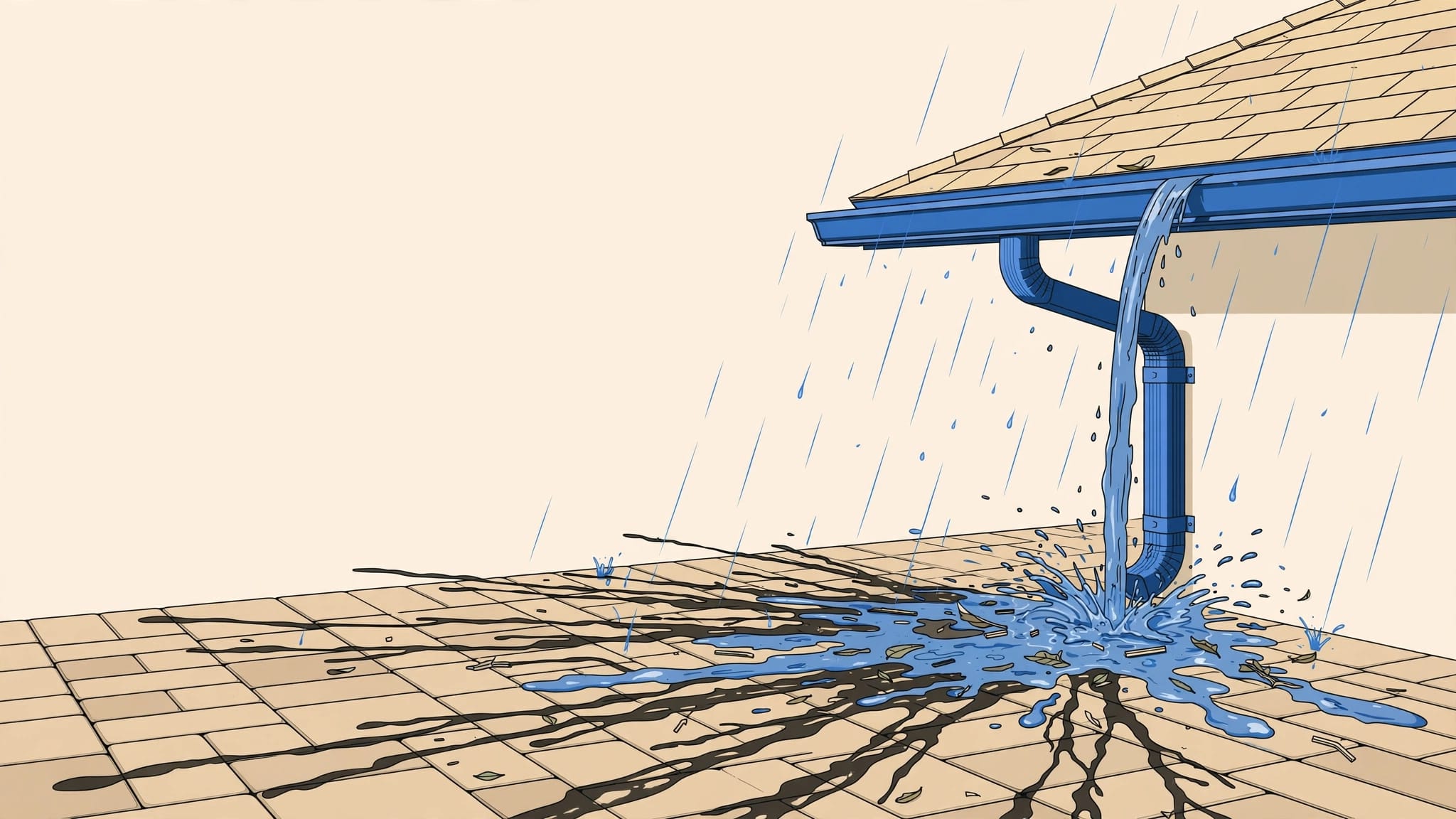
Dark streaks can make a clean driveway or patio look old before its time. In Southwest Florida, those marks often come back because water keeps following the same path.
When homeowners ask me about dark streaks brick pavers develop, I start above the pavers, not with the cleaner. A roof edge, clogged gutter, or downspout can send dirty water across the same few rows every time it rains.
The stain pattern usually gives you a clear place to begin.
Why Dark Streaks Brick Pavers Form Below Rooflines
Rainwater doesn’t land clean. As it moves across a roof, gutter, and fascia, it can pick up dust, pollen, leaf residue, roof debris, and organic buildup. When that water drops onto pavers, it leaves the dirt behind.
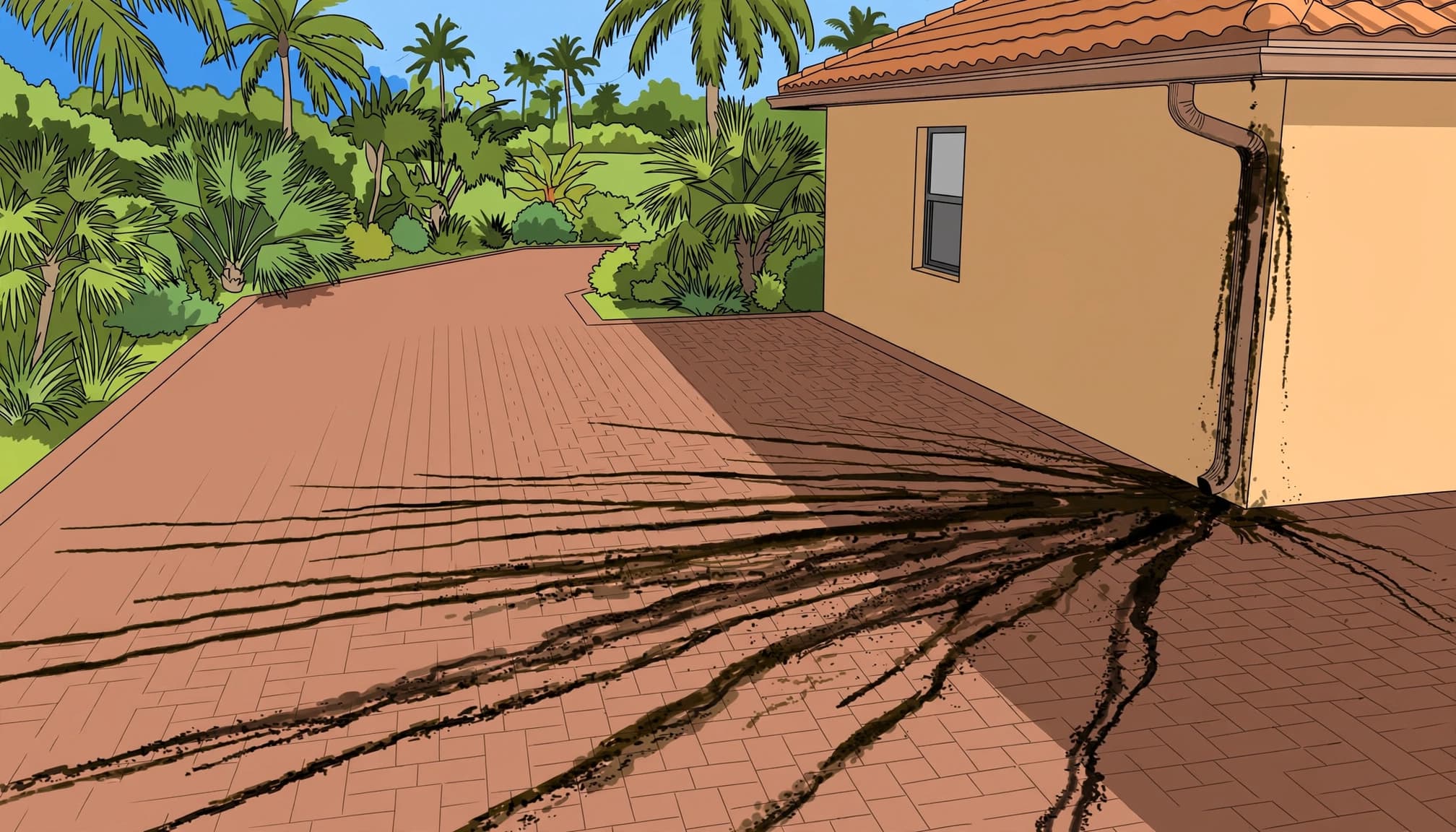
Follow the direction of the mark
Roof-related stains often look like a fan, a dark stripe, or a narrow trail that starts at the roofline. Look for marks below a gutter seam, valley, scupper, or downspout outlet.
I also check whether the streak becomes lighter as it travels away from the house. That usually means the water is slowing down and spreading out over the driveway or walkway.
A mark that runs in a straight line from a roof edge is different from general dirt across the whole surface. It points to repeated runoff, not one missed cleaning.
Moisture lets organic growth take hold
The dark material isn’t always only dirt. Roof runoff and shade can support organic growth such as mold and algae, mildew, and black lichen. Shade from a pool cage, tree canopy, or home can keep the surface wet long after a storm.
The EPA’s mold and moisture guidance makes the point clearly: moisture control is the main part of controlling mold. The same idea applies outside. Persistent moisture below a roofline lets mold and algae return, so cleaning alone won’t stop the staining cycle.
A paver can look clean after washing, then turn dark again because the water source above it was never corrected.
Separate Roof Runoff From Other Paver Stains
Black spots don’t always come from the roof, and white stains can have another cause. Before applying a cleaning solution, I look at the color, texture, and location of the discoloration.
Organic growth usually looks uneven
Mold and algae often create blotchy green, black, or dark gray areas. They are common along pool decks, patios, shaded walkways, and areas near irrigation heads.
Black lichen can look flatter and more stubborn than ordinary algae. It may stay attached after surface dirt rinses away. That is why a hard blast of water is rarely the right first move.
If black spots are concentrated where roof water lands and surface moisture remains longest, you may have both runoff staining and biological growth.
White residue needs a different approach
White stains are usually not part of the same problem. Efflorescence happens when moisture moves salts through masonry and leaves a powdery residue as the surface dries. Polymeric sand haze can also leave a light film after installation or repair work.
That efflorescence needs a different approach from a dark organic stain. A cleaner that works on algae may not remove mineral residue. Strong acids can also damage colored brick, joint material, or an existing sealer.
Cleaner compatibility varies among concrete pavers, patio stones, and natural stone, depending on the material and finish.
Temporary flower beds, rubber mats, and plastic sheets create another issue. They hold moisture against the pavers, block sunlight, and trap leaf tannins. The result may look like roof runoff, but the dark patch stops at the covered area.
Fix the Water Path Before Patio Cleaning
A clean paver surface won’t stay clean if the roof continues dumping water onto it. I look for the source before I begin pressure washing.
Check gutters and downspouts
Leaves and debris can make a gutter overflow at seams or spill over the front edge. A downspout may be loose, blocked, too short, or aimed directly at the pavers.
Check gutters and downspouts after major storms. Water should move away from the home and spread out before it reaches the hardscape. If a downspout ends at the edge of a patio or driveway, an extension or proper drain connection may be needed.
Watch for joint and base damage
Repeated runoff can wash away joint sand. It may also disturb polymeric sand between pavers when water repeatedly follows the same path.
You may notice low joints, loose pavers, puddles that remain after rain, or a soft area underfoot. Persistent moisture movement can cause efflorescence as well as dark runoff marks.
Those are drainage issues, not only cosmetic problems. Water can move below the pavers, disturb the bedding sand, and weaken the paver base over time. If the pavers settle or rock, patio cleaning should wait until the runoff path and base condition are checked.
A driveway should shed water away from the house. A patio should not hold standing water along walls, screen enclosures, or doors.
Clean Dark Streaks Without Damaging the Brick
I never start with the strongest chemical or the hardest spray. Pavers are porous, and the wrong method can leave a lighter spot, rough surface, or empty joints.
Start mild and test first
Sweep away leaves, grit, and loose sand. Wet the surrounding pavers first so they do not pull in a concentrated cleaner too quickly. Then test the chosen product in a small, hidden area.
For light surface grime, detergent and water with a soft brush is a safe starting point for patio cleaning. A stiff-bristle brush can help with stubborn residue, but use it cautiously and only after testing.
The EPA’s cleanup guidance also recommends detergent and water for hard surfaces, followed by complete drying. Efflorescence is a mineral deposit, not organic staining, so identify it before choosing a stronger cleaner.
Keep the dirty rinse water moving away from clean pavers. Do not let it dry around doors, pool equipment, screens, landscaping, or walls. After rinsing, let the area dry fully before deciding whether the stain remains.
Use targeted treatment for organic growth
A soft wash is often a better fit when organic growth, mold and algae, or lichen is part of the problem. It treats the growth without using raw force as the main cleaning method.
Targeted treatment can address mold and algae while limiting unnecessary wear on the paver surface. Follow the product directions for dwell time, rinsing, and plant protection, especially when black lichen is present.
I don’t recommend routine household bleach for every dark mark. The EPA advises that bleach is not a routine mold-cleanup choice, and mixing it with other cleaners is unsafe. Never combine bleach with ammonia, acids, vinegar, or unknown products.
Efflorescence does not usually require an aggressive chemical treatment. Using the wrong product can spread residue or damage the surface, while persistent black spots may indicate biological residue rather than dirty rinse water.
Use pressure washing with control
Pressure washing can rinse away loosened dirt and residue during patio cleaning, but it does not fix the cause of the streak. A pressure washer can scar the brick face, remove sealer, and blast out joint sand when held too close.
A power washer should use a wide spray pattern and controlled distance. Keep it moving, avoid spraying directly into the joints, and protect nearby surfaces.
If sand comes out during cleaning, joint sand should be replaced before sealing. Polymeric sand can also be disturbed, leaving haze or weakened joints if rinsing is too forceful. Persistent black spots after drying may signal remaining growth, not simply leftover rinse water.
Methods suitable for these pavers should not automatically be transferred to natural stone or concrete pavers. If joint sand continues washing out, pause and address the water path before cleaning again.
Keep the Streaks From Coming Back
The best maintenance plan starts at the roofline and finishes at the paver surface. Regular maintenance keeps both areas working together.
Maintain the roofline
Roof cleaning can remove mold and algae, leaves, and other organic growth that contribute to dirty runoff. Low-pressure soft wash methods are safer than aggressive washing that can damage shingles or metal roofing.
If your roof has visible residue, routine roof washing, including roof washing in Southwest Florida, may help clean the source before the next rainy season. Cleaning the roofline and correcting the water path can also reduce recurring black spots on the pavers.
Trim back heavy branches where possible. Clear leaves from gutters and valleys. Check downspouts after a strong rain, not only when everything is dry.
Protect clean and stable pavers
After complete, dry patio cleaning, make sure the pavers and joints are stable before applying any protective treatment. Confirm that polymeric sand has cured properly and that no moisture remains trapped below the surface.
Sealing can make routine cleanup easier, but it doesn’t replace drainage repair. It also shouldn’t be applied over loose joint sand, trapped moisture, or remaining stains.
For Florida patios and driveways, look at the whole surface before choosing a treatment. One clean patch beside faded, worn pavers can look unfinished. Protective paver sealing works best as part of a complete restoration plan.
When a Professional Inspection Makes Sense
Call for help if dark streaks return within weeks, water pools after every storm, or pavers shift underfoot. Those signs point to more than surface dirt.
I also recommend professional help for persistent black spots, unknown finishes, or missing sand. Stubborn staining after a safe cleaning test, or discolored pavers that remain marked, may indicate permanent surface or finish damage.
If the cause can’t be safely identified, seek an independent, qualified inspection before trying more chemical treatments or aggressive scrubbing.
Key Takeaways
- Dark streaks below a roof edge, gutter seam, or downspout usually show where runoff repeatedly crosses the pavers.
- Moisture, shade, and roof debris can cause organic growth, black spots, and other dark marks that remain after the surface dries.
- Pale mineral residue may indicate efflorescence, while dark runoff and organic staining point to different causes.
- Start with sweeping, a small test area, mild cleaning, nylon brushing, and controlled rinsing.
- Avoid wire brushes, muriatic acid, random garage chemicals, and aggressive pressure that can damage the brick face or joint sand.
- Correct gutter overflow, poor downspout placement, puddling, and missing joint sand before sealing the surface.
Frequently Asked Questions
Can vinegar and dish soap remove dark paver stains?
Dish soap and water can help with ordinary dirt and light organic residue. Pale white stains may be efflorescence, not a dark organic mark. I don’t use white vinegar as a default paver cleaner because acidic products may affect masonry, colored surfaces, and some sealers.
Test any cleaner first. If the mark follows a roof runoff path or keeps returning, solve the drainage issue before trying stronger products.
What is the safest way to pressure wash brick pavers?
Use a pressure washer as a controlled rinse after loosening debris and residue. Keep a wide fan pattern moving across the surface. Don’t aim a narrow, high-force stream into the joints.
Cleaning methods may differ for natural stone and concrete pavers. If the paver face looks rougher, lighter, or scarred, the pressure was too aggressive. Restore missing joint sand before sealing.
Why are pavers still dark after cleaning?
A wet paver naturally looks darker, so wait until it is completely dry before judging the result. If discoloration remains, it may be efflorescence, embedded roof grime, or damaged sealer.
Black spots may reflect mold and algae, runoff residue, or finish damage. A stubborn shadow may also come from black lichen. Cracked, spalled, or permanently damaged pavers may need replacement rather than more scrubbing.
A targeted, masonry-safe treatment may be necessary. Test it first, especially if the discoloration has reached into the paver.
Final Thoughts
Dark roof runoff streaks are easier to fix when you follow the water first. Clean the pavers, but also correct the gutter, downspout, roof debris, shade, or drainage issue causing the stain.
A clean, dry, stable paver surface is easier to maintain and protect. Pale residue may indicate efflorescence, as moisture moves salts through masonry, while recurring dark streaks more often point to runoff, dirt, or organic growth. Fixing the source keeps the same dark streak from coming back after the next Florida rain.