

A Southwest Florida storm can fill your gutters before you notice a single leak.
Post-storm gutter cleaning helps remove wet leaves, palm fronds, branches, and compacted debris before heavy rains reach your home. A blocked gutter system can push water toward the fascia, soffits, walls, landscaping, and foundation.
I recommend starting with a safe inspection from the ground. Then you can decide whether the gutters need simple cleaning, professional gutter cleaning, gutter repair, or a larger storm damage assessment.
Key Takeaways
- Wait until the storm has fully passed and conditions are safe, then begin with a ground-level inspection and clear photographs.
- Remove wet leaves, palm fronds, branches, and compacted debris carefully, then clean the downspouts and test that water flows away from the home.
- Sagging or detached gutters, damaged fascia, roof leaks, separated seams, and water inside the home indicate that cleaning may not be enough.
- DIY cleaning is best limited to low-risk, ground-level work; multi-story homes, difficult access, electrical hazards, and storm damage call for professional gutter cleaning services.
- Keep dated photos, videos, receipts, and damaged materials when practical, and confirm insurance requirements before making repairs or discarding storm debris.
Why storm-related drainage problems matter in Southwest Florida
Severe weather creates different problems for your roof drainage. Wet leaves, palm material, and roof residue can collect in the channels after a storm, causing debris accumulation.
Heavy rains turn small clogs into water damage
Clogged gutters leave rainwater with nowhere to go. It may spill over the front edge or back up under the roof edge. This can contribute to water damage around the fascia, soffit, exterior walls, and nearby windows.
Overflow can also wash soil away from the home. Over time, repeated erosion may create foundation problems, puddling, and damaged landscaping. A clog may look minor, but it can redirect a large amount of water during a Florida downpour.
Wind and hail leave different warning signs
Storm damage gutters often show shifted sections, blocked outlets, and separated seams. Tree branches may dent the channels or sit across the roof edge.
Hail can knock shingle granules loose. Those small, sand-like particles often wash into the channels and collect near the outlet. A thick layer of granules can slow drainage and may point to roof damage that needs a closer inspection. Ice dams can block gutters in cold climates, but they aren’t a typical cause of blockage in Southwest Florida.
Active overflow before another downpour may warrant emergency gutter cleaning.
A storm can damage the gutter system even when the home looks fine from the street.
Start with a safe gutter inspection
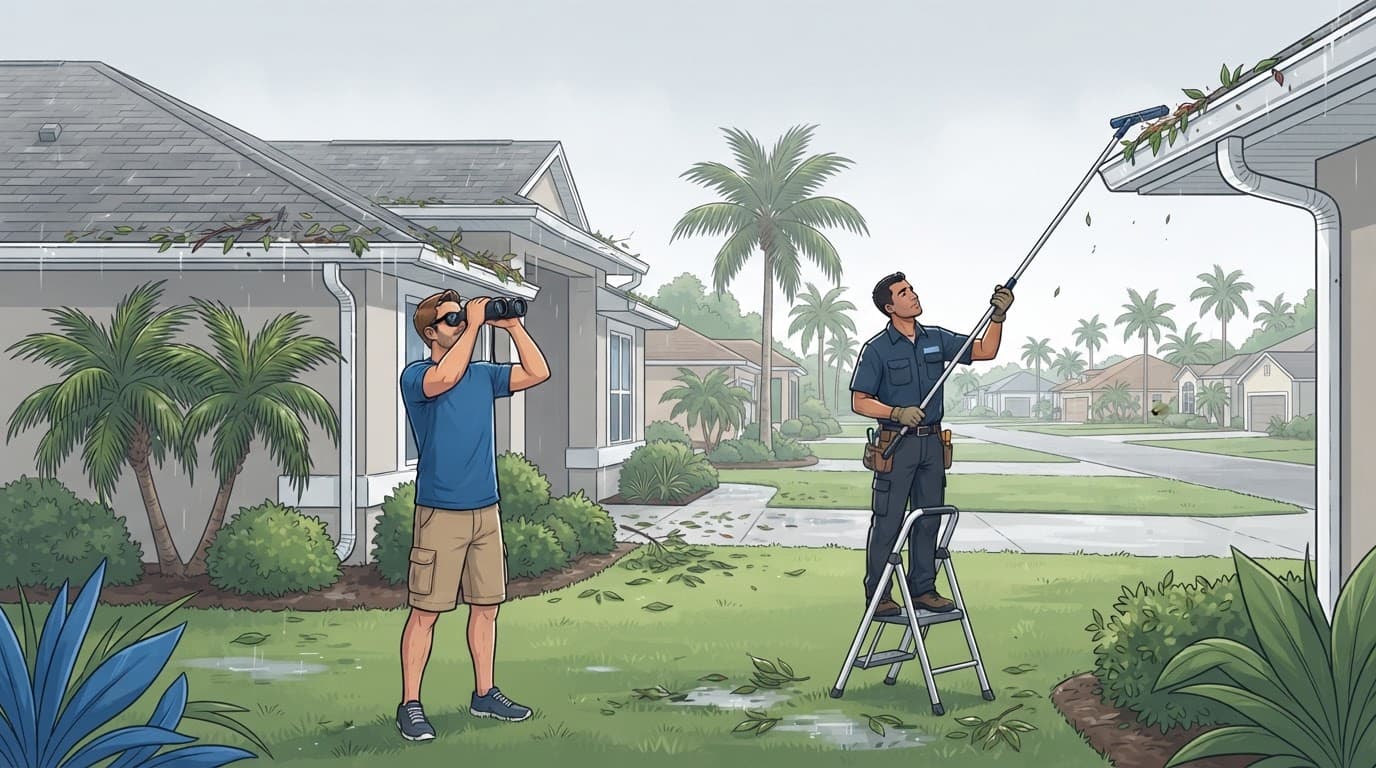
Don’t begin with a ladder while wind is still moving through the trees or rain is falling. Wet surfaces, unstable branches, hidden electrical hazards, and loose roofing materials can make a basic inspection unsafe.
The CDC disaster cleanup guidance recommends cleaning and drying wet areas as soon as possible, but gutter access should wait until conditions are safe.
Check the roof edge from the ground
Use binoculars if you have them. Walk around the property and look at the gutter line, downspout outlets, roof edge, fascia, and areas where water usually drains.
Look for:
- Gutter sections that sag, twist, or pull away from the fascia.
- Downspouts that are separated, crushed, or disconnected at an elbow.
- Branches, palm debris, or dense wet material sitting in the channel.
- Water stains below the roof edge or fresh soil erosion near the foundation.
Take clear photographs before removing anything. Wide photos show the location, while close-up photos show the damage. Add the date and time to your records, especially if you may file an insurance claim.
Know when cleaning is not enough
A gutter full of leaves usually needs cleaning. A gutter that has detached from the house needs repair. If you see cracked fascia, exposed roof decking, missing shingles, ceiling stains, roof leaks, or water inside the home, contact the appropriate contractor before washing anything away.
Emergency gutter cleaning may help control active overflow, but it won’t repair structural damage or other roof problems. I separate those concerns so the right work gets done first.
Follow a careful post-storm gutter cleaning sequence
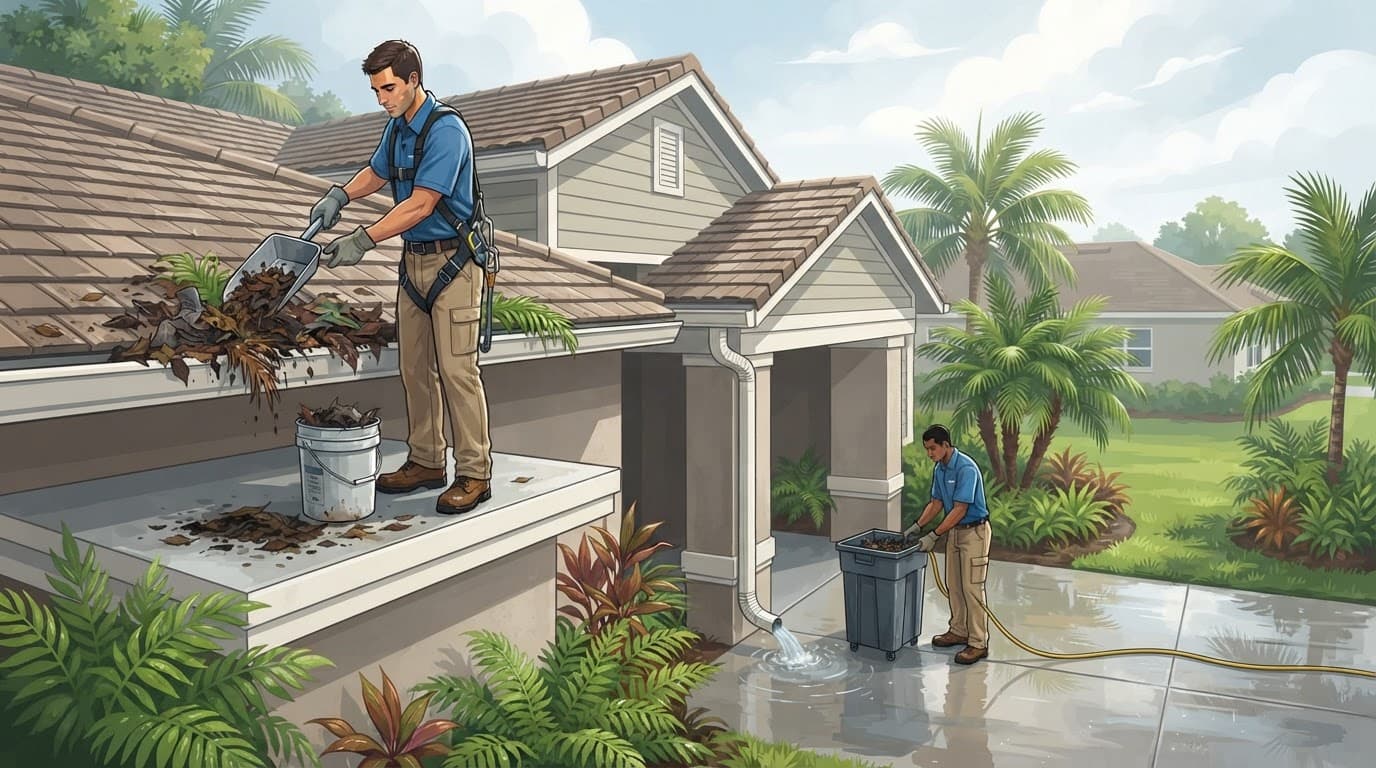
If the home is one story, the ground is stable, and there is no visible damage, a homeowner may be able to remove light debris safely. Use work gloves, eye protection, a plastic scoop, a bucket, and a garden hose.
Remove compacted debris without damaging the gutter
Start with large branches and palm fronds. Then remove wet leaves and roof granules by hand or with a plastic scoop. Wet debris is heavier than it looks, so don’t overload the gutter or bucket.
Avoid metal tools that can scratch or puncture the channel. Don’t push debris into the downspout. That can create downspout clogs in a harder-to-reach location.
If the gutter has old sealant, loose seams, or visible dents, stop before applying force. Cleaning a damaged section aggressively can make the repair larger.
Finish with downspout cleaning and a water test
Clear the outlet area first. Run water through the downspout from the top if the channel is open. If the water stops, try flushing upward from the bottom or use a suitable auger.
Don’t force a rigid object through a blocked downspout. It can damage joints or leave debris packed inside the elbow. Once the obstruction is removed, run enough water to confirm consistent water flow away from the house.
If water backs up, leaks at a joint, or pools beside the foundation, the gutter system needs more than a quick debris removal. Persistent active overflow that can’t be safely controlled may require emergency gutter cleaning.
For storm debris disposal, check local instructions before placing branches and other material at the curb. Florida State’s post-storm guidance also recommends following local cleanup directions.
Decide when gutter cleaning services make sense
DIY gutter cleaning is reasonable only when the work is low-risk and the damage is minor. A two-story home, steep roof, screened pool enclosure, lanai, power line, or unstable tree changes the situation.
DIY work fits limited conditions
A homeowner may handle a ground-level visual inspection and light cleaning when:
- The storm has fully passed and the ground is dry and stable.
- The gutters are reachable without standing on the roof.
- There is no visible sagging, separation, or broken fascia.
- Debris is loose and the downspouts are accessible.
For ladder safety, never place a ladder against a gutter. Use firm, level footing, keep three points of contact, and have another adult nearby. If the ladder needs to sit in soft soil, on a slope, or beside a pool, the setup is not suitable.
Professional service is safer for difficult access
I recommend professional gutter cleaning when debris is compacted, the home is multi-story, or the gutter line is difficult to reach. For homes with storm damage gutters, detached sections, leaking seams, or damaged downspouts, a closer evaluation is wise.
Visible fascia or roof-related problems may indicate structural damage, not routine debris removal. If gutter repair or roof work is needed, that should be listed separately from cleaning.
Professional cleanup can include gutter channel cleaning, downspout cleaning, debris removal, photo documentation, and a basic condition report. Active overflow or a dangerous obstruction may require emergency gutter cleaning instead of waiting for a routine appointment.
Post-hurricane cleanup can include unstable structures, contaminated water, sharp debris, and electrical hazards. Hurricane cleanup safety guidance gives a useful overview of those risks.
Document storm damage before making repairs
Insurance documentation is easier when the evidence is clear. Take photos before cleaning, repairing, or discarding storm-damaged materials.
Build a complete photo record
Photograph each side of the home, then take closer images of the gutter line, downspouts, roof edge, fascia, soffit, exterior walls, and foundation area. For storm damage gutters, photograph each full section before cleaning or removing it. Include fallen branches, hail residue, damaged screens, and visible water damage.
If safe, record a short video of overflowing water during rainfall. Keep dated receipts for emergency cleaning, temporary protection, materials, and related repairs. Write down when severe weather passed and when you first noticed the damage. Dated photos, receipts, and videos can support insurance claims, but they don’t guarantee coverage.
Don’t remove a damaged gutter section before photographing it. If emergency gutter cleaning is needed to stop active water intrusion, photograph the condition first and save the damaged parts when practical.
Understand what insurance may cover
Coverage depends on your policy, deductible, storm cause, and the condition of the property before the event. Wind or hail damage may be treated differently from ordinary wear, poor maintenance, or flood damage.
FEMA’s roof repair guidance explains that disaster-related roof leaks that damage ceilings or threaten electrical components may qualify for certain assistance. FEMA assistance is not the same as private homeowners insurance, and gutter cleaning or replacement is not automatically covered.
Report the loss to your insurer and ask what documentation is required. Don’t promise that a cleaning invoice will be reimbursed. Keep the records and let the adjuster explain the policy terms.
Understand gutter cleaning costs after a storm
Professional gutter cleaning commonly falls around $100 to $400, depending on home size, height, debris volume, access, and downspout condition. A standard two-story home usually falls toward the higher end.
| Property condition | Common planning range |
|---|---|
| One-story home with light debris | $100 to $200 |
| Standard two-story home | $200 to $400 |
| Heavy debris or difficult access | Custom quote |
Ask what the service includes
Before scheduling gutter cleaning services, ask whether the quote includes the gutter channel, downspouts, debris removal, cleanup around the home, and photographs. Emergency gutter cleaning may have different pricing or availability, so confirm those details before approving urgent work. Minor reseating may be included by some companies, while gutter replacement, fascia repair, roof work, tree removal, and interior moisture damage are separate services.
At Kingsway, I prefer clear pricing and clear communication. A good quote should explain what will be cleaned, what damage was found, and which repairs should wait for another contractor.
Prevent future debris and drainage problems
Gutter guards can reduce leaves and larger debris, but they don’t eliminate maintenance. Palm seeds, pine needles, roof granules, and fine organic material can still collect on top of the guard or pass through it.
Trim branches and inspect after major weather
Keep tree branches away from the roof edge when possible. Trim dead limbs before storm season and remove branches that rest on the roof or gutter line.
As part of regular gutter maintenance, inspect the gutters at least twice a year and after severe weather. Homes near mature trees may need more frequent service. Pay attention to slow drainage, stains under the gutter, loose sections, and soil washing away near downspout outlets.
A properly positioned extension or splash block can help direct water away from the foundation. It won’t solve a blocked downspout, but it can reduce erosion when the system is flowing correctly.
Keep the full exterior drainage system working
The gutter system is only one part of the home’s exterior maintenance. If the roof has algae or organic growth, schedule roof cleaning with a low-impact soft wash method instead of directing high pressure at shingles.
I also recommend correcting roof runoff before cleaning pavers or scheduling driveway sealing. Otherwise, dirty runoff can cross the same surface again. Controlled pressure washing can clean storm residue from driveways, walkways, patios, and walls after the water path is corrected.
Frequently Asked Questions
When should I clean my gutters after a storm?
Wait until the storm has fully passed, the rain has stopped, and the ground and access areas are safe. Inspect the gutters as soon as practical, especially if you notice active overflow or water collecting near the foundation.
Can I handle post-storm gutter cleaning myself?
DIY cleaning may be reasonable for a one-story home with stable ground, light debris, and no visible damage. Avoid roof access and difficult ladder setups, and hire a professional when the home is multi-story or the gutter line is unsafe to reach.
What signs mean my gutters need repair instead of cleaning?
Sagging or detached sections, separated seams, crushed downspouts, cracked fascia, roof leaks, and water inside the home can indicate damage beyond routine debris removal. Photograph the condition and contact the appropriate contractor before washing away evidence or applying force.
How much does professional post-storm gutter cleaning cost?
Professional gutter cleaning commonly costs about $100 to $400. Home size, height, debris volume, access, and downspout condition can move the price higher, particularly when emergency service or difficult access is involved.
Will homeowners insurance cover storm-related gutter cleaning or repairs?
Coverage depends on the policy, deductible, storm cause, and the property’s condition before the event. Photograph the damage first, keep dated receipts and records, and ask your insurer what documentation and repairs may qualify.
Keep Southwest Florida gutters ready for the next storm
Cleaning gutters after a storm protects more than the gutter itself. It helps restore drainage, reduce overflow, limit foundation erosion, and identify damage before it spreads. Active overflow or an urgent blockage may justify emergency gutter cleaning.
Start with a ground-level inspection. Photograph the condition, remove only what is safe to handle, and call for help when the home is tall, damaged, or difficult to access. For a clear recommendation and free estimate, you can Get a Quote.