
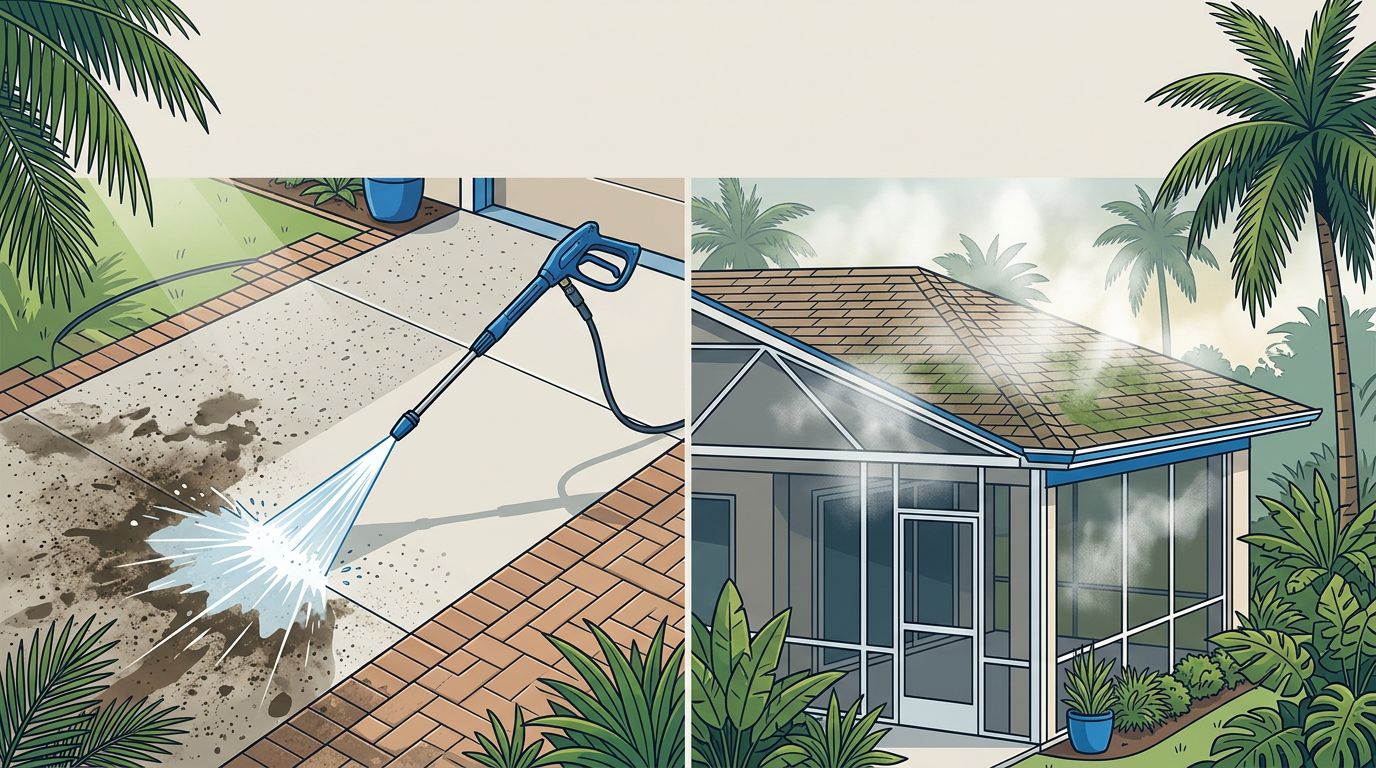
Florida humidity can turn a clean exterior green, gray, or black faster than many homeowners expect. Rain, warm temperatures, shade, and salty coastal air encourage algae and mold, along with other organic growth.
If you’re comparing pressure vs soft washing, the right choice depends on the surface and the type of buildup. Soft washing uses cleaning solutions and low pressure for delicate surfaces. Pressure washing, sometimes called power washing, relies on stronger water force for durable materials such as concrete and brick pavers.
At Kingsway, I inspect the material first. A method that works well on a driveway can damage a roof, screen enclosure, painted surface, or older paver installation.
Pressure vs soft washing for Florida exteriors
The main difference between pressure vs soft washing is where the cleaning power comes from. Soft washing depends on chemistry to break down and kill organic growth. Pressure washing depends more on mechanical force to remove dirt, grease, loose coatings, and residue.
There isn’t one universal PSI cutoff for every company or machine. Soft-wash applications are commonly performed below 500 PSI, with roof cleaning often using much less. Traditional pressure cleaning commonly falls between 1,500 and 4,400 PSI, depending on the equipment and surface.
Soft washing uses cleaning solutions
A soft wash system applies a diluted formulation containing water, sodium hypochlorite, and a surfactant. Other products may include algaecides or cleaning agents that help control growth.
The formulation loosens and kills algae, mold, mildew, and similar growth at the surface. Proper dilution matters, plants should be protected before application, and incompatible chemicals should never be mixed. A low pressure rinse then removes the residue without forcing water behind siding, under shingles, or through delicate seals.
Florida mildew often returns when it is only rinsed away. For homeowners dealing with recurring growth, the EPA’s guide to mold, moisture, and your home provides helpful information about the moisture conditions that allow mold to continue growing.
Pressure washing removes buildup with force
Pressure washing uses a concentrated stream of water to remove soil and surface contamination. The equipment’s PSI measures pressure, while GPM measures flow rate. Both pressure and flow rate affect cleaning performance.
A pressure washer delivers water through adjustable pressure levels, which should match the material. A basic injector can support downstreaming, while dedicated systems offer more controlled chemical delivery.
Higher PSI isn’t automatically better. A turbo nozzle concentrates force and can etch concrete, strip old sealer, remove paver joint sand, or leave visible cleaning lines. It’s not appropriate for roofs, screens, or other delicate materials. A wider spray pattern, steady movement, and the correct distance usually produce a more even result.
This method is a good choice for hard, nonporous surfaces with stubborn dirt, oil, grease, tire marks, and loose debris. Some commercial machines also use hot water for grease and oil-related jobs on durable materials.
Which method fits each exterior surface?
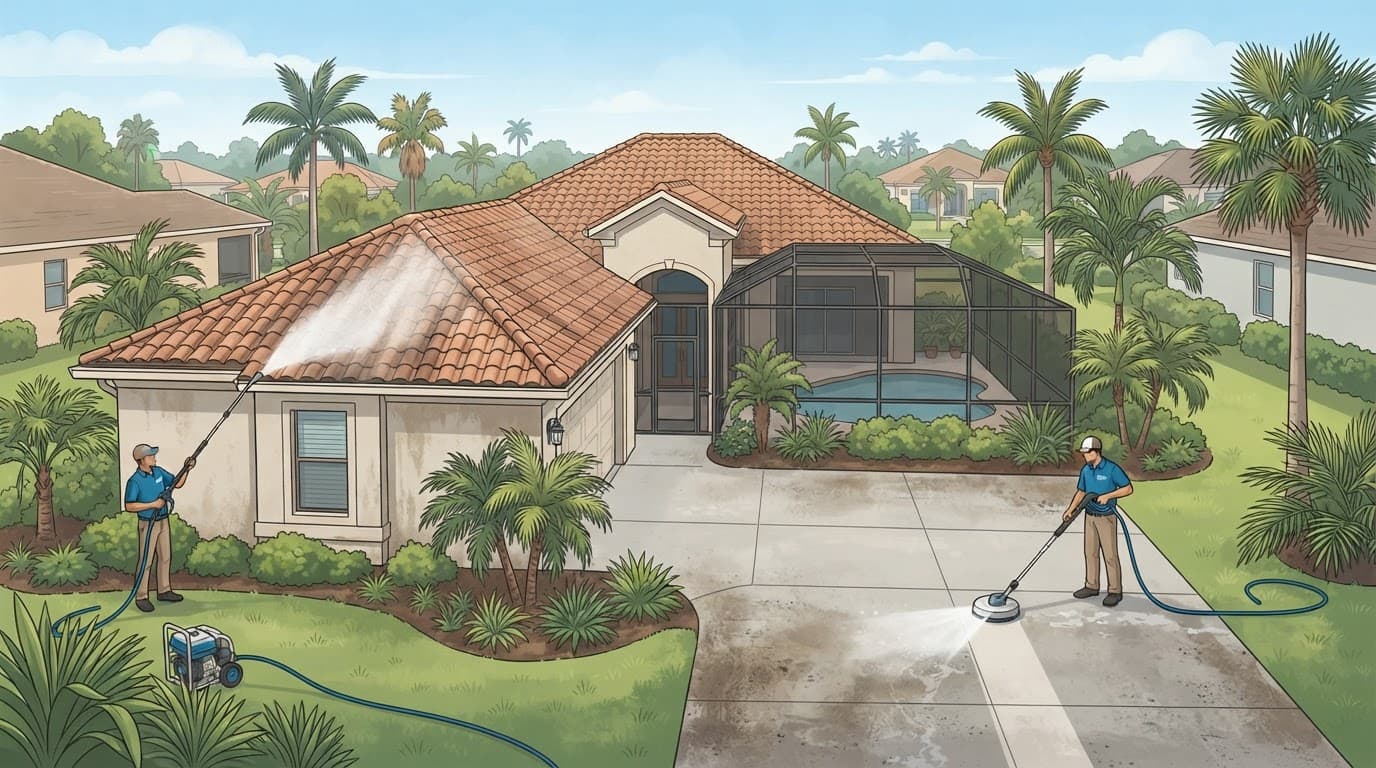
Florida properties often combine several materials within one work area. A home may include stucco walls, a tile roof, roof shingles, a screened lanai, concrete sidewalks, and brick pavers.
That is why I don’t treat an entire property as one group of exterior surfaces. Each material needs the right pressure, nozzle, solution, and rinse method.
| Exterior surface | Usual method | Main reason |
|---|---|---|
| Asphalt shingles | Soft washing | Removes algae without damaging granules |
| Stucco and painted siding | Soft washing | Reduces the chance of forcing water into the wall |
| Vinyl siding and soffits | Low pressure cleaning | Helps protect seams and openings |
| Screen enclosures | Gentle cleaning | Avoids bending screens and damaging frames |
| Concrete driveways | Pressure cleaning | Removes embedded dirt and hard buildup |
| Brick pavers | Controlled pressure washing | Cleans the paver face while protecting joints |
| Travertine and natural stone | Gentle cleaning | Reduces the risk of etching and surface wear |
The takeaway is simple. Organic growth usually needs a cleaning solution, while hard surface buildup often needs controlled water pressure.
Roofs, stucco, and screens need a gentle approach
Stucco, painted walls, soffits, pool cages, and vinyl siding can all be damaged by excessive pressure. Water may enter cracks, vents, seams, light fixtures, or window edges.
I use a low pressure approach for house washing when algae or mildew is the main problem. The goal is an even clean without removing paint, marking stucco, or pushing water into areas that should stay dry.
Screen enclosures need extra care. A strong stream can stretch or tear the mesh, damage spline, and bend lightweight framing. Gentle cleaning and controlled rinsing are safer for lanais and pool cages.
Concrete, pavers, and stone require different settings
Concrete can usually handle more pressure than siding or roofing, but it still needs the correct technique. Before controlled cleaning, downstreaming may apply a compatible treatment to loosen buildup. I often use a surface cleaner on flat areas because it helps reduce striping and uneven wand marks.
Concrete and pavers may require pressure washing, but each needs appropriate settings. Brick pavers are durable, but they are not indestructible. Nozzle choice, pressure, and flow rate affect cleaning results.
A turbo nozzle may help with limited, compatible concrete buildup. It shouldn’t be the default for pavers or travertine. Excessive force can remove joint sand, damage existing sealer, or create lines in the paver face. Travertine requires even more care because natural stone can etch or lose its finish.
For a driveway or patio that will later receive driveway sealing, the surface must be clean, stable, and completely dry first. Sealer should never be used to hide stains, residue, or surface damage.
Why Florida roofs usually need soft washing
Roof algae is common across Southwest Florida. Dark streaks and green growth are forms of organic growth, not ordinary dirt. High pressure isn’t the safest way to remove them.
The roof material matters most. Shingles, tile, and metal each respond differently to water force and product selection.
Asphalt shingles can lose granules
High pressure can loosen protective granules on asphalt shingles. It can also lift shingle edges, harm the surface, and shorten the roof’s useful life.
The Asphalt Roofing Manufacturers Association recommends chemical cleaning methods for algae and moss on asphalt roofing systems. Its asphalt roof cleaning guidance discusses a mixture of laundry-strength liquid chlorine bleach and water for this type of cleaning.
The roof material and manufacturer instructions should guide the choice of cleaning agents. That mixture isn’t a universal formula for every roof. A professional must consider the roof age, growth level, drainage, nearby plants, and manufacturer instructions. The solution should never be mixed with acids, ammonia, or other cleaners.
Tile and metal roofs still need care
Tile roofs are stronger than shingle roofs, but pressure can still crack tiles, damage coatings, and force water beneath the material. Metal roofs may have painted or coated finishes that forceful water can scar or remove.
Application equipment matters too. Downstreaming and dedicated systems can improve consistency, but neither makes high-force roof cleaning safe.
Soft washing is often a better choice when the problem is algae, mildew, or organic staining. I protect plants and nearby surfaces, apply the appropriate solution, allow enough dwell time, and finish with a low pressure rinse.
A roof doesn’t need to look clean for only a few days. The cleaning process should remove the growth while protecting the roofing material underneath.
How a professional cleaning visit combines both methods
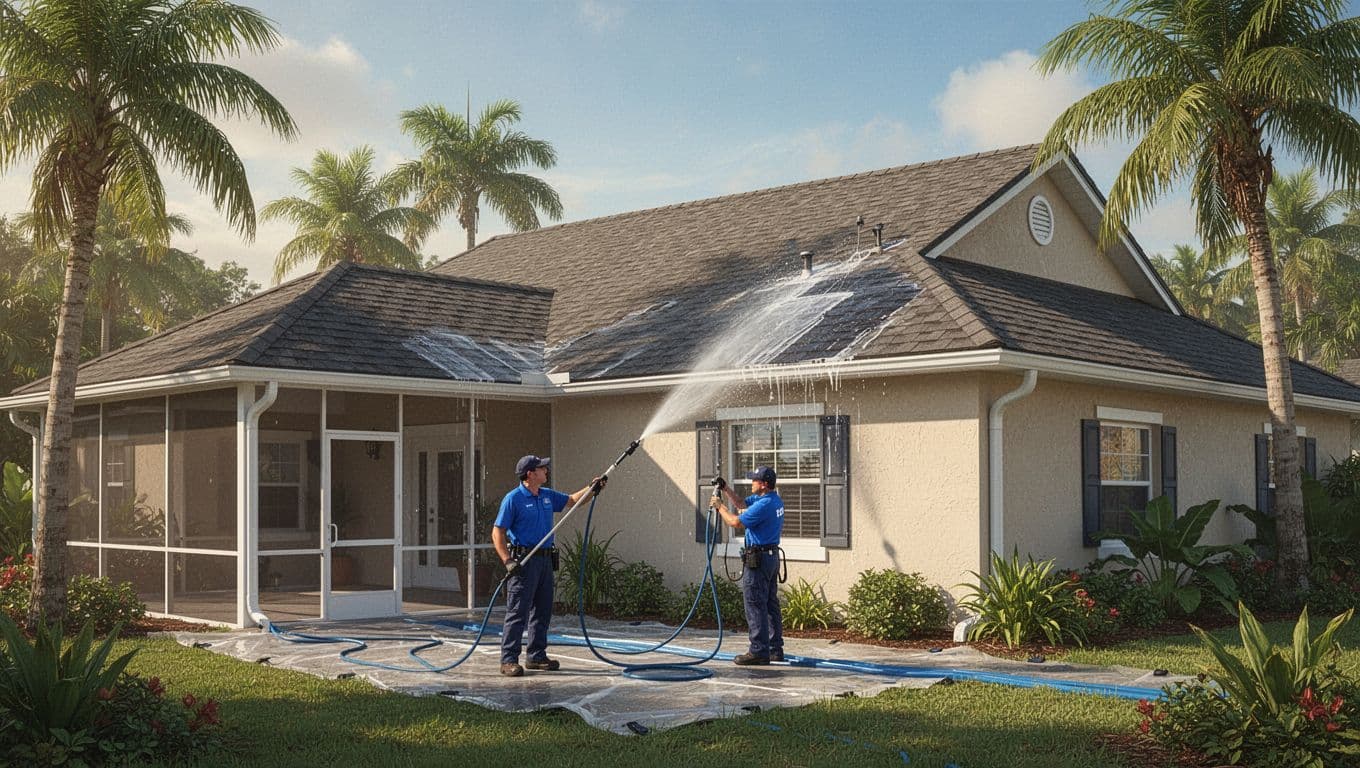
Many Florida properties need both soft washing and pressure washing during the same service call. Roofs and walls may need gentler treatment, while driveways and walkways need more mechanical cleaning.
I use the method that fits each area instead of forcing one technique across the entire property.
Inspection comes before the equipment
Before cleaning, I look at the surface material, age, existing coatings, cracks, joints, drainage, and nearby landscaping. I assess chemical compatibility before choosing a cleaner. I also check for loose pavers, damaged screens, open windows, outdoor outlets, and areas where water may enter.
This inspection helps separate organic growth from rust, fertilizer stains, oil, efflorescence, paint, and permanent surface damage. A chemical solution may clean algae, but it won’t repair an etched paver or restore a cracked tile.
Small test areas are useful on older surfaces and sealed pavers. They show how the material reacts before the full area is cleaned.
Chemical application comes before the final rinse
During a soft wash, cleaning agents are applied evenly and kept wet for the proper dwell time. The dwell period gives the cleaner time to loosen buildup, so the rinse doesn’t need excessive force.
Plants, windows, doors, outdoor furniture, and pool equipment should be protected before application. After the buildup has loosened, the surface receives a rinse at low pressure.
For concrete and pavers, I may use a compatible pre-treatment before controlled pressure washing. I adjust pressure levels, spray distance, and coverage to suit the material. A wide spray pattern or surface cleaner helps remove loosened dirt without scarring the surface or washing out unnecessary amounts of joint sand.
A turbo nozzle is reserved for compatible hard surfaces, not routine use on older pavers or coated areas.
Downstreaming is not the same as forceful roof washing
A standard pressure washer can sometimes apply a mild cleaner through downstreaming. This form of downstreaming uses an injector to draw product into the water line as the machine runs.
The injector’s performance depends partly on flow rate, because insufficient water movement can reduce chemical draw. The approach can work for some siding and house-washing jobs, where downstreaming offers useful reach.
For larger roof work, downstreaming may not provide the chemical strength, reach, or consistency required. Proportioning controls help regulate the mix, while a consistent flow rate supports even coverage.
A professional soft wash system is one of several dedicated systems designed for controlled chemical delivery. It usually includes:
- A chemical-resistant tank and hoses.
- A 12-volt soft wash pump.
- Proportioning or metering controls.
- Low-pressure spray equipment.
- Water for rinsing and plant protection.
- Gloves, eye protection, and other safety equipment.
The important point is how the equipment is operated. A pressure washer shouldn’t be used to blast a roof simply because it can reach it.
Avoiding damage during exterior cleaning
Most cleaning damage comes from using the wrong combination of equipment, pressure, nozzle, distance, or chemical. That mistake can cause property damage and leave marks that cost more to repair than the original cleaning.
Protect plants, joints, and stormwater paths
Florida landscaping can be sensitive to cleaning chemicals. Plants should be watered before work begins and protected from overspray, then rinsed during and after cleaning when needed.
Runoff also matters. Dirt, detergent, and chemical residue shouldn’t be allowed to flow uncontrolled into a storm drain. The Florida Department of Environmental Protection’s stormwater program explains the state’s broader stormwater management framework.
Paver joints deserve attention too. When too much sand is removed, weeds can enter the gaps and the pavers can shift more easily. I check the joints after rinsing and recommend re-sanding when the installation needs it.
Ask what method will be used
Before hiring a contractor, ask how pressure washing will be limited to suitable, durable surfaces. A reliable answer should mention surface testing, pressure control, plant protection, chemical handling, and runoff management.
You should also ask:
- Will the roof be cleaned with low pressure?
- Which cleaning agents will be used on the siding or roof?
- Is downstreaming appropriate for the proposed application?
- How will screens, windows, and plants be protected?
- How will downstreaming, chemical draw, plant protection, and rinsing be controlled?
- Will paver joints and existing sealer be inspected?
- Is the price based on the actual condition of the property?
At Kingsway Paver Sealing & Pressure Cleaning, I provide professional cleaning, restoration, and sealing for homeowners in Fort Myers, Naples, Bonita Springs, Port Charlotte, Sanibel Island, and nearby Southwest Florida communities. If your property needs a careful exterior assessment, you can Get a Quote for professional cleaning, restoration, or sealing.
Frequently Asked Questions
Is soft washing safer than pressure washing for Florida homes?
Soft washing is usually safer for roofs, stucco, painted siding, screens, and other delicate surfaces. It uses cleaning solutions and low pressure to remove organic growth without forcing water into seams, shingles, or fragile materials.
Can pressure washing remove algae and mold?
Pressure washing can remove surface growth, but rinsing alone may not kill the algae or mold at the source. Soft washing is generally more effective for organic growth, while controlled pressure washing is better suited to dirt, grease, tire marks, and hard residue on durable surfaces.
Can I pressure wash my roof?
High pressure can damage asphalt shingles, crack tile, remove coatings, and force water beneath roofing materials. Florida roofs usually need a properly applied soft wash with plant protection and a low pressure rinse.
Do concrete driveways need pressure washing?
Concrete driveways often benefit from controlled pressure washing because water force can remove embedded dirt, oil, grease, and tire marks. The pressure, nozzle, spray distance, and cleaning pattern should still be adjusted to avoid striping or surface damage.
Can one cleaning visit include both methods?
Yes. Many Florida properties need soft washing for the roof, walls, and screens, along with controlled pressure washing for concrete, walkways, and pavers.
Conclusion
The decision starts with the material and the type of buildup. Soft washing is usually safer for roofs, stucco, siding, screens, and organic growth. Controlled pressure washing suits durable surfaces with embedded dirt, grease, and hard residue.
Maximum pressure isn’t the goal. The right cleaning method protects your home while delivering a clean, even result. A surface-first approach helps reduce unnecessary property damage, keeping your Florida exterior cleaner and better protected.