
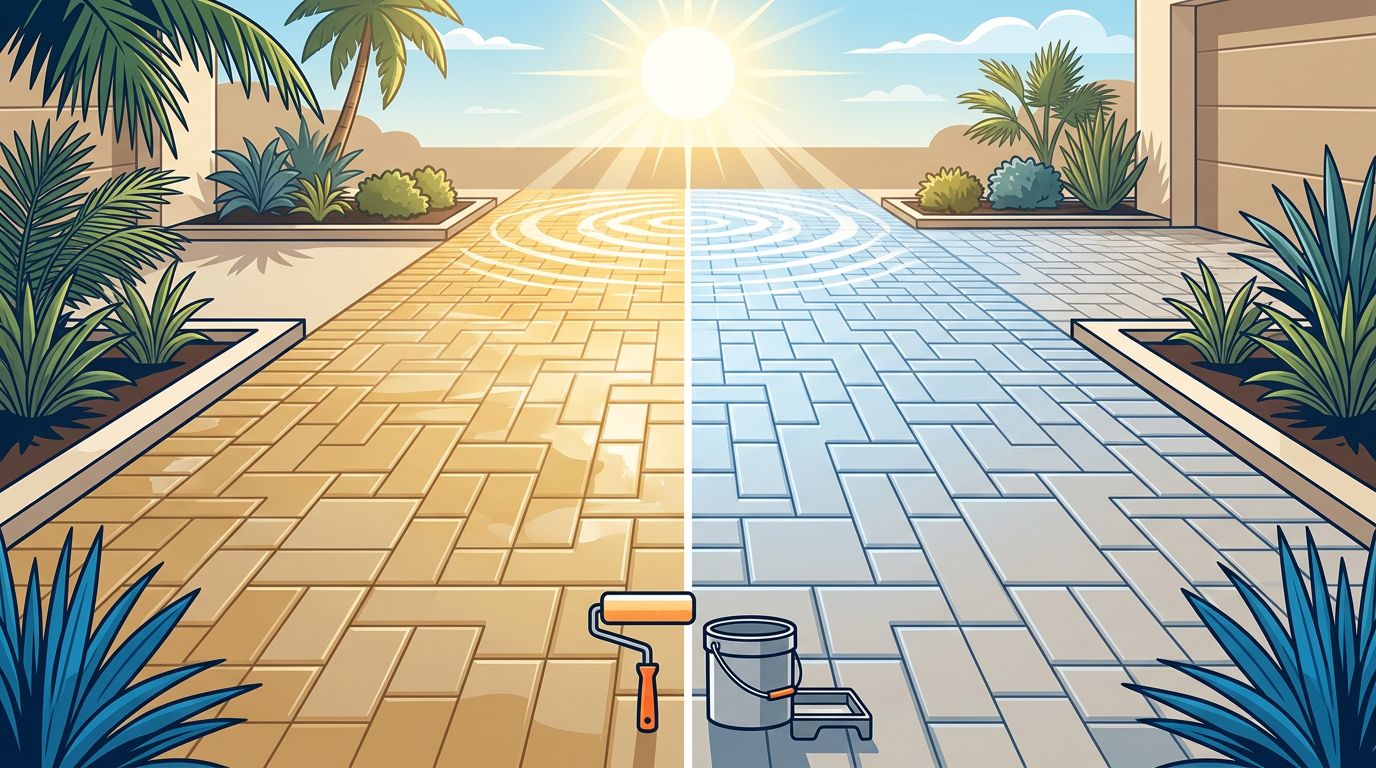
Dealing with a yellow paver sealer is a common frustration that can make a freshly cleaned driveway or patio look cloudy, aged, or poorly maintained. I frequently encounter this issue on concrete pavers used for driveways, patios, pool decks, and walkways throughout Southwest Florida.
The cause is usually more than sunlight alone. Strong UV exposure, trapped moisture, excess product, intense heat, and an aging coating can all change the appearance of your sealed surfaces. Before applying another coat, you need to understand exactly what caused the discoloration and determine whether the existing sealer should be removed.
Key Takeaways
- Intense Florida sunlight can break down specific sealer resins, leading to an unwanted amber or yellow appearance.
- You can significantly reduce the risk of discoloration by choosing a high-quality water-based acrylic sealer that offers superior UV resistance.
- Applying too much sealer, ignoring poor curing conditions, or allowing trapped moisture to remain can exacerbate yellowing issues.
- White haze is typically a sign of moisture or sealer blushing, whereas yellowing often indicates coating failure or oxidation.
- Applying additional layers over a failing coating usually worsens the appearance; instead, focus on proper cleaning, thorough drying, and controlled application to prevent future problems.
Why Does Paver Sealer Turn Yellow?
Paver sealer is a protective coating, but it inevitably changes over time. The coating sits on and inside the porous surface of concrete pavers. When that coating is exposed to intense Florida sun, high heat, rain, and humidity, the material can lose its original clarity.
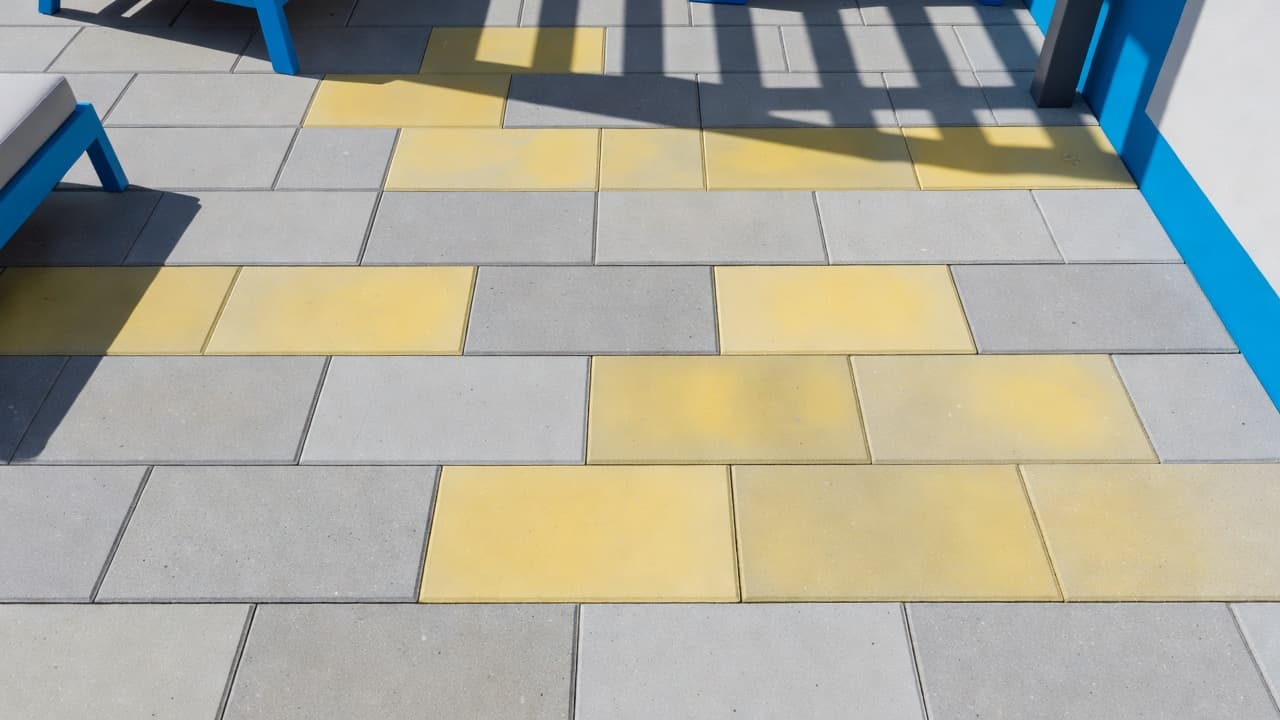
The most common cause is UV-related oxidation. Ultraviolet light can break down the acrylic resin in some sealers. As the acrylic resin ages, it may shift from clear to amber, yellow, or brown. This change often appears first in areas that receive direct afternoon sunlight on patios and driveways.
Heat adds another problem. On a South Florida driveway, pavers can become extremely hot during the day. If the sealer softens under that heat, it can hold dust, tire residue, pollen, and other grime. The surface may then look yellow even when the coating itself is not the only problem.
Overapplication is another common reason for discoloration. When too much sealer is left on the surface, the product may not cure evenly. Thick areas can stay tacky, collect dirt, and develop an uneven yellow film or paver sealer overlap marks. This is especially common when someone applies a second coat before the first layer has cured properly.
Old coatings can also react poorly with new products. A water-based sealer applied over an incompatible solvent-based sealer may not bond correctly. The result can be clouding, peeling, stickiness, or color changes that do not disappear after cleaning.
Moisture creates a different appearance. If water vapor becomes trapped below the coating, pavers may look white, gray, or milky. A visual explanation of white pavers after sealing can help you compare that problem with true yellowing. White haze and yellow discoloration can happen together, but they do not always have the same cause.
Florida Weather Makes Sealer Failure More Noticeable
Florida creates a challenging environment for paver sealers. The sun is intense, the pavement stays warm for long periods, and heavy rain often arrives shortly after a scorching afternoon. Patios and driveways also contend with pool splash, sprinkler overspray, salt air, leaves, algae, and everyday vehicle traffic.
In Fort Myers, Naples, Bonita Springs, Cape Coral, and nearby communities, shaded areas often stay damp after rainfall. These spots may develop mold and mildew or other organic buildup, while exposed sections of clay brick and brick pavers fade and oxidize. This difference in wear creates an uneven, unsightly appearance across the same surface.
Sprinkler water can leave minerals behind as it dries, and pool water may deposit chlorine and other chemicals onto nearby surfaces. While these issues do not always cause a yellow coating on their own, they often make aging sealer look dull, cloudy, or stained.
The quality and application of the product also matter significantly. Some sealers are designed to resist yellowing, but they are not immune to poor preparation or harsh conditions. A sealer applied to damp pavers can trap moisture, while a coating applied in direct heat may flash-dry on the surface while remaining soft underneath. Furthermore, a heavy application can create a thick surface film that discolors much faster than a thin, even coat.
I also observe the impact of roof maintenance on these surfaces. Roof cleaning should be handled with care because dirty runoff, cleaning solutions, and algae residue can travel onto driveways and walkways. A proper soft wash method is safer for many roof surfaces than aggressive pressure washing, but nearby patios and driveways still require protection during the process.
Sealer life depends on the product used, the surface condition, traffic volume, sun exposure, and routine maintenance. Some local paver care guidance describes a practical service window of three to five years in Florida conditions, but that is not a guarantee for every property. You can review one Florida paver sealer lifespan discussion while keeping in mind that proper installation has just as much influence as the instructions found on the product label.
How I Tell Yellowing Apart From Other Paver Problems
Not every color change means the sealer has turned yellow. I carefully inspect the pattern, texture, and location of your hardscape surfaces before deciding what the pavers need.
| What you see | Common cause | What I look for |
|---|---|---|
| Clear amber or yellow film | Aging or oxidized sealer | A consistent coating across sun-exposed areas |
| White or milky haze | Trapped moisture, sealer blushing, or efflorescence | Cloudiness that appeared soon after sealing |
| Dark brown or black patches | Oil, tire residue, or organic growth | Spots near vehicles, trees, or wet areas |
| Yellow-orange deposits | Rust, irrigation minerals, or fertilizer | Staining near sprinklers, metal, or landscaping |
| Patchy shine and color | Uneven application or failed old coating | Different finishes across adjoining pavers |
The location often gives me the first clue. Yellowing concentrated in open, sunny sections usually points toward UV exposure. A dark band under a vehicle may be tire residue or oil. Orange marks near a sprinkler may be mineral or rust staining instead of a yellow sealer.
Texture matters too. If the surface feels sticky, dirt may be attached to a soft coating. If the surface is a rough brick paver, the texture may be powdery, indicating the sealer is breaking down. If the color change is inside the paver material rather than on the surface, cleaning alone may not solve the problem.
I do not begin with aggressive pressure washing when I see discoloration. High pressure can strip weak sealer unevenly, remove joint sand, or leave visible spray marks on your hardscape surfaces. I first test a small hidden area with the safest cleaning method that matches the specific brick pavers or stone material.
A homeowner discussion about stone coatings turning yellow also shows why surface type, product choice, and exposure all matter. You can see that stone coating yellowing discussion for another example of how discoloration can develop over time.
How to Fix Yellow Paver Sealer
Proper surface preparation is the most critical step before attempting any repair. I never recommend applying fresh sealer over an existing yellow film. The new product usually locks in the old color, often creating an even heavier coating that becomes harder to manage.
I start by cleaning the surface and testing a small area to determine if the discoloration sits on top of the sealer or has become part of the coating. This process helps identify whether the pavers have an older product that may react poorly to a new cleaner. For concrete pavers, I assess the porosity, while natural stone requires a much gentler approach to ensure the integrity of the surface is maintained.
If the sealer is loose, tacky, peeling, or badly discolored, removal is often necessary. A professional-grade sealer remover can soften the coating before controlled agitation and rinsing. This is especially important for natural stone, which can easily lose its finish under improper pressure. For durable concrete pavers, a surface cleaner can remove dirt without creating unwanted pressure marks.
Organic growth is a separate issue. Algae and mildew may require a cleaning solution rather than high pressure. I always use the least aggressive method that removes the problem without damaging the paver face or surrounding landscaping.
After cleaning or stripping, the pavers must dry completely. Humidity can make the surface look dry while moisture remains in the joints. Sealing too soon can trap that moisture and create another cloudy finish. When it is time to re-seal, I look for a high-quality non-yellowing formula. Many homeowners prefer a wet look finish, which can be achieved using a durable water-based acrylic sealer. These products are often low VOC, making them safer and more environmentally friendly.
When applying the sealer, I use a professional pump sprayer to ensure even distribution. Calculating the correct coverage per gallon is essential to avoid over-application, as too much product can lead to the very yellowing issues you are trying to fix. I monitor the coverage per gallon throughout the project to ensure the sealer remains thin and breathable.
A professional approach is not about creating the thickest shine, but about protecting the surface without leaving excess product behind. If your patios and driveways have turned yellow, or if you are dealing with peeling and patchy surfaces, you can Get a Quote for our professional cleaning, restoration, and sealing services.
How to Prevent Yellow Paver Sealer in Florida
Effective prevention begins long before the sealer is opened. Proper surface preparation is the most critical step to ensure longevity, as any lingering dirt, oil, algae, efflorescence, or organic residue will interfere with adhesion and ruin the final color. If you are working with brick pavers or clay brick, ensure the surface is completely clean and dry before starting.
When choosing a product, opt for a high-quality water-based acrylic sealer. These products often feature excellent blushing resistance, which helps maintain clarity in high-humidity climates. Selecting a breathable sealer is also vital for Florida, as it allows moisture vapor to escape rather than becoming trapped beneath the film. For those who prefer easy maintenance, many modern water-based options allow for simple soap and water cleanup.
You should also consider your desired aesthetic. While a high gloss finish creates a dramatic look, it can highlight imperfections. If you prefer a more subtle transformation, look for a product that offers natural color enhancement rather than a heavy plastic sheen. If you do choose a product with strong color enhancement, ensure it is applied evenly to avoid streaks.
Beyond aesthetics, the right sealer provides structural benefits. Look for products that utilize sand-locking technology to keep your joints firm. Consistent joint sand stabilization prevents the sand from washing away during heavy rain, which in turn limits weed growth between the joints. During application, aim for a method that ensures deep joint sand stabilization for the best long-term results.
Avoid sealing during the hottest part of the day, as direct sunlight causes uneven drying. Rain is equally problematic, especially if it arrives before the coating cures. Furthermore, keep sprinkler heads aimed away from the pavers to prevent mineral deposits. Correcting overspray and managing roof runoff will significantly reduce staining.
Finally, stick to low VOC formulas to ensure a safer application process. Always perform a small test area before coating an entire patio to ensure the product reacts well with your specific stones. By focusing on quality materials and thorough surface preparation, you can enjoy a beautiful, long-lasting finish that resists the yellowing common in Florida.
Frequently Asked Questions
Can I just apply a fresh layer of sealer over the yellowed surface?
I strongly advise against applying new sealer over an existing yellow film. The new product will likely lock in the discoloration, resulting in a thicker, more difficult-to-remove coating that still looks unappealing.
How can I tell if my pavers are yellowing or just dirty?
Yellowing due to sealer failure usually looks like a consistent amber tint across sun-exposed areas, whereas dirt or organic growth appears as localized patches. You can perform a small test in an inconspicuous area using a gentle cleaning solution to see if the yellow tint lifts or remains.
Why does moisture cause a white haze instead of a yellow color?
White or milky haze is typically caused by trapped moisture or sealer blushing, which happens when water vapor cannot escape through the coating. This is physically different from the UV-related oxidation that breaks down the resin to produce the characteristic yellow or amber appearance.
Conclusion
Yellow paver sealer is typically the result of an aging coating, intense UV exposure, excessive product application, poor curing, or the use of an incompatible sealer system. Florida heat, rain, humidity, pool water, and irrigation can make this discoloration appear much faster on your hardscape surfaces.
I always recommend identifying the root cause before attempting to clean or reseal your outdoor spaces. The most effective way to protect your patios and driveways starts with proper testing, controlled removal when necessary, complete drying, and the selection of a high-quality non-yellowing formula. Choosing the right product is essential for maintaining the long-term beauty of clay brick and other paver types throughout the intense Florida sun. With the right preparation, your exterior surfaces can stay protected without the unsightly yellow film.