
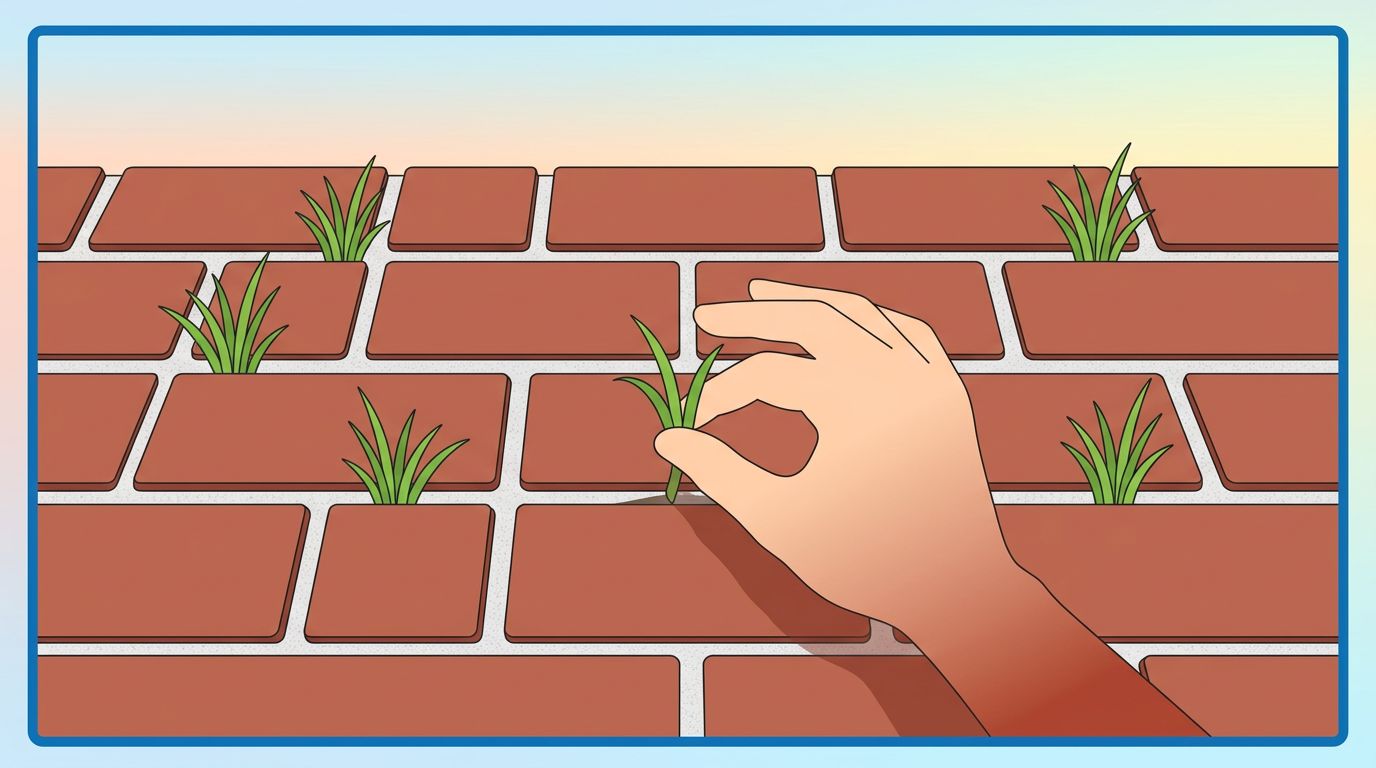
Pull a weed on Saturday, and by next week another one shows up in the same spot. If you have a brick driveway, patio, or walkway, that cycle of constant maintenance gets old fast.
I have seen it enough times to know this is not random. Weeds between pavers come back because the joints keep giving them what they need: dirt, moisture, light, and room to root. Once I look at the joints in my hardscape as tiny planting beds, the whole problem makes more sense.
Key Takeaways
- Joints act like planter beds: Weeds return because paver joints collect organic debris and moisture, creating an ideal environment for seeds to germinate regardless of what lies beneath the surface.
- Moisture is the primary driver: Persistent weed clusters often point to specific trouble spots, such as areas prone to sprinkler overspray, poor drainage, or constant shade.
- Avoid the cycle of damage: Methods like aggressive pressure washing without replacing joint sand or relying solely on temporary spot-treatments often make the problem worse by leaving gaps for new seeds to thrive.
- Focus on stabilization: The most effective long-term solution involves cleaning the joints, refilling them with high-quality polymeric sand to create a solid barrier, and applying a sealer to reduce porosity.
Those narrow joints act like tiny seed beds
At first glance, the space between pavers looks too small to grow anything. It is not. That thin line is usually filled with sand, dust, pollen, bits of leaves, and whatever the wind drops in.
To a weed seed, that is not a crack. It is a home.
Brick paving stones are laid with joints for a reason. During the initial installation, these gaps are necessary to allow the surface to move slightly, drain water, and lock together with joint sand. The trouble starts when that sand mixes with organic debris. Then, the paver joints stop acting like clean separators and start acting like little garden rows.
I see this more on older surfaces. Over time, foot traffic, rain, irrigation, and ants shift the sand around. Some joints get lower, some collect more dirt, and some stay damp longer than others. That uneven surface gives weeds a better shot.
Seeds also do not need much depth. A lot of the weeds that show up in paver joints start small and root shallow. If the top layer stays moist and dirty for a few days, that is often enough for germination. Once the plant takes hold, the roots chase whatever moisture sits below.
Homeowners sometimes think the weed is coming up from under the entire system because they assume there is no geotextile fabric to stop them. Sometimes that happens, but not as often as people think. In many cases, the seed landed from above. Wind carried it, birds dropped it, lawn mowing threw it, or rain washed it in from the side.
That is why the same few joints keep sprouting growth. They catch more debris, hold more moisture, and stay looser than the rest.
If I want to stop the cycle, I do not start with the weed. I start with the joint.
Water, shade, and dirt keep resetting the problem
Moisture is the part people underestimate. A dry joint is harder for weeds to use, while a damp joint is an invitation.
Rain helps, of course, but irrigation is often the bigger issue. Sprinklers that hit the driveway every morning keep the paver joints wet long after the sun is up. Shady walkways stay damp even longer. If a gutter spills near the edge, or roof runoff drops onto the same strip, those areas become repeat offenders. Keeping these areas dry is the best way to prevent weed growth.
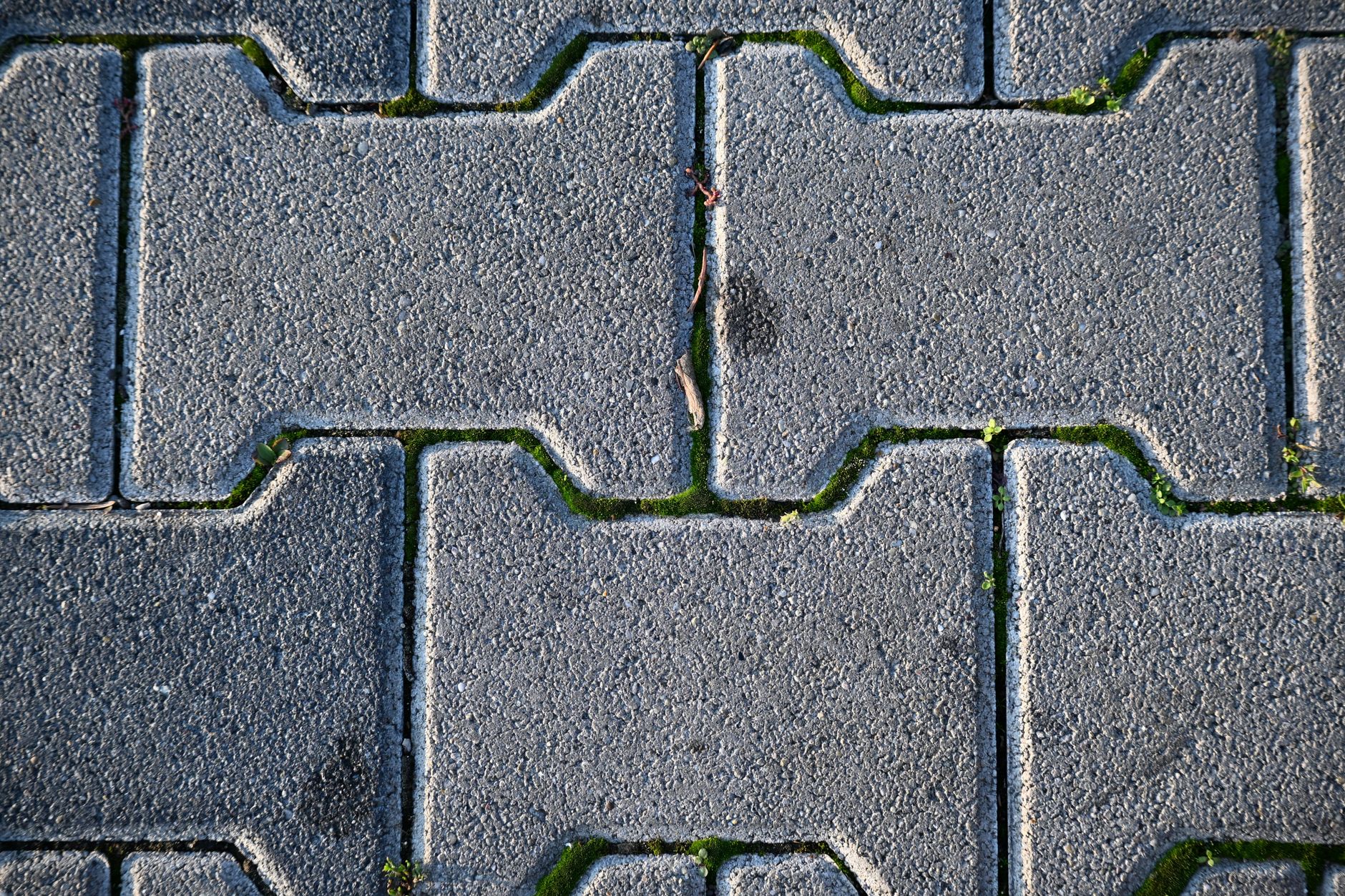
Photo by Edvin Gál
I also watch for buildup that does not look like much at first. A thin film of dirt. Mulch washed from a bed. Grass clippings. A little moss. That stuff traps moisture and feeds new growth. The joint does not need rich soil. It only needs enough organic matter to give a seed a head start.
In humid places, the problem speeds up. Southwest Florida is a good example. Heat and rain do not only grow lawns. They help weeds, algae, and moss settle into paver joints faster than most homeowners expect.
This is why weeds between brick pavers often appear in clusters instead of evenly across the whole surface. One part of the hardscape gets more sprinkler overspray. One walkway runs along a hedge. One patio corner never dries out, requiring more frequent maintenance.
Once I spot those patterns, the return of weeds stops feeling mysterious. The surface is telling me where the moisture lives.
Why pulling, spraying, or blasting rarely solves it
I perform hand pulling too. Sometimes that is the right move for a quick cleanup. The problem is that hand pulling the green part does not change the conditions that allowed it to grow in the first place.
If the root breaks off, it can return. If the seed head drops while I am tugging, I may have planted the next round. If I leave the dirty joint intact, another seed will land there soon enough.
Many people turn to a natural weed killer for a quick fix, such as pouring boiling water into the joints or creating a DIY mixture of vinegar and salt. While white vinegar and salt can wilt leaves, they rarely kill the deep root systems buried between pavers. Furthermore, excessive salt can damage surrounding landscape plants or stain stone surfaces over time. While these methods are common, they are only temporary solutions that do not address the void left in the joint.
Herbicides can help in some cases, but they are often treated like a full solution when they are only one piece of the puzzle. A contact herbicide may kill the top growth without fixing the joint. A stronger chemical might knock the weed back longer, but it still will not replace missing sand or correct a drainage problem.
Then there is the pressure washer. I like using a pressure washer when it is done with control and followed by the right repair steps. Used the wrong way, however, a pressure washer can make the next weed cycle worse.
Here is what happens. The surface looks cleaner, but the water blasts out joint sand. That leaves wider, deeper gaps where fresh debris settles. Seeds land in the loosened material, and a few weeks later, the weeds are back. If I use a pressure washer to clean pavers and do not replace lost joint sand, I have made them look better for a week and easier for weeds next month.
I think about it the same way I think about roof cleaning. A roof usually needs a soft wash, not brute force, because too much force can damage the surface. Pavers can handle more than shingles, but the idea still holds. Good cleaning is controlled cleaning.
That matters for more than pavers. Roof cleaning, siding care, and surface washing all work better when I match the method to the material, instead of treating every problem like it needs maximum pressure.
What I do when I want weeds between pavers to slow down
A longer lasting fix is less dramatic than people expect. I clean the surface to remove weeds, restore the paver joints, and then protect the surface so dirt and moisture have a harder time settling in.
That process starts with careful cleaning. Sometimes that includes pressure washing to help remove weeds, but it is not a one step miracle. The real win comes after, when the joints are re-sanded using high quality polymeric sand and stabilized. Proper re-sanding ensures that your hardscape remains durable.
This quick comparison shows what I look for before deciding on the next step:
| What I see | What is happening | What helps most |
|---|---|---|
| A few isolated weeds | Seeds landed in dirty joints | Remove weeds and refill with jointing sand |
| Green lines after rain | Moisture stays trapped in patio stones | Improve drainage and reduce overwatering |
| Weeds return after washing | Joint sand was blown out | Use polymeric sand and compact the joints |
| Paving stones starting to move | Sand loss or base failure | Repair the base or check the original installation |
The piece homeowners miss most is the importance of polymeric sand. Without it, pavers lose the material that helps lock them together. Open joints collect more organic matter, hold more water, and provide an inviting bed for new growth. That is why fresh re-sanding matters so much after cleaning. If you are dealing with persistent growth, using polymeric sand provides a hardened barrier that makes it difficult for roots to take hold. Unlike standard jointing sand, polymeric sand contains binding agents that help keep your joints firm.
When the surface is stable and dry, applying a paver sealer can help. I do not treat a paver sealer like magic, but I do think it changes the odds. A quality paver sealer helps reduce surface porosity, slows staining, and makes it harder for debris to settle in. Driveway sealing also strengthens the surface, ensuring the polymeric sand stays in place longer. While this does not mean weeds can never return, it usually means they have a tougher time getting started.
If the problem has gone beyond a few stray sprouts, I would not stop at basic weed removal. I look at the whole surface, the drainage, the sprinkler pattern, and the structural integrity of the joints. For deep repairs, checking for geotextile fabric beneath the base can also prevent future issues. If you want help with that reset, you can Get a Quote for cleaning, sanding, sealing, or pressure cleaning work.
The goal is not perfection forever. The goal is breaking the cycle that keeps turning the same joints into the same weed patch by using the right polymeric sand and protective sealers.
Frequently Asked Questions
Why do weeds keep growing back in the same spots?
Weeds return to the same areas because those specific joints act as moisture traps or collection points for organic matter. Once a pattern of debris buildup and dampness is established, it becomes a preferred site for wind-blown seeds to germinate repeatedly.
Can I just use a pressure washer to get rid of the weeds?
While a pressure washer can remove existing weeds, it is risky if used improperly because it often blasts away the necessary joint sand. If you leave these deeper, empty gaps, you create the perfect conditions for new seeds to settle and grow faster than before.
What is the benefit of using polymeric sand?
Polymeric sand contains binding agents that harden once activated, creating a stable, water-resistant barrier between pavers. This hardened surface makes it significantly more difficult for weed roots to establish a foothold compared to loose, traditional sand.
Does applying a sealer actually stop weeds?
Sealing your pavers does not make the surface completely immune to weeds, but it does make the stone less porous and keeps the joint material protected. By reducing surface staining and helping the joint sand stay in place, a sealer creates an environment that is much less hospitable to new plant growth.
Final thoughts
When weeds between pavers keep showing up, I do not blame the plant first. I blame the environmental conditions. Loose sand, trapped moisture, and built-up debris are exactly what keep inviting the next round of growth.
That is why the fix is rarely to pull harder or spray more. A clean surface helps, but rebuilt joints and the right protection are what actually help you prevent weed growth effectively. By focusing on proper maintenance rather than temporary fixes, you can stop your patio or walkway from acting like a hospitable planter.
Pull one weed today, and another may appear next week. Change the joint material, however, and the surface finally stops acting like a home for unwanted guests.