
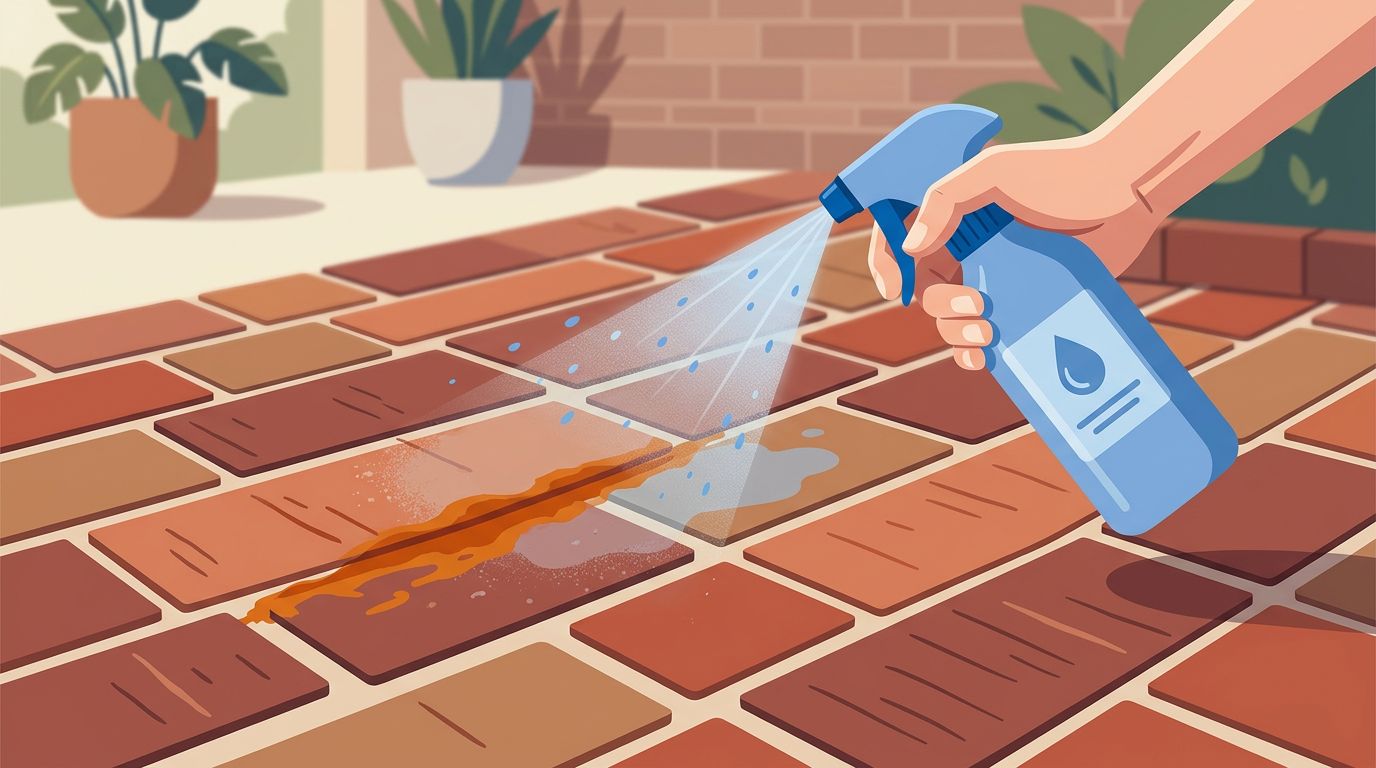
Rust on brick is sneaky. One orange iron oxide streak can make the whole driveway look tired.
I’ve seen homeowners scrub at rust stains until the brick looks worse than the spot. If I want to remove rust from brick, force isn’t the answer. The right cleaner and the right order are.
The good news is that most rust marks can come off without wrecking the pavers. Clay brick has a way of showing every mistake in full sunlight. That’s why I always start by finding the source first.
Key Takeaways
- Identify the source first: Before attempting to clean, always locate and remove the metal object, fertilizer, or sprinkler issue causing the rust to prevent the stain from returning.
- Use the right chemistry: Avoid harsh substances like muriatic acid or bleach, which can damage or fade your brick; instead, opt for professional-grade, masonry-safe rust removers formulated with oxalic acid.
- Prioritize technique over force: Never use a wire brush or excessive pressure, as these can scar the brick surface and wash away essential joint sand.
- Protect your investment with sealant: After a deep clean and re-sanding, applying a brick sealer helps slow down the absorption of moisture and contaminants, making future cleanup significantly easier.
I find the source before I touch the stain
Before I open a bottle or grab a hose, I ask one question: where are the rust stains coming from? If I miss that part, the blemish comes back and the whole job starts over.
Most of the time, the cause is simple. Metal patio furniture, a rusting gate, fertilizer with iron, well water, or sprinkler heads can all leave that orange-brown bleed on brick. I have even seen a forgotten wrench stain pavers after a few rainy days. These same principles apply if you are cleaning a brick chimney or other masonry surfaces around your property.
Not every orange mark is rust, though. Brick driveways also collect leaf tannins, efflorescence, and ground-in dirt. Rust usually looks sharper. It often starts at one point and spreads outward like a spill.
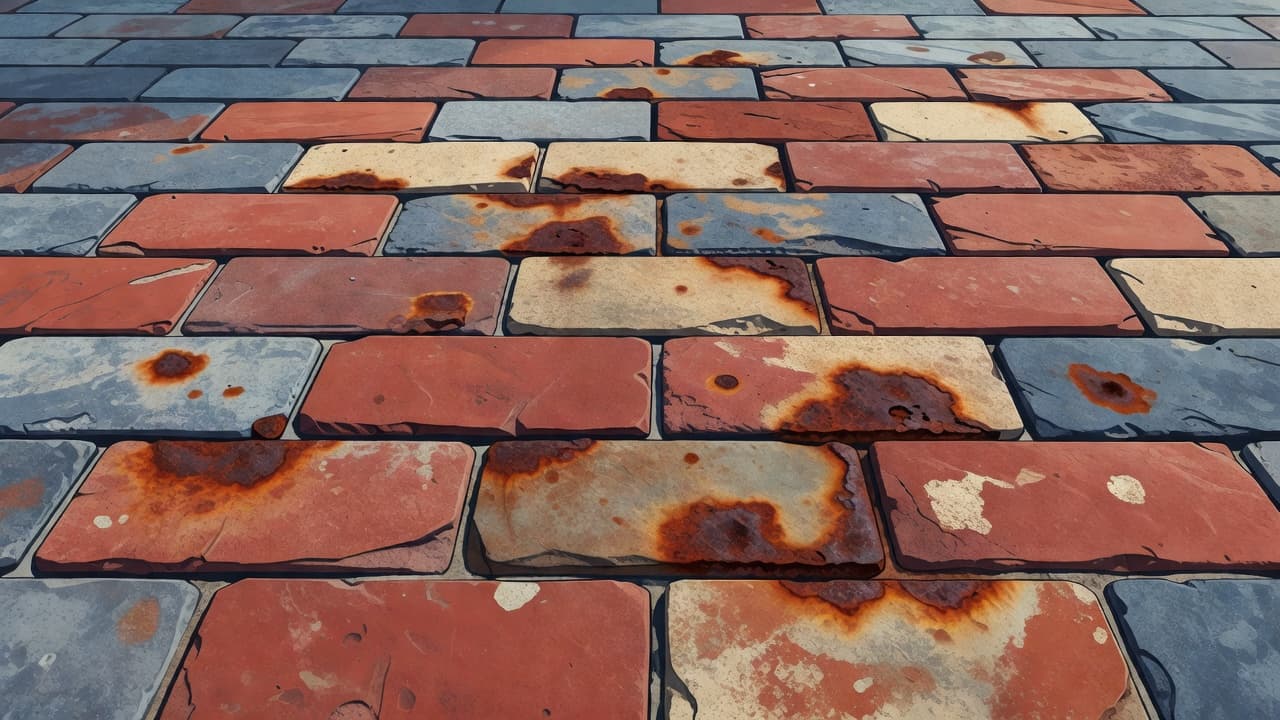
That source matters because brick is porous. Once rust settles in, random scrubbing will not pull it back out. A wire brush can scar the face of the brick. Strong acid can bleach the color in one patch while the stain hangs around.
If the stain sits near a joint, I also check the sand. Aggressive cleaning can wash joint sand out, and loose joints lead to loose pavers.
When I see a bad stain, I remove the metal source first. Then I sweep the area and test a small area to ensure material compatibility. That check tells me how the brick reacts before I commit to the full driveway.
The right way to clean rust from brick
People ask me all the time if a pressure washer alone will fix rust. Usually, no. It helps with surface grime, but rust is a chemical bond, not loose dirt.
I use pressure washing as a support step, not the whole plan. The real work comes from a brick-safe rust remover, patience, and a scrub brush.
Start gently and test the cleaner
First, I dry-clean the area. I sweep off grit, leaves, and loose sand so I don’t grind debris into the brick while I work. Then, I protect nearby grass and metal by wearing protective gear and eye protection.
Next, I apply rust removal products formulated for masonry. While some people try DIY hacks, I prefer professional-grade solutions like F9 Barc or cleaners based on oxalic acid, which are far safer and more effective. I follow the dwell time on the label before using these cleaning chemicals. After that, I agitate the stain with a scrub brush. Small circles beat panic scrubbing every time.
Skip the harsh shortcuts
Muriatic acid is the shortcut that often turns into a bigger bill.
This substance is essentially a diluted form of hydrochloric acid. I have seen it etch brick, fade color, and leave the stain half-removed. Bleach can cause problems too. It has its place, but rust removal usually isn’t it.
I also don’t treat brick the same way I handle roof cleaning. On a roof, a soft wash is often the safer option because shingles and tile need low pressure. Brick can handle more than a roof, but that doesn’t mean it wants brute force.
Rinse with control, not with panic
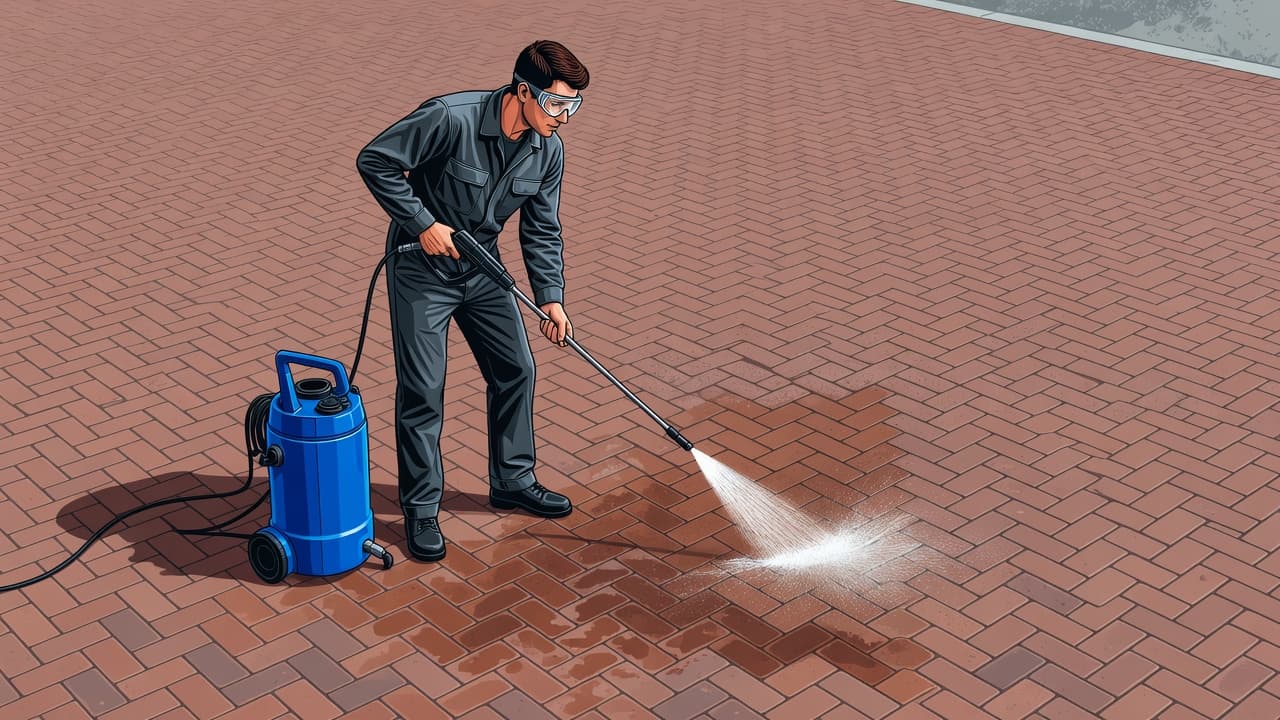
After the cleaner has done its job, I rinse thoroughly. Sometimes I use controlled pressure washing with a wide fan tip, but a standard garden hose often works for smaller areas. I am always mindful of chemical runoff to ensure it does not harm surrounding landscaping. I keep the nozzle back, as being too close can rough up the face of the brick or blow out the joints.
If you are dealing with stubborn stains, I may need a second treatment. That is normal. Rust often lifts in stages, and a careful repeat is better than one reckless pass.
When a driveway has widespread staining, failed DIY attempts, or damaged joints, I stop guessing and bring in help. If that is where you are, Get a Quote for professional services including sealing or pressure cleaning to get the brick restored the right way.
How I keep rust stains from coming back
Once the rust is gone, I switch from cleanup to prevention. Otherwise, it is like mopping up a leak while the pipe still drips.
I look for rusty furniture feet, exposed steel edging, and fertilizer spills. If you use well water for your irrigation, the iron content in the spray often leaves a distinct pattern that makes the source easy to spot.
After the surface dries fully, driveway sealing can help protect your investment. Sealing does not hide rust, and it will not stop metal from staining forever. What it does is slow down how quickly moisture and contaminants sink into the porous brick, which makes the next cleanup much easier.
I find that sealing is even more effective after a deep clean because fresh brick tends to absorb everything. If the cleaning process removed any joint sand, I re-sand the gaps first and then apply the sealer. That keeps the surface tighter and helps the whole driveway look uniform again.
Routine care matters too. I recommend sweeping off metal debris and adjusting any sprinkler heads that hit the pavement. Using a water hose to perform regular rinsing is a simple way to prevent mineral buildup before it turns into a stubborn stain. If house washing or pressure washing is already on your schedule, I suggest checking the brick at the same time so small rust spots do not sit for months.
Frequently Asked Questions
Can I use household vinegar to remove rust from my brick driveway?
While vinegar is a common DIY cleaner for many household tasks, it is generally ineffective against stubborn iron oxide stains on masonry. Furthermore, its acidic nature can potentially etch the surface of certain types of clay brick, making it a risky choice compared to professional-grade masonry cleaners.
Is it safe to use a pressure washer on my brick pavers?
Pressure washing is helpful for surface grime, but it should not be your primary tool for removing chemical rust bonds. If you do use one, keep the nozzle at a safe distance and use a wide fan tip to avoid damaging the face of the brick or blowing out the sand between the joints.
Why do my rust stains keep coming back after cleaning?
If the stains return, you likely haven’t addressed the underlying source, such as a rusting gate, fertilizer runoff, or irrigation water with high iron content. You must identify and eliminate the source of the iron oxide before cleaning; otherwise, the brick will continue to be re-exposed to the rusting elements.
Should I seal my brick driveway after removing rust?
Yes, applying a high-quality masonry sealer after a deep cleaning is an excellent way to protect your driveway. It acts as a barrier that slows down the absorption of moisture and potential contaminants, ensuring your brick stays cleaner for a longer period.
Final thoughts
One rust streak can steal all the attention from a good-looking driveway. The fix is rarely more scrubbing. It is better to focus on diagnosis and a calmer cleaning method.
When I remove rust from brick, I start with the source, use a brick-safe cleaner, and rinse with control. That is what protects the color, the surface, and the joints. Taking the time to follow these steps keeps your clay brick looking new and prevents future rust stains from becoming permanent eyesores.
Done right, brick comes back clean. Done wrong, the stain turns into surface damage, and that is the part nobody forgets.