
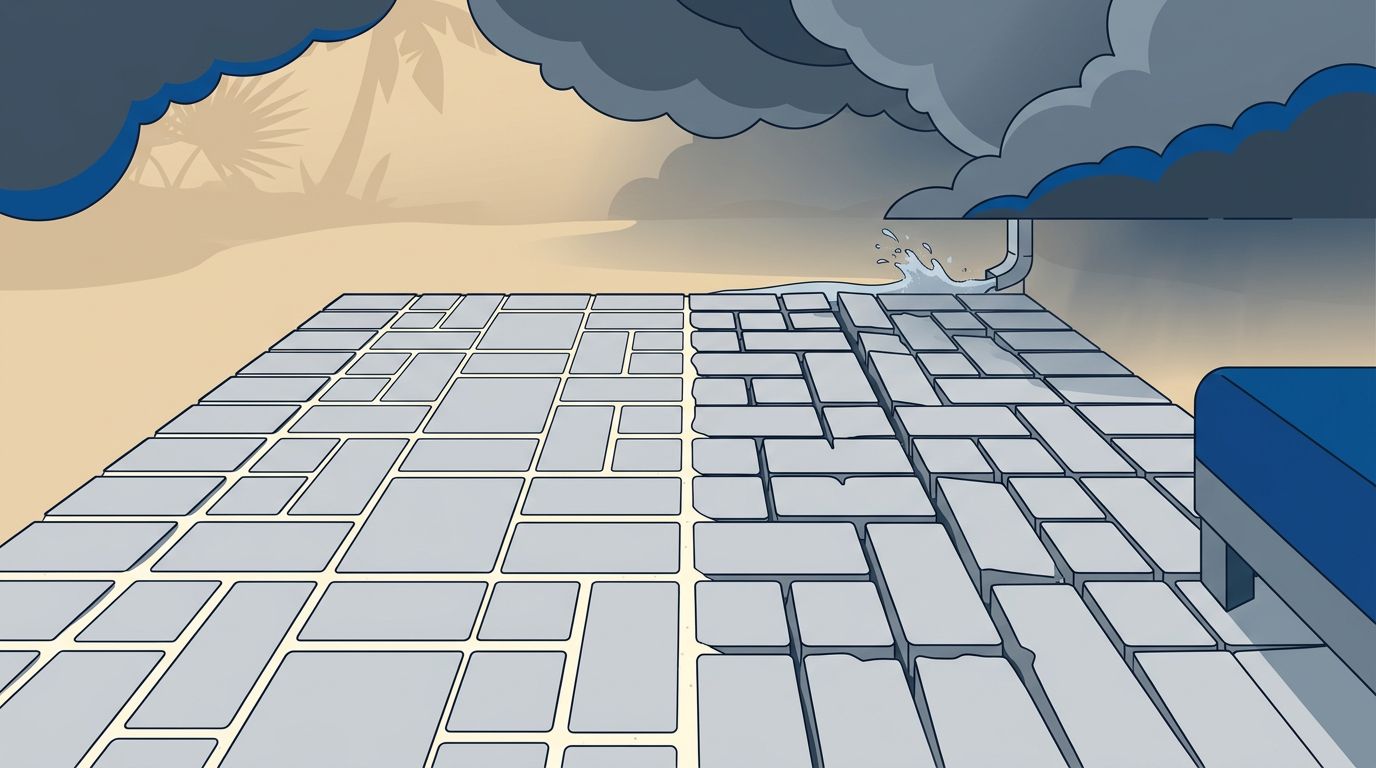
One hard storm can age a paver surface in a single afternoon. I see it all the time in Southwest Florida, where a driveway or patio looks mostly fine, but the paver joint sand has thinned out, shifted, or disappeared.
If those lines between your pavers look deeper after a heavy rain, you are not imagining it. High-intensity weather events often lead to significant washout, leaving your joints empty and exposed. When combined with the breakdown of old sealer or the use of improper cleaning methods, this process happens faster than most homeowners expect. While standard sand often fails to withstand our climate, upgrading to a high-quality polymeric sand can provide the necessary durability to keep your patio intact. Here is why this erosion happens and why it matters more than it seems.
Key Takeaways
- Joint Sand is Structural: Paver joints provide the vertical interlock necessary to keep a surface stable; without full joints, individual pavers lose their cohesion and can shift or rock.
- Storms Drive Erosion: Southwest Florida’s intense rainfall frequently washes away standard sand, especially in high-runoff areas like downspout zones or sloped driveways.
- Polymeric Sand is Essential: Unlike loose, standard sand, high-quality polymeric sand hardens to form a durable, water-resistant bond that effectively resists washout during severe weather.
- Preventative Maintenance Matters: Addressing low joints before they become empty prevents weeds, insect infestations, and costly structural movement that often results from neglected paver maintenance.
What paver joint sand is really doing
Most people notice the color of the pavers first. I notice the joints.
That sand between each stone is what helps the whole surface stay locked together. Whether you are using standard joint sand or high-performance polymeric sand, this material fills the gaps to reduce side-to-side movement. This process creates a vertical interlock that spreads weight across the entire field of concrete pavers. Without full joints, the surface loses the tight fit necessary for long-term stability.
A paver driveway is not one solid slab. It is a system of individual units working together. The paver joints are what help those separate pieces behave like one cohesive surface instead of a bunch of loose bricks.
When the joints are filled with compacted polymeric sand, rainwater moves across the surface more evenly. When those joints get low, water finds tiny entry points. Once that starts, the sand can keep washing down and out, little by little.
I tell homeowners this all the time: missing joint sand is not only about appearance. Open paver joints invite weed growth, insect penetration, and moisture damage. On driveways, tire pressure makes these weak spots show up even faster. On pool decks and patios, damp empty joints tend to hold grime and dark staining.
Sealer helps, but sealer is not magic glue. If the joints are already thin, sealing over them will not rebuild what is missing. That is why I look at joint depth before I think about shine.
When I see open joints after a storm, I know the problem is not just cosmetic.
Why Southwest Florida storms wash it out so fast
Southwest Florida rain has a habit of arriving all at once. Summer downpours, tropical systems, and wind-driven storms can dump a massive amount of water on a surface in a very short window. That kind of force does not need a significant weakness; it only needs a starting point.
When homeowners rely on regular sand, the risk of washout increases significantly. Unlike the stable bond created by polymeric sand, regular sand remains loose and easily displaced by flowing water. If the joint sand is already low, a hard storm will finish the job. Water starts moving across the brick pavers, then down into the joints, and finally toward the lowest exit. Each pass carries more material away, leading to a persistent washout that degrades the structural integrity of the walkway or patio.
The worst erosion usually happens where water gets concentrated. I see it below roof valleys, next to downspouts, at the bottom of sloped driveways, near pool cage corners, and along patio edges where runoff gathers speed. A broad sheet of rain is one thing, but a narrow stream of runoff acts like a small cutter, tracing the same path and carrying sand grain by grain.
Saturated conditions make the situation worse, often leading to unsightly staining between the blocks as dirt settles into the gaps. When the joints stay wet for hours, the sand loses its hold. If the surface sealer has worn off, there is even less resistance at the top of the joint where the initial failure begins. Using high-quality polymeric sand provides a crucial defense, as it hardens to resist the movement of water during these intense storms.
I also pay attention to the roofline. A home may need roof cleaning for aesthetic reasons, but from a paver standpoint, I care just as much about where that roof water lands. A proper roof cleaning usually uses a soft wash method, which is easier on the roofing material and less likely to blast debris across nearby hardscapes.
Storms are not always the only cause of these issues. An aggressive pressure washer often sets the table for future storm damage. If someone cleans the surface with too much pressure or the wrong angle, the joints get emptied before the rainy season even starts, leaving the structure vulnerable when the next storm arrives.
How to tell when washed-out sand is becoming a real issue
Most sand loss starts quietly. You do not wake up to a collapsed driveway. You notice deeper lines, a few loose grains at the curb, or a section that seems darker and wetter than the rest after rain.
Then the smaller clues begin to stack up. A paver rocks slightly underfoot. Ants build in the gaps. Weeds find an opening. Water keeps sitting in the same low area.
Here is the quick read I use when I inspect a surface:
| What you see | What it usually means |
|---|---|
| Open gaps between pavers | The jointing sand has dropped and needs attention |
| Sand collecting at edges or drains | Storm-driven washout is carrying material away |
| Pavers that click or rock | The paver joints have lost lateral support |
| Ant hills or weeds in joints | Empty spaces are allowing weed growth and pests to settle |
| Water pooling in one section | Drainage issues are accelerating the need for new jointing sand |
One sign by itself may not mean a major repair is around the corner. A few signs together tell a different story. If I see low joints, slight movement, and standing water in the same area, I do not call that a minor cosmetic issue.
This matters even more on driveways. Cars add downward force and sideways stress. Without enough sand in the paver joints, that pressure shifts toward the edges. Over time, that can lead to chips, widened gaps, and areas that start to drift out of line.
Waiting through another storm season usually makes the fix bigger. Simply filling the gaps is one job, but if the foundation has shifted, you may need a more durable solution like polymeric sand to lock everything in place. Re-sanding a stable surface is manageable, but resetting loose pavers after months of neglect is much harder. If you have significant instability, installing polymeric sand is often the best way to prevent future movement. The earlier I catch these signs, the simpler the solution tends to be.
How I protect paver joints before the next storm
The fix is not complicated, but the order matters.
First, I clean the surface the right way. That means removing dirt, algae, and buildup without stripping out more sand than necessary. After cleaning, the area must dry completely because wet joints prevent the proper installation of new material. To ensure long-term stability, I prefer using polymeric sand because it is specifically designed to resist washout. This jointing compound features angular granules with a precise granule size that interlocks to stay in place.
When I refill the joints, I make sure to sweep the polymeric sand into the joints until they are full. I use a leaf blower to gently remove any excess material from the surface of the pavers. If the material is not properly cleared, it can leave a hazy residue. Once I sweep into the joints thoroughly, I often use a plate compactor to ensure the material settles firmly into the gaps.
Proper activation is the next critical step. I carefully apply water to the area to trigger the polymers within the polymeric sand. It is vital to apply water in a fine mist to avoid washing the material away before it hardens. This reaction between the water and the polymers creates a durable, flexible bond that protects the paver edges. After the sand has gone through its initial curing phase, it becomes highly resistant to the elements.
When I handle driveway sealing, I never seal over empty joints. Good paver sealer helps protect the surface and can help hold the top of the joint together, but it cannot replace missing material. Full joints come first. To add an extra layer of defense, I recommend a stabilizing sealer that penetrates the pavers and reinforces the sand. I always finish with a high-quality paver sealer to lock everything in.
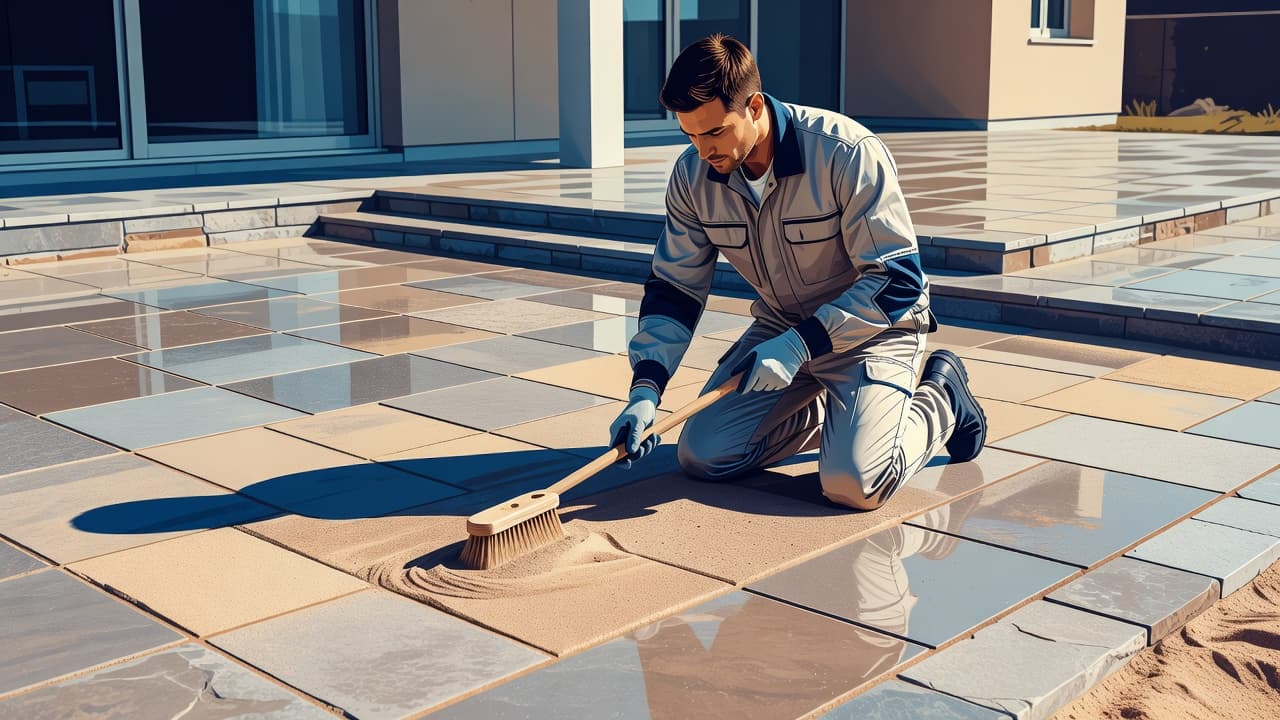
The cleaning method matters more than most people think. Pressure washing is useful when I need to remove heavy grime, old residue, or slippery buildup. Done right, it preps the surface. Done wrong, it empties the joints in minutes. I use a leaf blower afterward to ensure the surface is clean and debris-free.
For roofs, siding, and other more delicate areas around the hardscape, I usually prefer a soft wash approach. It cleans without the same aggressive blast, which helps protect surrounding surfaces while keeping runoff more controlled.
I also look beyond the pavers themselves. Sometimes the answer is fresh polymeric sand and sealer. Other times the real issue is a downspout dumping in the wrong place, a low corner holding water, or runoff crossing the driveway every time it rains. Paver problems often start as water-management problems.
That is why I do not separate the surface from the whole exterior. Roof cleaning, pressure washing, and paver maintenance all connect once storm water starts moving in the wrong direction.
If your joints are looking thin now, it is better to fill the joints before the next round of storms. Get a Quote if you want a free look at sealing or pressure cleaning services before small washout turns into loose pavers.
Frequently Asked Questions
Why does my paver sand keep disappearing after it rains?
Southwest Florida storms often dump significant amounts of water very quickly, which can physically displace loose sand from your paver joints. If you are using standard joint sand, it lacks the binding strength to resist these high-intensity runoff events, leading to recurring erosion.
Can I just seal over my current pavers if the sand is low?
No, you should never seal over empty or thin joints. Sealer is designed to protect the surface and lock the existing sand in place, but it cannot rebuild or fill gaps that have already been washed away.
What makes polymeric sand better than regular sand?
Polymeric sand contains specific polymers that activate when misted with water to create a firm, flexible bond between the pavers. This hardened structure is much more resistant to wind, rain, and the constant stress of foot or vehicle traffic compared to traditional loose sand.
How can I tell if my pavers need new sand immediately?
Look for clear signs of instability, such as pavers that rock when stepped on, the presence of ant hills or weeds between the gaps, or sand collecting in piles at the edges of your patio or driveway. If you see these signs, it is time to have your joints refilled to prevent further structural damage.
What I watch after every big storm
After a heavy Southwest Florida rain, most people look for broken branches or screen damage first. I look at the lines between the pavers. That is where small trouble usually shows up before it becomes expensive trouble.
Paver joint sand disappears a little at a time, which is why homeowners often miss it. But once those paver joints open up, every future storm has an easier path to do more damage to your interlocking pavement.
Catch it early, refill it properly, and protect it with the right cleaning and sealing plan. By using high-quality polymeric sand, you create a durable barrier that stays put when the weather turns. Investing in premium polymeric sand is the most effective way to keep a good-looking driveway, patio, or pool deck from turning into a costly repair project.