
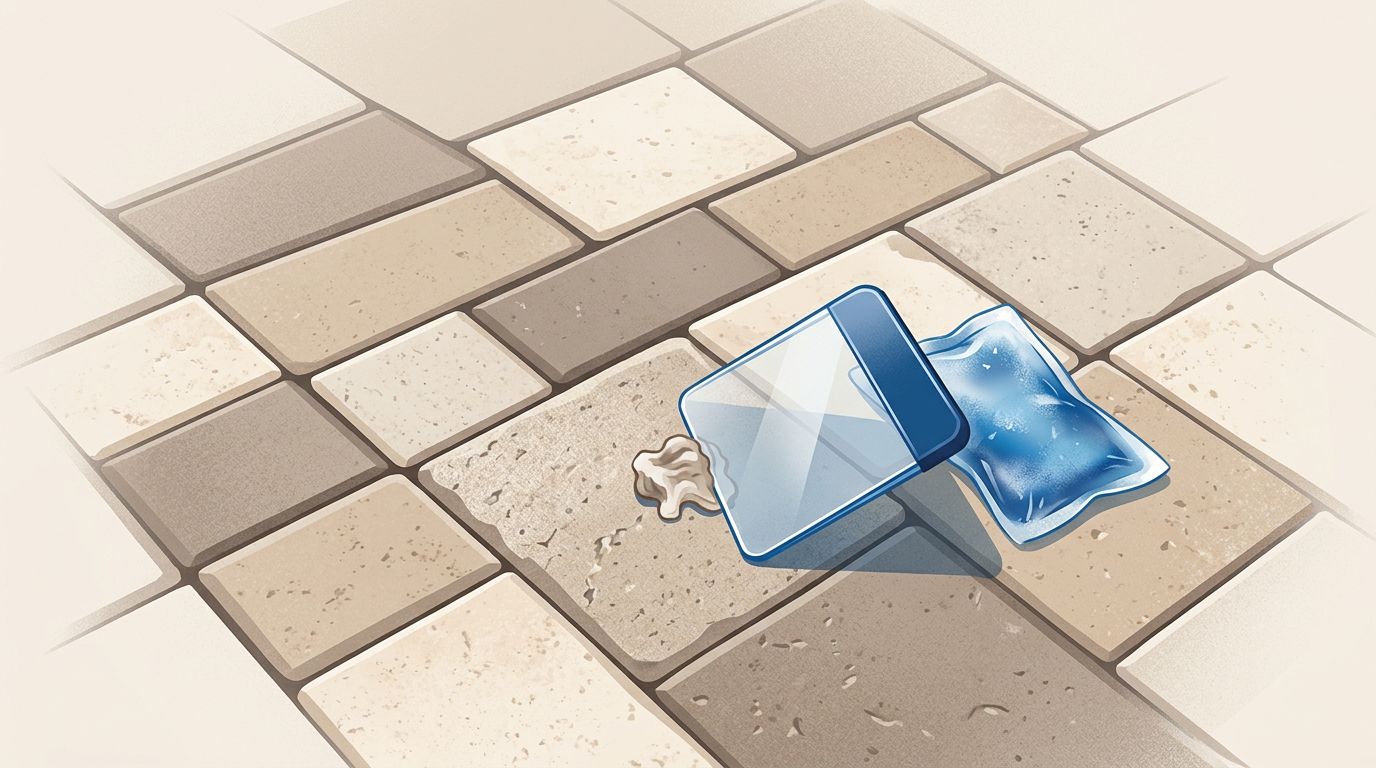
A single wad of chewing gum can leave a dark, sticky mark on an otherwise clean driveway or patio. When you need to remove gum from pavers, the fastest-looking fix is often the one that causes damage behind the spot.
Brick and travertine pavers have pores and textured faces, while joint sand and protective sealers can be vulnerable. I start with the least-aggressive method, increasing cleaning strength only when the surface can handle it. That approach removes the gum without trading one problem for chipped brick, stripped sealer, or missing sand.
Key Takeaways
- Start by freezing the gum, then lift it with a plastic scraper held nearly flat against the paver face.
- Avoid metal tools, hot water, turbo nozzles, and excessive pressure that can scratch pavers, strip sealer, or remove joint sand.
- Test household cleaners, degreasers, and chemical products on an inconspicuous area before applying them to brick, concrete, or travertine pavers.
- Let the surface dry completely before deciding whether a shadow remains or applying paver sealer.
- Persistent or embedded gum may require controlled pressure washing, specialty treatment, or professional cleaning rather than harsher DIY methods.
Why Chewing Gum Becomes Difficult to Remove
Fresh chewing gum usually sits on top of the paver. With time, foot traffic presses it into the texture. Heat softens it during the day, while dirt and moisture collect around the sticky residue. After repeated heating and cooling, the gum becomes harder to lift cleanly.
Porous concrete and brick pavers can also hold a dark shadow after the gum itself is gone. That shadow may contain oils, dirt, or old sealer mixed into the residue. A wet surface can hide the mark temporarily, so I always let the pavers dry before deciding whether the stain has been removed.
Interlocking pavers need more care than concrete surfaces formed as one solid slab. Water and scraping force can disturb the joints between individual bricks. If too much joint sand is removed, the pavers can shift, weeds can enter, and rainwater can wash into the base.
The interlocking paver maintenance guide provides useful care information for block paving installations, including the importance of cleaning methods that match the surface. The goal is not to blast one spot until it looks different from the rest of the driveway. The goal is to clean the gum while keeping the entire area even.
Start With the Freezing Method and the Least Force
For one or two chewing gum spots, I start with a small set of simple tools:
- A plastic putty knife or plastic scraper
- A bag of ice or an ice pack
- A nylon-bristle brush
- Warm water and mild dish soap
- Clean towels or absorbent rags
- A bucket for collecting removed gum
Freeze, lift, and clean the remaining residue
Place the ice pack over the gum for several minutes. The gum should become firm and brittle instead of stretchy. If you use loose ice cubes, keep them inside a plastic bag so melting water doesn’t spread dirt into the joint sand.
Don’t use hot water before the gum hardens, since heat can soften it and spread the material.
Once the gum hardens, slide the plastic scraper under one edge. Keep it nearly flat and push across the paver rather than digging downward. During manual scraping, lift the gum in small pieces rather than forcing one large section. When scraping gum, keep the tool focused on the paver face and stop if it catches. Rushing while scraping gum can pull loose sand from the joints or leave a gouge.
Never start with a metal scraper unless you’re willing to accept the risk. Metal can scratch a sealed paver, chip a sharp edge, or leave behind tiny steel deposits that later create rust-colored marks. A plastic tool is slower, but it is much safer for brick and travertine.
After lifting the gum, apply warm water with a small amount of dish soap. Blot the sticky residue first, then use a nylon brush to work through the remaining film. The maintenance guidelines for concrete products also favor a garden hose and nylon brush for routine paver cleaning.
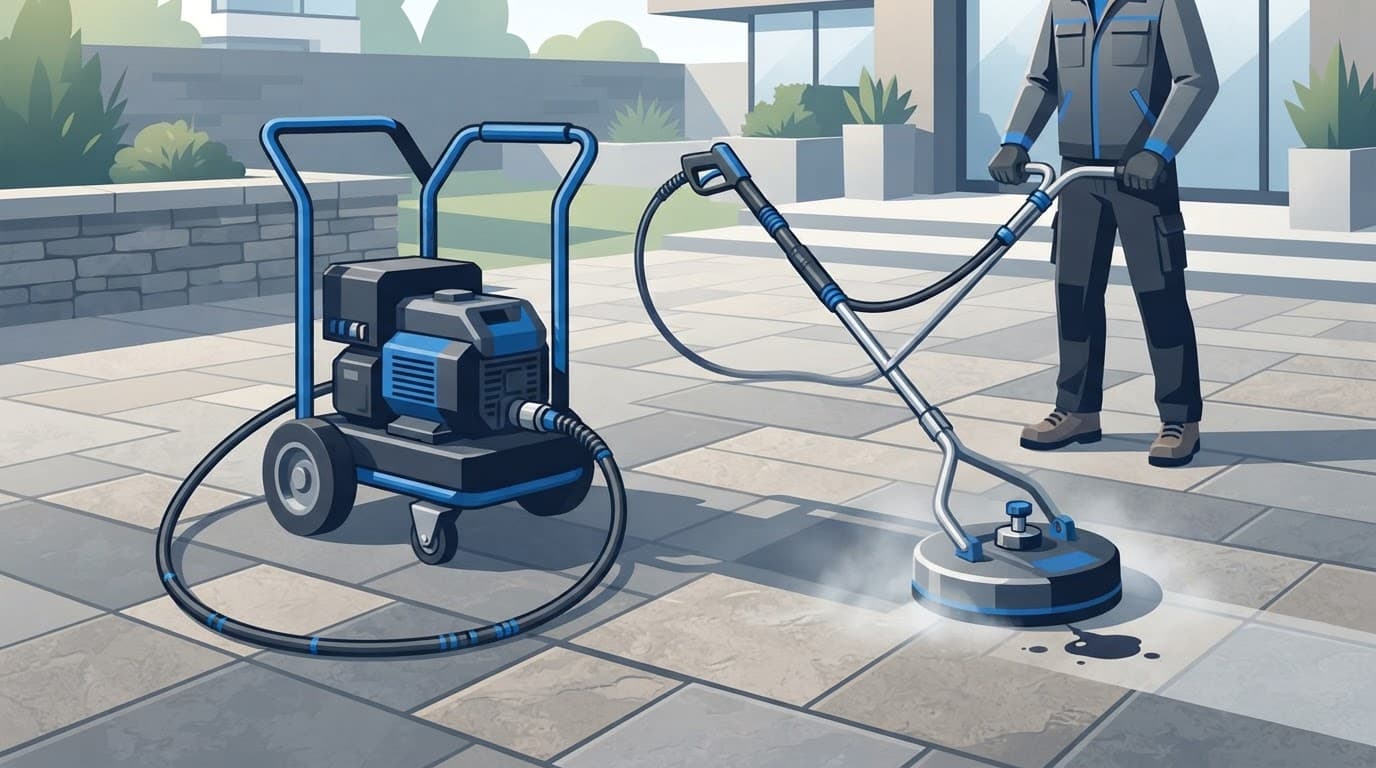
Rinse with a small amount of clean water and collect the loosened residue. Don’t flood the area if the joints are already low or loose. Allow the paver to dry fully before deciding whether another treatment is needed.
The safest scraper is the one that lifts the gum without touching the joint sand. Keep the work focused on the paver face.
When Hot Water and Pressure Washing Make Sense
Cold water can rinse away loose dirt, but it usually doesn’t soften old chewing gum. High pressure with cold water may smear the gum, spread oily residue, or force it farther into the pores.
Hot water works better because heat softens old gum and loosens oils at the same time. A commercial power washer can operate near 200 degrees Fahrenheit, but that doesn’t make it safe for every paver. Heat can affect concrete surfaces, sealers, and finishes differently. Test an inconspicuous area first, then control the distance, spray pattern, pressure, and drainage.
I don’t use one fixed PSI for every driveway. Brick, travertine, concrete surfaces, old sealers, and joint sand can all respond differently. The correct pressure is the lowest effective pressure, tested before the gum spot is treated.
For a controlled pressure washing process, I use the following approach:
- Inspect the paver face, joints, nearby drains, and existing sealer.
- Remove as much gum as possible with freezing and plastic scraping.
- Apply a product approved for the specific masonry surface when needed.
- Use a wide spray pattern and keep the nozzle moving.
- Rinse from the clean side toward the drainage path.
- Check the joints after drying and replace sand only when necessary.
A 15 degree tip may help a trained operator target softened residue, but I don’t begin there on an unknown surface. I also avoid starting with a turbo nozzle. A turbo nozzle’s concentrated rotating spray can cut lines into brick, strip sealer unevenly, and remove more joint sand than the gum requires.
High pressure is a finishing tool for loosened residue, not a substitute for softening the gum first.
A surface cleaner can be useful when the whole driveway or patio needs cleaning. It keeps the spray more even than a wand held too close to the paver. Spot cleaning with a wand requires extra care because an uneven pass can leave a visible clean patch.
Laser cleaning is a specialized, waterless option for certain commercial cleaning projects or delicate restoration work. It isn’t a practical DIY method, and laser cleaning should be handled by a qualified provider.
The Techo-Bloc paver care guide is another helpful reference for cleaning and maintaining manufactured pavers. Manufacturer instructions should take priority when the surface has a special finish or coating.
Household Products Need Careful Testing
Homeowners often ask about household products and chemical solvents. These treatments may affect chewing gum, but they can also create a second stain.
WD-40 may loosen gum residue, but its oil can soak into porous brick and concrete surfaces. That can leave a darker mark than the gum. If it is used at all, I would apply a very small amount to a cloth or cotton swab, keep it away from the joints, and follow with a masonry-safe degreaser. A test spot is required.
Vinegar and baking soda aren’t automatically safe for pavers. Vinegar can affect concrete, natural stone, some sealers, and joint materials. Baking soda is milder, but scrubbing dry powder into a textured paver can create unnecessary abrasion. I don’t mix household cleaners or use vinegar near an unknown chemical treatment.
Citrus-based cleaners can be a better option when the label approves them for the specific masonry surface. Apply the product only to the remaining sticky residue. Let it dwell according to the label, then rinse without flooding the joints.
Extra caution is needed with acid-based cleaners. Wear chemical-resistant gloves and eye protection, protect plants and metal fixtures, provide ventilation, and follow the product label. Never mix acid with bleach, ammonia, or another cleaner. If acid-based cleaners make the paver pale, rough, or pitted during testing, stop immediately.
Laser cleaning is a professional alternative for difficult gum deposits. A controlled beam can ablate or vaporize surface contamination, helping protect joint sand in sensitive areas. Rather than applying an untested product containing chemical solvents, laser cleaning operates without water or liquid treatment. The equipment is expensive, and its settings must match the paver and coating. Laser cleaning suits specialty restoration; laser cleaning is generally more appropriate for commercial cleaning than one residential spot.
When Gum Removal Needs Professional Treatment
Some gum stains are no longer simple surface problems. Manual scraping may remove loose material, but embedded deposits require closer inspection. Laser cleaning may be considered for persistent deposits, while chemical solvents and acid-based cleaners should be reserved for tested, surface-appropriate situations. Cleaning can improve the appearance, but it cannot reverse a chipped, burned, etched, or permanently discolored paver.
I inspect the full area before choosing a repair. A power washer may suit isolated residue at a controlled setting, but high pressure is not automatically the right repair. Laser cleaning can be compared with controlled pressure washing for embedded deposits. Whole-area cleaning may create a more even appearance, while replacing a severely damaged paver may be cleaner than harsher treatment.
At Kingsway Paver Sealing & Pressure Cleaning, I use different methods for different exterior surfaces. Roof cleaning typically calls for a soft wash because shingles don’t need the force used on a driveway. Pavers need their own measured cleaning process, especially when polymeric sand or an older sealer is present. Laser cleaning may suit specialty restoration or larger commercial cleaning projects, while sidewalk cleaning requires its own assessment.
After the gum and residue are gone, the surface should dry completely before driveway sealing or paver sealing. Sealing over oil-based residue or discoloration can trap the mark and complicate future correction, so a degreaser may be needed first. During inspection and quotation, laser cleaning can be discussed for unusual deposits. If you need help with safe cleaning, restoration, or sealing in Fort Myers, Naples, Bonita Springs, Port Charlotte, or nearby areas, you can Get a Quote.
Frequently Asked Questions
What is the safest way to remove gum from pavers?
Freeze the gum with an ice pack until it becomes firm and brittle. Then lift it carefully with a plastic scraper and clean the remaining residue with warm water, mild dish soap, and a nylon brush.
Can I use a pressure washer to remove gum from pavers?
Pressure washing can help with softened residue, but it should not be the first step. Use the lowest effective pressure, a wide spray pattern, and a moving nozzle after removing as much gum as possible manually.
Will WD-40 remove gum from brick or concrete pavers?
WD-40 may loosen gum, but its oil can soak into porous pavers and leave a darker stain. If you use it, test a very small area, keep it away from the joints, and follow with a masonry-safe degreaser.
Should I use vinegar or acid to remove gum from pavers?
Vinegar and acid-based cleaners can affect concrete, natural stone, sealers, and joint materials. Use them only when the product is approved for the specific surface, and always test first while following the label and required safety precautions.
When should gum removal be handled by a professional?
Professional treatment is worth considering when the gum is embedded, the paver is delicate or sealed, or manual cleaning leaves a persistent shadow. A professional can compare controlled pressure washing, specialty cleaning, and paver replacement without unnecessarily damaging the surrounding surface.
Protect the Pavers After Gum Removal
The best time to deal with gum is before it collects dirt or gets pressed into the pores. I freeze or otherwise harden fresh gum, lift it with a nonmetal tool, clean lightly, protect the joints, and let the surface dry.
I never treat interlocking pavers like a plain concrete slab. The paver face, sealer, drainage, and joint sand all need protection, so I keep pressure washing controlled and use it only when necessary. With that order of work, you can remove gum from pavers without creating a larger repair.