
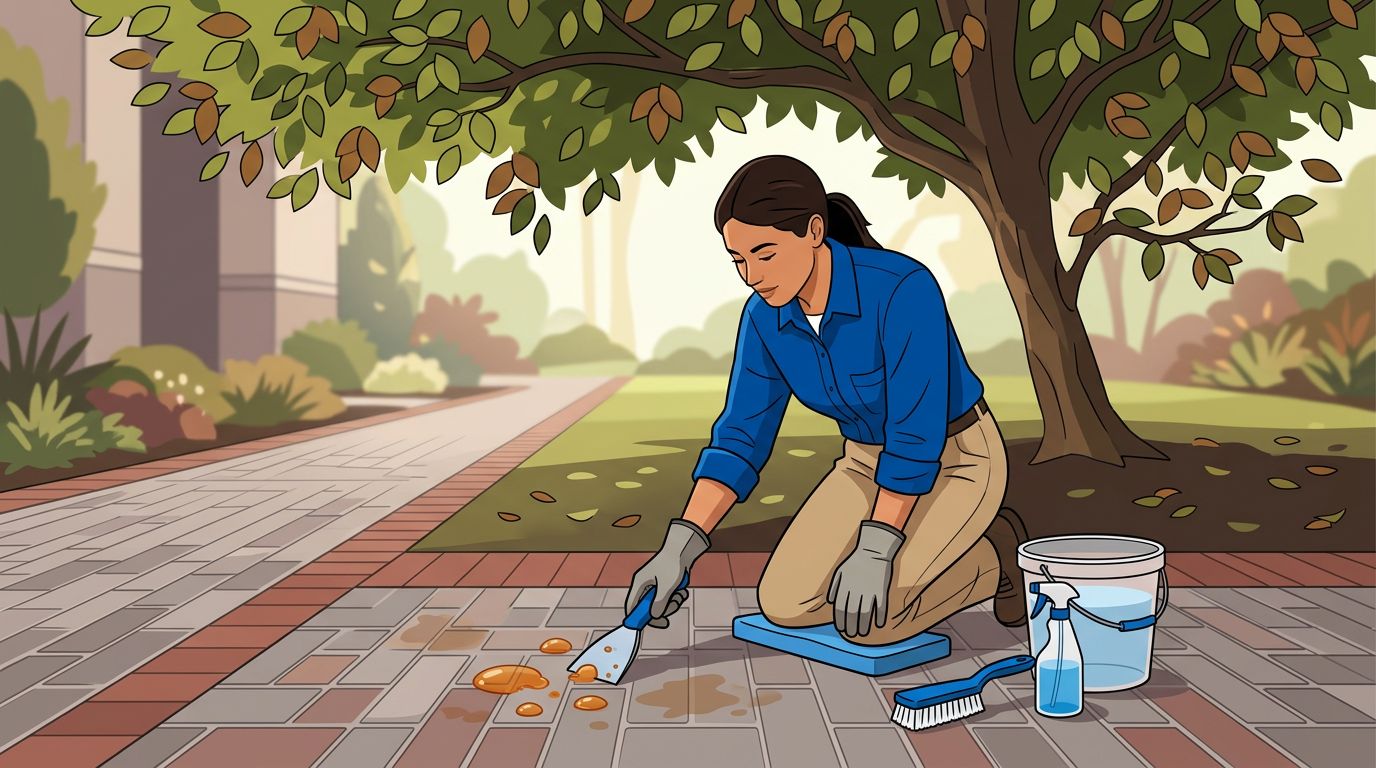
Pavers beneath a tree can become sticky, dark, and difficult to clean within weeks. Plain water may remove dust and loose leaves, but it usually leaves hardened resin or brown stains behind.
I inspect the stain before choosing a cleaner or pressure setting on pavers and other exterior surfaces. Sap, leaf tannins, old sealer, and organic debris each respond differently. The safest process loosens the staining material first, protects paver color and joint sand, then uses controlled rinsing to finish the job.
Key Takeaways
- Identify whether the stain is tree sap, leaf tannin, old sealer, or organic debris before choosing a cleaner or pressure setting.
- Start with the least aggressive method: sweep the area, lift hardened sap with a plastic scraper, apply a paver-safe cleaner, agitate with a nylon brush, and rinse with controlled pressure.
- Plain water pressure washing often fails on hardened resin and older tannin stains; excessive heat, pressure, and harsh chemicals can damage paver color, sealer, masonry, and joint sand.
- Test every chemical in an inconspicuous area, keep cleaners wet for the recommended dwell time, use protective equipment, and protect nearby plants and natural stone.
- Allow pavers to dry fully before inspecting, replace washed-out joint sand, and seal only after the surface is clean, stable, and free of remaining sap shadows.
Why Tree Sap Brick Pavers Develop Stubborn Stains
There are two common organic stains on exterior pavers: resinous residue and tannin stains. They may appear together, especially under trees that drop leaves, fruit, bark, and small branches.
Tannins are natural compounds found in leaves, bark, acorns, and other plant material, including tannin-rich leaf litter from live oaks. Rain and dew pull tannins from wet leaves and carry them onto the porous surface of pavers. As moisture evaporates, the brown material remains inside the surface. These tannin stains create the familiar brown outlines and ghost-shaped marks left by leaves.
Sap contains resinous material that doesn’t mix easily with water, so the residue behaves differently. When it lands on a driveway or patio, it can remain sticky for a short time. Sun, heat, dirt, and foot traffic then harden the spot and make it darker. Once the resin settles into a brick paver’s texture, a water rinse usually can’t remove it.
Black olive trees are common staining offenders in Southwest Florida. They may leave small leaves, fruit, bark, and sticky organic residue across a hardscape, while ficus fruit adds another tacky source. Beneath live oaks, recurring buildup under the canopy can produce a similar pattern. This organic staining isn’t always pure resin, since plant material, moisture, shade, and repeated leaf drop can all contribute.
I also check whether the pavers are sealed. Old sealer can hold resin at the surface, while worn or unsealed pavers may absorb it into a porous surface. A stain that looks small while wet can appear larger after the paver dries. Identifying whether a mark comes from leaf tannin and tree sap helps determine how it should be treated.
Safe Tree Sap Removal Methods for Pavers
Start with the least aggressive method that fits the stain. I don’t begin with the highest pressure or strongest chemical. That approach can strip sealer, fade paver color, and remove more joint sand than necessary.
Follow these steps for a small, manageable spot:
- Sweep away loose leaves, needles, dirt, and other organic debris with a soft broom. Don’t grind dry material into the paver.
- If the sap is raised or hardened into resin, lift it carefully with a plastic scraper. Keep the scraper nearly flat, and avoid metal tools that can scratch the brick face.
- Apply a paver-safe degreaser or compatible resin remover to a small test area. Let it sit for the dwell time listed on the product label, and keep it from drying on the paver.
- Agitate gently with a nylon brush. Work toward the center of the stain instead of spreading softened residue across clean pavers.
- Rinse with controlled water pressure and inspect the area after it dries. Repeat a mild treatment if needed instead of immediately switching to a harsh chemical.
Homeowner advice, including this homeowner discussion about paver sap cleanup, mentions alcohol or petroleum-based products. These may loosen certain fresh spots, but they can also soften an existing sealer, leave an oily film, or create larger discoloration. I only consider a solvent-based approach after testing an inconspicuous area and checking the surface condition.
For brown leaf marks and tannin stains, sodium percarbonate, citric acid, or oxalic acid may suit the residue better than a solvent. The oxygen-based cleaner helps lift organic residue, while the milder option suits light discoloration. The latter can react with stubborn brown discoloration, but it isn’t harmless to masonry.
Acidic cleaners can fade paver color, weaken some joint materials, and damage nearby travertine or other natural stone. A product labeled for concrete and pavers still requires a paver-specific test area. Some heavy-duty alkaline cleaners contain sodium hydroxide. It can damage paver color, sealer, or masonry, so consider these products only when the label permits paver use. Any chemical reaction with masonry, coatings, or nearby stone can cause damage. Use gloves and eye protection, follow the label, protect plants, and never mix cleaning products. If the stain covers a large driveway or sits next to delicate surfaces, professional testing is safer than guessing.
Keep the cleaner wet for the label-specified dwell time so it can loosen sap or tannins before rinsing. High pressure applied too early can spread the stain and drive residue farther into porous brick.
Why Plain Water Pressure Washing Often Fails
Pressure washing is useful, but water pressure alone isn’t a chemical treatment. Hardened tree sap is hydrophobic, so water tends to move around it instead of dissolving it. A narrow spray may remove dirt beside the spot while leaving the resin attached.
The same issue occurs with tannin stains. Water can carry fresh tannins away before they settle, but an older brown mark may have already absorbed into the paver. Repeated cold-water rinsing may lighten the surface without removing the discoloration.
Hot water pressure washing can improve sap removal because heat softens the resin bond and helps a suitable cleaner work faster. This doesn’t mean using hot water at excessive temperatures, boiling water, a heat gun, or a torch. Sudden heat can cause cracking, spalling, sealer damage, or permanent color changes. The water temperature, pressure, nozzle, and distance must match the paver and its existing coating.
At Kingsway, my controlled process usually includes:
- Inspecting the paver face, joints, drainage path, nearby walls, and landscaping.
- Applying a surface-appropriate pre-treatment and allowing proper dwell time.
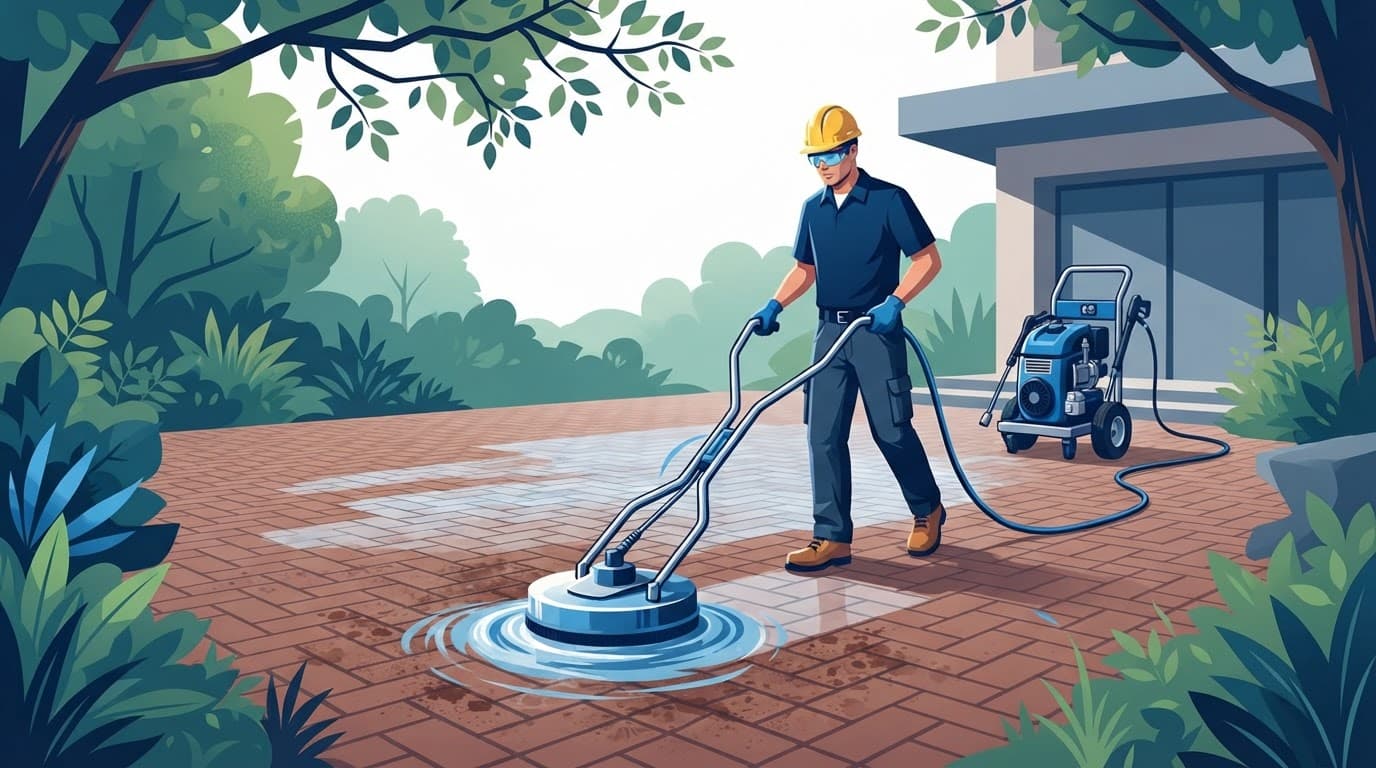
- Using a wide spray pattern or surface cleaner on flat areas.
- Keeping the nozzle moving and away from delicate edges.
- Using controlled rinsing without directing unnecessary force into the joints.
- Checking whether joint sand needs to be replaced after cleaning.
A surface cleaner can help keep the finish even across a larger patio or driveway. It also reduces the straight lines and patchy appearance that can happen when a narrow wand is held too close. A useful visual example of cleaning leaf and sap residue is shown in this paver cleaning demonstration.
A high-pressure rinse isn’t the right first step for every sap spot. If the residue is thick and raised, soften it first. If the pavers are old, heavily sealed, or surrounded by travertine, the cleaning plan needs more care. A soft wash may be better for organic growth on nearby walls or other surfaces, but soft wash chemicals used for house washing or roof cleaning aren’t automatically safe for brick pavers.
Protecting Joint Sand and Paver Color
Interlocking pavers have more than one surface to protect. The brick face matters, but the joints matter too, since protecting both preserves the installation’s surface integrity. Excessive pressure or aggressive chemicals can remove polymeric joint sand, weaken the installation, and leave wider gaps where weeds and water can enter.
After cleaning, I let the area dry completely before inspecting the final result. Wet pavers can hide a remaining sap shadow. Drying also shows whether the cleaned section matches the surrounding surface or whether old sealer is creating a patchy appearance.
If joint sand has washed out, it should be replaced before sealing. The pavers must be dry, stable, clean, and free of chemical residue. A concrete sealer isn’t automatically interchangeable with a product intended for interlocking pavers. Sealing too soon can trap moisture or discoloration below the coating.
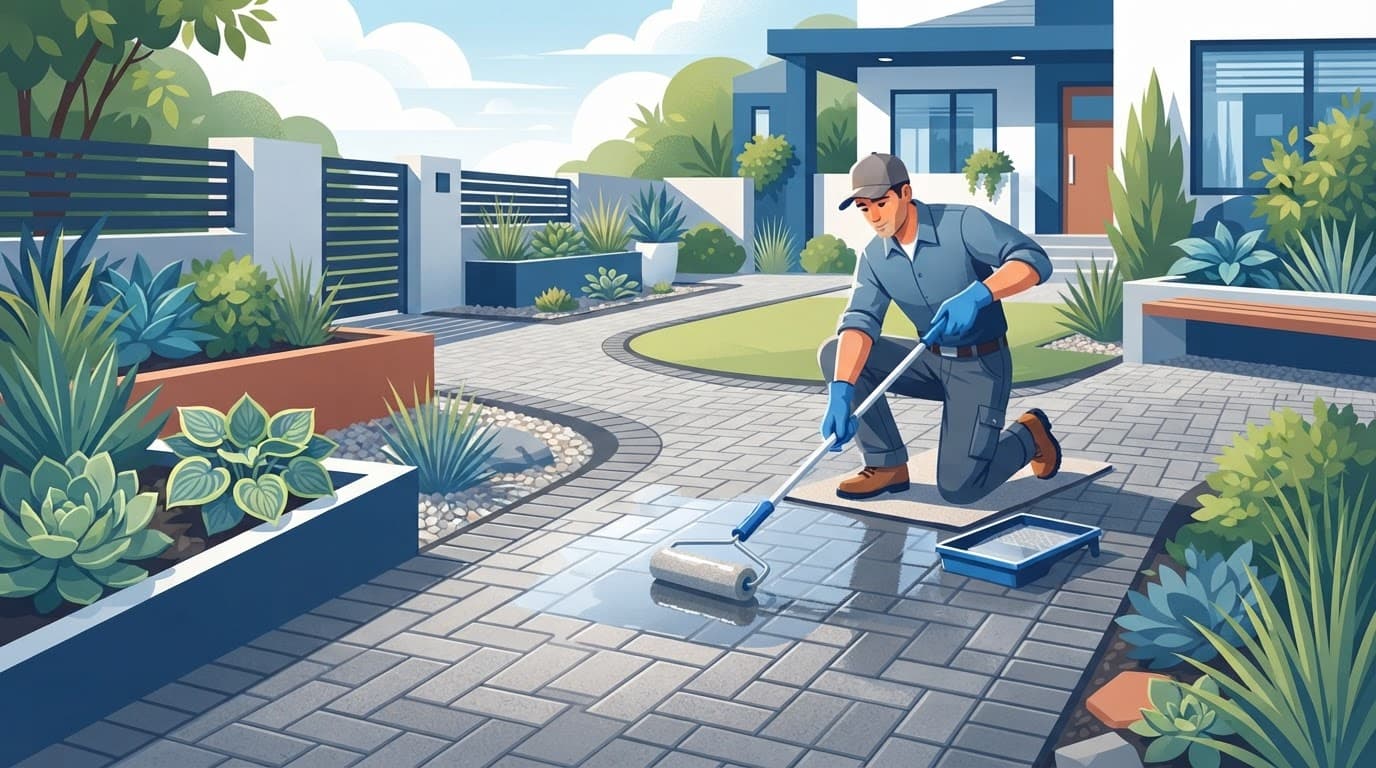
Never seal over a dark sap shadow that still needs treatment. Sealer can lock the discoloration beneath the coating and make later removal more difficult.
Driveway sealing and patio sealing can reduce absorption after the surface has been properly cleaned. A sealer won’t repair a paver that has been chemically burned or permanently discolored, but it can make future organic staining easier to manage.
Many residential paver sealing schedules fall near two to four years, but exposure, traffic, moisture, sealer type, and preparation all affect the timing. I look for faded color, increased water absorption, flaking coating, and stains that no longer clean easily instead of relying on a calendar alone.
For widespread staining, uneven old sealer, or pavers that need sanding and restoration, Get a Quote for a professional evaluation.
Preventing New Sap and Tannin Stains
Prevention starts by reducing organic debris that remains on the surface. Blow or sweep leaves away before rain turns them into a stain, since removing wet plant material limits recurring organic staining. Pay extra attention beneath black olive trees, live oaks, pines, maples, and other trees that drop resin, fruit, bark, or heavy leaf litter. Fallen ficus fruit can also leave sticky residue.
Trim branches where practical around black olive trees and live oaks, keeping the canopy off driveways and pool decks. Keep gutters clear because dirty runoff can carry tannins onto pavers and leave repeated streaks.
A sealer helps, but it doesn’t replace regular maintenance. Follow these preventative measures: sweep leaves, trim branches, and keep gutters clear. Remove fresh residue before it hardens, then rinse away loose debris before wet weather. If your property also has organic growth on siding or roofing, use the proper soft wash method for those materials rather than applying paver chemicals everywhere.
For homeowners in Fort Myers, Naples, Bonita Springs, Port Charlotte, Sanibel Island, and nearby areas, regular paver cleaning and sealing can help keep outdoor surfaces easier to maintain through Florida’s heat, rain, and humidity.
Frequently Asked Questions
Can plain water remove tree sap from brick pavers?
Plain water may remove loose dirt and fresh organic debris, but it usually won’t dissolve hardened tree sap or older tannin stains. A suitable cleaner and controlled agitation are often needed before rinsing.
What cleaner should I use for tree sap on pavers?
Fresh or hardened resin may respond to a paver-safe degreaser or compatible resin remover, while brown leaf stains may respond better to sodium percarbonate, citric acid, or oxalic acid. Always test the product on an inconspicuous area and follow the label directions.
Is pressure washing safe for pavers with tree sap stains?
Pressure washing can be safe when the cleaner has loosened the residue and the pressure, nozzle, and distance match the paver. Avoid excessive force, narrow spray patterns held too close, and direct pressure into the joint sand.
Should I seal pavers after removing tree sap?
Seal only after the pavers are completely dry, clean, stable, and free of remaining discoloration or chemical residue. Replace missing joint sand first, and never seal over a dark sap shadow that still needs treatment.
Keep Sap From Becoming Permanent
These pavers need the right treatment, not the strongest option. Fresh residue may respond to careful scraping and a paver-safe cleaner. Hardened resin often needs solvent or alkaline treatment, while brown tannin stains may respond better to an oxygen-based or acidic cleaner used with care.
Controlled rinsing helps remove loosened residue and clean larger areas evenly. It should protect the brick face, joint sand, nearby landscaping, and existing sealer instead of blasting everything at once.
Clean the stain fully, allow the pavers to dry, repair the joints, and seal only when the surface is ready. This sequence helps prevent recurring organic staining and keeps your driveway, patio, walkway, or pool deck clean without creating a new repair problem.