
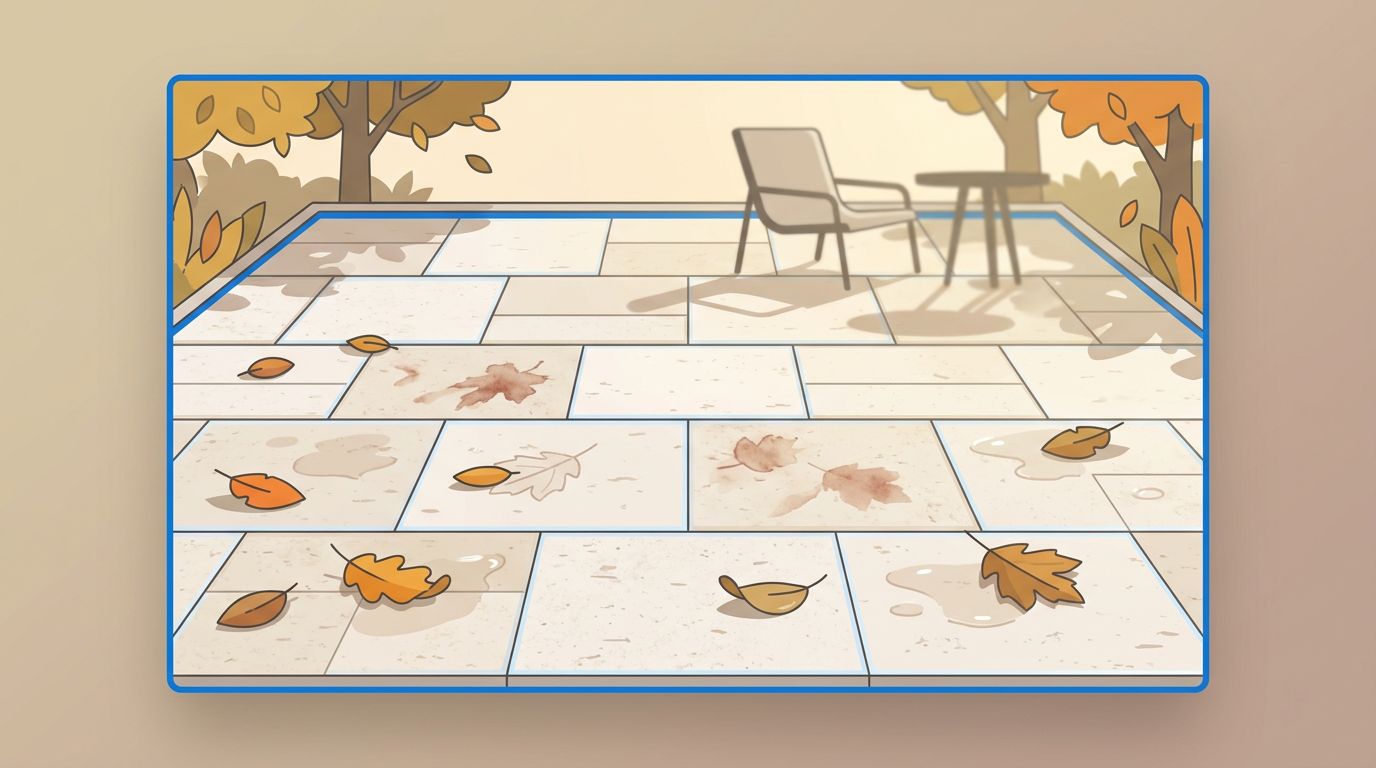
A few damp leaves can leave a mark that looks older than the patio itself. If you have swept a pile aside and found a brown shadow underneath, you are likely dealing with persistent travertine leaf stains.
I see these markings all the time, and they often catch homeowners off guard. While travertine is a popular natural stone known for its elegance, it is also highly porous. Because these travertine pavers are not as dense as other materials, they absorb organic pigments from decaying foliage much faster than most people expect.
Once I know how long the leaves sat there and how wet the surface stayed, I can usually tell how deep the stain has penetrated the stone.
Key Takeaways
- Travertine is Highly Porous: Because it is a calcium-based natural stone with a porous surface, it easily absorbs moisture and organic tannins from decaying leaves, flowers, and garden debris.
- Avoid Acidic Cleaners: Never use vinegar, lemon juice, or harsh acidic solutions on travertine, as these will cause permanent etching and dull the stone’s finish.
- Timing is Everything: Tannin stains are significantly easier to remove when caught early; if allowed to bake in the sun or settle for weeks, they become much harder to treat.
- Preventative Maintenance: Regular sweeping, proper management of irrigation systems, and applying a high-quality penetrating sealer can significantly reduce the risk of future staining.
- Use the Right Technique: For stubborn spots, a DIY poultice made of hydrogen peroxide and baking soda is often safer and more effective than aggressive pressure washing, which can damage the stone’s surface.
Why leaves leave such stubborn marks on travertine
Leaves carry tannins, natural compounds that leach out as they break down. Think of what happens when tea sits in water; the water darkens fast. On an outdoor travertine patio, rain, dew, irrigation, and humidity do the same job.
Travertine is the perfect place for that color to settle. It is a calcium-based stone with a porous surface filled with natural pits and tiny channels. Even when the stone feels smooth underfoot, it still has places for moisture to move. Once tannin-rich water sits on it, the resulting organic stains do not always stay on top.
That is why leaf marks often look worse after you clean the debris away. The leaves are gone, but the brown print stays behind. In fresh cases, the stain may look yellow-brown or amber. If it sits longer, it can turn darker and pick up regular soil, mildew, and grime along the edges.
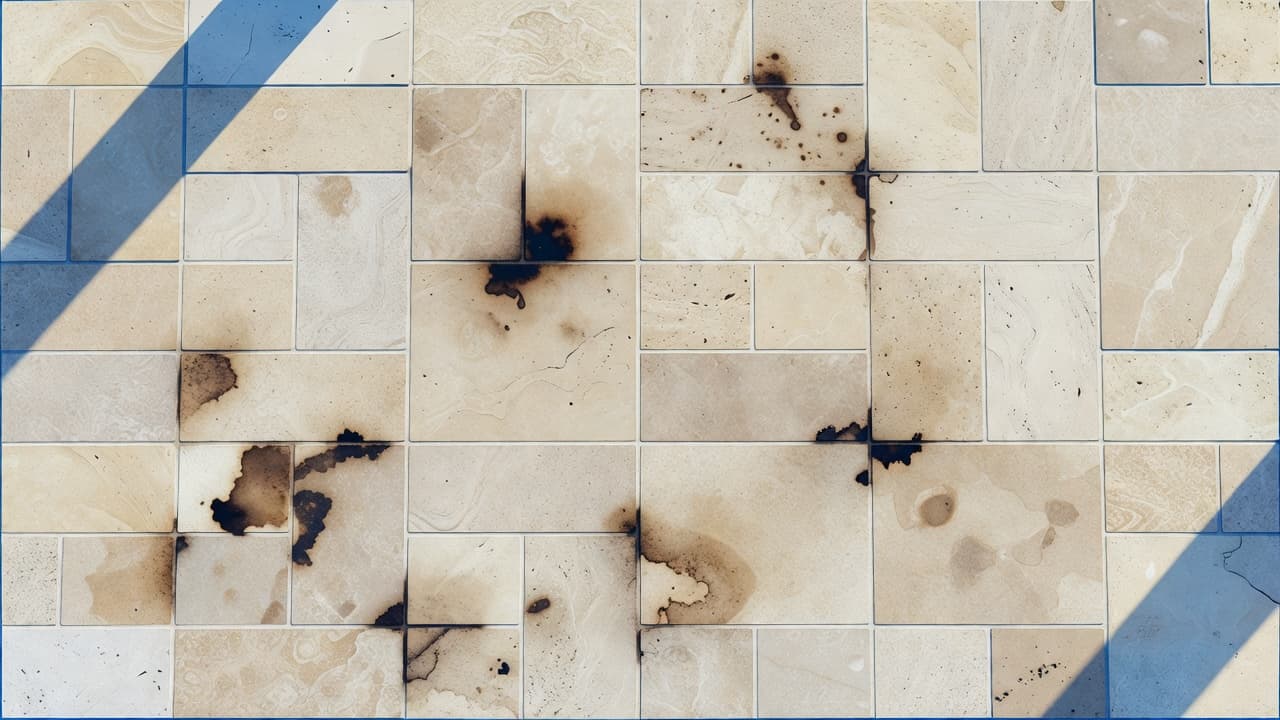
Old leaves are not the only problem. Wet seed pods, flower petals, mulch pieces, and even tannin-heavy runoff from planters can leave similar marks. I have also seen the outline of one single leaf remain on light travertine pavers like a stamp.
Sealing matters here, but not in the way many people assume. A good penetrating sealant can slow absorption, but it does not make the stone bulletproof. If the product is worn out, or the stain has hours and heat on its side, the color can still move into the surface.
When a wet pile of leaves sits on unsealed travertine through a hot weekend, the stain can go from easy cleanup to real restoration.
That is the part most people miss. The problem is not the leaf itself. It is the mix of moisture, time, and a porous stone that drinks in whatever is left behind.
Why some travertine patios stain faster than others
Two patios or pool decks can sit a few streets apart and age in completely different ways. I usually find the same trouble spots over and over: under trees, beside landscaping beds, near downspouts, and in corners where debris gets pinned by wind.
Shade makes a big difference. A sunny patio dries quicker, which limits how long tannins can soak. A shaded patio stays damp, creating an environment where mold and mildew can thrive. Add Southwest Florida humidity and the stain has more time to settle in. Sprinkler overspray is another quiet culprit. If irrigation hits the same area every morning, leaves never get the chance to dry out.
Surface condition matters too. Honed, tumbled, filled, or unfilled, all outdoor travertine ages a little differently. Rougher textures trap more organic residue. Open pits and worn joints hold moisture longer. If sanded joints have thinned out, small debris can hang around the edges of each travertine paver and keep feeding a stain.
I also look at the age of the sealer. When stone stops resisting water, it usually stops resisting organic stains as well. A simple clue is how the surface reacts after rain. If the water beads for a moment, protection may still be present. If the paver darkens immediately, the stone is taking water in.
Not every brown mark is a tannin stain, though. Rust stains from furniture feet, fertilizer splash, and metal runoff can look similar. The shape often gives it away. Leaf tannins tend to feather out, pool at the edges, or leave an organic silhouette. Rust is more concentrated and orange. Dirt is flatter and easier to rinse.
Timing beats force every time. A light stain caught early is often manageable. A month-old stain that baked in through storms is a different animal.
How I remove travertine leaf stains without damaging the stone
This is where people get into trouble. They see brown marks and grab the harshest cleaner they can find. On travertine, that can make the patio look worse than the stain did.
I never start with acidic cleaners on this kind of stone. Vinegar, lemon juice, and strong acidic cleaners can cause etching because travertine is a natural stone that is calcium-based. That leaves a dull patch, and now the patio has both discoloration and texture damage.
My approach is simple and controlled:
- I identify whether the mark is organic tannin, rust, algae, or a mix.
- I test a pH-neutral stone cleaner in a small spot first.
- I give the cleaner enough dwell time to loosen the stain.
- I rinse and repeat carefully, with light agitation if needed.
A soft-bristled brush helps. Patience helps more. I would rather clean the same area twice than scar the finish in one pass. For very light cleaning, I sometimes use a mild dish soap diluted in water.
If the leaf stain is deep, a pH-neutral stone cleaner might not be enough on its own. In those cases, I use a poultice. You can make an effective one by mixing hydrogen peroxide with baking soda to create a thick baking soda paste. Applying this mixture to the spot and letting it dry draws the stain out of the porous stone.
Using a pressure washer can help, but only when it is used the right way. A lot of homeowners hear pressure washing and picture brute force. Travertine does not like that. Too much pressure can leave lines, open the face of the stone, or blast out joint material. The right method uses controlled pressure, proper nozzles, and a soft-bristled brush for manual agitation where necessary.
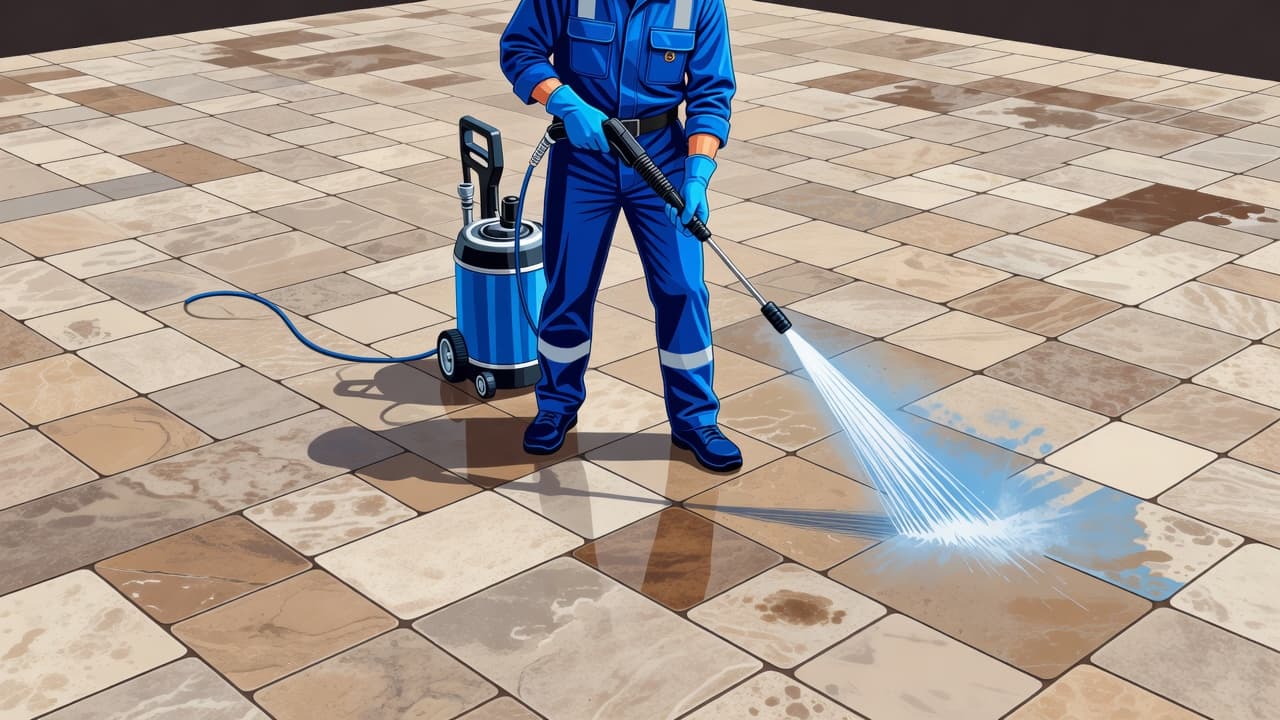
That is also why a soft wash is not the same thing as stain removal. A soft wash is excellent for certain exterior surfaces and organic growth on siding or roof lines. The chemistry and pressure choices for stone need to match the stone. I would never clean travertine the exact way I approach roof cleaning, and I would not prep this patio the same way I would prep concrete before driveway sealing.
When a stain has gone deep, I may need more than one treatment. That is normal. Good cleaning is not a stunt. It is a sequence. Diagnose, treat, rinse, check, then protect the surface so the next leaf pile does not win the same fight.
How I keep leaf stains from coming back
The best way to prevent stains is simple, consistent regular maintenance. Most leaf staining occurs because organic debris sits on the surface for too long. Frequent blowing or sweeping, especially after heavy storms, makes a significant difference. It is also helpful to trim back trees that drop heavy foliage and move planters that trap wet debris against the stone.
I also pay close attention to water sources. Downspouts that dump near the patio, clogged gutters, and sprinkler heads pointed too low turn a simple cleanup chore into a permanent staining issue. If the patio remains constantly wet, the porous stone continues to absorb tannins.
Taking the time to seal travertine is the most effective long-term move for your patio. A high-quality stone sealer will not stop every single leaf print, but it provides a protective barrier that gives you more time to clean up messes before they set. This added layer of protection also helps defend against accidental oil-based stains from grills or spilled food. If your outdoor travertine is already showing repeated tannin marks, faded color, or fast water absorption, it is likely time for a professional cleaning and reseal.
Homeowners often bundle this work with other exterior maintenance because the same debris and runoff affect the whole property. If you are already scheduling roof cleaning or driveway sealing, it makes sense to have your travertine pavers checked as well. If you want a professional look at your surface, Get a Quote and catch the stains before another rainy stretch sets them deeper.
The goal is not perfection. It is simply keeping small seasonal marks from turning into permanent damage.
Frequently Asked Questions
Can I use vinegar to clean organic stains off my travertine?
No, you should never use vinegar on travertine. Because travertine is a calcium-based stone, acidic cleaners like vinegar or lemon juice will cause etching, which creates dull, permanent spots on the surface.
Why does my travertine stain even though it is sealed?
A sealer is a protective barrier, not an impenetrable shield. If the sealer is worn out, or if wet debris is left on the surface for an extended period, tannins can still migrate into the pores of the stone.
How can I tell if my stone needs to be resealed?
A simple test is to watch how the surface reacts to water. If the water beads up, your sealant is likely still working; however, if the stone darkens immediately when wet, it is absorbing moisture and needs a fresh application of sealer.
Is pressure washing safe for travertine patios?
Pressure washing can be safe only if performed with low, controlled pressure and the correct nozzles. Using too much force or the wrong equipment can damage the stone’s finish, blast out the joint sand, or create permanent lines in the pavers.
Final thoughts
That brown shadow left behind by a pile of foliage is usually not stubborn dirt. It is tannins that have migrated into the porous surface of your natural stone.
Once you begin to treat your patio like a delicate mineral surface rather than standard concrete, the maintenance process becomes much more manageable. By addressing travertine leaf stains early, using the correct cleaning chemistry, and keeping a watchful eye on secondary issues like mold and mildew, you can ensure your patio retains the elegant look you originally invested in. Consistent care is the most effective way to preserve the beauty of your stone for years to come.