
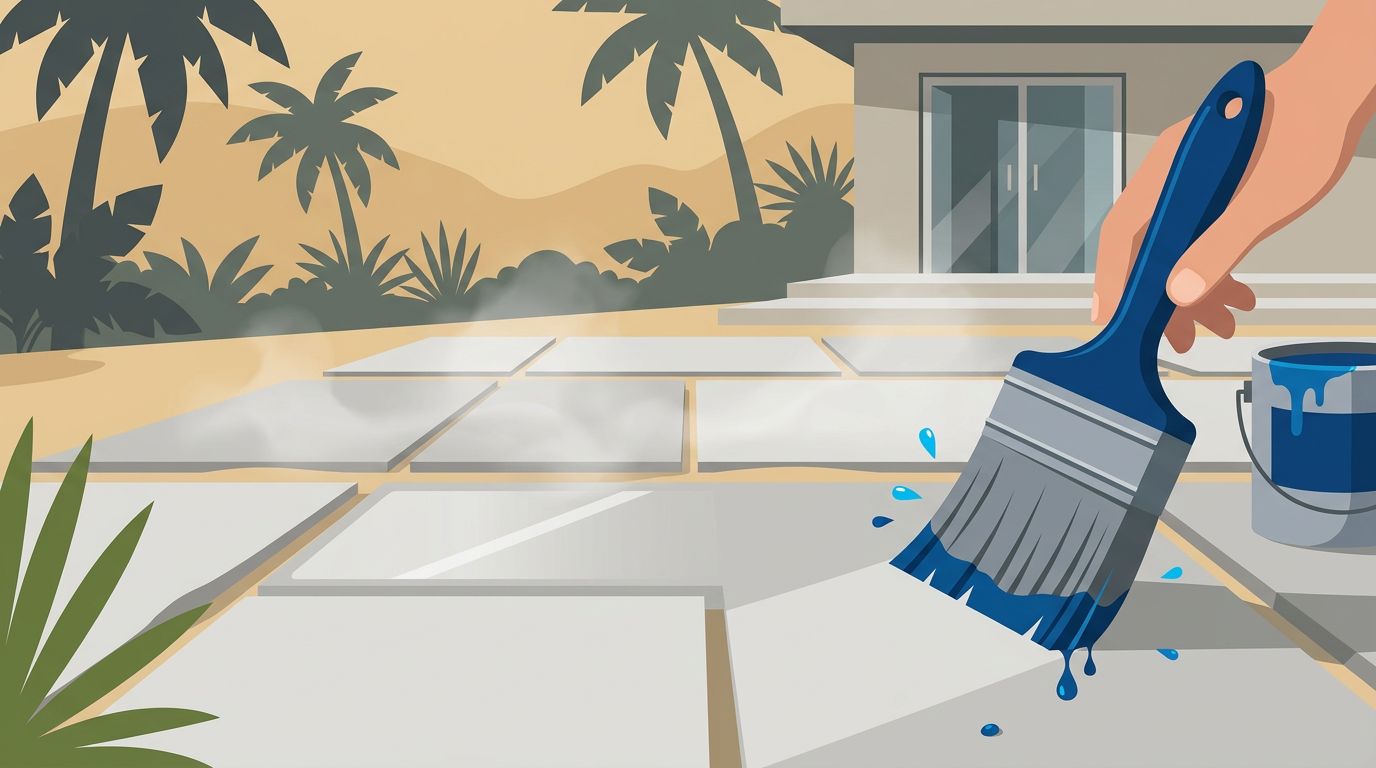
Florida humidity has a nasty way of exposing a weak sealing job. One day your patio looks fresh, and the next it feels tacky under your shoes, grabs dirt, and holds onto every footprint. This common issue with sticky paver sealer can quickly ruin the curb appeal of your outdoor space.
I see this problem frequently on driveways, lanais, pool decks, and other concrete pavers that looked pristine right after application. Once the surface begins to feel soft or tacky, it rarely stays a small problem for long.
The cause is usually present from the start. Excessive moisture, poor surface preparation, the wrong product choice, or a coat that failed to cure properly can all turn a clean looking surface into a gummy mess.
Key Takeaways
- Causes of Stickiness: Sticky paver sealer is primarily caused by over-application, trapped moisture within the pavers, or environmental factors like high humidity preventing a proper cure.
- The Humidity Problem: Florida’s high moisture levels and morning dew can cause film-forming sealers to skin over while remaining soft underneath, trapping moisture and creating a gummy surface.
- Recognizing Failure: Warning signs include surfaces that remain tacky after rain, footprints that stay permanently visible, and dirt that accumulates rapidly due to the gummy residue.
- Professional Remediation: Minor tackiness may be resolved by re-emulsifying the top layer with solvent, but severe cases require a full strip of the existing sealer followed by a fresh, properly applied application once the surface is bone-dry.
What makes paver sealer turn sticky
A sealer becomes tacky when it fails to harden as intended. While that sounds straightforward, the underlying reasons often involve a combination of chemistry and environmental factors.
Sticky surfaces are frequently the result of over-application. When too much product is applied, the top layer dries while the bottom remains soft and gummy. This is particularly common with a film-forming sealer, which creates a solid layer over the stone rather than penetrating deep into the pores. Whether you are using a solvent-based sealer or a water-based sealer, these products require specific environmental conditions to set properly.
A major culprit during the application process is trapped moisture. Even if pavers appear dry on the surface, dampness deep within the stones can prevent the coating from bonding correctly. Florida’s climate exacerbates this issue significantly. If the weather shifts before the product reaches its full cure time, the finish will not lock in. Factors like heavy morning dew, sudden afternoon rain showers, and intense overnight humidity prevent the coating from drying evenly.
When this chemical process is disrupted, the sealer remains soft. This creates a magnet for debris, where dust sticks to the surface and footprints become permanently embedded, leaving the entire area feeling tacky and unattractive.
Why Florida humidity makes the problem worse
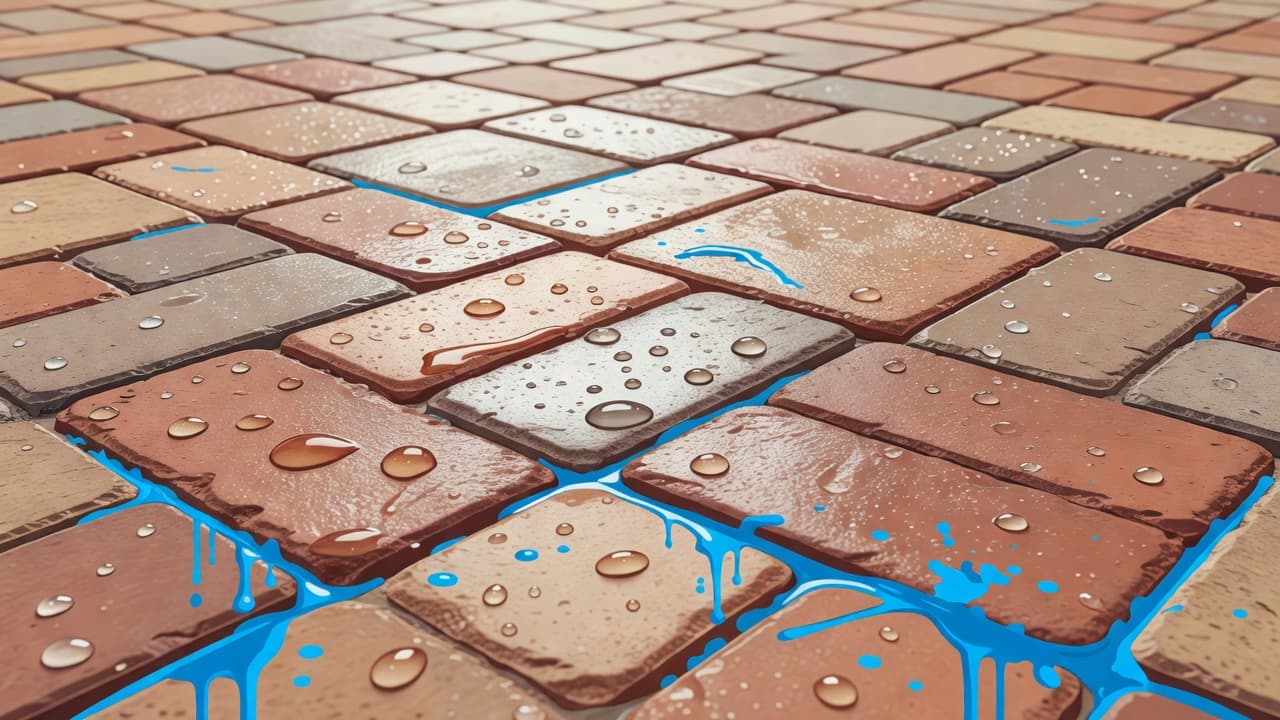
Humidity does not just sit in the air here; it works its way into the surface. Pavers can look dry and still hold enough substrate moisture to ruin a fresh coat of sealer.
Shade makes it worse. A patio under trees, a lanai with limited sun, or a pool deck that stays damp longer than the front walk will trap moisture for longer stretches. That gives the sealer less room to cure properly.
Heat adds another layer to the problem. When the surface temperature gets too high, the top may skin over while the base stays soft underneath. This prevents the acrylic sealer from hardening correctly, and the trapped moisture often manifests as a white haze across the pavers. Then a little rain, a little dew, or even a heavy evening with no breeze can keep the whole finish in a half-cured state.
If the pavers grab dust faster than you can rinse it off, the sealer is already telling on itself.
I pay close attention to that on Florida properties because the same weather that makes a surface look clean one minute can turn it gummy the next. Pressure washing helps with dirt, but it won’t fix a finish that never bonded right in the first place.
The signs I look for before the damage spreads
A bad sealer job usually gives off warning signs before it becomes a full cleanup project. Homeowners often apply a wet look paver sealer hoping for a vibrant, glossy finish, but this can lead to surface issues if not handled correctly. I always look for the same few things:
- The surface feels tacky after the rain stops.
- Dirt keeps sticking to the same spots.
- Footprints show up and do not disappear.
- The shine looks blotchy, not even.
- Fine sand or debris seems to cling harder than it should.
If I pressure wash a patio and the grime comes back fast, I start thinking beyond surface dirt. This is why I often distinguish between a film-forming product and a penetrating sealer, which sinks into the stone rather than sitting on top. The same goes for a driveway that looks better for a day, then pulls in dust again after one humid night.
Old sealer can also trap moisture under the finish, which gives the pavers a cloudy or gummy look. Before assuming the sealer has failed, I consider efflorescence cleaning to rule out salt deposits that create a similar hazy appearance. However, if the surface remains gummy, the trapped moisture confirms that the coating is failing rather than just being dirty. That is a clue I never ignore.
Fixing sticky sealer without making a bigger mess
The fix starts with patience, not adding more shine. If the old coat is failing, I never try to hide it under another layer.
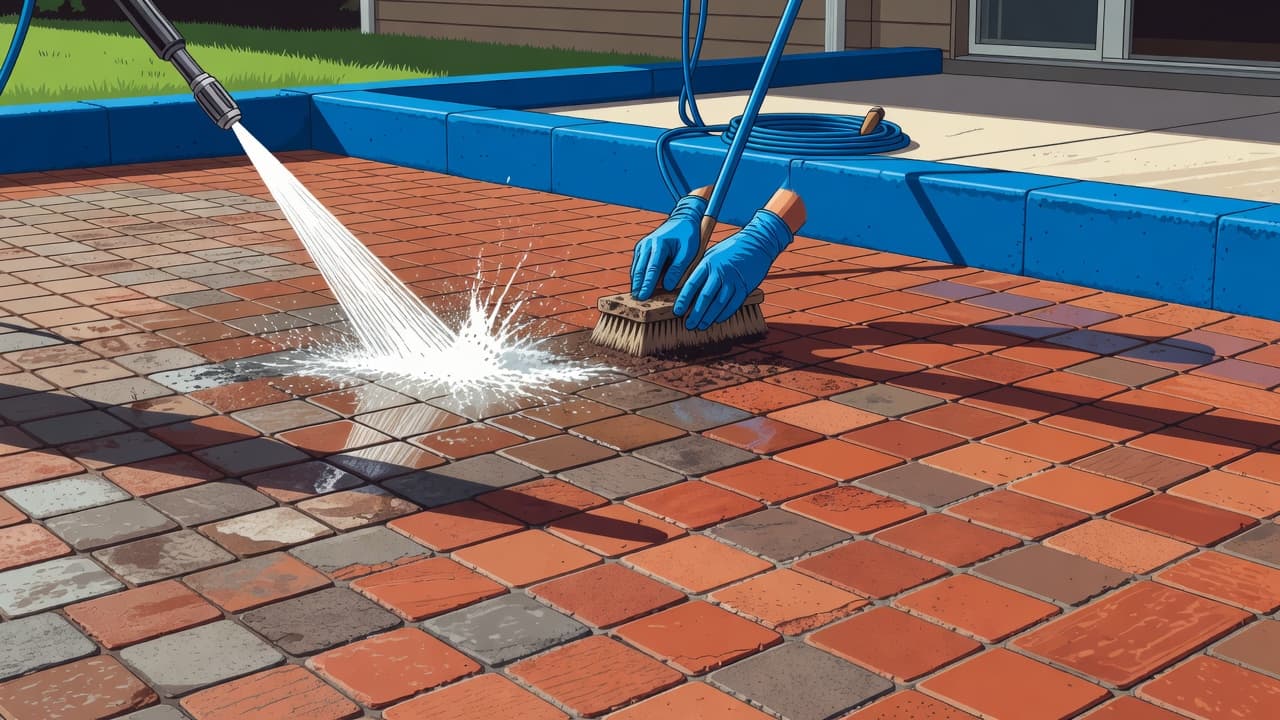
The first step is a professional pressure washing service to remove surface dirt and loose residue. If the sealer has become gummy across the entire area, the only effective solution is stripping sealer completely to reach a clean surface. Before I begin, I often perform a xylene test to determine if the existing product is solvent-based, which helps me decide the best chemical approach for removal. Once the surface is clean, I let the pavers dry thoroughly, ensuring there is no trapped moisture.
Next, I address the joints. If the cleaning process removed material, I replace it with high-quality polymeric sand to ensure proper stabilization. Solid joints are essential because they prevent the pavers from shifting, which helps avoid the uneven application of new products later.
When applying the new coating, I focus on consistent coverage through back-rolling. This technique ensures an even finish and prevents the pooling that often leads to tacky spots. I take care to select a product that fits the environment, noting that a natural stone sealer requires a different formulation and application process than standard concrete pavers. In some cases, if the tackiness is minor, I can use a specific solvent to re-emulsify the top layer, allowing it to cure correctly without a full removal.
My method is always dictated by the material. Just as roof cleaning requires a soft wash approach, hardscapes require a plan that considers cure time, drainage, and ambient humidity. If your patio feels gummy or your driveway sealing did not hold up after a wet season, Get a Quote and get it looked at before the problem settles in deeper.
Frequently Asked Questions
Can I fix sticky pavers by just applying another coat of sealer?
No, applying more sealer over a sticky surface will only trap more moisture and make the gummy mess worse. You must first resolve the underlying issue, which often requires stripping the failed product to reach a clean, stable surface.
Why does my sealer look white or cloudy in certain spots?
This white haze is typically caused by trapped moisture beneath the sealer film, which often happens when the sealer is applied too early or in high-humidity conditions. It indicates that the coating has failed to bond correctly with the stone.
Is it possible to prevent sealer from becoming sticky?
Yes, success starts with thorough surface preparation and ensuring the pavers are completely dry before application. Choosing a high-quality product suited for your environment and avoiding over-application are the best ways to ensure a durable, non-tacky finish.
Conclusion
Florida humidity is unforgiving when it comes to sealing projects. When your concrete pavers turn sticky, it is usually a sign of moisture trapped under the finish, inadequate surface preparation, or a product that was not suited for the local climate.
Whether you are working with a solvent-based sealer that reacted poorly to damp conditions or a water-based sealer that failed to cure properly, the solution is never to add another layer of gloss. Instead, the focus must be on thorough cleaning, ensuring the surface is completely dry, and implementing a proper reseal plan tailored to your specific environment.
If your pavers already feel tacky, do not wait for dirt and debris to bake into the finish. The sooner you address the issue, the better your chances of restoring a clean, durable look. If you are unsure why your sealer is failing, reach out for a professional assessment to ensure your next application protects your investment rather than causing more damage.