
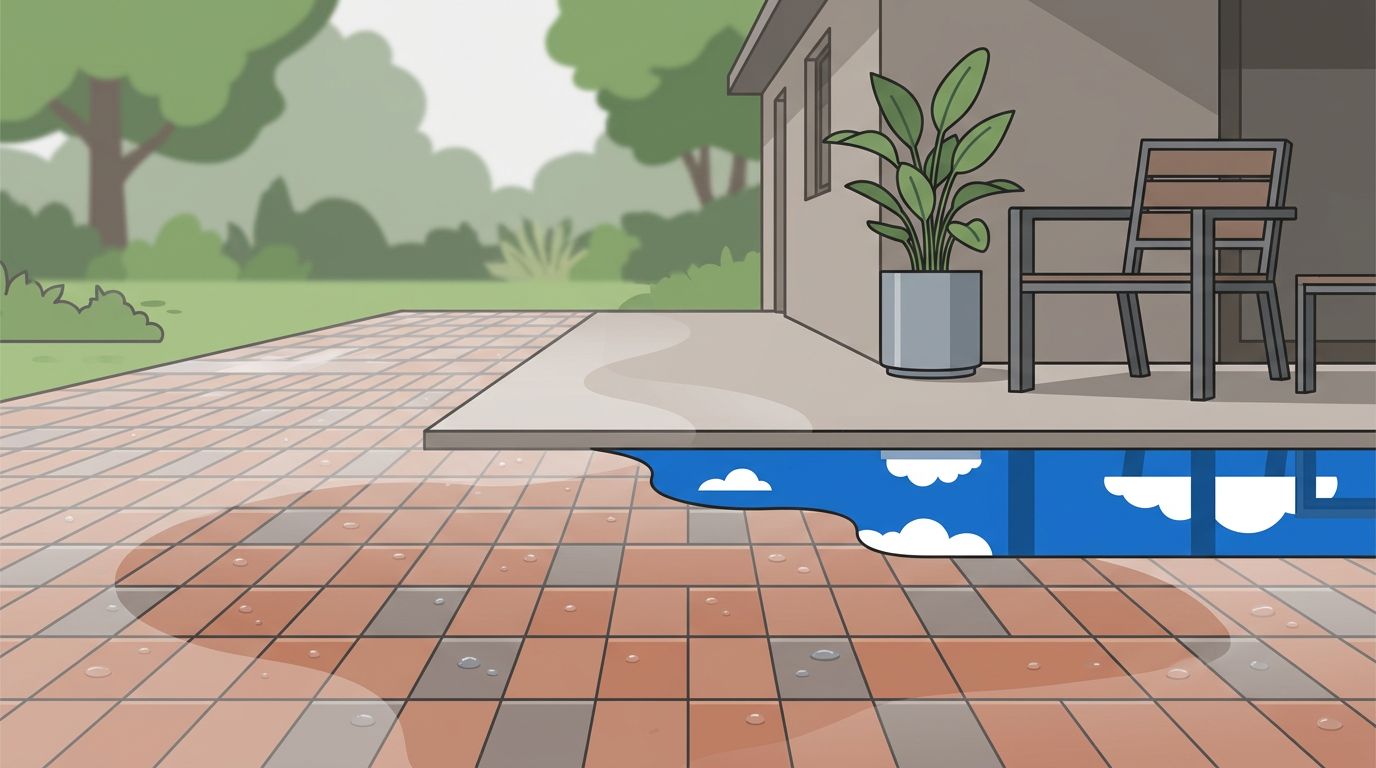
Summer rain can do a number on your outdoor surfaces. One day your brick pavers look sharp and pristine, but after a heavy storm, you might find yourself staring at a cloudy, milky film that ruins the appearance of the entire area.
This issue is known as paver sealer white haze, and it often appears quite suddenly following a downpour. It typically occurs when moisture becomes trapped beneath the coating, the sealer did not cure for a sufficient amount of time, or the product was applied under unfavorable weather conditions.
The good news is that this problem almost always has a specific cause you can track down. Once you understand what to look for, the process of fixing the haze becomes much less mysterious.
Key Takeaways
- Understand the root cause: White haze is almost always caused by moisture trapped beneath the sealer, often due to improper drying times or sealing over damp joints and pores.
- Distinguish between haze and efflorescence: Not all white film is sealer failure; sometimes it is efflorescence—natural mineral salts rising from the stone—that rain draws to the surface.
- Preparation is critical: Avoid sealing too quickly after cleaning or pressure washing, as pavers can look dry on the surface while still holding significant moisture deeper in the joints.
- Apply thin, breathable layers: Over-applying sealer or using non-breathable products creates a film that locks in humidity, leading to a cloudy appearance after summer storms.
- Fixing the issue: If haze occurs, let the surface fully dry, test for buildup, and use the correct removal or re-emulsification process rather than simply applying a new layer of product.
What the white film on pavers usually means
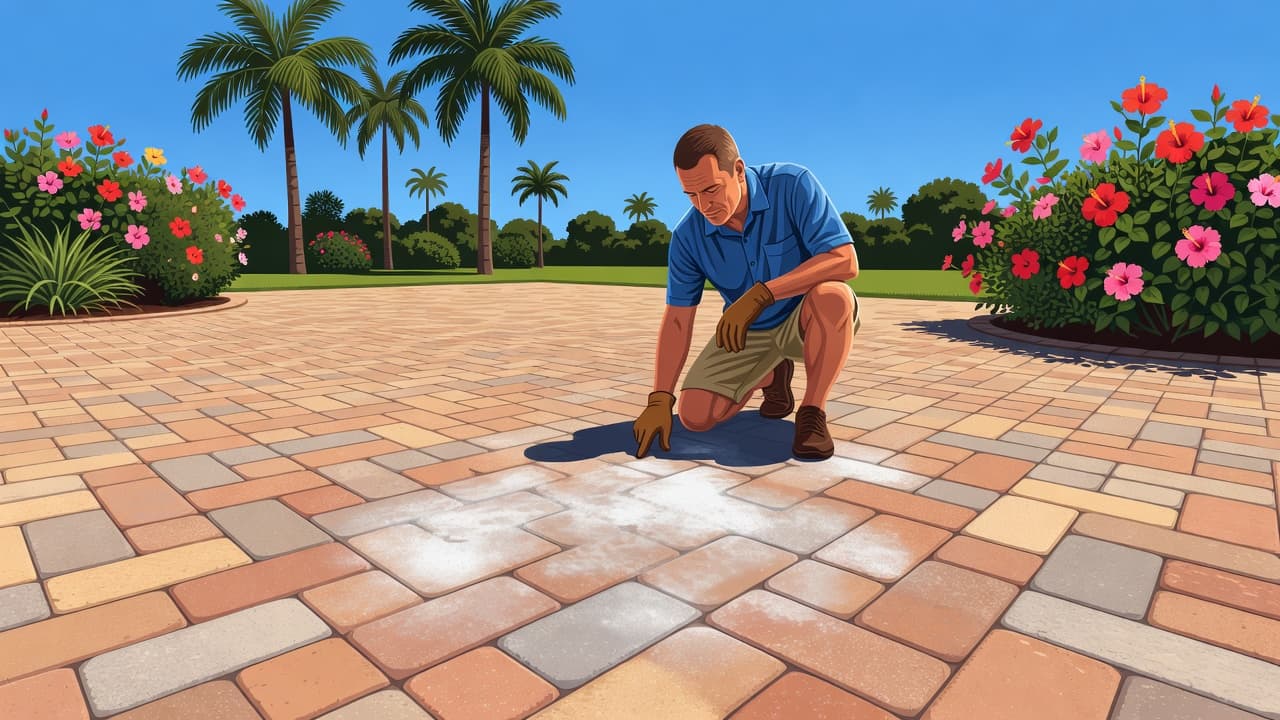
When paver sealer turns a cloudy or milky white color after rain, the first thing I look for is trapped moisture. This haze often occurs when water sits beneath the sealer, moves through the porous paver, or lingers in the joint sand where it cannot evaporate quickly enough.
Sometimes the film is not actually a failure of the sealer itself. It is efflorescence, which consists of white mineral salts that rise to the surface of brick, concrete, or travertine. Rain can draw these minerals out and make the appearance worse, especially when the sealer is applied too heavily or too soon after installation.
The tricky part is that the surface might look perfect until the first real summer storm. Then the haze appears, making the driveway look chalky or streaked. It feels sudden, but the issue was likely present all along.
I think of it like fog under glass. The top still feels smooth, but a layer of humidity is trapped below the surface. This is why simply wiping down your brick pavers without addressing the underlying moisture cause rarely solves the problem.
Why summer rain brings the haze out
Summer weather is notoriously hard on sealed pavers. The heat builds up during the day, the high humidity lingers, and afternoon storms frequently roll in. That volatile mix makes it incredibly difficult for moisture to escape the surface once it becomes trapped.
If a sealer has not cured fully, rain can turn the finish cloudy. If the pavers were damp before sealing, that moisture remains locked beneath the surface. If the job was rushed during a humid stretch, the film can dry unevenly, resulting in a milky appearance. Similar issues are often seen with concrete sealer applied to stamped concrete, where moisture management is equally critical to the final aesthetic.
If the white film shows up after the first real rain, I look at curing time before I look at color.
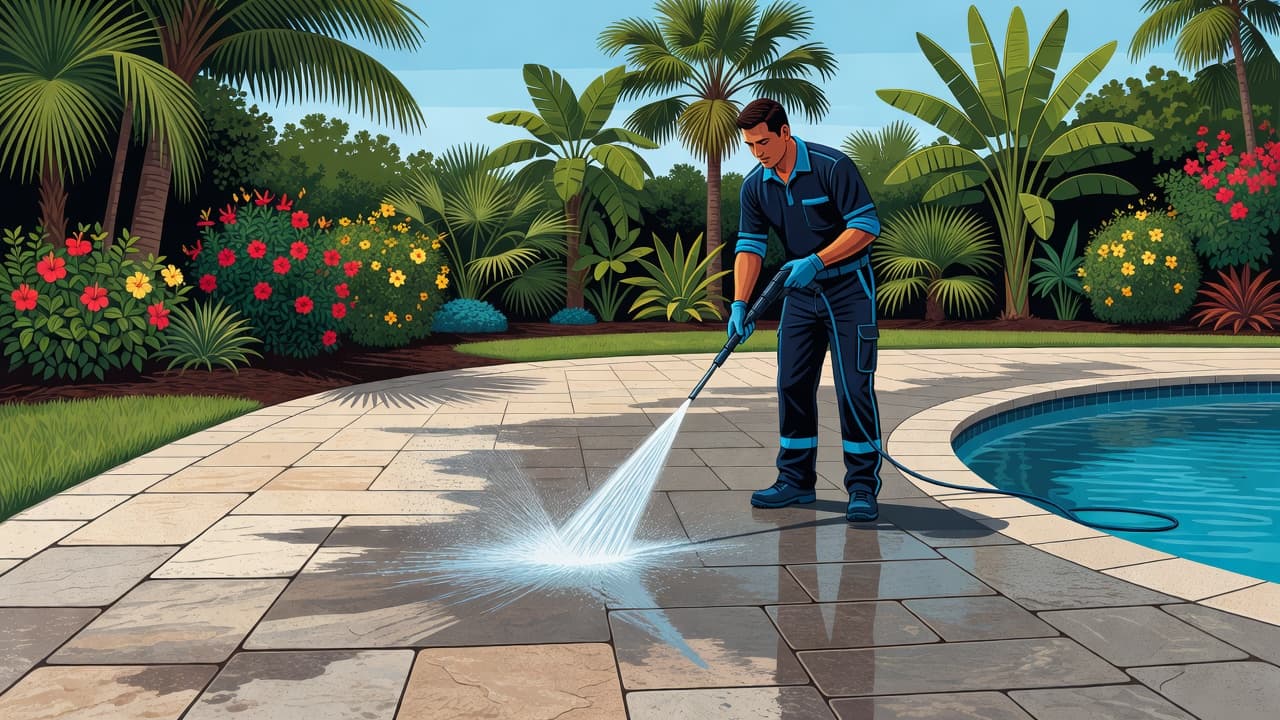
I also watch for runoff from other projects around the home. A roof cleaning job can send dirty water across patios and walkways. A soft wash is the right choice for delicate surfaces, but the rinse water still has to be managed. The same applies when you pressure wash your hardscape. It cleans the stone effectively, but the surface requires significant dry time before any driveway sealing process begins.
That is where a lot of homeowners get caught. The pavers look clean, so the next step feels obvious. However, clean and dry are not the same thing. Summer weather and trapped moisture prove that distinction quickly.
The mistakes that trap moisture under sealer
Most white haze problems trace back to a short list of mistakes. I see the same ones again and again, and they are all avoidable.
- Sealing too soon after cleaning: Pavers can look dry on top while still holding water deeper in the joints and pores.
- Over application of product: Putting the sealer on too thick creates a heavy film that traps moisture beneath the surface, leading to a cloudy appearance.
- Skipping proper surface cleaning: Dust, soap residue, and mineral deposits can interfere with how the sealer bonds. You must ensure the surface is completely clear before beginning.
- Sealing over efflorescence: If the white mineral salts are already active, the sealer can lock the efflorescence in instead of covering it up.
- Improper polymeric sand installation: If the sand is not swept or activated correctly, you may end up with poly haze that appears on the surface after the first rain.
- Ignoring the weather window: Evening humidity, pop-up storms, and overnight rain can all mess with the cure time.
This is one reason I take driveway sealing seriously. It is not just about the product. It is about the timing, the preparation, and the weather around the job.
I also think homeowners underestimate what a good pressure wash can do, and what it cannot do. A professional pressure wash clears dirt and buildup, but it does not erase the trapped moisture hidden deep within the paver pores. If the surface is not allowed to dry all the way through, even a light rain can push the pavers into haze mode.
The same caution applies after a soft wash on a roof or house. Those services protect delicate surfaces, but they still leave water moving around the property. If that water ends up under fresh sealer, you have a problem waiting to show up.
How I’d fix paver sealer white haze
When I see a cloudy paver surface after summer rain, I do not rush to reseal it. I start by finding out whether the haze is sitting on top of the sealer, trapped under it, or coming up from the paver itself.
Here is the order I would follow:
- Let the surface dry out fully.
Give it several dry days if the weather allows. A damp paver can fool you. - Test a small hidden area.
If the haze wipes away with drying, the issue may be minor moisture. If it stays cloudy, the problem is deeper. - Check for mineral residue or sealer buildup.
A light white film can sometimes be cleaned. A thick cloudy layer requires a reliable sealer stripper to remove the compromised coating. If the haze persists, you will need a professional stripping agent to prepare the surface for a proper application. - Treat the actual cause, not the symptom.
If you used a solvent-based product, you might be able to apply a light coat of xylene to re-emulsify the sealer, which helps release trapped moisture. Conversely, a water-based sealer typically lacks this flexibility and will likely require full removal using a quality sealer stripper before you can start over. - Wait for the right weather before sealing again.
Dry pavers, dry joints, and a clean forecast matter more than most people think.
If the haze keeps returning, I would not keep guessing. I would Get a Quote and have your brick pavers checked before the problem gets locked in again. A stubborn white film can turn into a bigger cleanup job if it is ignored.
The main thing is this, don’t seal over a moisture problem and hope rain won’t notice. Summer rain always notices.
What keeps the haze from coming back
Once the surface is fixed, the goal is simple: keep the next storm from repeating the same mess. That starts with patience, proper prep, and using the right materials for the job. To prevent future issues, I highly recommend using breathable sealers. These allow moisture vapor to escape rather than trapping it under the surface, which is the primary cause of that cloudy film.
While many people prefer the deep, vibrant wet look for their hardscape, the key to achieving this safely is applying thin coats rather than one heavy, thick layer. If you are using a standard acrylic sealer, be aware that it can be prone to trapping moisture if the surface is not perfectly dry or if the product is applied too heavily. In many cases, a high-quality water-based sealer is a better choice because it offers superior breathability compared to traditional solvent-based alternatives.
I also tell homeowners to pay attention to the whole property, not just the driveway. Runoff from roof cleaning, overspray from soft wash work, and wash water from pressure washing can all affect nearby pavers. If the area is going to be sealed, the surface has to be completely ready, not just visually clean.
A little patience helps a lot here. I would rather wait for the right weather window than rush a job and spend the next month dealing with haze. That applies to patio sealing, walkway work, and driveway sealing alike. When the job is done right, the pavers should dry clear after rain, not turn chalky. That is the real test.
Frequently Asked Questions
Why did my pavers look fine until it rained?
The haze often appears after rain because the water forces moisture trapped beneath the sealer to rise or prevents it from evaporating. This creates a “fog under glass,” where the film reflects the moisture trapped deep within the paver pores.
Can I just pressure wash the white haze off?
Usually, no. If the haze is trapped underneath the sealer, surface cleaning will not reach the source of the problem and may even push more moisture into the joints.
Is it better to use a water-based or solvent-based sealer?
Water-based sealers are generally more breathable and less likely to trap moisture than traditional solvent-based sealers. However, the most important factor is ensuring the surface is completely dry and cured before any product is applied.
How long should I wait after cleaning before sealing?
I recommend waiting several days, especially in humid conditions, to ensure the pavers and the joint sand are completely dry. If you rush this step, you risk sealing in residual moisture that will inevitably show up as a milky film.
Conclusion
Summer rain does not create white haze out of nowhere. Instead, it exposes a problem that was already hidden within the sealer, the paver, or the joint sand.
If your driveway looks cloudy after a storm, I would start by evaluating moisture levels, curing time, and product buildup before assuming the pavers are ruined. Dealing with paver sealer white haze is frustrating, but it usually stems from a clear cause and has a straightforward fix. When this cloudiness persists or returns frequently, it is often a sign of sealer failure that requires a more thorough surface assessment.
The next time a rainstorm leaves your pavers looking milky, do not panic. Let them dry, check the surface carefully, and address the root of the problem instead of just focusing on the shine.