
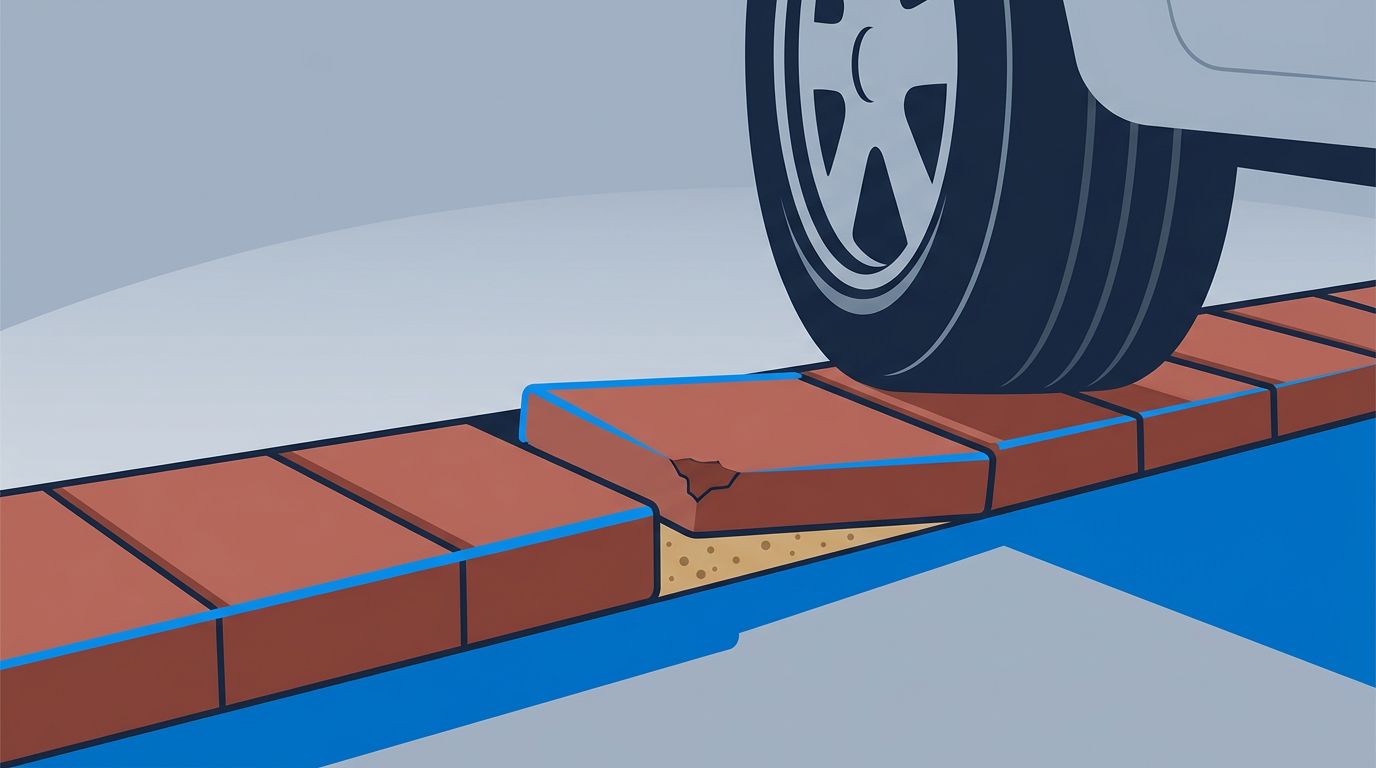
Brick pavers chipping at a driveway apron usually starts small. It often begins with one cracked edge, a loose corner, or a tiny spot where the base has shifted, before the damage begins to spread across the surface.
I see this issue most often where cars turn in, brake, and swing wide over the same spot every day. Because the apron takes the heaviest impact on the driveway, you will frequently notice chipped outdoor pavers appearing here long before they develop elsewhere.
Key Takeaways
- High-Impact Zones: Driveway aprons face significantly more stress than the rest of the driveway because tires twist and grind against the edges during every arrival and departure.
- Underlying Causes: Chipping is rarely just a surface issue; it is often caused by poor base compaction, inadequate edge restraints, or water infiltration that softens the foundation.
- Proactive Maintenance: Addressing loose pavers early prevents minor chips from turning into severe structural failures that require a full apron replacement.
- The Role of Sealing: While cleaning and sealing improve aesthetics and protect against stains, they cannot fix a failing base or stabilize loose, shifting blocks.
Why the driveway apron wears out first
The apron serves as the critical transition point between the street and your driveway, meaning it endures significantly more stress than the rest of the surface. Because of this constant activity, driveway pavers in this section are subjected to forces that the main body of the driveway never experiences. Tires do not simply roll straight across this area; they twist, turn, and grind against the edges during every arrival and departure.
This wear is accelerated when there is a lack of proper edge restraints, which causes individual blocks to migrate or shift under consistent pressure. Pavers are designed to be strongest when the load is distributed evenly, but once that lateral movement begins, the edges start to chip, the joints loosen, and the structural integrity of the apron begins to fail.
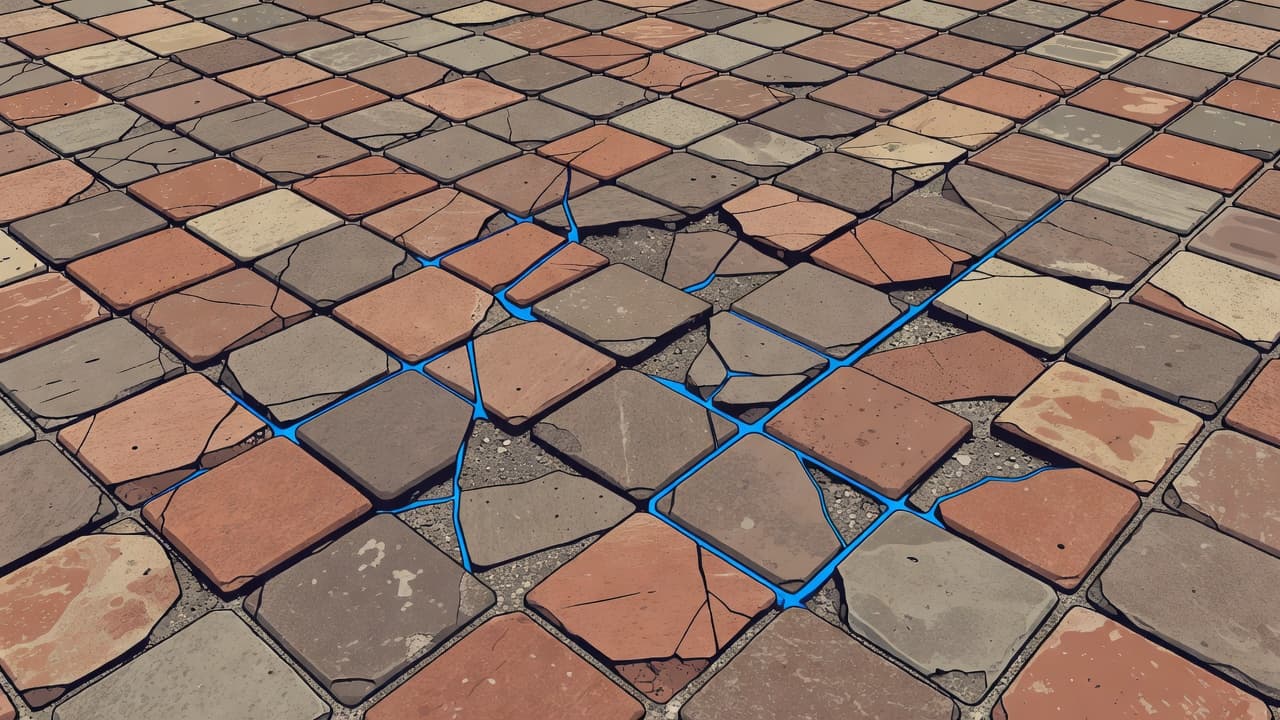
Brick pavers chipping at the apron usually starts right at the edge where traffic keeps loading the same spot.
The usual reasons brick pavers start chipping
The biggest cause is repeated vehicle stress. A sharp turn into the driveway puts significant side pressure on the pavers, which often leads to minor cosmetic damage initially. However, persistent heavy loads can quickly escalate this into severe structural damage to the edges. A hard brake or a quick stop only adds more force, causing the edges to crumble over time.
A weak base is another common reason for failure. If the paver base was not compacted well during installation, the pavers can settle unevenly. Proper base compaction is essential for stability, and many experts prefer a crushed concrete base to provide the necessary support. Once the paver base is compromised, the surface stops supporting the load the way it should.
Water is also a major factor. When drainage issues occur, standing water works its way under the apron and softens the foundation. While Florida does not experience extreme winters, in other regions, freeze-thaw cycles remain a leading cause of chipped outdoor pavers as moisture trapped in the sub-base expands. In Southwest Florida, heavy rain and constant runoff can accelerate this degradation.
If the apron is moving, driveway sealing alone will not stop the chips.
I also look at the way the edge was cut and set. Thin slivers of paver at the apron are inherently unstable and more likely to break under pressure. In these cases, using replacement pavers is often the only way to fix areas that were patched poorly or cut incorrectly during the initial installation.
What cleaning and sealing can actually do
Good cleaning helps, but it has to be done the right way. Pressure washing can clear off dirt, moss, and loose debris, but too much force can pull the polymeric sand from the joints, which only makes weak edges worse.
That is why I treat soft wash work differently from heavier cleaning. A soft wash is ideal for delicate surfaces, whereas pressure washing is a better fit for tougher paver surfaces when the right settings are used to protect the joint stability.
Once the surface is clean and you have completed necessary concrete paver repairs to solidify the area, you should seal your pavers to lock in the look and slow down wear from stains, water, and sand loss. It does not rebuild a failing base, though. If the apron is sinking or the pavers are already loose, sealing is only part of the answer.
If you are dealing with chipped outdoor pavers, I suggest taking a closer look sooner rather than later. When deciding whether to repair or replace sections of your driveway, remember that a small intervention is much easier than a full apron replacement. If you want a hand with those professional assessments, Get a Quote before the chips turn into a larger repair job.
How I protect the edge before it gets worse
A driveway apron lasts longer when the weak spots get attention early. To prevent paver shifting and the resulting tripping hazards, I keep my maintenance routine simple and practical:
- Watch for loose blocks near the road edge, as this is where failure usually begins. If you find wobbly units, use a paver extractor to remove them and reset them firmly with a rubber mallet.
- Keep water moving away from the driveway with proper drainage and working gutters to avoid standing water.
- Refill bedding sand after cleaning so the driveway pavers stay tightly locked together.
- For minor chips, apply a small amount of landscape adhesive or paver paste to secure the surface.
- If a unit is beyond repair, source replacement pavers that match your original hardscape installation.
- Use the right cleaning method for the surface, avoiding high pressure that might wash out the joints.
- Seal after repairs, not before, so the finish sits on a stable base.
I also pay attention to the rest of the exterior. Whether you are maintaining driveway pavers or patio pavers, factors like roof cleaning and runoff affect how much water ends up around the edges. If the roofline dumps water near the driveway, that edge gets punished over and over again. While porcelain pavers and natural stone pavers have different wear patterns, the same principles of avoiding drainage issues apply to all exterior surfaces.
To provide extra support, I often recommend installing molded edging to secure the perimeter. When I walk a property, I look for movement first. A chip is often just a symptom; the real trouble is usually happening underneath the surface.
Frequently Asked Questions
Can I simply glue the chipped pieces back onto my pavers?
While you can use landscape adhesive for minor cosmetic chips, it is not a permanent structural fix. If the underlying base is shifting, the repaired piece will likely break again under the continued pressure of vehicle tires.
Is pressure washing safe for my chipped pavers?
Pressure washing can be effective, but you must use caution to avoid blasting out the polymeric sand from between the joints. If the sand is removed, your pavers will lose the lateral support they need, which will only lead to more shifting and chipping.
How do I know if my driveway apron needs a full replacement?
If you notice that the pavers are sinking, rocking significantly under foot traffic, or spreading away from the edge restraint, the base is likely compromised. In these cases, individual repairs are often insufficient, and the section may need to be pulled up and re-leveled with a properly compacted base.
Will sealing prevent further chipping at the edges?
Sealing primarily protects the surface from water, UV damage, and stains while locking the joint sand in place. While it keeps the pavers cleaner and more stable, it does not provide enough structural strength to stop chipping caused by vehicle tires turning on a weak or improperly installed edge.
Conclusion
Brick pavers chipping at driveway aprons usually comes down to structural stress, water infiltration, or a base that lacks adequate support. Once the edge begins to shift, every turn in and out of the driveway accelerates the damage.
The good news is that these issues are easier to manage when you catch them early. Whether you decide to repair or replace the damaged sections, the key is to address the underlying base issues first. By cleaning the surface, reinforcing the edge, and applying a high-quality sealant, you give your apron a much better chance at staying tight and looking clean. Proactively fixing chipped outdoor pavers is the best way to preserve the curb appeal and long-term safety of your home entrance.